Oral medicine case book 64: some aspects of the pathophysiology of angioedema with special reference to the upper aerodigestive tract
Abstract
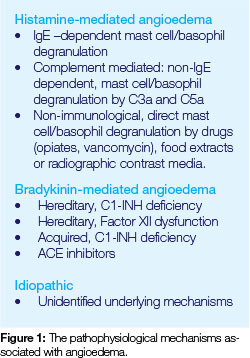
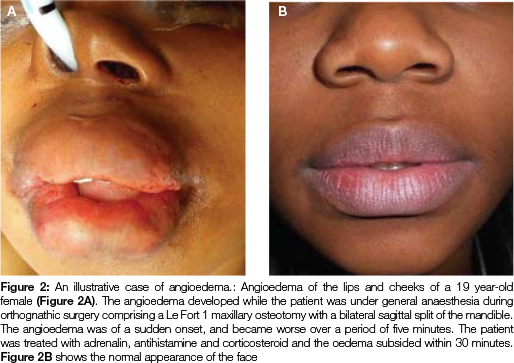
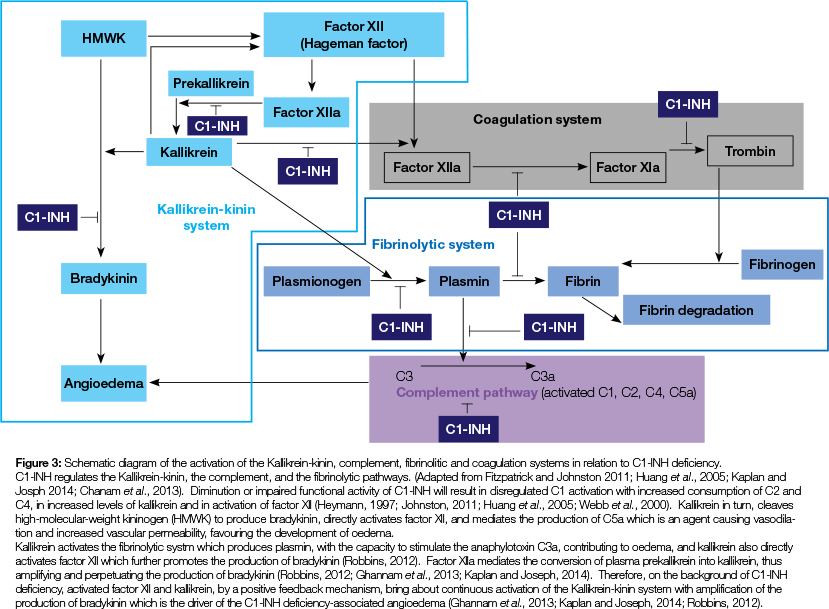
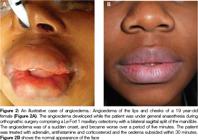
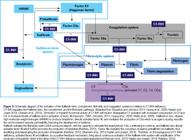
Angioedema refers to a localized oedematous swelling of subcutaneous or sub-mucosal tissues, caused by dilatation and increased permeability of blood vessels, usually mediated either by histamine or by bradykinin. Deficiency or loss of functional activity of the complement component C1 esterase inhibitor (C1-INH) affects multiple systems, including the kallikrein-kinin, complement, coagulation and fibrinolytic pathways, and in the context of angioedema, the result is increased production and release of bradykinin and other vasoactive substances such as C3a. Owing to impairment of C1-INH, factors XIIa and kallikrein, by a positive feedback mechanism, bring about persistent activation of the kallikrein-kinin pathway with amplification of production of bradykinin, resulting in angioedema. Histamine can cause histaminergic angioedema. As the name implies, this oedema is caused by degranulation of mast cells/ basophils as a result of an IgE-dependant allergic reaction to extracts of food, drugs, infectious agents, or to physical stimulation; or as the result of direct degranulation of mast cells/basophils independently of IgE, caused by releasing agents such as opiates, antibiotics or radio-contrast media. As dental, oral and maxillofacial operative procedures may trigger the development of angioedema in susceptible individuals, the dental practitioner should be familiar with its signs and symptoms, its pathophysiology and with the firstline treatment of this disorder.
hereditary angioedema; bradykinin; histamine; C1-inhibitor; factor XII
 Thumbnail
 Thumbnail
 Thumbnail