Mercury levels in wastewater samples at a South African dental school
Abstract
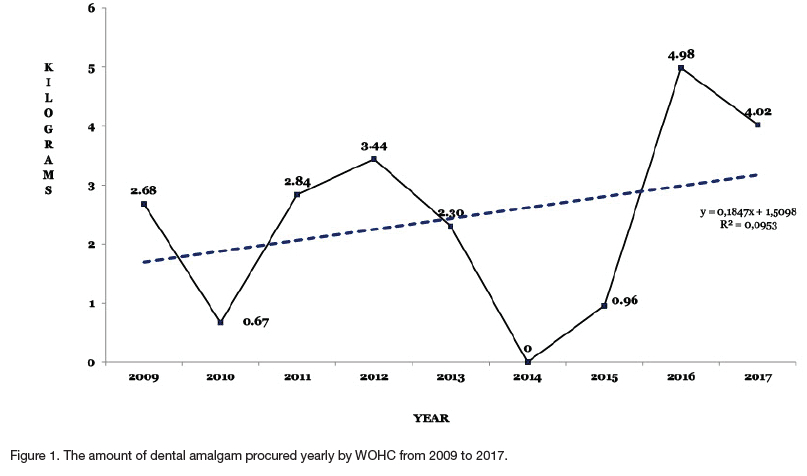
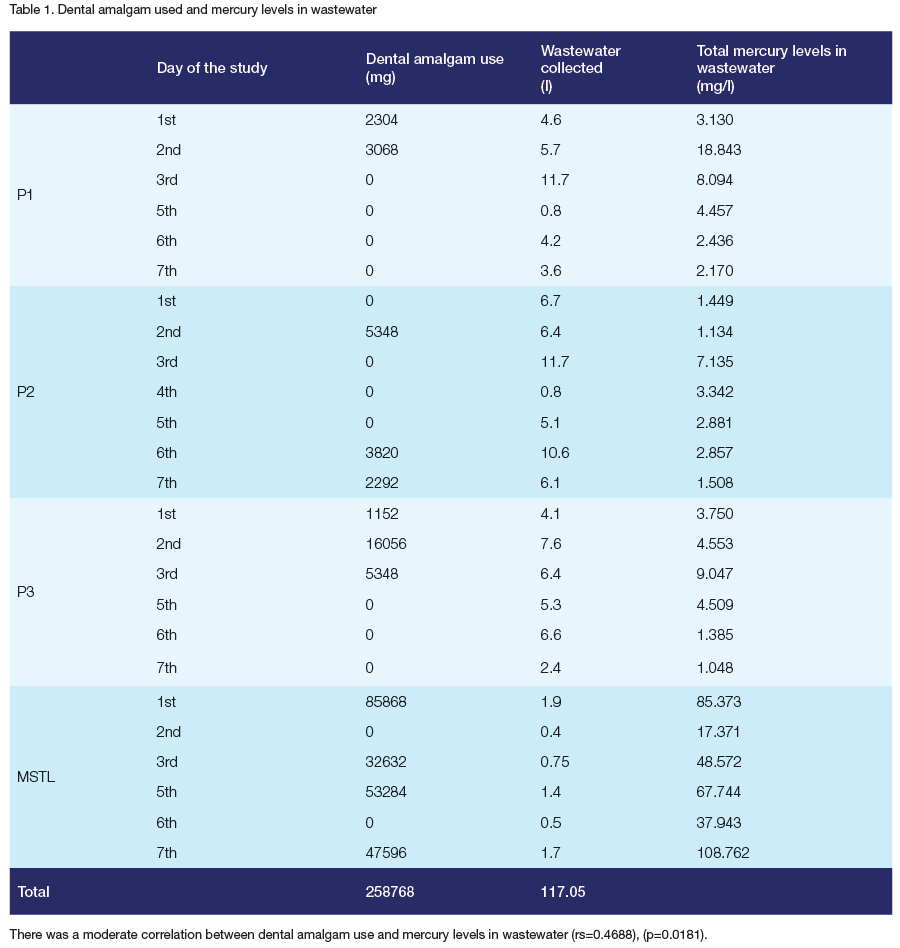
Dental amalgam is a commonly used restorative material in oral health care services in South Africa. It is composed of between 43-50% mercury. Over the past 40 years, advancing knowledge of mercury toxicity to the environment and life has led to concerns over the waste produced during the placement and removal of dental amalgam. The present study determined mercury levels in wastewater, described the application of the best management practices (BMPs) for dental amalgam use and investigated dental amalgam procurement patterns at the WITS Oral Health Centre, University of the Witwatersrand. The wastewater generated during the study period was diverted, collected and sampled. The samples were analysed for total mercury concentrations using USEPA method 245.7 - Cold Vapor Atomic Absorption Spectroscopy. A structured interview was used to investigate the application of the BMPs for dental amalgam use. The amalgam procurement records were accessed and analysed. The study found that the levels of mercury in wastewater samples ranged from 1.048mg/l to 108.762mg/l, there was an increasing procurement of dental amalgam over nine years and there was inadequate adherence to the BMPs. The mercury levels observed called for the urgent need to institute BMPs.
 Thumbnail