Biaxial flexural strength of three ceramic oxide core materials
Abstract
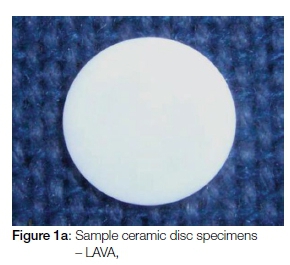
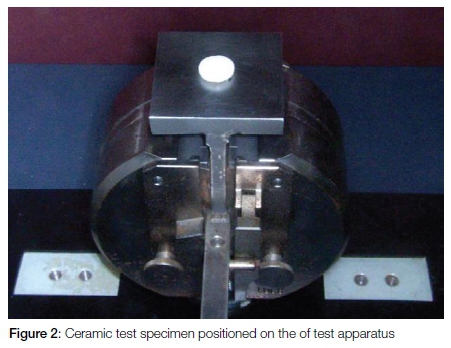
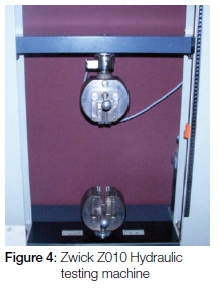
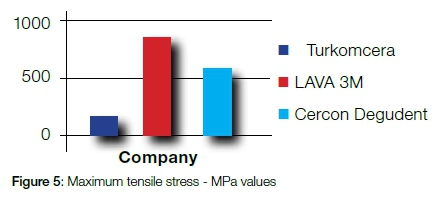
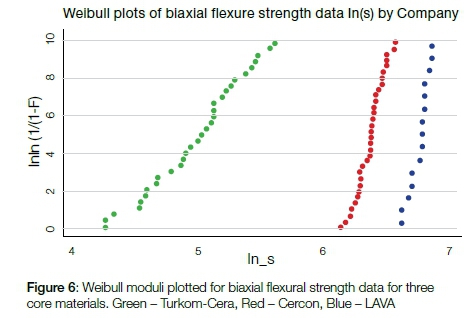
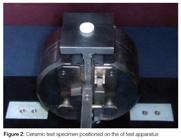
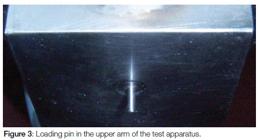
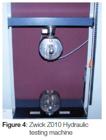
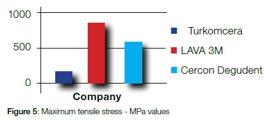
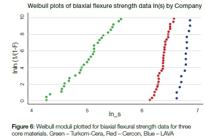
INTRODUCTION: Brittleness and low strength render conventional ceramic systems unsuitable for routine restorative use in molars. Modern, high-strength ceramic core materials such as high purity aluminum oxide (Al2O3) and yttrium - partially stabilized zirconia (Y-PSZ) have been designed for aesthetic, metal-free, all-ceramics in posterior teeth. AIMS AND OBJECTIVES: 1. To compare the biaxial flexural strengths of these two core materials. 2. To compare the strengths of Y-PSZ samples produced by two manufacturers. MATERIALS AND METHODS: Three groups of discs measuring 16mm diameter and 2mm thickness were prepared for each of the sample materials, high purity Al2O3, commercially available as Turkom-Cera, and Y-PSZ, commercially available as Cercon and LAVA. The Biaxial flexural strengths were measured using a Zwick Z010 Material Testing Machine. Reliability was compared using Weibull Moduli. RESULTS: Mean strengths for LAVA, Cercon and Turkom-Cera were 866.44, 586.92, 155.71 MPa respectively. Statistically significant differences were shown between the mean values. DISCUSSION AND CONCLUSIONS: This project showed that the samples of Y-PSZ had higher biaxial flexural strengths than those of high purity Al2O3. The biaxial flexural strengths of Y-PSZ, sourced from two manufacturers, are significantly different. It is suggested that Y-PSZ is suitable and indicated for restorative use in molar regions.
High-strength ceramics; tensile stress
 Thumbnail
 Thumbnail
 Thumbnail
 Thumbnail
 Thumbnail
 Thumbnail
 Thumbnail