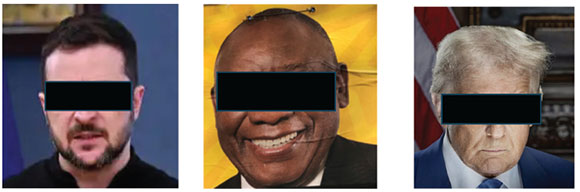
The Paradox of Perception - You do not need THE EYES to SEE the person
Abstract
Covering the eyes of patients in reports or public images is often done to preserve anonymity, dignity and confidentiality. However, human recognition is a complex process involving a variety of sensory inputs that extend far beyond mere visual processing. One can often identify a person based on other non-visual cues, including auditory, tactile, social, contextual, cultural, and emotional dimensions. With regards to the face, blocking out the eyes alone does not guarantee that a person's identity will be concealed. This is because there are many other geometric and anatomical features that the brain is attuned to recognising. In addition, modern AI programmes can often be used to re-insert blocked-out features. This paper suggests that from both an ethical and legal perspective, we need to develop more sophisticated ways of treating patient facial photographs to ensure that they are truly not recognisable to others.
INTRODUCTION
The eyes are conventionally considered the primary sensory organs through which we interpret the world and see others. However, perception is a multifaceted process that extends beyond the physical sight of the observer, and their observation of the eyes of others. This phenomenon challenges conventional assumptions about what it means to "see" someone and calls attention to the diverse ways we recognize and understand others.1
The Role of Non-Visual Cues in Identity Recognition
When people think of recognition, they often associate it with facial features, especially the eyes. However, human recognition is a complex process involving a variety of sensory inputs that extend far beyond mere visual processing. Studies on prosopagnosia (face blindness) demonstrate that people with impairments in facial recognition often rely on several other cues, to identify individuals.2
The Cognitive Science Behind Non-Visual Recognition
From a cognitive science perspective, the brain has specialized neural systems for processing different kinds of sensory information. Research on the brain's processing of faces (the fusiform face area) indicates that people are wired to recognize faces through visual cues, but other areas of the brain are responsible for recognizing people through sound, touch, and social context. This neural adaptability underscores the brain's ability to shift between different types of sensory data for identification purposes.3
Auditory Cues: The Role of Voice
One of the most prominent non-visual identifiers is a person's voice. Vocal characteristics such as pitch, tone, cadence, and rhythm are highly distinctive and are crucial components of identity. A person's voice often carries the nuances of their emotions, background, and unique speech patterns. Even when someone's eyes are covered or they are out of sight, their voice can reliably trigger recognition, particularly if they have an established relationship with the person.4
Tactile and Kinetic Recognition: The Power of Touch and Movement
In the absence of sight, tactile and kinetic cues can also help identify an individual. The unique way a person walks, moves, or gestures often leaves an imprint on their observer's memory. For instance, the rhythm or sound of someone's footsteps, the way they gesture during conversation, their stance, the tilt of their heads, their form of greeting such as a handshake or a hug, their style of speaking, or the emotional tone of their speech might all reveal their identity. Their mannerisms are usually very familiar to those who know them, and are often so distinct and unique that they may even allow us to recognize strangers and public figures who we have only observed from a distance.1
Social and Contextual Recognition
Even without physical sight, we constantly rely on contextual and social clues to make sense of our environment. Context plays a large role in how we perceive and identify others. For example, if a person is at a familiar location or is in a situation with a group of people they know, the surrounding context helps identify who they are. This phenomenon aligns with the idea of "social recognition," where individuals are not only recognized by their physical features but also by their behaviours and interactions within a particular social framework.5
Cultural and Emotional Dimensions of Recognition
Cultural factors also play a significant role in how we identify others without seeing their eyes. In many cultures, people are taught to recognize not just the face, but other non-visual aspects of identity, such as voice, gait, or even scent. These learned patterns further reinforce the idea that identity is not limited to physical sight. Moreover, the emotional connection between individuals can serve as a powerful recognition tool. Emotional bonds can create a deeper form of recognition, where the mere presence of another person, irrespective of their visual appearance, triggers a sense of familiarity. This suggests that identity is as much about emotional connection as it is about physical features.1
Focusing in on the face - The use of facial photographs in medicine, dentistry and forensic sciences
Facial photography presents a unique ethical dilemma, as faces are difficult to de-identify if one wants to use patient photographs for teaching, at conferences, in publications, as illustration for other patients, or even for advertising purposes.6
In most cases, identification is still possible. This is because there are a myriad of other geometric and anatomic facial features that the brain is attuned to recognising.7
Unless a person has had extensive restorative dentistry they are often recognizable by their unique dental arrangement, tooth size, angulation and shade, class of occlusion, degree of overjet and overbite, buccal corridors, missing dentition as well as the presence of visible dental restorations.
The use of blocking out eyes has waned, as patients are often recognized by themselves and others in spite of this technique.8789101
Ethical and Legal Principles
Medical and Forensic Ethics mandate covering eyes of patients in reports or public images in a professional responsibly in order to preserve patient anonymity, dignity and confidentiality. Whether the patient is deceased or alive, concealing identifiable features like eyes can prevent dehumanization. Graphic forensic images should be handled responsibly, avoiding unnecessary public exposure or exploitation. One must also be aware that some cultures have strong beliefs regarding the treatment of deceased individuals and how they should be represented in forensic or medical settings.

The legal requirements for covering the eyes of patients depend on the jurisdiction, ethical considerations, and the purpose of covering their eyes. For example, forensic patient information, including identifiable images, must be protected. However, if forensic photographs are used in court, the decision to cover the eyes depends on whether the identity needs to be protected. In some cases, courts may require unaltered images. If forensic evidence is presented in court or research, ethical considerations must balance the need for transparency with privacy protections. Many countries have patient privacy laws that may require anonymizing patient images, with extra legal protection for minors or vulnerable individuals. Furthermore, if forensic images are released to the media, covering the eyes may reduce privacy violations or legal liability. To this end many journalistic standards require anonymization of crime victims, forensic patients, or suspects by obscuring facial features. It also helps to preserve privacy rights and protect against accusations of defamation.6
CONCLUSION
The ability to "see" and identify a person does not depend solely on vision. Through auditory cues, tactile experiences, social context, and emotional connections, humans can recognize and understand others without relying on their own vision or seeing the eyes of the person being observed. The complex nature of recognition involves a blend of sensory inputs, cognitive processes, and emotional bonds that together create a more holistic view of identity. As we continue to explore the interplay between sight, sound, touch, and context, it becomes evident that the recognition of a person transcends the physical act of seeing-demonstrating that the true essence of "seeing" someone lies in the deeper connections we form beyond the visual realm.
REFERENCES
- 1. Chatgpt.com. Search words: eyes; identity; perception; anonymity. Accessed on: 20-03-2025.
- 2. Yovel, G., & Duchaine, B. (2006). A cognitive neuroscience perspective on face perception. Trends in Cognitive Sciences, 10(3), 68-74.
- 3. Kanwisher, N. (2000). Domain specificity in face perception. Nature Neuroscience, 3(8), 759-763.
- 4. Schwartz, S. A., et al. (2004). Voice perception and its role in identity recognition. Psychological Science, 15(4), 244-248.
- 5. Bruce, V., & Young, A. (1986). Understanding face recognition. British Journal of Psychology, 77(3), 305-327.
- 6. Bennet KG, Bonawitz SC, Vercler CJ. (2019) Guidelines for the ethical publication of facial photographs and review of the literature. Am Cleft Palate,56(1)7-14.
- 7. Clover AJ, Fitzpatrick E, Healy C. (2010) Analysis of methods of providing anonymity in facial photographs: A randomised controlled study. Ir Med J; 103(8):243-245.
- 8. Koch CA, Larrabee W (2013) Patient privacy, photographs and publication. JAMA Facial Plast Surg; 15(5):486-491.
- 9. Rose CD. (2017) Ethical conduct of research in children: Paediatricians and their IRB. Paediatrics;139(5):e20163648.
- 10. Lau CK, Schumacher HH, Irwin MS (2010) Patients' perception of medical photography. J Plast Reconst Aesthet Surg. 63(6):e507-e511.

Authors contributions
Leanne Sykes - Primary author - 50%
Herman Bernitz - 50%