The psychological impact of malocclusion on patients seeking orthodontic treatment at a South African oral health training centre
Abstract
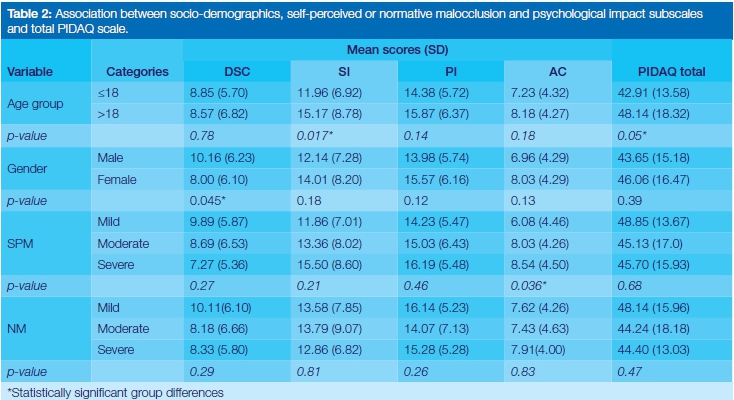
OBJECTIVE: The study set out to assess the psychosocial impact of dental aesthetics among a sample of patients seeking orthodontic treatment at Medunsa Oral Health Centre (MOHC), Sefako Makgatho Health Sciences University (SMU). METHODS: One hundred and fifty patients (100 females and 50 males, aged 13-29 years) presenting for orthodontic treatment were prospectively enrolled. Following comprehensive orthodontic clinical examination, patients were requested to complete the Psychosocial Impact of Dental Aesthetics Questionnaire (PIDAQ), which was supplemented by a few additional items. The data were analysed using Chi-square, Student's t-tests and ANOVA. RESULTS: The questionnaire demonstrated good reliability, with a Cronbach score of 0.85. Total psychological impact and particularly social impact were significantly greater among those older than 18 years (p =0.017) than amongst the younger patients (p= 0.035), and dental self-confidence was significantly higher among females than males (p = 0.045). Self-perceived malocclusion had a significant positive association with aesthetic concern (p = 0.036). CONCLUSION: Malocclusion, particularly when self-perceived, has a significant negative impact on the psychological wellbeing of patients, especially for those older and male. Orthodontic treatment may result in improved oral health-related quality of life and thus enhance the general psychological wellbeing of patients.