Root canal preparation with reciprocating instruments - A literature review and clinical application
INTRODUCTION
It is well described that the presence of microbial flora in the pulp space of the tooth, and the inability of the immune system to remove these pathogens, are the major sources of peri-apical and radicular inflam-mation.12,3
The basic objectives of cleaning and shaping of root canals include: (1) removal of all infected soft and hard tissues; (2) creating space for delivery of disinfectants and medicaments to the apical part of the canal; (3) facilitating three dimensional obturation and (4) preservation of radicular structures.4
Even modern endodontic file systems leave untouched areas on the root canal walls after preparation and show compaction of hard tissue debris.562,7
Importance of attaining and maintaining apical patency
Negotiating the canal to the apical terminus is the first significant step in setting up a glide path. Typically utilizing a very thin K-File and passing it through the apical extent of the root canal for 1mm, will achieve patency.8 910,11
Regular recapitulation of the canal during preparation with a thin K-File (size 08 or 10), maintaining patency throughout, drastically improves disinfection of the apical portion of the canal.10,12
Glide path preparation
Glide path is defined as a smooth reproducible pathway from the canal orifice to the apical portal of exit.13 14,15
Many procedural errors can be reduced by preparing a proper glide path.161718
Occurrence of canal transportation, ledging and perforations are reduced, with improved centered preparations and more favourable amounts of dentine removal.1920,21 Glide path preparation can be done with stainless steel K-Files, either by hand or in a reciprocating hand piece. Alternatively, newer rotary or reciprocating NiTi systems can be used in dedicated endodontic motors.16
This "glide path" will guide the non-cutting tips of the rotary/reciprocating NiTi files to working length.1617
Glide path preparation using reciprocation
1. Reciprocation with hand stainless steel K-Files
Utilizing a stainless steel (SS) hand file inserted into a dedicated reciprocating hand piece can reduce fatigue and operating times with lower risk of instrument failure compared to NiTi rotary glide path files.22
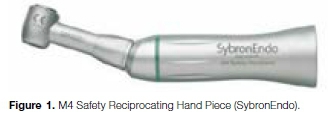
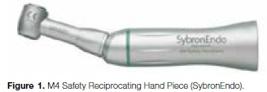
Ti-Max Ti35L (NSK, Kanuma, Japan) and the M4 Safety Reciprocating Hand Piece (SybronEndo, Orange, CA, USA) (Figure 1) are some of the hand pieces that are available with 90° and 30° reciprocation angles respectively.23 16,24
Excess dentine removal, apical transportation and debris extrusions are reported with the use of larger files (greater than size 15), undue apical forces during canal instrumentation and over preparation of canals.22,25
2. Dedicated reciprocation glide path systems
The three systems mentioned below all cut in a counter clockwise (CCW) direction and operate with a 150° CCW and 30° clockwise (CW) angle of rotation.23
a). WaveOne Gold Glider (Dentsply Sirona, Ballaigues, Switzerland) (Figure 2)

The WaveOne Gold Glider was introduced into the market in 2017. Utilizing proprietary post-manufacturing thermal treatments that modifies the transition between austenite and martensite to produce a distinctive gold coloured alloy (Gold Wire) that exhibits superior flexibility and cyclic fatigue resistance compared to M-Wire and conventional NiTi alloys.26,27
It is a single file system that has an ISO 15 tip size that is variable tapered from 2% at D0 to 6% at D16. Designed with a parallelogram shaped cross section and a semi-active tip.
b). EdgeOne Fire GlidePath (EdgeEndo Albuquerque, New Mexico, USA) (Figure 3)

EdgeOne Fire GlidePath file is also a single file system to be used in reciprocation motion. Made from the same trademarked "FireWire" as EdgeGlide Path files, they are also designed similarly to the WaveOne Gold Glider with a parallelogram cross-section but with an ISO tip size of 19. The file is recommended for use prior to final shaping with the EdgeOne Fire shaping system.28
According to the manufacturer, FireWire NiTi yields performance-enhancing durability providing flexibility of up to 90° curves and will expedite endodontic treatment.29
c). One File G Reciprocating Glide Path File (Pac-Dent, Brea, CA, USA) (Figure 4)

One File G Reciprocating Files are reciprocating endo-dontic files manufactured from heat-treated NiTi. The One File G Reciprocating Glide Path file has an ISO 15 tip with a 2% taper. The file has a square-shaped cross section and is used prior to shaping with the One File G Reciprocating Shaping System (Pac-Dent).30
d). R-Pilot (VDW, Munich, Germany) (Figure 5)

The R-Pilot instrument is a glide path instrument manufactured from M-Wire and is used in reciprocating motion to prepare the root canal system before the shaping with a rotary or a reciprocating instrument. The R-Pilot instrument has a constant taper of 4%, an ISO tip size of 12,5 and an S-shaped cross section. It is a single-use instrument designed for use in no more than one molar.
The R-Pilot instrument can be used only in a reciprocating motion with a designated drive system using that uses the original Reciproc (VDW) settings. Failure to do so, according to the manufacturers can lead to instrument fracture and misuse. The instrument is not recommended for use in canals with abrupt apical curvatures in the apical region.
Rotation vs. reciprocation for root canal preparation
Introduction of NiTi endodontic instrumentation, paved the way for many machine assisted rotary systems to be developed which allowed for more efficient root canal preparation.31,32 Recently, asymmetrical rotary systems have been added: Revo-S (MicroMega, Besancon, France), ProTaper Next and TruNatomy (Dentsply Sirona) as well as systems with variable cross section designs like OneShape (MicroMega).
ProTaper Next is made from M-Wire and has a off-centre rectangular cross section that moves in an asymmetrical fashion.3334-36 Less dentine engagement due to fewer contact points at any given time, lowers generated forces on the root canal walls and might attribute to higher fracture resistance of the instrument.37
The new TruNatomy system features slimmer files with a unique off-centered cross sectional design. Designers claim that the files are three times more flexible than ProTaper Next, due to post-grinding thermal treatments, that operates at higher speeds of 500 rpm. As a singlefile system, they also allow for more conservative, minimal invasive canal preparation, without straight-line ccess to the canal.38,39
Even though NiTi reciprocating instrumentation has only recently been introduced, reciprocating motion with SS files has been utilized widely in the progress of mechanical root canal preparation systems.404142,43
Many of these drawbacks was attributed to the mechanical rigidity of SS instruments.4422
Yared47
In this way he completed single file shaping of a root canal (after traditional canal negotiation and glide path preparation). A technique that lowered cost, used less instruments, eliminated cross-contamination, and lead to faster treatments.45-47 This also improved safety whereby the instrument is not exceeding its elastic limits and causes less instrument fatigue.4849
Different types of reciprocatory movements include:40
i. Vertical (in-out) only reciprocation like Racer (Cardex, Austria) and Self-Adjusting file (ReDent Nova, Israel).50
ii. Complete reciprocation - horizontal. With no completion of any rotations and no vertical movements. Giromatic (MicroMega), M4 Safety hand piece (Sy-bronEndo).22
iii. Complete reciprocation with vertical oscillations. Canal-Finder (Fa. Societe Endo Technique, Marseille, France) introduced by Lévy.51
iv. Partial reciprocation. Complete rotations completed, dependent on unequal angles of reciprocation. Wave-One Gold (Dentsply Sirona) and Edge One Fire (EdgeEndo).
v. Hybrid reciprocation. TF Adaptive System (Sybron-Endo) that can interrupt continuous rotation (CR) (600° CW cutting motion) with 50° CCW movement if undue torsional stresses is detected.52
The majority of endodontic treatments can now be completed utilizing only a single-file, even in teeth with multiple canals (post glide path preparation).
Cyclic fatigue and torsional resistance
The biggest drawback of using a rotary instrument in a root canal is the high incidence of file fractures.53 31 54-56
Reciprocation, firstly reduces the number of rotations the file makes in a curved canal, reducing the amount of bending (compression and tension) forces it subjected to, lowering the risk of cyclic fatigue fracture.5747,58
The metal's elastic limit of each individual system dictate the cutting speed and angle of reciprocation. As an example Reciproc (VDW, Munich, Germany) uses 150°/ 30° at 300 rpm and WaveOne (Dentsply Sirona) with M-Wire uses 170°/50° at 350 rpm.59
CR system files show a higher risk of instrument fracture when compared to systems utilizing reciprocation.60,61 De-Deus confirmed in 2010 the extended lifespan and reduced cyclic fatigue of the ProTaper Universal F2 file (used by Yared4762
Kim et al.5963-65
Importantly, many other factors influence the cyclic fatigue and torsional resistance of these instruments. Metallurgic properties differ between Reciproc (VDW) M-Wire and heat treated Reciproc Blue, rendering the M-Wire counterpart more torque resistant.666768
A higher angle of reciprocation (increasing the angle of progression for every reciprocating cycle) is directly associated with reduced cyclic fatigue resistance.62
Cross sectional design features like diameter and shape also seems to play a role, but some studies suggest otherwise.69-71 Hülsmann et al.72
Dynamic fatigue testing is closer to clinical situations and usually show higher resistance figures. Seeing that temperature plays a significant role in study outcomes, many room temperature studies are however rendered inaccurate. All taken into account, including the move to new single-use instruments, cyclic fatigue should not be a major factor in clinical situations any more.
Maintaining original canal anatomy
The interaction of three main instrument factors can have an effect on the preservation of the original canal anatomy: the cross section design of the file, kinematics and the alloy of the NiTi instrument.5319,23
The effectiveness of the shaping system can be evaluated by assessing the centering ability and the amount of canal transportation, both mid root and apically.19 73
Early comparisons of reciprocating and CR instruments by You et al.7475
On the other hand a study by Saleh et al.7878
Newer studies on WaveOne Gold compared to One-Shape showed no statistical significance at any level for canal transportation and centering ratio.798053
Debris removal
Cleaning effectiveness is accessed by the histological evaluation of the amount of debris compaction or remaining smear layer in the root canal after instrumentation.81,82 Usually inaccessible area's like isthmus, fins and the apical third are more prone to impaction of debris.83 8481,85 and, in some, better86
It has been suggested that file design is more responsible for effective cleaning than the kinematics of a system.86
Apical debris extrusion
As already discussed, apical extrusion of debris can cause negative outcomes and post-operative flair ups.87 88
Unfortunately many conflicting results exist in the literature, and may well be clarified by the difference in study designs,53ex vivo studies.894690,91 Opposing results demonstrating lower amounts of extrusions created by reciprocating movements compared to other systems is also present.92-94 Some studies even show no difference between the two.95
A recent systematic review on the incidence of post-operative pain (usually the main symptom of apical extrusions) after root canal treatment with either reciprocating or rotary systems, concluded that rotary systems showed a negative impact on postoperative pain, and even more so after 48 hours.96
Independent of the system used, apical debris extrusions is possible by incorporating additional irrigation protocols to conventional procedures. These include passive ultrasonic irrigation and negative pressure irrigation systems which will reduce apical extrusions.97,98
Reduction of intracanal bacteria
Reducing the bacterial load inside the root canal remains the cornerstone for a successful endodontic treatment outcome.199
Reduction of the bacterial load were found to be similar in both reciprocating and rotary systems. Studies by Machado et al.100101102
Dentinal cracks
It is well described that endodontic treatment can have a negative impact on root dentine.103104,105
An initial pilot study on cadavers could not show a relationship between different shaping techniques and the incidence of micro cracks.106107,108
One study showed that reciprocating files, Reciproc and Self-Adjusting File (ReDent-Nova, Israel) actually cause less cracks than the rotary ProTaper Universal and One-Shape files.109110
Ultimately it seems that reciprocating files could be more favourable, with lower incidence of dentinal defects and cracks.53
Efficiency and shaping times
Having faster treatment times, allow for shorter and more economical treatments. Additionally it allows more time for important irrigation protocols.5345,75,86 while some show no significant difference.111
Reciprocating root canal shaping systems
After glide path enlargement, final shaping of the root canal can be completed. As mentioned before, Yared47 45,47,48
Reciprocating instruments has been shown to cause less transportation with better centered preparations compared to continuous rotary systems, keeping in mind that other factors like design features and metallurgic properties of the instrument could attribute to these results.77,112
Unequal CCW movement and CW movements ensures that elastic limit of instrument is not exceeded, more effective coronal advancement of debris and better progression with less apical pressure is promoted compared to equal CCW/CW movements.113
Although no instrumentation system can render the canal free of bacteria, reciprocation systems seem to perform equally to rotary systems in reducing bacterial load in the canal.114
All these systems advocate single-use with already pointed out benefits.47
a). WaveOne Gold (Dentsply Sirona)
WaveOne Gold is a reciprocating root canal shaping system with a unique alternating offset parallelogram-shaped cross-section design with two 85° cutting edges that reportedly limits the engagement between the file and dentine to only one or two points of contact at any given cross-section. This reduces taper-lock and the screw-effect, improves safety, increases cutting efficiency, and provides more chip space to auger debris coronally.67,68,80,115
WaveOne Gold is manufactured from Gold-Wire, a new super-metal that is said to render this system 80% more flexible, 50% more resistant to cyclic fatigue, and 23% more efficient than its predecessor, WaveOne (Dentsply Sirona), manufactured from M-Wire.113,116 WaveOne Gold cuts in a CCW direction in reciprocating angle of 150° with a 30° CW disengaging angle at 300 rpm.117
In a CBCT study comparing the shaping ability of 2Shape (MicroMega), WaveOne Gold, and ProTaper Gold, WaveOne Gold preparations resulted in better maintenance of original canal anatomy and removed less excess dentine than its rotary multiple file counterpart ProTaper Gold, made from the same heat treated Gold wire.118
Differences of nanoscale surface profiles, after preparing four curved root canals, between WaveOne, WaveOne Gold, Reciproc and Reciproc Blue instruments were described by AlRahabi and Atta.119120
While evaluating structural and torsional properties of WaveOne and WaveOne Gold files, Paula Ribeiro et al.115
In a comparative study to evaluate the appearance of dentinal defects in root canal walls after machine driven instrumentation with WaveOne Gold and ProTaper Universal systems, the WaveOne Gold group showed less dentinal cracks (up to 30%) in the apical and coronal thirds compared to the ProTaper system.121
In a 2017 study by Asiye et al.122
In another 2018 study, comparing canal shaping ability of the Primary WaveOne Gold instrument - preceded by different glide path techniques. No difference in canal transportation values, or canal centering ability was noted after canal preparation, irrespective of preceding glide path and system used, or no glide path at all.123
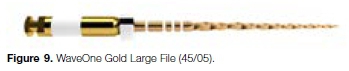
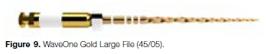
The system is available in four files with different tip sizes (Figures 6-9) and come in 21mm, 25mm, and 31mm lengths. These tips are ogival, roundly tapered (pointed arch) shape that is semi-active that is able to better follow the secured glide path. A variable and reducing taper design from D1 to D16 will result in a more conservatively shaped canal.



• Primary (Red) - ISO 25 tip 7% Taper (D1-D3) - Used in 80% of cases from Orifice to Apex (Figure 6).
• Small (Yellow) - ISO 20 tip 7% Taper (D1-D3) - Used as bridging file when Primary file does not seem to progress passively (Figure 7).
• Medium (Green) ISO 35 tip 6% Taper (D1-D3) - When Primary did not cut sufficient dentine or the apex is larger than ISO size 25 (Figure 8).
• Large (White) ISO 45 tip 5% Taper (D1-D3) - When the apex is larger than ISO 35 and not sufficient cutting was done with Medium file (Figure 9).117
Distinctively these files exhibit less memory effect than M-Wire or conventional NiTi and is super elastic. This allows for a certain amount of pre-curving of the instrument before canal penetration (and it will retain its shape) and naturally follows the canal shape better.116
b). EdgeOne Fire (EdgeEndo) Shaping Files
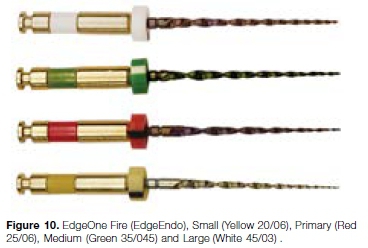
EdgeEndo is one of the largest suppliers of endodontic NiTi file systems.124Figure 10).
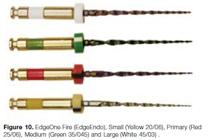
These files are to be used in the same way as WaveOne Gold, with similar reciprocating angles and 300rpm.125 28
The manufacturers claim that the heat-treated FireWire NiTi construction of EdgeOne Fire tests at five times the cyclic fatigue resistance compared to WaveOne Gold-Wire,28125
EdgeOne Fire has a similar cross-sectional design, three dimensional characteristics and tip sizes as the Wave-One Gold system.125126
After testing cyclic fatigue by number of cycles to fracture of three different NiTi rotary files at different temperatures, EdgeFile out performed Vortex Blue (Dentsply Sirona) and ESX (Brasseler, USA), at all tested temperatures. While all systems showed a decrease in resistance with rising temperatures.127
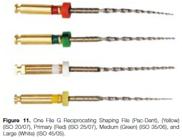
c). One File G Reciprocating Shaping File (Pac-Dent)
One File G Reciprocating Shaping Files (Pac-Dent) is a system that shapes canals in a reciprocating motion and is compatible with the same motor, hand piece, and settings as WaveOne Gold instruments.
According to the manufacturer, One File G Reciprocating Shaping Files are made using proprietary heat-treated NiTi Wire, which increase its cyclic fatigue resistance and imparts a unique shape memory to the files.
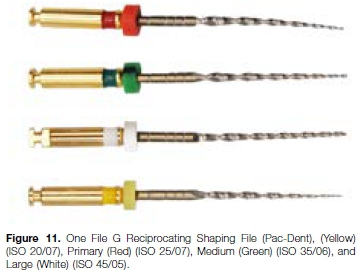
The file has a parallelogram cross section, and recommended for use after the One File G Glide Path File. They are available in the same sizes, lengths and tapers as the other two systems: Small (Yellow) ISO 20 tip 7% Taper, Primary (Red) ISO 25 tip 7% Taper, Medium (Green) ISO 35 tip 6% Taper, and Large (White) ISO 45 tip 5% Taper (Figure 11).30
d). Reciproc Blue (VDW)
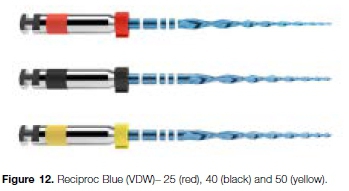
Reciproc Blue (Fig. 12), based on its predecessor Reciproc, was recently launched by VDW (Munich, Germany). Blue NiTi is a newly developed alloy that is obtained through a proprietary-specific oxide surface layer thermo- mechanical manufacturing process.
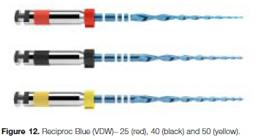
Like M-Wire and Gold, Blue NiTi is thermally treated NiTi designed to improve the mechanical properties of endodontic instruments such as fatigue resistance, flexibility, cutting efficiency, and canal centering ability.128,129
Thermal treatment modifications, in addition to the reciprocating motion, have already been shown to extend the life span of a NiTi instrument and its resistance to fatigue in comparison with continuous rotation movement.130,131
Reciproc Blue has an S-shaped cross-section and is available in sizes 25 (with a taper of 8%), 40 (with a taper of 6%) and 50 with a taper of 5% (Figure 12).
Instruments are used in an unequal forward and reverse reciprocating cutting motion at 10 cycles of reciprocation per second. Manufacturer recommend cutting in amplitudes of no more than 3-4 mm per cutting cycle with an in- and out movement.132
A recent study compared the bending resistance and cyclic fatigue of conventional Reciproc files to Reciproc Blue.133
CASE REPORT 1
The patient, a 62 year old female presented with a history of an unsuccessful attempted emergency root canal treatment on her maxillary right first molar. A preoperative periapical radiograph (Figure 13A) and CBCT scan revealed very narrow and calcified root canal systems.
After canal location and negotiation with size 08 K-Files and C+ Files, the glide paths were enlarged using a WaveOne Gold Glider (Dentsply Sirona). The four root canals systems were prepared with the Small WaveOne Gold (20/07) (Dentsply Sirona) instrument.
Figure 13B illustrates the cone-fit radiograph to confirm the fit of the four size 20/07 gutta-percha points.
The final result after root canal obturation is shown in Figure 13C.
CASE REPORT 2
The patient, a 58 year old male presented with irreversible pulpitis as a result of extensive decay on the mesial aspect of his left maxillary second molar. After caries removal the pulp was exposed and four root canal systems were detected.
After glide path enlargement with the EdgeOne Fire GlidePath (EdgeEndo) all four root canal systems were prepared with the Primary EdgeOne Fire (EdgeEndo) file. Figure 14B illustrates the intra pulpal view after root canal preparation, and Figure 14C the final result after obturation.
CASE REPORT 3
The patient, a 32 year old male presented with a non-vital maxillary left first premolar (Figure 15A). After glide path enlargement with the One File G Glide Path file instrument (Pac-Dent) both root canal systems were prepared with the One File G Primary (25/07) instrument 9 (Pac-Dent). Figure 15B illustrates the cone-fit radiograph to confirm the fit of the two gutta-percha points and the final result after root canal obturation is shown in Figure 15C.
CASE REPORT 4
The patient, a 41 year old male presented with a history of an emergency root canal treatment on his mandibular right second premolar (Figure 16A). Length determination was done using an electronic apex locator and confirmed radiographically (Figure 16B).
Glide path preparation was completed using the R-Pilot file (VDW) and root canal preparation was completed using the Reciproc Blue (VDW). Figure 16C illustrates the final result after root canal obturation and core build up.
CONCLUSION
Reciprocation increases treatment safety, without compromising cutting efficiency or shaping ability, respecting the anatomical pathway of the root canal. Reciprocating movement extends the life span and increases fracture resistance of instruments, with equally effective debris removal and bacterial load reduction, when compared to continuous rotation.57,86,130
Reciprocation systems allow for single-file root canal shaping and single-use instruments that make it highly unlikely that these instruments will be used above their thresholds.15
References
- 1. Kakehashi S, Stanley HR, Fitzgerald RJ. The effects of surgical exposures of dental pulps in germ-free and conventional laboratory rats. Oral Surg Oral Med Oral Pathol. 1965; 20(3): 340-9.
- 2. Schilder H. Cleaning and shaping the root canal. Dent Clin North Am. 1974; 18(2): 269-96.
- 3. Schilder H. Filling root canals in three dimensions. 1967. J Endod. 2006; 32(4): 281-90.
- 4. Hargreaves KM, Berman LH, Rotstein I. Cohen's pathways of the pulp. St. Louis, Mo.: Elsevier; 2016.
- 5. Lopes RMV, Marins FC, Belladonna FG, Souza EM, et al. Untouched canal areas and debris accumulation after root canal preparation with rotary and adaptive systems. Aust Endod J. 2018; 44(3): 260-6.
- 6. Siqueira JF, Pérez AR, Marceliano-Alves MF, Provenzano JC, et al. What happens to unprepared root canal walls: a correlative analysis using micro-computed tomography and histology/scanning electron microscopy. Int Endod J. 2018; 51(5): 501-8.
- 7. Young GR, Parashos P, Messer HH. The principles of techniques for cleaning root canals. Aust Dent J. 2007; 52: S52-S63.
- 8. Buchanan LS. Working length and apical patency: the control factors. The Endodontic report. 1987: 16-20.
- 9. de Vasconcelos BC, Veríssimo Chaves RD, Vivacqua-Gomes N, Candeiro GT, et al. Ex Vivo Evaluation of the Accuracy of Electronic Foramen Locators in Root Canals with an Obstructed Apical Foramen. J Endod. 2015; 41(9): 1551-4.
- 10. Mounce R. Achieving and maintaining apical patency in endodontics: optimizing canal shaping procedures. Gen Dent. 2015; 63(1): 14-5.
- 11. Flanders DH. Endodontic patency. How to get it. How to keep it. Why it is so important. NY State Dent J. 2002; 68(3): 30-2.
- 12. Vera J, Hernandez EM, Romero M, Arias A, et al. Effect of Maintaining Apical Patency on Irrigant Penetration into the Apical Two Millimeters of Large Root Canals: An In Vivo Study. J Endod. 2012; 38(10): 1340-3.
- 13. West JD. Endodontic Update 2006. J Esthet Restor Dent. 2007; 18(5): 280-300.
- 14. Bergmans L, Van Cleynenbreugel J, Wevers M, Lambrechts P. Mechanical root canal preparation with NiTi rotary instruments: rationale, performance and safety. Status report for the American Journal of Dentistry. Am J Dent. 2001; 14(5): 324-33.
- 15. Patino PV, Biedma BM, Liébana CR, Cantatore G, et al. The influence of a manual glide path on the separation rate of NiTi rotary instruments. J Endod. 2005; 31(2): 114-6.
- 16. Cassim I, van der Vyver PJ. The importance of glide path preparation in endodontics: a consideration of instruments and literature. SADJ. 2013; 68(7): 324-7.
- 17. Berutti E, Negro AR, Lendini M, Pasqualini D. Influence of manual preflaring and torque on the failure rate of ProTaper rotary instruments. J Endod. 2004; 30(4): 228-30.
- 18. Abu-Tahun IH, Kwak SW, Ha JH, Sigurdsson A, et al. Effective Establishment of Glide-Path to Reduce Torsional Stress during Nickel-Titanium Rotary Instrumentation. Materials. 2019; 12(3): 493.
- 19. Elnaghy AM, Elsaka SE. Evaluation of Root Canal Transportation, Centering Ratio, and Remaining Dentin Thickness Associated with ProTaper Next Instruments with and without Glide Path. J Endod. 2014; 40(12): 2053-6.
- 20. Jonker CH, De Wet FA, Van der Vyver PJ. The influence of glide path preparation on the failure rate of WaveOne reciprocating instruments. SADJ. 2014; 69(6): 266-9.
- 21. Vorster M, van der Vyver PJ, Paleker F. Influence of Glide Path Preparation on the Canal Shaping Times of WaveOne Gold in Curved Mandibular Molar Canals. J Endod. 2018; 44(5): 853-5.
- 22. Kinsey B, Mounce R. Safe and efficient use of the M4 safety handpiece in endodontics. Roots. 2008; 4(2): 36-40.
- 23. Paleker F, van der Vyver PJ, de Wet FA, Vorster M. Glide path preparation in Endodontics: case report and a literature review of available materials and techniques. SADJ. 2019; 74(3): 129-36.
- 24. Gambarini G, Plotino G, Sannino G, Grande NM, et al. Cyclic fatigue of instruments for endodontic glide path. Odontology. 2015; 103(1): 56-60.
- 25. Wagner MH, Barletta FB, Reis MdS, Mello LL, et al. NSK reciprocating handpiece: in vitro comparative analysis of dentinal removal during root canal preparation by different operators. Braz Dent J. 2006; 17(1): 10-4.
- 26. Fangli T, Maki K, Kimura S, Nishijo M, et al. Assessment of mechanical properties of WaveOne Gold Primary reciprocating instruments. Dent Mater J. 2019; 38(3): 490-5.
- 27. Topçuoglu HS, Topçuoglu G, Kafdag O, Arslan H. Cyclic fatigue resistance of new reciprocating glide path files in 45- and 60-degree curved canals. Int Endod J. 2018; 51(9): 1053-8.
- 28. EdgeEndo. EdgeEndo About Edge 2019 [Available from:
- edgeendo.com/edgeoneflre/" target="_blank">https://web.edgeendo.com/edgeoneflre/.
- 29. Tomer DAK, Miglani DA, Sahni DS, Goud DBV, et al. Comparison of Efficacy of Three Ni-Ti Instruments in Removal of Gutta-Percha from Root Canal during Retreatment - An In Vitro Study. IOSR J Dent Med Sci. 2017; 16(04): 32-7.
-
30. One File G Reciprocating File - Pac-Dent,Inc. 2019 [2019 -08-31]. Available from: https://pac-dent.com/products/endo-dontic/one-file-g-reciprocating-file.
» https://pac-dent.com/products/endo-dontic/one-file-g-reciprocating-file - 31. Walia H, Brantley WA, Gerstein H. An initial investigation of the bending and torsional properties of nitinol root canal files. J Endod. 1988; 14(7): 346-51.
- 32. Scháfer E, Erler M, Dammaschke T. Influence of different types of automated devices on the shaping ability of rotary nickel-titanium FlexMaster instruments. Int Endod J. 2005; 38(9): 627-36.
- 33. Çapar ID, Arslan H. A review of instrumentation kinematics of engine-driven nickel-titanium instruments. Int Endod J. 2016; 49(2): 19-35.
- 34. Capar ID, Arslan H, Akcay M, Uysal B. Effects of ProTaper Universal, ProTaper Next, and HyFlex instruments on crack formation in dentin. J Endod. 2014; 40(9): 1482-4.
- 35. Capar ID, Ertas H, Arslan H. Comparison of cyclic fatigue resistance of novel nickel-titanium rotary instruments. Aust Endod J. 2015; 41(1): 24-8.
- 36. Capar ID, Arslan H, Akcay M, Ertas H. An in vitro comparison of apically extruded debris and instrumentation times with ProTaper Universal, ProTaper Next, Twisted File Adaptive, and HyFlex instruments. J Endod. 2014; 40(10): 1638-41.
- 37. Elnaghy AM. Cyclic fatigue resistance of ProTaper Next nickel-titanium rotary files. Int Endod J. 2014; 47(11): 1034-9.
- 38. van der Vyver PJ, Vorster M, Peters OA. Minimally invasive endodontics using a new single-file rotary system.
- 39. Sirona D. TruNatomy 2019 [Available from:
- dent-splysirona.com/content/dentsply-sirona/en/explore/endodon-tics/trunatomy.html" target="_blank">https://www.dent-splysirona.com/content/dentsply-sirona/en/explore/endodon-tics/trunatomy.html.
- 40. Grande NM, Ahmed HMA, Cohen S, Bukiet F, et al. Current Assessment of Reciprocation in Endodontic Preparation: A Comprehensive Review-Part I: Historic Perspectives and Current Applications. J Endod. 2015; 41(11): 1778-83.
- 41. Frank AL. An evaluation of the Giromatic endodontic handpiece. Oral Surg Oral Med Oral Pathol. 1967; 24(3): 419-21.
- 42. Weine FS, Kelly RF, Bray KE. Effect of preparation with en-dodontic handpieces on original canal shape. J Endod. 1976; 2(10): 298-303.
- 43. Klayman SM, Brilliant JD. A comparison of the efficacy of serial preparation versus Giromatic preparation. J Endod. 1975; 1(10): 334-7.
- 44. Scháfer E, Lau R. Comparison of cutting efficiency and instrumentation of curved canals with nickel-titanium and stainless-steel instruments. J Endod. 1999; 25(6): 427-30.
- 45. You SY, Bae KS, Baek SH, Kum KY, et al. Lifespan of one nickel-titanium rotary file with reciprocating motion in curved root canals. J Endod. 2010; 36(12): 1991-4.
- 46. Bürklein S, Scháfer E. Apically Extruded Debris with Reciprocating Single-File and Full-sequence Rotary Instrumentation Systems. J Endod. 2012; 38(6): 850-2.
- 47. Yared G. Canal preparation using only one Ni-Ti rotary instrument: preliminary observations. Int Endod J. 2008; 41(4): 339-44.
- 48. Kim JW, Ha JH, Cheung GS, Versluis A, et al. Safety of the factory preset rotation angle of reciprocating instruments. J Endod. 2014; 40(10): 1671-5.
- 49. Roane JB, Sabala CL, Duncanson MG, Jr. The "balanced force" concept for instrumentation of curved canals. J Endod. 1985; 11(5): 203-11.
- 50. Metzger Z, Teperovich E, Zary R, Cohen R, et al. The self-adjusting file (SAF). Part 1: respecting the root canal anatomy - a new concept of endodontic files and its implementation. J Endod. 2010; 36(4): 679-90.
- 51. Levy G. Canal Finder System 89!!! Improvements and indications after 4 years of experimentation and use. Rev Odontostomatol. 1990; 19(4): 327-36.
- 52. Dental K. TF™ Adaptive 2015 [updated 2015-07-06.
- Available from: https://www.kerrdentalcom/ca/kerr-endodontics/tf-adaptive-niti-endo-file-system.
- 53. Plotino G, Ahmed HMA, Grande NM, Cohen S, et al. Current assessment of reciprocation in endodontic preparation: a comprehensive review-part II: properties and effectiveness. J Endod. 2015; 41(12): 1939-50.
- 54. Plotino G, Grande NM, Cordaro M, Testarelli L, et al. A review of cyclic fatigue testing of nickel-titanium rotary instruments. J Endod. 2009; 35(11): 1469-76.
- 55. Sattapan B, Palamara JE, Messer HH. Torque during canal instrumentation using rotary nickel-titanium files. J Endod. 2000; 26(3): 156-60.
- 57. Ferreira F, Adeodato C, Barbosa I, Aboud L, et al. Movement kinematics and cyclic fatigue of NiTi rotary instruments: a systematic review. Int Endod J. 2017; 50(2): 143-52.
- 58. Malentacca A, Lalli F. Use of nickel-titanium instruments with reciprocating movement. Ital J Endod. 2002; 16: 79-84.
- 59. Kim H-C, Kwak S-W, Cheung GS-P, Ko D-H, et al. Cyclic Fatigue and Torsional Resistance of Two New Nickel-Titanium Instruments Used in Reciprocation Motion: Reciproc Versus WaveOne. J Endod. 2012; 38(4): 541-4.
- 60. Varela-Patiho P, Martfn-Biedma B, Rodriguez-Nogueira J, Cantatore G, et al. Fracture rate of nickel-titanium instruments using continuous versus alternating rotation. Endo-dontic Practice Today. 2008; 2(3): 193-7.
- 61. Varela-Patiho P, Ibahez-Párraga A, Rivas-Mundiha B, Cantatore G, et al. Alternating versus continuous rotation: a comparative study of the effect on instrument life. J Endod. 2010; 36(1): 157-9.
- 62. Gambarini G, Rubini AG, Al Sudani D, Gergi R, et al. Influence of Different Angles of Reciprocation on the Cyclic Fatigue of Nickel-Titanium Endodontic Instruments. J Endod. 2012; 38(10): 1408-11.
- 63. da Frota MF, Espir CG, Berbert FLCV, Marques AAF, et al. Comparison of cyclic fatigue and torsional resistance in reciprocating single-file systems and continuous rotary instrumentation systems. J Oral Sci. 2014; 56(4): 269-75.
- 64. Tokita D, Ebihara A, Miyara K, Okiji T. Dynamic Torsional and Cyclic Fracture Behavior of ProFile Rotary Instruments at Continuous or Reciprocating Rotation as Visualized with Highspeed Digital Video Imaging. J Endod. 2017; 43(8): 1337-42.
- 65. Varghese NO, Pillai R, Sujathen UN, Sainudeen S, et al. Resistance to torsional failure and cyclic fatigue resistance of ProTaper Next, WaveOne, and Mtwo files in continuous and reciprocating motion: An in vitro study. J Conserv Dent. 2016; 19(3): 225-30.
- 66. Silva EJNL, Hecksher F, Antunes HDS, De-Deus G, et al. Torsional Fatigue Resistance of Blue-treated Reciprocating Instruments. J Endod. 2018;44(6):1038-41.
- 67. Topçuoglu HS, Düzgün S, Akti A, Topçuoglu G. Laboratory comparison of cyclic fatigue resistance of WaveOne Gold, Reciproc and WaveOne files in canals with a double curvature. Int Endod J. 2017; 50(7): 713-7.
- 68. Elsaka SE, Elnaghy AM, Badr AE. Torsional and bending resistance of WaveOne Gold, Reciproc and Twisted File Adaptive instruments. Int Endod J. 2017; 50(11): 1077-83.
- 69. Cheung GSP, Darvell BW. Low-cycle fatigue of NiTi rotary instruments of various cross-sectional shapes. Int Endod J. 2007; 40(8): 626-32.
- 70. Tripi TR, Bonaccorso A, Condorelli GG. Cyclic fatigue of different nickel-titanium endodontic rotary instruments. Oral Surg, Oral Med, Oral Pathol, Oral Radiol Endodontol. 2006; 102(4): e106-e14.
- 71. Craveiro de Melo MC, de Azevedo Bahia MG, Lopes Buono VT. Fatigue Resistance of Engine-Driven Rotary Nickel-Titanium Endodontic Instruments. J Endod. 2002; 28(11): 765-9.
- 72. Hülsmann M, Donnermeyer D, Scháfer E. A critical appraisal of studies on cyclic fatigue resistance of engine-driven endo-dontic instruments. Int Endod J. 2019; 52(10): 1427-45.
- 73. van der Vyver PJ, Paleker F, Vorster M, de Wet FA. Root Canal Shaping Using Nickel Titanium, M-Wire, and Gold Wire: A Micro-computed Tomographic Comparative Study of One Shape, ProTaper Next, and WaveOne Gold Instruments in Maxillary First Molars. J Endod. 2019; 45(1): 62-7.
- 74. You SY, Kim HC, Bae KS, Baek SH, et al. Shaping Ability of Reciprocating Motion in Curved Root Canals: A Comparative Study with Micro-Computed Tomography. J Endod. 2011; 37(9): 1296-300.
- 75. Paqué F, Zehnder M, De-Deus G. Microtomography-based comparison of reciprocating single-file F2 ProTaper technique versus rotary full sequence. J Endod. 2011; 37(10): 1394-7.
- 76. Franco V, Fabiani C, Taschieri S, Malentacca A, et al. Investigation on the Shaping Ability of Nickel-Titanium Files When Used with a Reciprocating Motion. J Endod. 2011; 37(10): 1398-401.
- 77. Berutti E, Chiandussi G, Paolino DS, Scotti N, et al. Canal shaping with WaveOne Primary reciprocating files and Pro Taper system: a comparative study. J Endod. 2012; 38(4): 505-9.
- 79. Gawdat SI, El Nasr HMA. Shaping ability and surface topography of WaveOne Gold and OneShape single files. Endo-dontic Practice Today. 2018; 12(2): 109-18.
- 80. Bürklein S, Flüch S, Scháfer E. Shaping ability of reciprocating single-file systems in severely curved canals: WaveOne and Reciproc versus WaveOne Gold and Reciproc blue. Odontology. 2019; 107(1): 96-102.
- 81. Amaral P, Forner L, Llena C. Smear layer removal in canals shaped with reciprocating rotary systems. J Clin Exp Dent. 2013; 5(5): e227.
- 82. De-Deus G, Barino B, Zamolyi RQ, Souza E, et al. Suboptimal debridement quality produced by the single-file F2 ProTaper technique in oval-shaped canals. J Endod. 2010; 36(11): 1897-900.
- 83. De-Deus G, Marins J, Silva EJNL, Souza E, et al. Accumulated hard tissue debris produced during reciprocating and rotary nickel-titanium canal preparation. J Endod. 2015; 41(5): 676-81.
- 84. Robinson JP, Lumley PJ, Cooper PR, Grover LM, et al. Reciprocating Root Canal Technique Induces Greater Debris Accumulation Than a Continuous Rotary Technique as Assessed by 3-Dimensional Micro-Computed Tomography. J Endod. 2013; 39(8): 1067-70.
- 85. Dietrich MA, Kirkpatrick TC, Yaccino JM. In Vitro Canal and Isthmus Debris Removal of the Self-Adjusting File, K3, and WaveOne Files in the Mesial Root of Human Mandibular Molars. J Endod. 2012; 38(8): 1140-4.
- 86. Bürklein S, Hinschitza K, Dammaschke T, Scháfer E. Shaping ability and cleaning effectiveness of two single-file systems in severely curved root canals of extracted teeth: Reciproc and WaveOne versus Mtwo and ProTaper. Int Endod J. 2012; 45(5): 449-61.
- 87. Tanalp J, Güngör T. Apical extrusion of debris: a literature review of an inherent occurrence during root canal treatment. Int Endod J. 2014; 47(3): 211-21.
- 88. De-Deus G, Brandão MC, Barino B, Di Giorgi K, et al. Assessment of apically extruded debris produced by the single-file ProTaper F2 technique under reciprocating movement. Oral Surg, Oral Med, Oral Pathol, Oral Radiol, Endodontol. 2010; 110(3): 390-4.
- 89. Myers GL, Montgomery S. A comparison of weights of debris extruded apically by conventional filing and Canal Master techniques. J Endod. 1991; 17(6): 275-9.
- 90. Bürklein S, Benten S, Scháfer E. Quantitative evaluation of apically extruded debris with different single-file systems: R eciproc, F 360 and O ne S hape versus M two. Int Endod J. 2014; 47(5): 405-9.
- 91. Surakanti JR, Venkata RCP, Vemisetty HK, Dandolu RK, et al. Comparative evaluation of apically extruded debris during root canal preparation using ProTaper™, Hyflex™ and Wave-one™ rotary systems. J Conserv Dent. 2014; 17(2): 129.
- 92. Üstün Y, Çanakçi B, Dinger A, Er O, et al. Evaluation of api-cally extruded debris associated with several Ni-Ti systems. Int Endod J. 2015; 48(7): 701-4.
- 93. Tinoco J, De-Deus G, Tinoco E, Saavedra F, et al. Apical extrusion of bacteria when using reciprocating single-file and rotary multifile instrumentation systems. Int Endod J. 2014; 47(6): 560-6.
- 94. Ozsu D, Karatas E, Arslan H, Topcu MC. Quantitative evaluation of apically extruded debris during root canal instrumentation with ProTaper Universal, ProTaper Next, WaveOne, and self-adjusting file systems. Eur J Dent. 2014; 8(4): 504.
- 95. Mollashahi NF, Saberi EA, Havaei SR, Sabeti M. Comparison of Postoperative Pain after Root Canal Preparation with Two Reciprocating and Rotary Single-File Systems: A Randomized Clinical Trial. Iran Endod J. 2017; 12(1): 15-9.
- 96. Martins C, De Souza Batista V, Andolfatto Souza A, Andrada A, et al. Reciprocating kinematics leads to lower incidences of postoperative pain than rotary kinematics after endodontic treatment: A systematic review and meta-analysis of randomized controlled trial. J Conserv Dent. 2019; 22(4): 320-31.
- 97. Gummadi A, Panchajanya S, Ashwathnarayana S, Santhosh L, et al. Apical extrusion of debris following the use of single-file rotary/reciprocating systems, combined with syringe or ultra-sonically-facilitated canal irrigation. J Conserv Dent. 2019; 22(4): 351-5.
- 98. Alkahtani A, Al Khudhairi TD, Anil S. A comparative study of the debridement efficacy and apical extrusion of dynamic and passive root canal irrigation systems. BMC Oral Health. 2014; 14(1): 12.
- 99. Schneider SWATUSA. A comparison of canal preparations in straight and curved root canals. Oral Surg Oral Med Oral Pathol. 1971; 32(2): 271-5.
- 100. Machado MEL, Nabeshima CK, Leonardo MFP, Reis FAS, et al. Influence of reciprocating single-file and rotary instrumentation on bacterial reduction on infected root canals. Int Endod J. 2013; 46(11): 1083-7.
- 101. Nabeshima CK, Caballero-Flores H, Cai S, Aranguren J, et al. Bacterial removal promoted by 2 single-file systems: Wave One and One Shape. J Endod. 2014; 40(12): 1995-8.
- 102. Siddique R, Nivedhitha M. Effectiveness of rotary and reciprocating systems on microbial reduction: A systematic review. J Conserv Dent. 2019; 22(2): 114-22.
- 103. Soares CJ, Santana FR, Silva NR, Preira JC, et al. Influence of the endodontic treatment on mechanical properties of root dentin. J Endod. 2007; 33(5): 603-6.
- 105. Sathorn C, Palamara JE, Messer HH. A comparison of the effects of two canal preparation techniques on root fracture susceptibility and fracture pattern. J Endod. 2005; 31(4): 283-7.
- 106. Arias A, Lee YH, Peters CI, Gluskin AH, et al. Comparison of 2 canal preparation techniques in the induction of micro-cracks: a pilot study with cadaver mandibles. J Endod. 2014; 40(7): 982-5.
- 107. Bürklein S, Tsotsis P, Scháfer E. Incidence of dentinal defects after root canal preparation: reciprocating versus rotary instrumentation. J Endod. 2013; 39(4): 501-4.
- 108. Ashwinkumar V, Krithikadatta J, Surendran S, Velmurugan N. Effect of reciprocating file motion on microcrack formation in root canals: an SEM study. Int Endod J. 2014; 47(7): 622-7.
- 109. Liu R, Hou BX, Wesselink PR, Wu M-K, et al. The Incidence of Root Microcracks Caused by 3 Different Single-file Systems versus the ProTaper System. J Endod. 2013; 39(8): 1054-6.
- 110. De-Deus G, Leal Silva EJN, Marins J, Souza E, et al. Lack of Causal Relationship between Dentinal Microcracks and Root Canal Preparation with Reciprocation Systems. J Endod. 2014; 40(9): 1447-50.
- 111. Stern S, Patel S, Foschi F, Sheriff M, et al. Changes in centring and shaping ability using three nickel-titanium instrumentation techniques analysed by micro-computed tomography (jCT). Int Endod J. 2012; 45(6): 514-23.
- 112. Franco V, Fabiani C, Taschieri S, Malentacca A, et al. Investigation on the Shaping Ability of Nickel-Titanium Files When Used with a Reciprocating Motion. J Endod. 2011; 37(10): 1398-401.
- 113. Ruddle CJ. Single-File Shaping Technique: Achieving a Gold Medal Result. Dent Today. 2016; 35(1): 98-101.
- 114. Neves MAS, Provenzano JC, Rôças IN, Siqueira JF. Clinical Antibacterial Effectiveness of Root Canal Preparation with Reciprocating Single-instrument or Continuously Rotating Multi-instrument Systems. J Endod. 2016; 42(1): 25-9.
- 115. Garcia PR, Resende PD, Lopes NIA, Peixoto IFdC, et al. Structural Characteristics and Torsional Resistance Evaluation of WaveOne and WaveOne Gold Instruments after Simulated Clinical Use. J Endod. 2019; 45(8): 1041-6.
- 116. Webber J. Shaping canals with confidence: WaveOne GOLD single-file reciprocating system. Roots. 2015; 1: 34-40.
- 117. Webber J, Machtou P, Pertot W, Kuttler S, et al. The Wave One single-file reciprocating system. Roots. 2011; 1(1): 28-33.
- 118. Singh S, Abdul M, Sharma U, Sainudeen S, et al. An in vitro comparative evaluation of volume of removed dentin, canal transportation, and centering ratio of 2Shape, Wave-One Gold, and ProTaper Gold files using cone-beam computed tomography. J Int Soc Prev Community Dent. 2019; 9(5): 481-5.
- 119. AlRahabi AMK, Atta RM. Surface nanoscale profile of Wave One, WaveOne Gold, Reciproc, and Reciproc blue, before and after root canal preparation. Odontology. 2019; 107(4): 500-6.
- 120. Feghali M, Jabbour E, Koyess E, Sabbagh J. Scanning electron microscopy evaluation of debris and smear layer generated by two instruments used in reciprocating motion WaveOne Gold® and Reciproc Blue®. Aust Endod J. 2019; 5(3): 388-93.
- 121. Miguéns-Vila R, Castelo-Baz P, Rufz-Pihón M, Varela-Patiho P, et al. Comparison of damage to root dentine during engine-driven instrumentation with ProTaper Universal vs. WaveOne Gold. Endodontic Practice Today. 2017; 11(4): 293-7.
- 122. Dincer AN, Guneser MB, Arslan D. Apical extrusion of debris during root canal preparation using a novel nickel-titanium file system: WaveOne gold. J Conserv Dent. 2017; 20(5): 322-5.
- 123. Vorster M, van der Vyver PJ, Paleker F. Canal Transportation and Centering Ability of WaveOne Gold in Combination with and without Different Glide Path Techniques. J Endod. 2018; 44(9): 1430-5.
- 124. Excellent resistance to cyclic fatigue. Br Dent J. 2019; 227(7): 641.
- 125. Gambarini G, Di Nardo D, Galli M, Seracchiani M, et al. Differences in cyclic fatigue lifespan between two different heat treated NiTi endodontic rotary instruments: WaveOne Gold vs. EdgeOne Fire. J Clin Exp Dent. 2019; 11: 609-13.
- 126. Bier CA, Shemesh H, Tanomaru-Filho M, Wesselink PR, et al. The ability of different nickel-titanium rotary instruments to induce dentinal damage during canal preparation. J Endod. 2009; 35(2): 236-8.
- 127. Dosanjh A, Paurazas S, Askar M. The Effect of Temperature on Cyclic Fatigue of Nickel-titanium Rotary Endodontic Instruments. J Endod. 2017; 43(5): 823-6.
- 128. Lopes HP, Gambarra-Soares T, Elias CN, Siqueira Jr JF, et al. Comparison of the mechanical properties of rotary instruments made of conventional nickel-titanium wire, M-wire, or nickel-titanium alloy in R-phase. J Endod. 2013; 39(4): 516-20.
- 129. Pereira ES, Gomes RO, Leroy AM, Singh R, et al. Mechanical behavior of M-Wire and conventional NiTi wire used to manufacture rotary endodontic instruments. Dent Mater. 2013; 29(12): 318-24.
- 130. Pedullà E, Grande NM, Plotino G, Gambarini G, et al. Influence of continuous or reciprocating motion on cyclic fatigue resistance of 4 different nickel-titanium rotary instruments. J Endod. 2013; 39(2): 258-61.
- 131. De-Deus G, Moreira E, Lopes H, Elias C. Extended cyclic fatigue life of F2 ProTaper instruments used in reciprocating movement. Int Endod J. 2010; 43(12): 1063-8.
- 132. G Yared. Reciproc blue: the new generation of reciprocation. Giornale italiano di endodonzia. 2017; 31(2): 96-101.
- 133. De-Deus G, Silva EJNL, Vieira VTL, Belladonna FG, et al. Blue thermomechanical treatment optimizes fatigue resistance and flexibility of the Reciproc files. J Endod. 2017; 43(3): 462-6.
Martin Vorster
Department of Odontology, School of Dentistry, University of Pretoria
Gauteng, South Africa
Email:

1. Christiaan Victor: Contributed to the data collection and analysis, scientific writing, and proofreading of the manuscript - 30%
1. Peet J van der Vyver: Contribute to the data analysis, scientific writing and proofreading of the manuscript - 35%
2. Martin Vorster: Contribute to the scientific writing and proofreading of the manuscript - 20%
3. Zunaid I Vally: Contribute to the scientific writing and proofreading of the manuscript - 15%