Effect of denture cleansers on flexural strength of heat-polymerized and auto-polymerized acrylic resins
Abstract
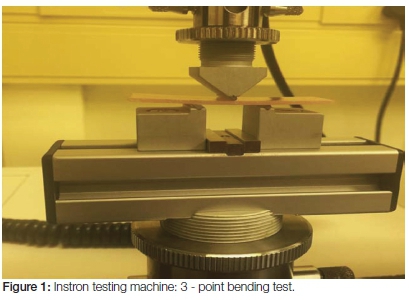
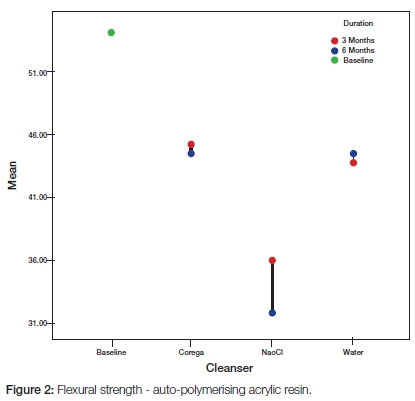
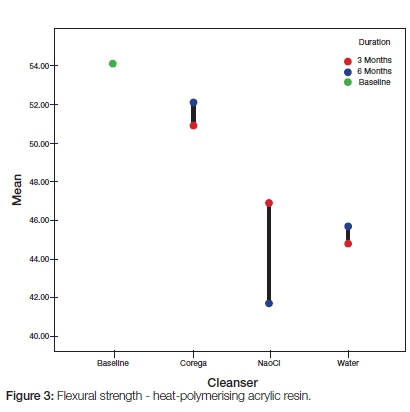
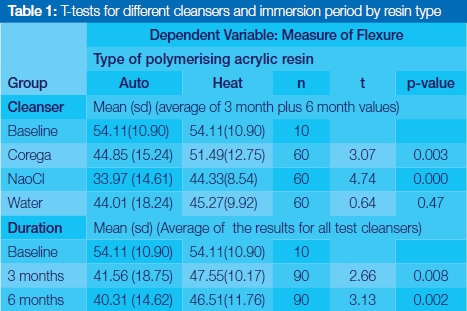
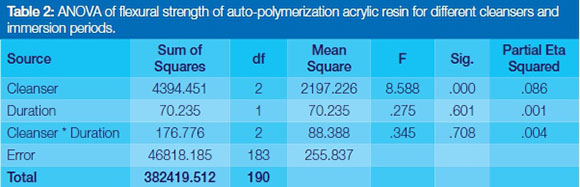
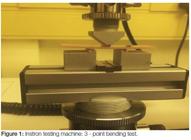
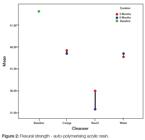
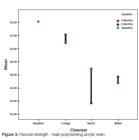
AIM: To compare the flexural strengths of two types of acrylic resins after immersion in three different denture cleansers, for two different time periods. MATERIALS AND METHODS: 380 rectangular acrylic resin specimens (60mm x 20mm x 2mm) were fabricated and divided into three groups. Group 1 - baseline, ten of each type of acrylic resin; Group 2 - heat-polymerizing, 180 specimens, and Group 3 - auto-polymerizing, 180 specimens. Random samples of 30 specimens from Groups 2 and 3 were severally immersed in three different liquids: two denture cleansers i.e. alkaline peroxide- based (Corega) and sodium hypochloride- based (Jik), and tap water. Immersion time of six hours was taken to represent one day, hence, three and six months of continuous immersion represent one year and two years realtime, respectively. Flexural strengths were determined before, then after the three and six month periods. A two-way analysis of variance (SPSS version 23.0© (IBM USA) determined any statistical differences between the recorded flexural strengths. RESULTS: Sodium hypochloride decreased flexural strength for both polymethylmethacrylate resins. Water reduced flexural strength of the heat-polymerizing resin. The alkaline peroxide cleaner had no impact on flexural strength. CONCLUSION: Flexural strength of heat-polymerizing acrylic resin can be significantly reduced by exposure to denture cleansers.
flexural strength; heat-polymerizing acrylic resin; self; polymerizing acrylic resin
 Thumbnail
 Thumbnail
 Thumbnail