Comparison of accuracy of digital and conventional radiographies in determining endodontic working length
Abstract
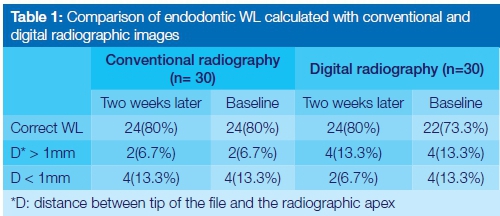
INTRODUCTION: Determination of the length of the root canal is a critical step in endodontic therapy. Recently, digital radiography has been introduced for this purpose because it may have advantages over conventional radiographic methods. This study aimed to compare the accuracy of digital and conventional radiographic techniques in the determination of the endodontic working length (WL). MATERIALS AND METHODS: Sixty single-rooted premolar human teeth were selected for this study. The teeth were randomly divided into two groups. The WL determination in groups 1 and 2 was carried out using, respectively, digital and conventional radiographic techniques. The procedure was performed by a single operator on two separate occasions, two weeks apart. RESULTS: The differences in WL measured at the two intra observer intervals was statistically significant neither in digital nor in conventional radiography method (P>0.05). The analysis of the data using a X2 test revealed that there were no significant differences in WL measurements between digital and conventional radiographic methods at any interval (P>0.05). CONCLUSION: Based on the findings of this study, it may be assumed that the digital and conventional radiographic techniques have similar accuracies in the determination of WL.
conventional radiography; digital radiography; endodontic working length