Physiotherapeutic approach in Dentistry (Trismus) - A case Study
Abstract
Trismus, characterized by limited mouth opening, is a condition rather than a standalone disease. It can pose challenges to eating, hinder oral hygiene, limit access for essential dental procedures, and have negative impacts on speech and facial appearance. In a recent case, a 42-year-old male experienced trismus due to submucosal fibrosis, infection, and direct trauma to the temporomandibular joint. Conservative treatment, involving ultrasound therapy, stretching, and mobilization, was administered. Remarkably, the patient experienced significant relief within just two weeks of treatment.
Trismus; Mobilization; Electrotherapy; tobacco; oral hygiene
INTRODUCTION
Trismus (lock jaw) is prolonged tetanic spasm of the jaw muscles. Causes can be trauma, neoplastic, neuromuscular, reactive, congenital, psychogenic and drug induced12221,3.
A case study is presented, illustrating electrotherapy, Stretching and mobilization approaches in treating a patient with trismus caused by oral submucosal fibrosis, infection, tobacco use, and direct trauma to the temporomandibular joint. The treatment aimed to reduce pain, swelling, and restore oral cavity function.
Case Presentation
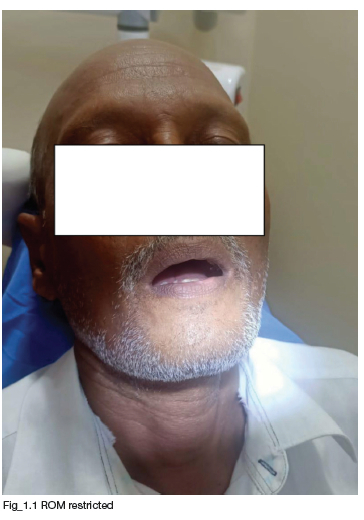
A 42 years old male patient came in Noida international institute of medical sciences with having pain in Oral cavity and difficulty in opening mouth due to this difficulty to chewing food. During examination Patient also found oral sub mucosal fibrosis, infection, and direct trauma to temporomandibular joint. He was referred to the Physiotherapy department of NIIMS. During taking history the patient informed that he chewing tobacco from 20yrs. Patient was complaining that right TMJ having severe pain since 8-10days condition is worsening and disrupt in daily activities such as eating, brushing etc. The patient was non-diabetic & non-hypertensive. By profession he was a driver. On examination Pain score was 8 as per Numeric pain rating Scale, pain aggravated during chewing and brushing and relieved at resting position of Mouth. Fibrous band was palpated in right side of his buccal mucosa. Three - knuckle test positive (only one knuckle is getting inserted into patient mouth) and Three finger test positive as ROM restricted.
PRE-TREATMENT ROM: -
Mandibular depression: 17 mm
Lateral excursion: ½ of depression
Protrusion: 4 mm
Retraction: 2 mm
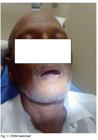
After examination treatment given as Cryotherapy 15 minutes after every session and ultrasound 8 minutes once a day and mobilize as procedure given below. Treatment Duration 15days
Active jaw stretching exercise
Step 1: Ask patient to hold his head and open mouth as wide as is comfortable for you. Hold it for 10 sec
Step 2: Move lower jaw to the left and hold it for three sec
Step 3: Move lower jaw to right and hold for three sacs
Step 4: Move lower jaw in a circle to the left.
Step 5: Move lower jaw in a circle to right
Step Ask patient to repeat these exercises for five times thrice a day:
Standard treatment evaluation by the Dental Service at Memorial Sloan Kettering Cancer Center.
Passive stretching exercises:
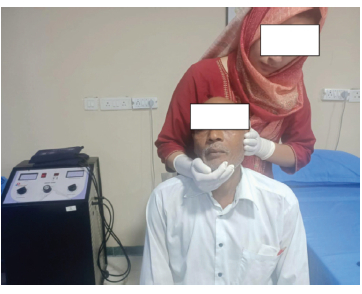
Step 1: put your (Therapist) thumb on top teeth in the middle of patient's jaw
Step 2: put index finger on bottom teeth in the middle of jaw
Step 3: open mouth as wide as possible, using therapist fingers to give extra resistance. Hold this stretches for 10 sec.
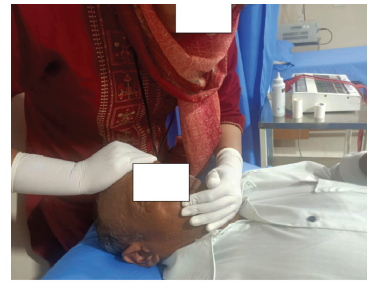
Anterior, lateral and inferior glides grade 1 and 2 were performed for 7 sessions and for 7 sessions of grade 3 and 4 were performed in 15 consecutive days for 10 minutes.
Result
POST TREATMENT RANGE OF MOTION
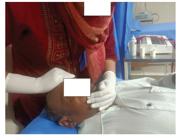
Depression: 45 mm
Lateral excursion: ¼ of depression
Protrusion: 6-9 mm
Retraction: 3mm
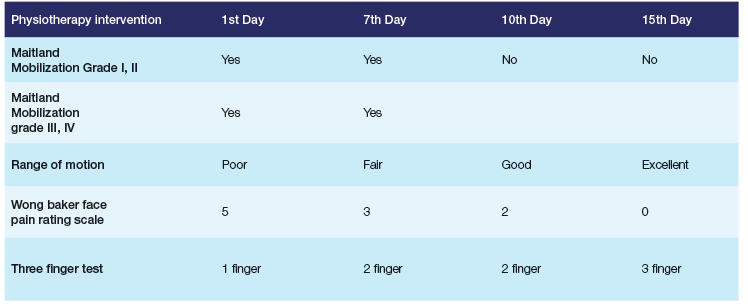
After 15 sessions of physiotherapy, the patient reported no pain during chewing food and experienced no difficulty in opening their mouth. The level of pain, measured using the Numeric Pain rating Scale (NPRS) and Wong baker face pain rating Scale was recorded as 0, indicating the absence of pain. Additionally, the range of motion (R.O.M) of the temporomandibular joint (T.M.J) was measured, showing a significant improvement. The positive outcome suggests that the physiotherapy intervention was successful in alleviating pain, improving jaw function, and enhancing the range of motion in the temporomandibular joint. This highlights the effectiveness of the physiotherapeutic approach in managing the patient's condition and restoring normal function to the jaw joint.
DISCUSSION AND CONCLUSION
The study reveals a significant improvement in temporomandibular dysfunction (trismus) following a 15-day physiotherapy treatment. Manual therapy was found to be more beneficial than medical treatment, successfully eliminating pain associated with trismus and demonstrating an overall enhancement in the patient's condition. The combination of ultrasound therapy and Maitland's mobilization was specifically employed to restore normal range of motion (ROM) in the temporomandibular joint (TMJ). The initial assessment on day one using the finger method indicated limited mouth opening, with only one finger insertable. However, by the 15th day of physiotherapy, remarkable progress was observed, as the finger method now allowed the insertion of three fingers into the patient's mouth without causing pain. This tangible improvement highlights the efficacy of the chosen physiotherapeutic interventions, particularly manual therapy and ultrasound therapy with Maitland's mobilization, in addressing trismus and restoring normal TMJ function. The study emphasizes the crucial role of physiotherapy in managing trismus, underscoring the importance of thorough assessment before intervention due to the diverse causes and varying signs and symptoms associated with the condition. This case study contributes to the discussion on the efficacy of Maitland mobilization, ultrasound therapy, and neck muscle stretching as components of physiotherapy for trismus treatment.
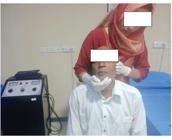
Additional research is warranted to establish the efficacy of physiotherapy in treating trismus, particularly through studies involving a substantial number of patients and diverse physiotherapy procedures. The need for more comprehensive investigations arises from the current gaps in understanding the full scope of physiotherapeutic interventions for trismus. Large-scale studies with varied treatment protocols can provide a more robust evidence base, allowing for a clearer assessment of the effectiveness of physiotherapy in addressing trismus. Such research endeavors would contribute valuable insights, guiding healthcare practitioners in optimizing physiotherapeutic approaches for individuals experiencing jaw-locking issues.
Conflict of interest: No
Funding: Nil
Ethical clearance: No. It is a case study only
REFERENCES
- 1. Sherazi, S. A. H. (2021). Physiotherapy in trismus. Rawal Medical Journal, 46(2), 488-488.
- 2. Siddiqui, H. K., Ikram, et al. (2018). Common causes of limited mouth opening and its management approach among dentists in Karachi. Baqai Journal of Health Sciences, 21.
- 3. APTA. Choose PT Guide. Physical Therapy Guide to Trismus. Revised by Jennifer Miller, Authored by Eric S. Furto, Created: May 11, 2011 Last Reviewed: January 08, 2016.
- 4. Siddiqui HK, Ikram K, siddiqi SH, Nazir A, shaikh M, Ahmad E, et al. (2018). common causes of limited mouth opening and its management approach among dentists in karachi. Baqai j Health sci; 21:40-8.
- 5. Goldestein M, Maxymiw WG, Cumming BJ, Wood RE (1999). The effects of antitumor Med oral Pathol oral Radiol Enfold, 88(3):365-273
- 6. Patrocinio LG, Patrocinio TG, Pacheco LG, Patrocinio JA (2008) sep. Trismus as the first manifestation of cholangiocarinoma. Med oral pathol oral cir Bucal 1, 13(9): E573-575
Dr. Nilofar Rasheed (MPT-Orthopedics)
ITS Institutre of health and Allied Sciences Ghaziabad Uttar Pradesh 203201
Email: