Teaching of Digital Workflow in the Removable Partial Denture Undergraduate Curriculum: A Scoping Review
Abstract
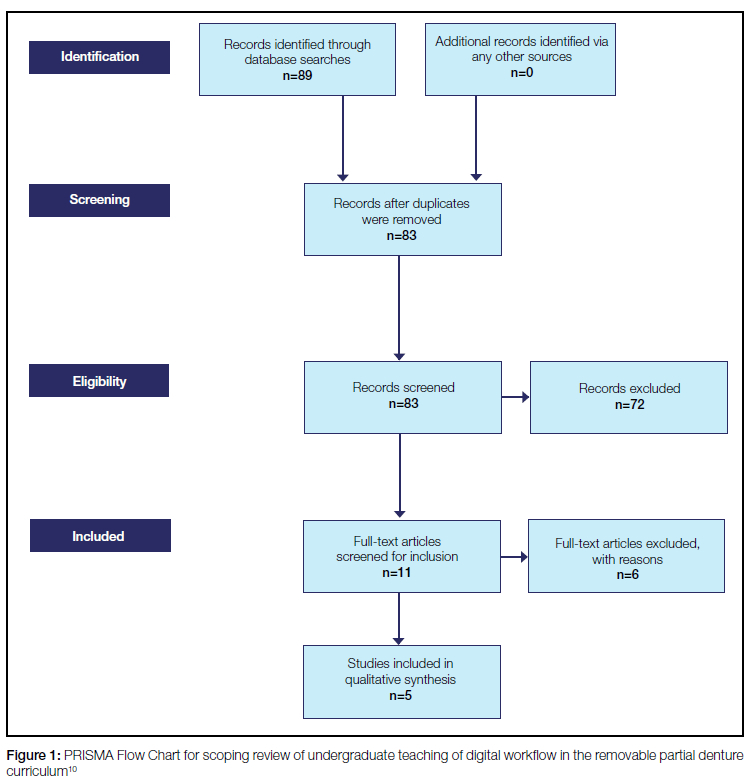
CONTEXT: Digital technology is a rapidly advancing field in dentistry and the implementation of digital workflow in the dental curriculum is a vital part of modern education. To ensure that dental graduates are equipped for independent practice in the digital era, dental curricula must adapt to incorporate these technologies. AIM: This scoping review explored the extent to which digital workflow is being implemented in the undergraduate removable partial denture (RPD) curriculum. METHODS AND MATERIALS: A study-specific protocol was developed in accordance with the criteria for conducting a scoping review. Ten electronic databases (Web of Science, ScienceDirect, Scopus, EBSCOhost, Wiley Online Library, PubMed, the Cochrane Library, Medline, Embase, and OpenGrey) were systematically searched for English-language, full-text articles published between 2020 and 2025 to include recent and relevant literature specifically addressing RPD education. Studies were screened based on specific inclusion and exclusion criteria, and relevant data were extracted for analysis. RESULTS: A database search yielded 89 articles. After removal of 6 duplicates, 83 articles remained and were screened by title and abstract, resulting in the exclusion of 72 articles. Eleven full-text articles were assessed for eligibility, of which 6 were excluded. Ultimately, five articles met the inclusion criteria and were included in the final review. Implementation occurred in preclinical and clinical training, with variations in depth and year-level exposure. Response rates varied from 25% to 85%, affecting generalisability. CONCLUSIONS: This scoping review identified limited evidence of the implementation of digital workflow within undergraduate RPD curricula. Given the small number of studies included, the findings reflect trends in the USA and MENA region and may not be generalisable to other contexts. A common theme across the studies was the identification of barriers to implementation, which included financial constraints, limited faculty training, and infrastructure limitations. Further research is required to determine current educational practices and support broader curriculum development.
undergraduate curriculum; digital workflow; dental education; removable partial dentures; CAD/CAM dentistry
INTRODUCTION
Removable partial dentures (RPDs) remain an important treatment modality in the management of partial edentulism, a condition characterised by the absence of one or more natural teeth.123
Despite significant advancements in digital dentistry, RPD teaching practices at many universities continue to rely predominantly on conventional workflows, with limited formal integration of digital technologies.456,7,8
Adoption of digital workflow and 3D printing technologies has increased considerably over the past decade.910,11,12
Digital workflow technologies may offer potential advantages in both clinical and educational contexts, including reduced laboratory procedures, decreased production time, and enhanced learning through interactive and visual teaching approaches.4,7,13 However, implementation challenges remain, including financial costs, infrastructure requirements, faculty training, and the rapid pace of technological development.5,14 These barriers contribute to variability in how digital workflow is incorporated into undergraduate dental curricula, particularly in the teaching of RPDs.
Although digital dentistry continues to expand rapidly, there is limited consolidated evidence describing the extent to which digital workflows are incorporated into undergraduate RPD education and how institutions are adapting to evolving clinical demands. This gap is particularly relevant within the South African context, where curriculum development must balance technological advancement with local resource considerations and public health priorities.
Therefore, this scoping review aimed to map the existing literature on the incorporation of digital workflow technologies within undergraduate RPD curricula, to describe how digital workflow is being taught, and to identify factors influencing its implementation. The findings are intended to provide evidence that may inform curriculum development in South African dental institutions, while acknowledging that direct application may not be possible due to difference in resources.
The review was guided by the question: Is digital workflow included in the undergraduate RPD curriculum?
METHODOLOGY
Study design and methodological framework
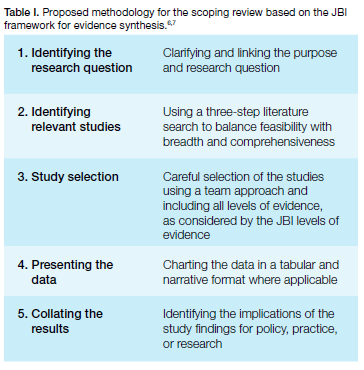
This study was conducted as a scoping review to explore the extent to which digital workflow technologies are integrated into undergraduate RPD curricula in dental education. The review was guided by the Joanna Briggs Institute (JBI) framework for evidence synthesis, which outlines a structured five-stage approach to scoping reviews. The JBI methodology was selected because it provides a rigorous framework for mapping emerging and heterogeneous literature and is particularly suited to reviews aiming to explore the breadth, nature, and characteristics of evidence rather than assess intervention effectiveness.6,7
The five stages of the JBI framework included: (1) identifying the research question; (2) identifying relevant studies; (3) study selection; (4) data charting and presentation; and (5) collating, summarising, and reporting the results (Table I).6,7
The review was reported in accordance with the Preferred Reporting Items for Systematic Reviews and Meta-Analyses extension for Scoping Reviews (PRISMA-ScR) guidelines.76,7
Three investigators (NA, FK, and RA) were involved in the conceptualisation and design of the review.
Research question
Following refinement of the research objectives, the review sought to explore the integration of digital workflow technologies within undergraduate RPD curricula in dental education, including the extent of implementation, teaching approaches, perceived benefits, and challenges associated with digital workflow adoption.
Eligibility criteria
Inclusion: This review focused on studies published in full-text English between 1 January 2020 and 1 January 2025. This period was selected to include recent and relevant literature specifically addressing the integration of digital workflow in undergraduate removable partial denture education, as earlier studies predominantly focused on fixed prosthodontics.
Exclusion: Studies were excluded if they focused on other dental disciplines, exclusively referenced postgraduate education, non-educational clinical applications, publications outside the specified date range, or non-English language articles.
Information sources and search strategy
A comprehensive search was conducted across ten electronic databases: Web of Science, ScienceDirect, Scopus, EBSCOhost, Wiley Online Library, PubMed, the Cochrane Library, Medline, Embase, and OpenGrey.
Key terms were combined using Boolean operators to maximise sensitivity and specificity. An example search strategy included:
("Removable Partial Dentures" OR "Removable Partial Prosthesis" OR "RPD" OR "Removable Dental Prosthesis" OR "Removable Prosthodontics") AND ("Dental Curriculum" OR "Prosthodontic Education" OR "Dental Education" OR "Clinical Dental Training" OR "RPD Education") AND ("3D Printing" OR "Digital Workflow" OR "CAD/CAM" OR "Digital Prosthodontics" OR "Digital Dental Education" OR "Digital Fabrication" OR "Digital Removable Prosthesis").
The search was limited to publications between 2020 and 2025 to ensure relevance of RPD-specific education.
Study selection
Two reviewers independently conducted the literature search and screening process according to predefined inclusion and exclusion criteria. Duplicate records were removed manually following database searches, with records reviewed to identify duplicates both within individual databases and across multiple databases prior to screening. Study selection was conducted in three stages: initial title screening, followed by abstract review, and subsequently full-text assessment for eligibility. Discrepancies between reviewers were resolved through discussion and consensus. A third reviewer acted as an adjudicator when agreement could not be reached; however, adjudication was not required.
Data extraction and charting
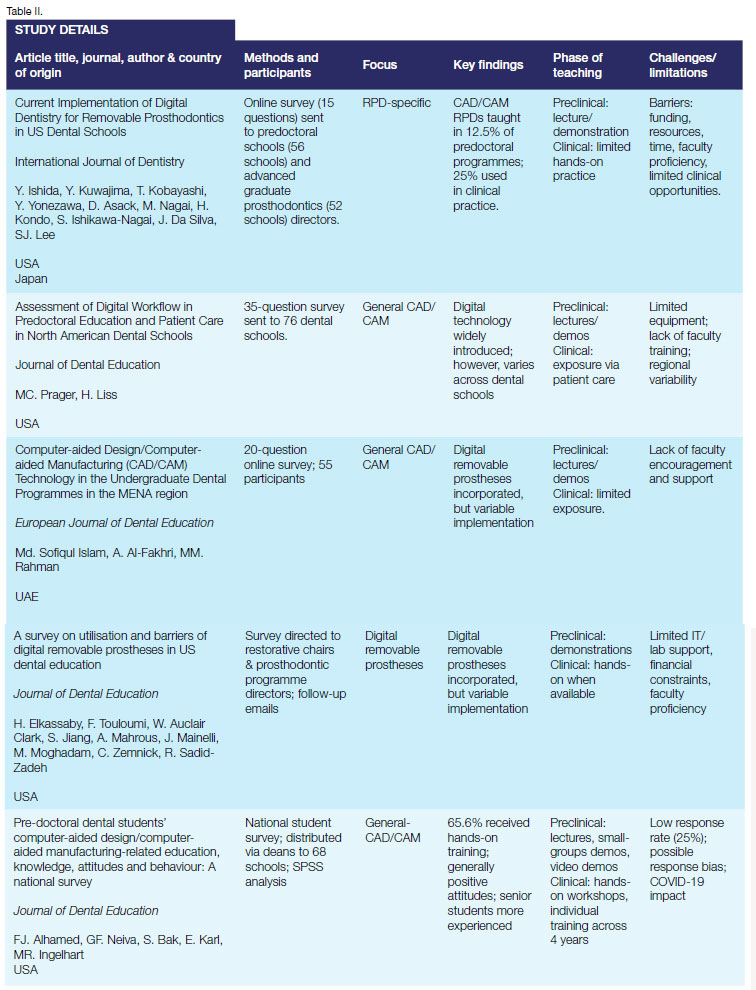
Data extraction was conducted independently by two reviewers using predefined data extraction criteria aligned with the objectives of the study. Extracted information included study characteristics, digital technologies utilised, educational approaches, key findings, phase of teaching and challenges/limitations.
Following independent extraction, reviewers met to compare findings and finalise extracted data through consensus. The third reviewer provided oversight where necessary.
Data analysis and presentation
The study selection process was documented using a PRISMA flow diagram (Fig. 1). Characteristics of included studies were analysed descriptively and synthesised narratively according to the objectives of the scoping review. Data was presented in tabular and narrative formats to provide an overview of digital workflow integration within undergraduate RPD education and to identify trends and gaps for dental curricula.
Results
The database search yielded a total of 89 records, of which 5 studies met the inclusion criteria following title, abstract, and full-text screening (Fig. 1). The included studies primarily consisted of survey-based research examining the implementation, teaching practices, and perceptions of digital workflow technologies in undergraduate dental education. Most of the included studies were conducted in the United States, with one study from the MENA region, reflecting a limited view of the growth of digital technologies in prosthodontic education.
Thematic synthesis of included studies
The five included studies were analysed thematically to explore patterns in the implementation and teaching of digital workflows within undergraduate RPD education. Thematic analysis identified five key areas: implementation of digital workflow for RPDs, extent of digital workflow teaching, response rates, emerging trends, and barriers to implementation.
RPD-specific Digital Workflow Implementation
Across the included studies, the implementation of digital workflow specifically for RPDs within undergraduate dental education was limited and inconsistent across institutions. Ishida et al.15
The remaining studies primarily focused on general CAD/CAM education rather than RPD-specific applications. Elkassaby et al.781314
Extent of digital workflow teaching
The included studies reported the incorporation of digital workflow into undergraduate dental education, within both preclinical and clinical training environments. However, the consistency and extent varied widely.
• Preclinical training: lectures, video demonstrations, small-group demonstrations.
• Clinical training: hands-on workshops, patient-based application.
Only Ishida et al.15
Response rates
Where reported, the response rates to the surveys varied considerably. Alhamed et al. reported a response rate of 25% while Elkassaby et al. reported an 85% response rate; this variability may influence the reliability and generalisability of the findings.
Trends in current digital workflow integration
Current trends demonstrate a gradual increase in the inclusion of digital dentistry, particularly CAD/CAM technologies, within undergraduate dental curricula. All studies reported some degree of exposure to digital scanning and manufacturing; however, access, type of training and implementation varied significantly across institutions and geographic regions.
Barriers to digital workflow implementation
Several recurring barriers to the integration of digital workflow technologies were identified across the studies. Financial constraints associated with equipment acquisition and maintenance were among the most frequently reported challenges.7,14 Limited faculty proficiency and insufficient training were also commonly cited as barriers to effective curriculum implementation.8,13 Additionally, shortages of adequately trained IT and laboratory personnel were reported as operational challenges.613
DISCUSSION
This scoping review explored the extent to which digital workflow technologies are integrated into undergraduate removable partial denture (RPD) education.
The findings indicate that while digital workflow is increasingly recognised as important in dental education, its implementation within RPD education remains limited and inconsistent. For example, Ishida et al. reported that only 12.5% of predoctoral programmes formally taught CAD/CAM fabrication techniques, with digital RPDs used clinically in only 25% of programmes. Similarly, Elkassaby et al. reported that a group of institutions had not implemented any form of digital RPD utilisation, highlighting the uneven adoption of these technologies.
Across the included studies, digital workflow was most introduced through preclinical and clinical training; however, the extent of integration and opportunities for hands-on learning differed considerably between the institutions. While Alhamed et al. reported that 65.6% of students had received hands-on CAD/CAM exposure and generally demonstrated positive attitudes toward digital technologies, these findings were derived from a single national survey study and were not specific to RPD fabrication. This reinforces the finding that exposure to digital workflow does not necessarily translate into structured RPD-specific training.
A key finding was the disconnect between the identification of digital dentistry as an essential component of modern practice and its practical inclusion within undergraduate RPD education. Although students and faculty members generally reported exposure to CAD/CAM technologies and digital design principles, formal training specific to digital RPD fabrication remained limited. This suggests that while digital dentistry is being introduced broadly within curricula, its application within removable prosthodontics is still developing. Compared to fixed prosthodontics, where CAD/CAM integration is more widespread, RPD-specific digital training appears to lag, potentially due to differences in resource availability and faculty familiarity. Although direct comparisons were not evaluated within this study, the lower reported rates of RPD-specific integration support this interpretation.
The included studies also highlighted common implementation approaches, including didactic teaching, small group demonstrations, and clinical exposure. However, the variability observed across institutions, including differences in reported equipment availability, faculty proficiency, and laboratory support, suggests that implementation is largely dependent on institutional resources rather than standardised curriculum requirements. For example, Ishida et al. and Prager and Liss identified funding and faculty training limitations as major barriers, while Elkassaby et al. highlighted insufficient IT and laboratory support. The MENA-region study further highlighted limited faculty encouragement as a major barrier.
It is important to note that none of the included studies reported clear accreditation requirements for digital RPD training. The absence of accreditation standards may contribute to differences in curriculum design and student exposure to digital RPD training. Establishing clear guidelines may help institutions implement more consistent digital workflow training, ensuring dental graduates are adequately prepared for private practice.
Several recurring barriers were identified across the studies. Financial constraints associated with equipment acquisition and maintenance were among the most frequently reported challenges. Limited faculty training and confidence in digital technologies were also commonly cited, emphasising the need for professional development initiatives to support curriculum transformation. Operational challenges, including insufficient IT and laboratory support, as well as time limitations within already dense curricula, further restricted integration efforts. Furthermore, the reliance on survey-based evidence indicates that much of the current understanding of digital workflow education is based on institutional self-report rather than objective curriculum evaluation.
Despite these challenges, attitudes towards digital workflow technologies were generally positive among students and faculty, with recognition of their relevance to contemporary dental practice. However, a gap remains between institutional support for digital innovation and its consistent delivery within undergraduate programmes. This highlights the need for structured curriculum planning that balances foundational prosthodontic principles with evolving technological competencies.
LIMITATIONSThe findings of this review should be interpreted considering certain limitations.
First, the small number of included studies, all of which were survey-based, limits the depth and strength of available evidence.
Second, the included studies demonstrated substantial differences in study design, response rates, participant groups and terminology used to describe digital workflow, making direct comparisons across the studies difficult.
Third, the review was restricted to English-language publications within a defined time frame. This date range was selected to report on current literature specific to digital workflow in removable prosthodontics, as earlier studies predominantly focused on fixed prosthodontics. However, relevant studies published outside of this timeframe or in other languages may have been excluded.
Fourth, no formal quality assessment of the included studies was performed. Due to this study being a scoping review, the focus was on reporting available evidence rather than evaluating study quality.
Finally, most of the studies focused on findings in the USA, with only one study conducted in the MENA region. Therefore, the findings reflect experiences in those regions and may not be generalise to other countries, including South Africa, where differences in resources may influence the integration of digital workflow technologies.
Finally, several studies reported low response rates, therefore limiting generalisability.
RECOMMENDATIONSFuture research should focus on evaluating educational outcomes associated with digital workflow training in removable prosthodontics and developing standardised frameworks for integrating digital technologies into undergraduate curricula. Longitudinal and mixed-methods studies would provide valuable insight into how digital workflow education influences clinical competence and graduate readiness.
Overall, while digital workflow is increasingly recognised as an essential component of contemporary prosthodontic education, its integration into undergraduate RPD curricula remains uneven. The findings suggest that addressing barriers related to infrastructure, faculty training, and curriculum design may be necessary to ensure that graduates are equipped with the skills required for modern dental practice.
CONCLUSION
This scoping review aimed to explore the extent to which digital workflow is implemented in the undergraduate RPD curriculum.
The findings suggest that while digital workflow is being introduced within undergraduate programmes, structured RPD-specific digital workflow training remains limited and inconsistently implemented. Evidence from the included studies indicates that exposure to CAD/CAM systems does not necessarily indicate that there is formal training in digital RPD fabrication. Implementation is largely dependent on institutional resources, including faculty expertise and infrastructure availability. Overall, the current literature reflects growing recognition of the importance of incorporating digital workflows into prosthodontic education; however, there is uneven integration within the undergraduate RPD curriculum. These findings highlight the need for increased attention to be given to the role of digital technologies in removable prosthodontic education.
AUTHOR CONTRIBUTIONSConceptualisation: RA
Conceived and designed the Protocol: RA
Completed the searches using a well-formulated strategy: NA, FK, RA.
Study Eligibility and Data Extraction Completed: NA, FK, RA.
Manuscript Writing: NA, FK. RM
Edited Drafts: NA, FK, RA, RM. Final Draft Check: NA, FK, RA, RM.
REFERENCES
-
1. Manandhar P, Ranjit R, Tuladhar SL, Bhandari A. Prevalence of partial edentulism among patients visiting a tertiary health care center in the Western Region, Nepal. J Gandaki Med Coll Nepal. 2021; 14: 93-9. https://doi.org/10.3126/jgmcn.v14i2.38719
» https://doi.org/10.3126/jgmcn.v14i2.38719 -
2. Kim JJ. Revisiting the removable partial denture. Dent Clin North Am. 2019; 63: 263-78. https://doi.org/10.1016/j.cden.2018.11.007
» https://doi.org/10.1016/j.cden.2018.11.007 -
3. Office for Health Improvement & Disparities (2025) Adult Oral Health Survey 2023: Clinical Oral Health. GOV.UK. Available at: https://www.gov.uk/government/statistics/adult-oral-health-survey-2023/clinical-oral-health (Accessed: 10 February 2026).
» https://www.gov.uk/government/statistics/adult-oral-health-survey-2023/clinical-oral-health - 4. Mahrous A, El-Kerdani T. Teaching the design and fabrication of RPD frameworks with a digital workflow: a preclinical dental exercise. MedEdPORTAL. 2020; 16: 1041-5.
-
5. Fernandez MA, Nimmo A, Behar-Horenstein LS. Digital denture fabrication in pre- and postdoctoral education: a survey of U.S. dental schools. J Prosthodont. 2016; 25: 83-90. https://doi.org/10.1111/jopr.12287
» https://doi.org/10.1111/jopr.12287 -
6. Daood U, Sidhu P, Jamayet N, et al. Current and future trends in the teaching of removable partial dentures in dental schools in Malaysia: a cross-sectional study. J Dent. 2022; 124: 104225. https://doi.org/10.1016/j.jdent.2022.104225
» https://doi.org/10.1016/j.jdent.2022.104225 - 7. Elkassaby H, Touloumi F, Auclair W, Jiang S, Mahrous A, Mainelli. A survey on utilization and barriers of digital removable partial prostheses in US dental education. J Dent Educ. 2023; 87: 1746-53.
- 8. Prager M, Liss H. Assessment of digital workflow in predoctoral education and patient care in North American dental schools. J Dent Educ. 2020; 84: 350-7.
-
9. Pillai S, Upadhyay A, Khayambashi P, et al. Dental 3D-printing: transferring art from the laboratories to the clinics. Polymers (Basil). 2021; 13: 1-25. https://doi.org/10.3390/polym13010157
» https://doi.org/10.3390/polym13010157 -
10. Almufleh B, Arellano A, Tamimi F. Patient-reported outcomes and framework fit accuracy of removable partial dentures fabricated using digital techniques: a systematic review and meta-analysis. J Prosthodont. 2023; 33: 626-36. https://doi.org/10.1111/jopr.13786
» https://doi.org/10.1111/jopr.13786 -
11. Schlenz MA, Michel K, Wegner K, Schmidt A, Rehmann P, Wöstmann B. Undergraduate dental students' perspective on the implementation of digital dentistry in the preclinical curriculum: a questionnaire survey. BMC Oral Health. 2020; 20: 1-10. https://doi.org/10.1186/s12903-020-01071-0
» https://doi.org/10.1186/s12903-020-01071-0 -
12. McGleenon EL, Morison S. Preparing dental students for independent practice: a scoping review of methods and trends in undergraduate clinical skills teaching in the UK and Ireland. Br Dent J. 2021; 230: 39-45. https://doi.org/10.1038/s41415-020-2505-7
» https://doi.org/10.1038/s41415-020-2505-7 - 13. Islam MS, Al-Fakhri, Rahman MM. Computer aided design/computer aided manufacturing (CAD/CAM) technology in the undergraduate dental programs in the MENA region. Eur J Dent Educ. 2024; 28: 142-7.
- 14. Alhamed FJ, Neiv GF, Bak S, Karl E. Pre-doctoral dental students' computer-aided design/computer-aided manufacturing-related education, knowledge, attitudes and behaviour: a national survey. J Dent Educ. 2023; 87: 562-71.
-
15. Ishida Y, Kuwajima Y, Kobayashi T, Yonezawa Y, Asack D, Nagai M. Current implementation of digital dentistry for removable prosthodontics in US dental schools. Int J Dent. 2022; 2022: 7331185. https://doi.org/10.1155/2022/7331185
» https://doi.org/10.1155/2022/7331185
Nabeelah Abdurahman
Address: University of Western Cape, Francie van Zijl Drive, Bellville, South Africa, 7505.
Phone number: +27662911112; Email address:

Contribution Statement:
Copyright and originality statement: The authors declare that the manuscript is original, has not been previously published and does not infringe on any copyrights.
Declaration of authorship: We hereby declare that each author listed above has made significant contributions to the article.
Declaration of conflict of interest: The authors have no conflict of interest to declare.