Relationship between cranial base flexure and sagittal jaw relationships
Abstract
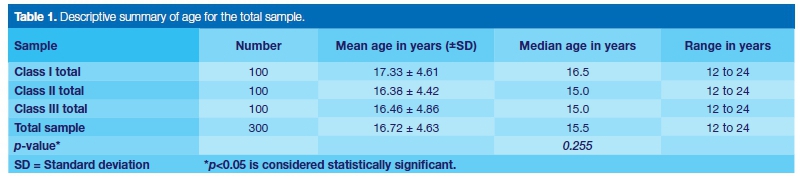
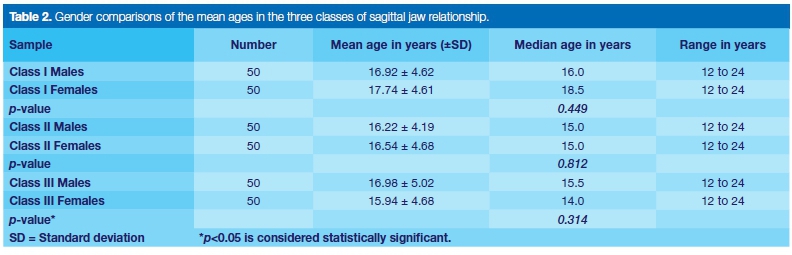
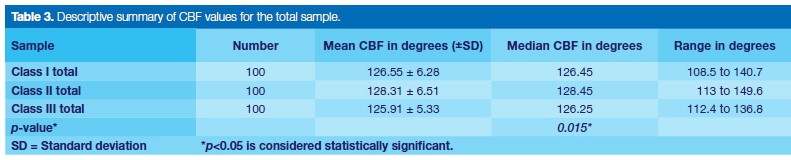
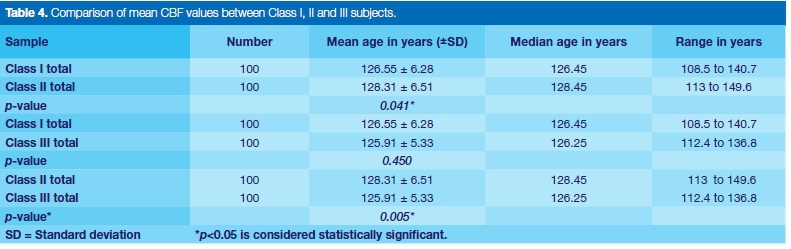
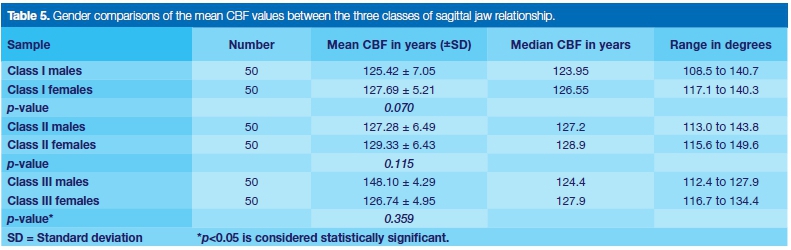
INTRODUCTION: Flexure of the cranial base plays a crucial role in the study of the craniofacial complex. The outcome of orthodontic treatment can be predicted if growth and flexure of the cranial base is understood. AIM: The aim of this study was to determine the relationship between cranial base flexure and sagittal jaw relationships in a sample of Black South African subjects. METHODOLOGY: A sample of pre-treatment lateral cephalograms of 300 patients with a mean age of 17.72 years was divided into three equal groups according to gender and skeletal classification. Age differences were tested using the Kruskal-Wallis test. Cranial base flexure differences were first tested using ANOVA and further evaluated using Student's f-test. RESULTS: Age distribution was similar in all three in all classes of sagittal jaw relationship. Class II subjects demonstrated a significantly larger cranial base flexure when compared with Class I and Class III subjects respectively. CONCLUSION: In this study sample, a larger cranial base flexure is a feature of Class II sagittal jaw relationship whilst both Class I and Class III sagittal jaw relationships are associated with smaller cranial base flexures. There were no significant differences between the Class I and Class III sagittal jaw relationship samples.
Cranial base flexure; skeletal classification; sagittal jaw relationship
 Thumbnail
 Thumbnail