Xerostomia and salivary flow rates in HIV patients
Abstract
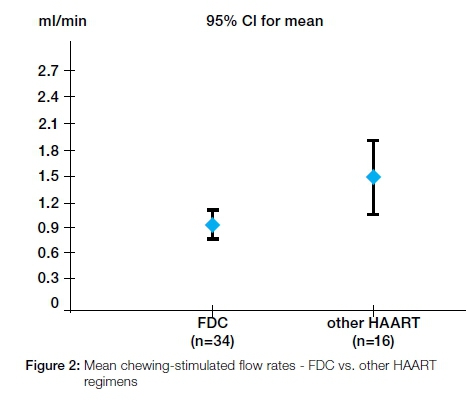
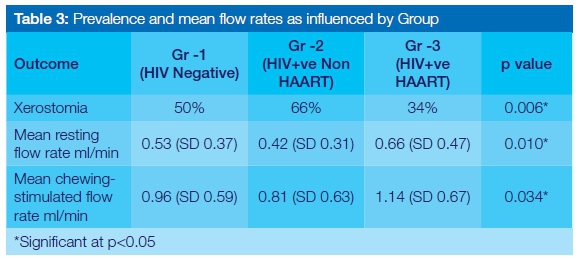
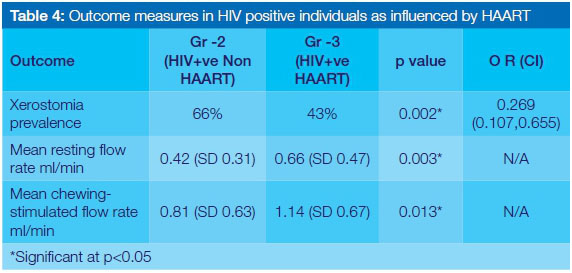
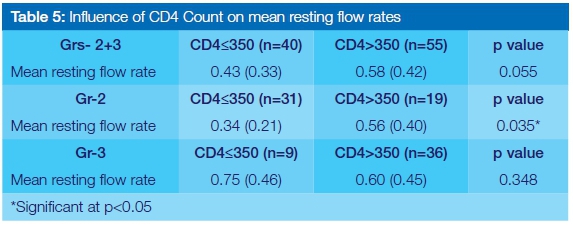
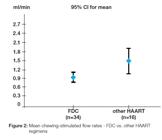
INTRODUCTION: Whilst the incidence of oral manifestations in HIV infected patients has decreased with the advent of highly active antiretroviral therapy (HAART), salivary gland disease is reported to be increasing among those on this treatment regime. AIMS AND OBJECTIVES: To compare the prevalence of xerostomia and mean salivary flow rates in three groups: HIV negative (Gr-1), HIV positive but not on HAART (Gr-2) and HIV positive on HAART (Gr-3). DESIGN: A cross sectional analytical study. METHODS: Xerostomia was assessed using a questionnaire. Saliva was collected and flow rates established. CD4 counts, viral loads and HAART regimens were recorded where appropriate. RESULTS: Significant differences were observed between the groups regarding the prevalence of xerostomia (p=0.006), mean resting (p=0.010) and stimulated (p=0.034), salivary flow rates. Gr-2 showed the greatest salivary deficiency. Salivary flow was not decreased by HAART. Levels of CD4 <350 were linked to low resting flow rates in Gr-2. In Gr-3, patients on fixed dose combination (FDC) showed a significantly lower stimulated flow rate (p=0.034) than those on other HAART regimens. CONCLUSION: HIV positive patients not on HAART are more vulnerable to decreased salivary flow rates. HAART did not adversely affect xerostomia or salivary flow rates in this population group.
 Thumbnail
 Thumbnail