Evaluation of association between self-reported harmful Oral Habits and the Temporomandibular joint Disorders (TMD) amongst oral hygiene students
Abstract
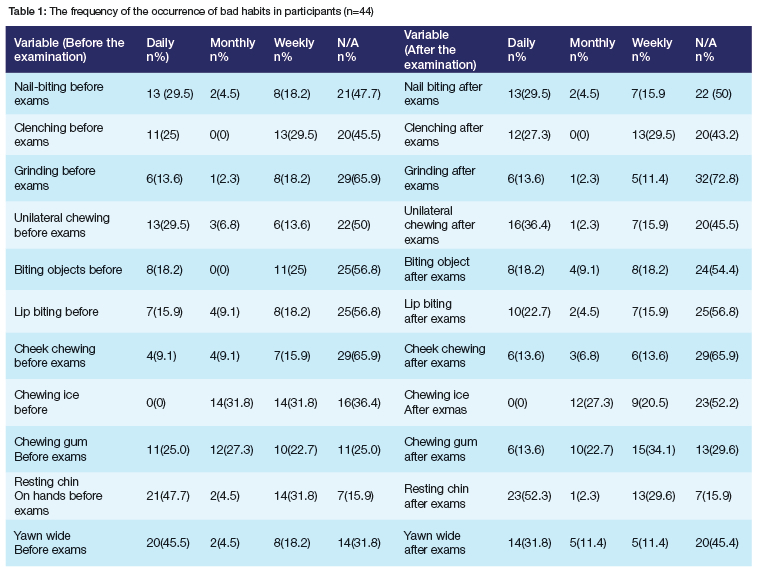
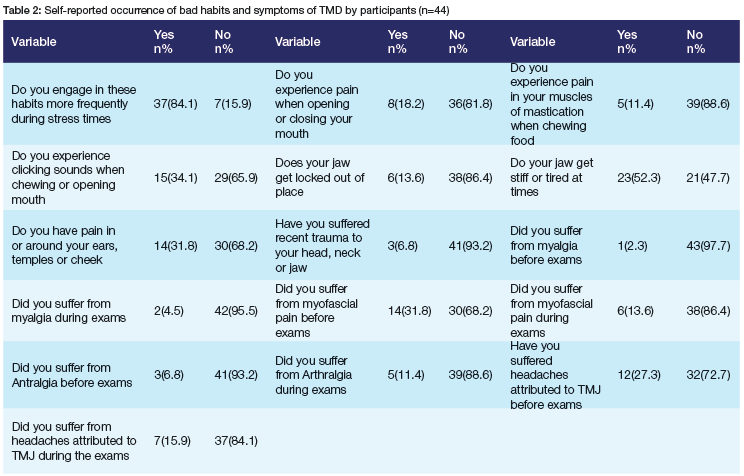
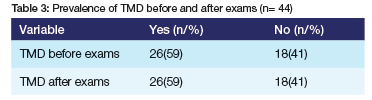
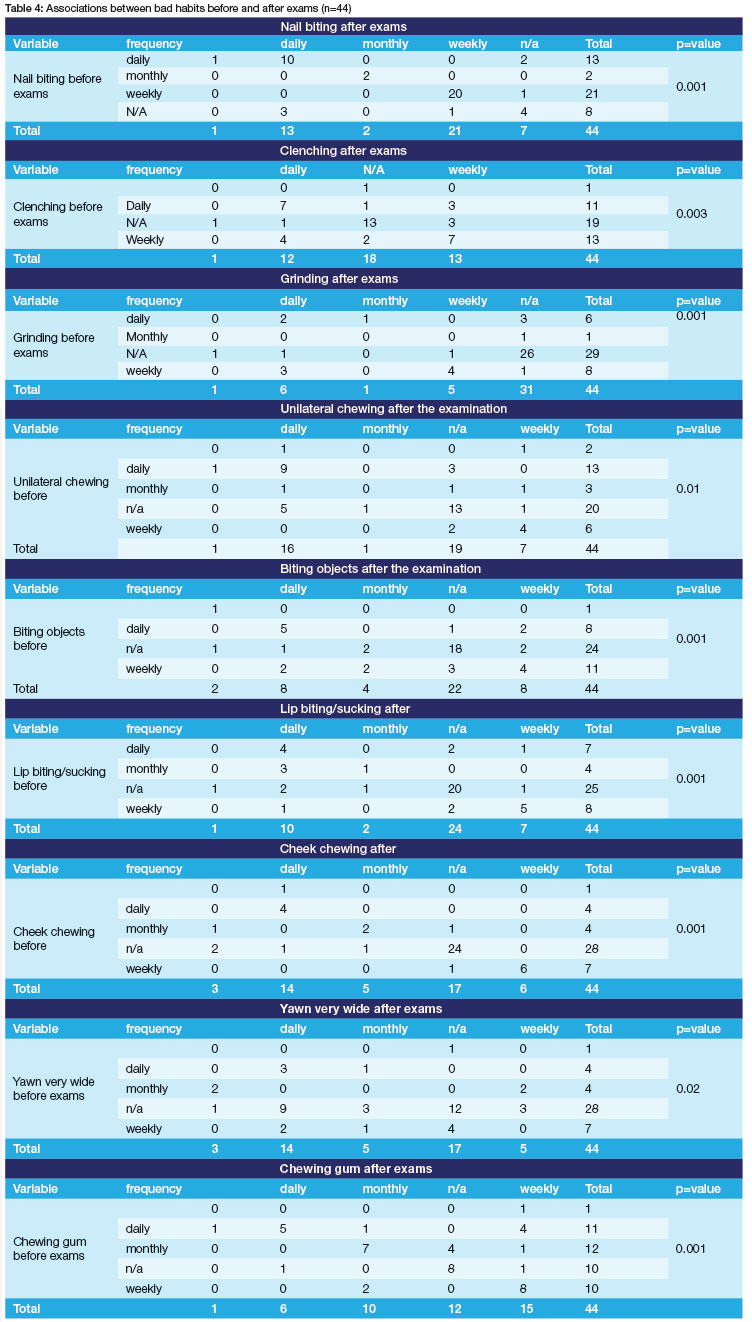
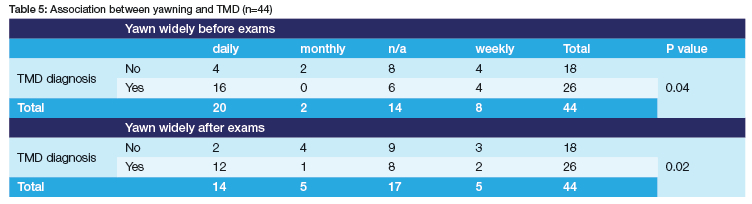
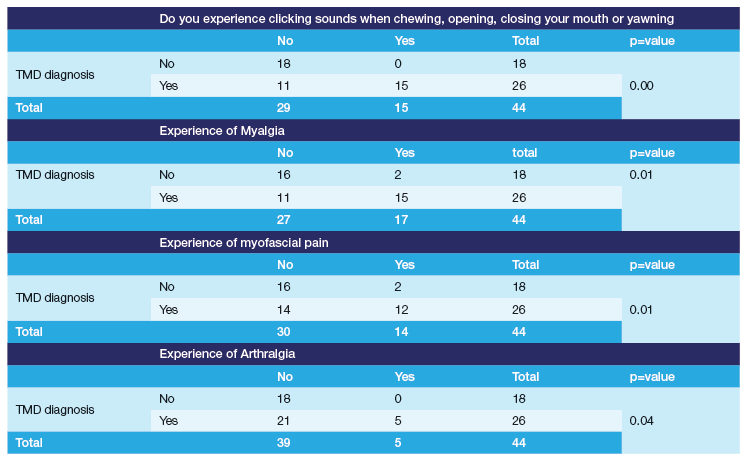
INTRODUCTION: Engagement in harmful oral habits is one of the biggest initiating factors of Temporomandibular disorder (TMD) related signs and symptoms among individuals. University students are particularly at risk for developing TMD often due to a higher degree of engagement in harmful oral habits due to writing of examinations. The purpose of the study was to determine the association between self-reported harmful oral habits and the TMD related signs and symptoms amongst oral hygiene students at a training institution. METHODS: A cross-sectional analytic survey was carried out. A pretested-validated modified self-administered questionnaire about the engagement in oral habits that may be harmful to the Temporomandibular joint (TMJ) and the experience of TMD related symptoms was distributed to all oral hygiene students and additionally a clinical examination of the TMJ was performed to assess for signs and symptoms of TMD. Data analysis was done with SPSS version 30. Quantitative variables were summarised as proportions, frequencies, mean with standard deviations, ranges and percentages. Chi square test was used to evaluate the association between variables with the level of significance set at p≤ 0.05. RESULTS: The study had a response rate of 95.6% with ages ranging from 18 to 28 with the mean age of 20.6 (SD=1.97) Majority (84%) of the participants were female. Most 37 (84%) students had bad habits such as nail biting, chewing gum, resting chin on hands, cheek chewing, lip biting, clenching their teeth. Significantly more participants participated in these bad habits after exams than before exams, p=0.001. More than half (52.3%) reported to have a stiff/tired jaw, 31% had myofacial pain and 27.3% suffered headaches attributed to the TMJ before exams. The prevalence of TMD was found to be 59%. CONCLUSIONS: Most students had bad habits and the occurrence of this were done daily in many cases, as well as weekly and they were observed after and before exams suggesting that the habits could be seen to be increased during stressful times. The prevalence of TMD was higher than in many studies.
Temporomandibular disorder; Temporomandibular joint; harmful oral habits