Trends in the seasonal variation of dry socket at Medunsa Oral Health Centre
Abstract
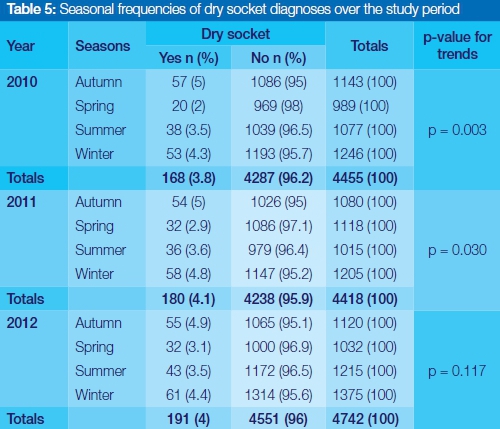
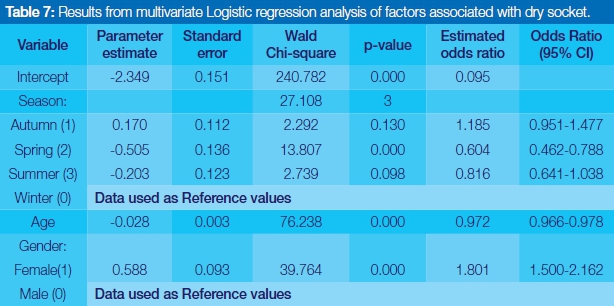
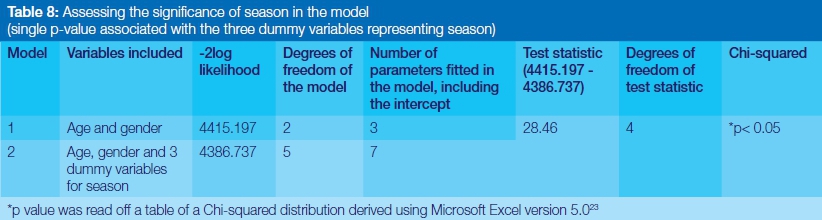
INTRODUCTION: The multifactorial aetiology of dry socket is firmly established. A probable seasonal variation was recently explored - the results indicated a significantly lower risk in spring. AIMS AND OBJECTIVES: This study sought to further explore the hypothesis of seasonal variation by describing trends in the occurrence of dry socket over three years at Medunsa Oral Health Centre. DESIGN: This was a repeated cross sectional analytical study in which existing medical records were reviewed. METHODS: Treatment records of 13615 adult patients who underwent routine tooth/teeth extraction(s) between January 2010 and December 2012 were reviewed. Data related to demographic characteristics, date of extraction, and diagnosis of dry socket were acquired. Dry socket odds were calculated. A Chi-squared test for trend was performed. RESULTS: Females accounted for 66.4% of the dry socket cases. The mean age of the occurrence of dry socket was 36 years (SD 11years). The risk for dry socket was lowest during spring (September - November) throughout the years 2010 to 2012. Statistically significant seasonal variation was found in the years 2010 and 2011. Other significant risk factors included younger age and female gender. CONCLUSIONS: The findings suggest a seasonal variation in the risk of dry socket.