Radiographic methods: The way forward in age estimation in the Western Cape, South Africa
Abstract
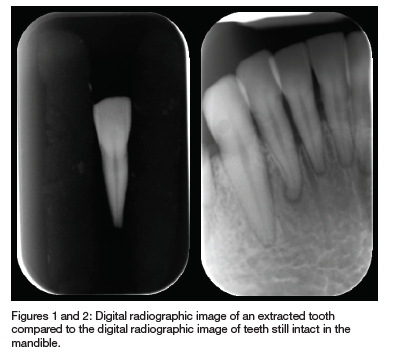
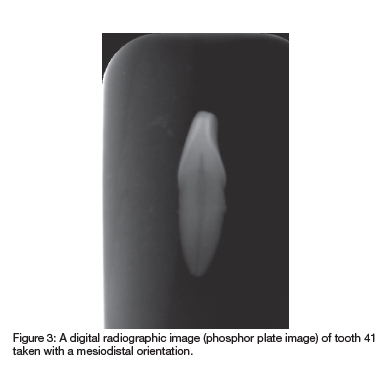
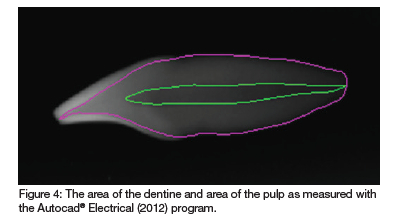
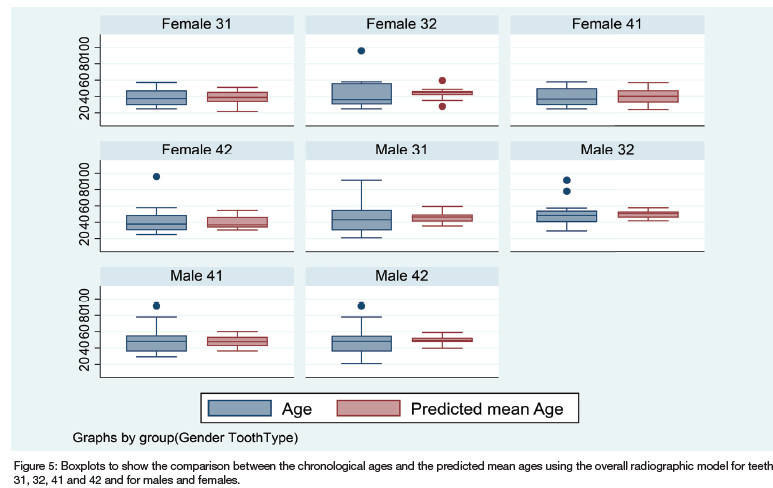
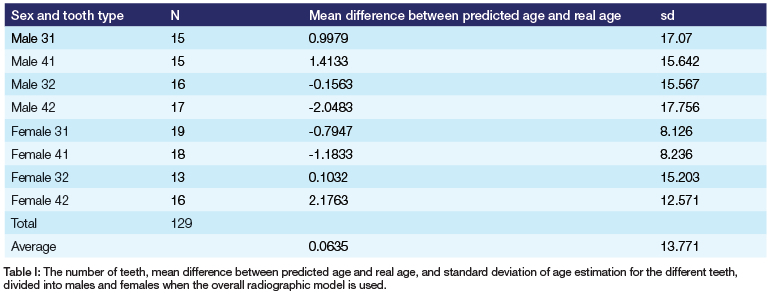
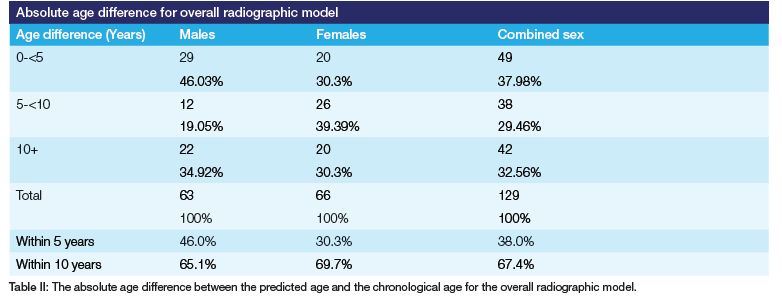
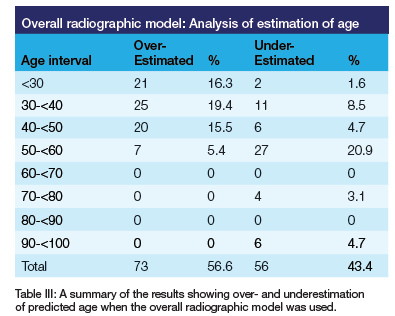
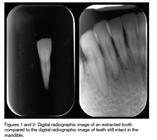
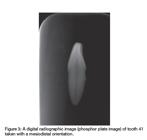
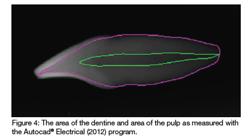
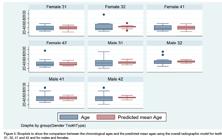
INTRODUCTION: Age assessment of human remains is essential in forensic and anthropological settings, based on age-related alterations in bones and teeth. Teeth are crucial for identification, especially in decayed or charred corpses. Gustafson's approach, frequently employed in the Western Cape, South Africa, has demonstrated inaccuracies among the local population. AIMS AND OBJECTIVES: The study aimed to provide a more accurate and easy-to-use approach for estimating the dental age of adults. The goals were to calculate pulp-to-dentine size ratios from periapical radiographs and to establish their relationship with chronological age. DESIGN AND METHODS: The study performed radiographic measurements on 74 mandibular central incisors and 72 mandibular lateral incisors from 45 cadavers aged 21-95 years, in both mesiodistal and buccolingual orientations. RESULTS: Stronger relationships were seen between measurements in buccolingual-orientated radiographs and age than in mesiodistal ones. This novel strategy was found to be superior when compared with Gustafson's method. CONCLUSION: This method demonstrates superior accuracy in estimating the age of the tooth samples compared to Gustafson's method. This development has the potential to have a major impact on forensic and anthropological practices, especially in populations where Gustafson's method has proven to be inadequate.
Forensic dentistry; dental age estimation; teeth
 Thumbnail
 Thumbnail
 Thumbnail
 Thumbnail