Policy Analysis of South Africa's National Oral Health Policy and Strategy (2024-2034)
Abstract
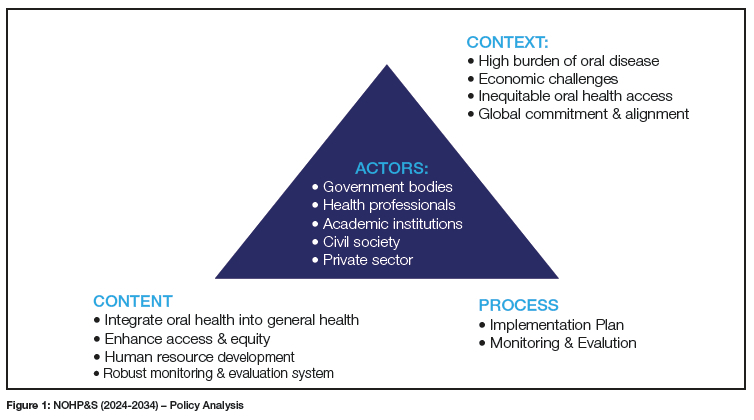
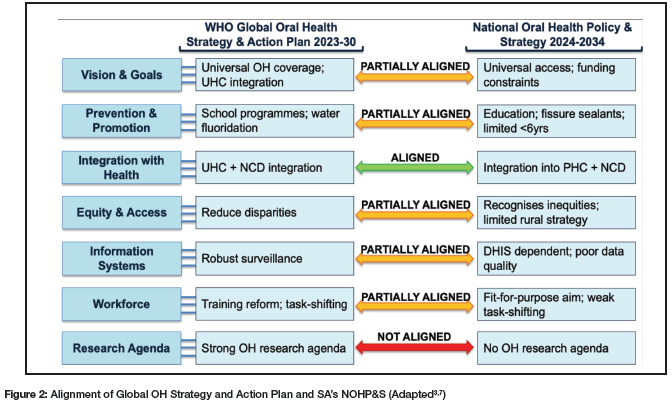
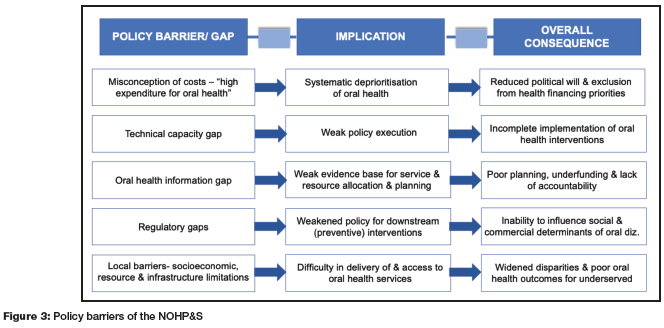
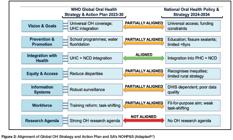
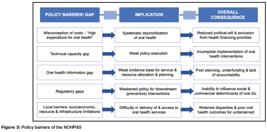
South Africa (SA) faces a mounting OH crisis shaped by apartheid-era inequities, a quadruple disease burden, workforce shortages, and chronic under-investment. This article presents an analysis of SA's National Oral Health Policy and Strategy (NOHP) 2024-2034 using the Walt and Gilson Policy Triangle Framework. The policy content, context, actors, and processes to assess alignment with global best practice and feasibility of implementation were examined. The NOHP demonstrates strong conceptual alignment with the WHO Global Strategy and Action Plan on Oral Health (2023-2030) and the Minamata Convention, with emphasis on prevention, integration into primary health care, universal health coverage, and environmental stewardship. However, significant gaps threaten translation into practice, including funding constraints, workforce maldistribution, weak service integration, the omission of a targeted early childhood caries prevention strategy, and surveillance shortcomings driven by limited indicators. Actor mapping highlights diffuse leadership and uneven coordination across government levels, with fragile NGO capacity and under-leveraged public-private partnerships. Process analysis indicates broadly framed strategies without operational detail, risking fragmented implementation and weak accountability. A pragmatic implementation roadmap anchored in policy-capacity assessment, strengthened monitoring and evaluation with quality, standardised outcome indicators, and investment in prevention-oriented services is proposed to catalyse sustainable improvements in population OH.
oral health policy; oral health equity; oral health strategy; workforce; governance
 Thumbnail
 Thumbnail
 Thumbnail