The relationship between oral candidiasis and micronutrient deficiency amongst adult tuberculosis patients in Alexandra, Johannesburg
Abstract
INTRODUCTION: Tuberculosis (TB), a major public health problem worldwide, is associated with micronutrient deficiency and wasting, and co-infections could worsen the condition AIM: To investigate the relationship between micronutrient deficiency and oral candidiasis in adult TB patients METHODS: A cross-sectional study among 88 TB adult patients in Alexandra, Johannesburg. Patients underwent a complete oral examination to establish the prevalence of candidiasis and blood was collected for the assessment of micronu-trient levels RESULTS: The mean age of participants was 36.66 years of age, the majority being female (60.23%) and HIV positive (69.30%). The prevalence of oral candidiasis was 39.77% with pseudomembranous being most common (48.00%). In those with micronutrient deficiencies, oral candidiasis was prevalent in 40% patients with Zinc deficiency, 25.00% with Vitamin A deficiency, 32.00% with Albumin deficiency, 33.00% with Selenium deficiency, 31.00% with Iron deficiency and in 36.00% with Vitamin D deficiency CONCLUSION: There was a significant association between the presence of oral candidiasis in TB/HIV co-infected patients and Zinc, Vitamin A and Vitamin D- deficiencies, but not in the TB only group
Tuberculosis; Human Immunodeficiency Virus; Oral Candidiasis; Zinc; Iron; Albumin; Selenium; Vitamin A and Vitamin D micronutrient deficiency
INTRODUCTION
Mycobacterium tuberculosis (M. tuberculosis) is the most widespread bacterial pathogen in the world, infecting approximately two million people globally on an annual basis.1
Tuberculosis (TB) is a major public health problem in South Africa, with an estimated 450,000 cases of active TB in 2013.23
In South Africa, TB is associated with poverty, overcrowding, alcoholism, stress, drug addiction and malnutrition.4
Micronutrient deficiency leads to low energy levels, low immunity, higher rates of disability and chronic illness among affected populations.5
Those most at risk are children, pregnant and breastfeeding mothers, people living with HIV/AIDS (PLWA) and/or TB.6 7
These people are particularly vulnerable to extensively drug-resistant tuberculosis because of their increased susceptibility to infection through nosocomial transmission, malabsorption of TB medication, acquired rifampicin resistance and poor response to TB therapy.89
The most common oral candidiasis lesions are pseudomembranous candidiasis, erythematous candidiasis (oral candidiasis) and angular cheilitis.101112
Nutritional deficiencies of Vitamin B12, Zinc and Selenium in malnourished PLWA are associated with decreased immune indices and a higher risk for disease progression.7
Oral manifestations of nutritional deficiency include non-specific signs and symptoms that involve the mucous membranes, the teeth, the periodontal tissues, the salivary glands and the perioral skin.13
Oral candidiasis is one of the oral lesions strongly associated with manifestations of HIV/AIDS14151617
Opportunistic infections and co-infections that are common among HIV-infected individuals are TB, chronic diarrhoea, oral candidiasis, herpes simplex virus-2 (HSV-2), cytomegalovirus (CMV), hepatitis B virus (HBV) and hepatitis C virus (HCV).
The most common dual infections are chronic diarrhoea (CD) and oral candidiasis, oral candidiasis and TB, CD with TB, HSV-2 and oral candidiasis, HSV-2 and CMV, HBV and HSV-2, HBV and CMV. The least common dual infections are HCV and HBV.
The most common triple infections are oral candidiasis, TB and CD and HSV-2, CMV and CD.918
A comprehensive understanding of the existence of an association between oral candidiasis and malnutrition is important for prevention and for treatment interventions in TB patients.
This study sought to determine the relationship between oral candidiasis and micronutrient deficiency in adults with TB and TB/HIV co-infection, living in Alexandra, Johannesburg.
The objectives were: to determine the prevalence of oral candidiasis amongst TB patients and among TB/ HIV co-infected patients; to investigate the association between oral candidiasis and micronutrient status among TB patients and TB/HIV co-infected patients.
MATERIALS AND METHODS
Alexandra, in north eastern Johannesburg, South Africa, has a population of over half a million people living in an area of approximately two square kilometers, with high HIV/AIDS, TB and unemployment rates.21
A cross-sectional, analytical study design was adopted for the study, which was part of a large longitudinal study that investigated the impact of a fortified supplementary food on the health and well-being of TB patients. The sample size, therefore, was determined by that larger study.21
The inclusion criteria were male and female outpatients, between the ages of 18-60, receiving TB treatment from a clinic in Alexandra. The inclusion criteria also covered a history of at least three regular clinic visits and consent to participate in the study.
The exclusion criteria were: inpatients, outpatients with fewer than three clinical visits, and those receiving treatment for multi-drug resistant TB.21
The South African National Tuberculosis Association (SANTA) assisted in identifying Johannesburg clinics in Alexandra that provided TB outpatients with treatment and support. Four Johannesburg clinics were identified and the two with the highest number of TB patients were selected as research sites.
The total sample screened and recruited comprised 120 patients. In only 88 participants was an oral examination carried out and blood specimens collected, as 32 of the recruited participants were not present on the day of examination and blood sample collection.
A questionnaire was designed to establish the demographics and HIV status of the sample population. The oral examination was conducted at the research site by a dentist and a dental therapist, both calibrated.
The patients were seated on mobile dental chairs and examined under headlamp, with disposable hand mirrors being used according to the WHO21
The diagnosis of the clinical variants of oral candidiasis was made in accordance with the criteria developed by Sharon and Fazel.22
Erythematous candidiasis is characterized by bright red patches that can be found intraorally; and angular cheilitis is characterized by erythematous Assuring at one or both corners of the mouth and an association with an intraoral candidial infection. Blood samples were collected for serum analysis of the levels of the micronutrients: Selenium, Albumin, Vitamin A, Vitamin D, Iron and Zinc. These data were compared with Alan's normal micronutrient levels.23
The relationship between each individual deficient micronu-trient and the prevalence of oral candidiasis was analysed to determine if there was a significant association (p < 0.05). Within this group of TB patients were patients who were also infected with HIV.
The micronutrient levels were analysed in this TB/HIV sub-group and the data compared with the TB only group. STATA 11 software was used for all statistical analysis. To describe micronutrient levels, the means (standard deviations) and medians (inter-quartile ranges) were used.
Frequencies (percentages) were used to describe categorical variables such as sex, HIV status and employment status. Where comparisons were made, Pearson's Chi-squared test (or Fisher's exact test), the Student t-test or Wilcoxon rank-sum test were used as appropriate. Logistic regression was used to identify factors that were independently associated with a diagnosis of oral candidiasis.
The odds ratios were used to determine the strength of the association. The statistical significance was calculated at the 5% significance level and estimates were reported at the 95% confidence interval.
The Human Ethics Research Committee at the University of the Witwatersrand (M10733), Johannesburg, granted ethics approval. Permission to conduct the study was given by the SANTA and informed written consent was obtained from all participants who volunteered to participate in the study.
RESULTS
The mean age of the total sample (n=88) was 36.66 years (SD. 9.97) with the majority of patients being HIV positive (69.30%). The mean values of the levels of most of the micronutrients (Zinc, Vitamin A, Selenium, Iron, and Albumin) were above the normal ranges.
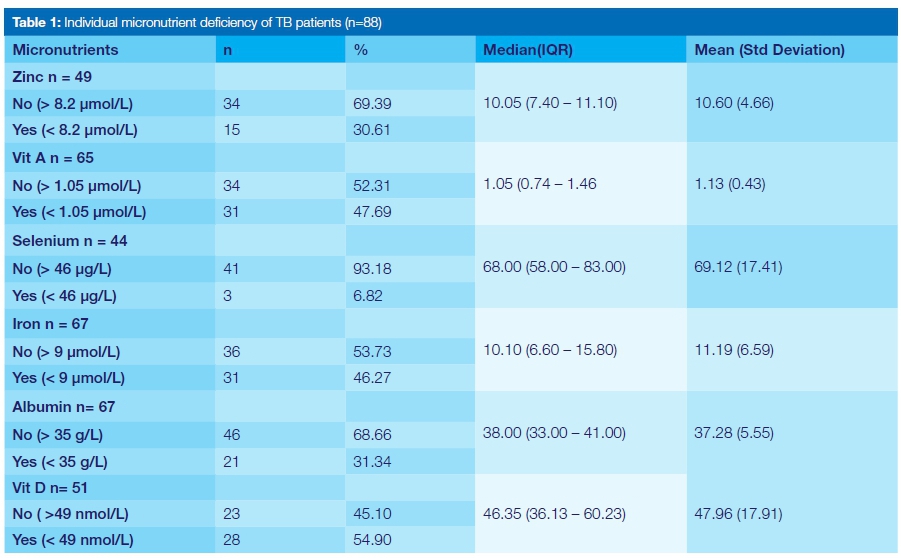
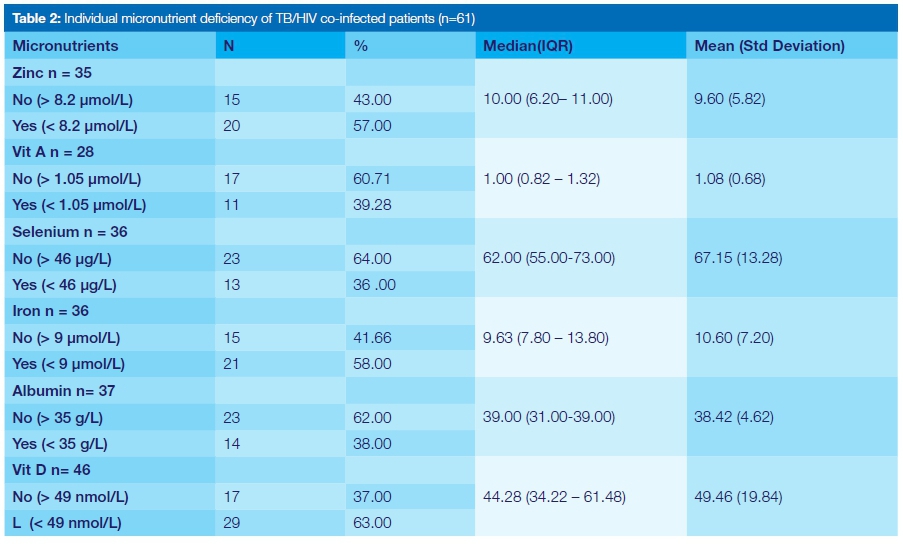
The exception was Vitamin D, which had a mean level below the normal range (47.96 nmol/L; S.D. 17.91) and 54.90% of the sample recorded a Vitamin D deficiency (Table 1, p491). The mean blood serum level of the micronutrients investigated in the TB/HIV co-infected cases was 69.32% (n=61). The mean values of the levels of all the micronutrients (Zinc, Vitamin A, Selenium, Iron, Albumin and Vitamin D) were above the normal ranges of these micronutrients (Table 2, p491).
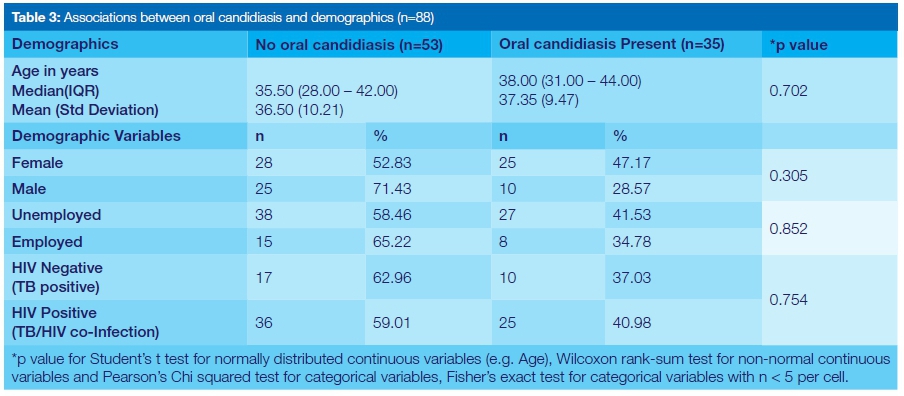
In the study sample 39.77% of patients (n=35) had oral candidiasis and 60.22% (n=53) did not have oral candidiasis present. In terms of prevalence of oral candidiasis by clinical type, 48.00% (n=17) of the TB patients had pseudomembranous candidiasis, 28.00% (n=10) had erythematous candidiasis, 14.00% (n=5) had angular cheilitis and 10.00% (n=3) presented a hyperplastic appearance. The prevalence of oral candidiasis was higher among the females (47.17%) than among males (28.57%) and the unemployed subjects had a slightly higher prevalence of oral candidiasis (41.53%) than did those employed (34.78%).
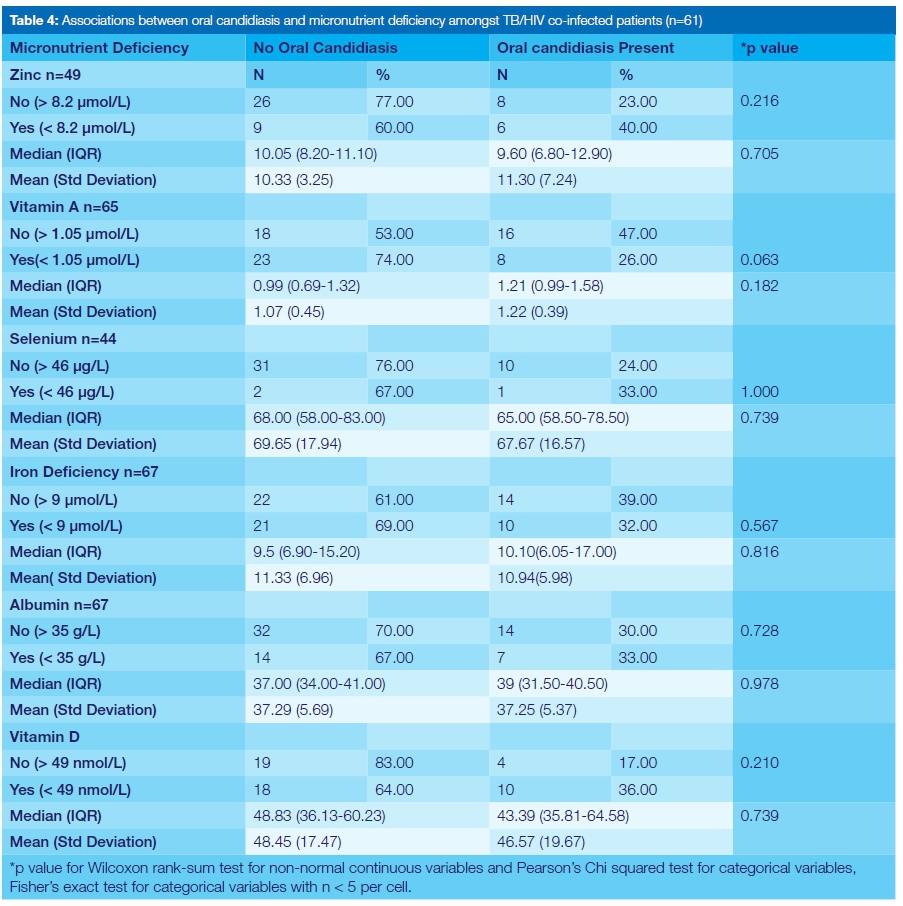
Forty one per cent of TB/HIV co-infected patients presented with oral candidiasis compared with 7.03% of TB patients (p=0.754). There was no statistically significant relationship between oral candidiasis and any of the demographics (Table 3, p493). For subjects with oral candidiasis, micronutrient levels below the normal range were present among 40% of patients for Zinc, 26% for Vitamin A, 33% for Selenium, 32% for Iron, 32% for Albumin and 33% of the sample for Vitamin D.
For TB patients with oral candidiasis, micronutrient levels within the normal range were present among 23.00 % for Zinc, 47.00% for Vitamin A, 24.00% for Selenium, 39.00% for Iron, 30.00% for Albumin and 17.00% for Vitamin D.
Oral candidiasis was not significantly associated with lower levels of micronutrients when compared with normal micronutrient levels in TB patients who had no oral candidiasis (Table 4, p493).
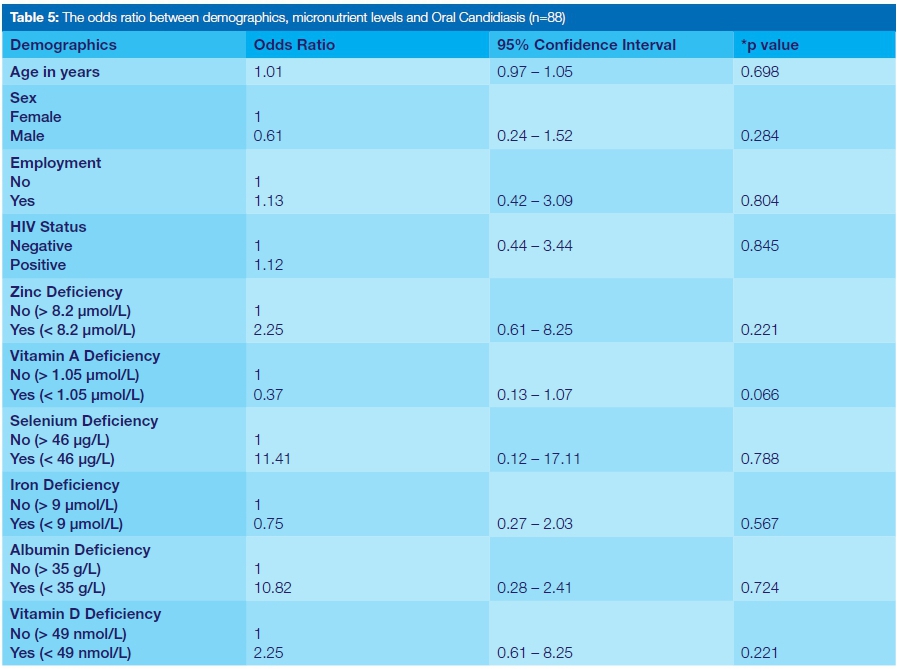
No significant association existed between the demographic variables or the micronutrient levels and the presence of oral candidiasis in TB patients (Table 5, p495). Sex [OR:0.61(95% CI:0.24-1.52)], Employment status [OR:1.13 (95% CI: 0.42-3.09)], HIV status [OR: 1.12(95% CI : 0.44-3.44)], Micronutrient level of Zinc [OR:2.25 (95% CI: 0.61-8.25)], Vitamin A [OR:0.37 (95% CI: 0.13-1.07)] , Selenium [OR: 11.41 (95% CI 0.12-17.11)] , Iron [OR: 0.75 (95% CI: 0.27-2.03)] , Albumin [OR:10.82 (95% CI: 0.28-2.41)] and Vitamin D [OR: 2.25 (95% CI: 0.61-8.25)].
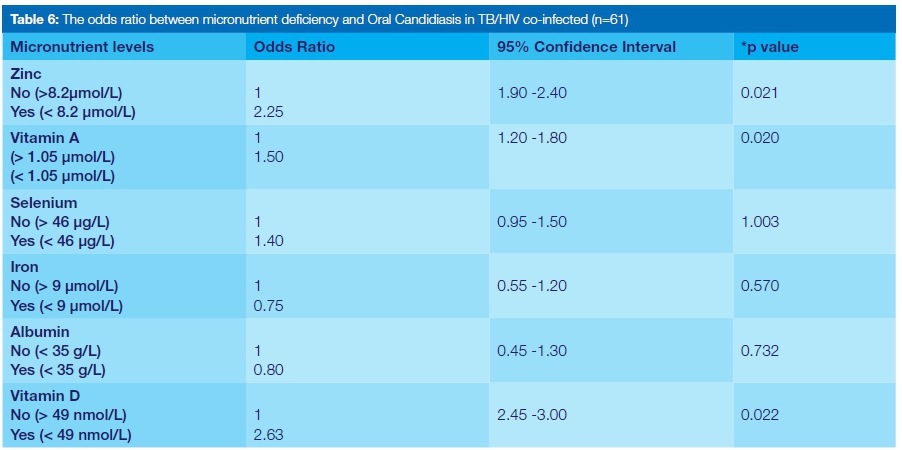
However, in patients with TB/HIV co-infection there was a significant association between the presence of oral candidiasis and deficiencies in the levels of Zinc [OR: 2.25 (95% CI: 1.9-2.4)], Vitamin A [OR: 1.5 (95% CI:1.2-1.8)] and Vitamin D [OR: 2.63 (95% CI: 2.45-3.00)] (Table 6, p495).
DISCUSSION
This study sought to investigate the relationship between oral candidiasis and micronutrient deficiencies in adults with TB and with TB/HIV co-infection. The majority of the study participants were females (60.23%) and unemployed (73, 90%).
The higher percentage of females might simply be because more females have TB or are co-infected with TB and HIV324 25
Although 69.32% of the TB patients in the current study were HIV positive, John et al.26272829302,31
In TB cases, nutrients (e.g. Iron, Copper, Selenium and Zinc) are compartmentalised to the tissues, lost from the body and/or blocked from cellular utilization.32
In addition, oral candidiasis was more prevalent in HIV-positive (40.98%) patients than in HIV-negative patients, although the difference was not significant. This finding is in line with the findings of Akpan et al.381639
Even though only 40.98% of the HIV-positive cases in the current study had oral candidiasis, evidence has shown that oral candidiasis is one of the key opportunistic infections that occur commonly and that it frequently presents in HIV-positive cases.14,15 The oral cavity is a reservoir of different potential pathogens - bacterial, viral and fungal - which can multiply and cause disease in malnourished and immunocompromised patients.
Samaranayake et al.18
In this study, 30.61% of the sample had Zinc deficiency; this prevalence was significantly lower than that reported by Koyanagi et al4041
Tuberculosis/HIV co-infection worsens Zinc deficiency in patients; in the current study 57.00% of the TB/HIV co-infected patients had Zinc deficiency. Studies have also shown Zinc deficiency to be more prevalent in TB/ HIV co-infected cases versus TB only controls.41,42 In the present study, 40.00% of the TB patients had oral candidiasis and Zinc deficiency and 23.00% had oral candidiasis associated with Zinc levels in the normal range. However, there was no significant relationship between oral candidiasis and Zinc deficiency. In contrast, Paillaud et al.19
An estimated 69.32% of the current sample were co-infected with TB/HIV and Baum et al.4344
This finding is in contrast to the findings reported by Kassu et al.4245
Although the current study did not And a significant association between Iron deficiency and TB-only infected cases and TB/HIV co-infected cases, studies have shown that severe Iron deficiency in TB/HIV co-infected cases is directly linked to HIV infection, as HIV-positive cases experience reduction in food intake3246
Oral candidiasis was present in patients both with Iron deficiency and those with Iron levels within the normal range. There was no significant difference between those with high Iron and oral candidiasis compared with those with low Iron levels. Neither could Walker et al.47
Also institutionalisation may render elderly individuals vulnerable to nutritional deficiency49,50 because the storage of foods and the cooking procedures used in institutions may contribute to the loss of vitamins from the food.
Hospitalised elderly TB patients also have limited food choice, which ultimately affects their food intake and micronutrient serum levels as compared with TB outpatients. There is also a high prevalence of edentulousness in elderly patients, which limits their food choice and impacts negatively on their micronutrient status51
Also none of the sample for the current study had dentures while the sample used in Sheiham's5119
In this study, 48.00% of the sample had Vitamin A deficiency; this result compares closely with Koyanagi et al.40
However, Karyadi et al.11
The lower percentage of Vitamin A deficiency in Karyadi et al.'s11
Studies have also shown that low Vitamin A levels are common in patients with TB and in those infected with HIV and are even more severe among patients with HIV/TB co-infection.12
Although the current study did not show any significant association between Vitamin A deficiency and TB or TB/HIV co-infected subgroups, it seems that TB/HIV co-infection may potentially worsen Vitamin A deficiency more than TB or HIV alone because Vitamin A deficiency is associated with TB/HIV co-infection and more pronounced with HIV disease progression.43
Approximately 7.00% of the TB patients in this study had Selenium deficiency. Koyanagi et al.4040
An inverse correlation between Selenium and HIV infection was reported by Dworkin,53
Selenium deficiency is common in HIV-positive- and AIDS patients. AIDS patients tend to have more severe deficits than those with earlier stages of HIV infection.47 54
The prevalence of Vitamin D insufficiency in women with TB (45.30%) was not significantly different from those without TB [p=0.91). Nansera et al.'s5758
Other different host factors are independently implicated in the development of oral candidiasis. These include old age, treatment with antibiotics, denture wearing and neglected oral hygiene, all of which predispose patients to the occurrence of oral candidiasis.51
LIMITATIONSThis study had a few limitations worth highlighting. One was the small sample size of TB patients and another the lack of a control group. These two limitations restricted the ability to draw conclusions about the associations between the independent and dependent variables.
Another limitation was reliance on the self-reported HIV status, necessary as budgetary constraints precluded comprehensive diagnostic testing. However, the self-reported HIV positive status was above the national average6121
This study is, however, a useful starting point for understanding the association between micronutrient deficiency and oral candidiasis in TB patients. More case control studies are needed to investigate the association of micronutrient deficiency and oral candidiasis in TB cases versus non-TB cases.
CONCLUSION
The present study shows a high prevalence of oral candidiasis, especially pseudomembranous oral candidiasis, as well as a high prevalence of several micronutrient deficiencies among adult TB patients.
There was a significant association between the presence of oral candidiasis in TB/HIV co-infected patients and Zinc-, Vitamin A- and Vitamin D- deficiencies. The present findings underline the importance of an oral examination and the need for mineral and vitamin supplements in adult TB patients, especially those who are TB/HIV co-infected.
Research Partners
Siyakhana Initiative for Ecological Health and Food Security, Wits Health Consortium
South African National Tuberculosis Association (SANTA) City of Johannesburg, Department of Health and Housing Edmore Miranda, Mazvita Senganyi
ACRONYMSCD: Chronic Diarrhoea
CMV: Cytomegalovirus
HBV: Hepatitis B Virus
HCV: Hepatitis C Virus
HSV-2: Herpes Simplex Virus - 2
PLWA: People Living With Aids
TB: Tuberculosis
Acknowledgements
References
- 1. Smith M. Mycobacterium tuberculosis pathogenesis and molecular determinants of virulence. Clin Microbiol Rev. 2003; 16(3): 463-96.
-
2. TB in South Africa. | National & Provincial Statistics. Available: http://www.tbfacts.org/tb-statistics-south-africa.html. Accessed 5 Jan 2015.
» http://www.tbfacts.org/tb-statistics-south-africa.html - 3. Tovaru S, Costache M, Sardella A. Primary oral tuberculosis: A case series from Bucharest, Romania. Oral Surg Oral Med Oral Path Oral Radiol Endod. 2008; 105:e41-e45.
-
4. Nutrition Information Centre University of Stellenbosch (NICUS). Department of Human Nutrition .2007. Available: http://www.sun.ac.za/nicus/NICU. Accessed 31 Jan 2015.
» http://www.sun.ac.za/nicus/NICU - 5. FAO Website. Agriculture and consumer protection. Preventing micronutrient malnutrition: a guide to food based approaches: Why policy makers should give priority to food based strategies.
-
6. Available: http://www.fao.org/DOCREP/x0245e/x0245e01.htm Accessed 20 March 2015.
» http://www.fao.org/DOCREP/x0245e/x0245e01.htm - 7. Woods M, Sherwood L, Gorbach S. Dietary considerations in HIV and AIDS. Nutrition in Clinical Care. 1999; 2:95-102.
-
8. UNAIDS (2013) 'Global Report 2013'. Available: http://www.avert.org/hiv-aids-south-africa.htm#footnote1_yuujgwe. Accessed 5 Feb 2015.
» http://www.avert.org/hiv-aids-south-africa.htm#footnote1_yuujgwe - 9. Dye C, Williams BG, Espinal MA, Ravigione MC. Erasing the world's slow stain: Strategies to beat multi-drug resistant tuberculosis. Science. 2003; 295:2042-46.
- 10. Saha K, Rushna F, Poonam S, Jyotirmoy P, Arnab R, Mihir KB, Sekhar C, Provash CS. Recent pattern of co-infection amongst HIV seropositive individuals in tertiary care hospital, Kolkata. Virology Journal. 2011; 8:116.
- 11. Reichart P. Oral manifestations in HIV infection: Fungal and bacterial infections, Kaposi's sarcoma. Med Microbiol Immunol. 2003; 192:165-9.
- 12. Karyadi E, West C, Schultink W, Nelwan R, Gross R, Amin Z, Dolmans W, Schlebusch H, van der Meer J. A double-blind, placebo-controlled study of vitamin A and zinc supplementation in persons with tuberculosis in Indonesia: Effects on clinical response and nutritional status. American Journal of Clinical Nutrition. 2002; 75(4):720-7.
- 13. Semba R, Tang A. Micronutrients and the pathogenesis of human immunodeficiency virus infection. Br J Nutr. 1999; 81:181-9.
- 14. Thomas DM, Giant BA, Mirowski DMD. Nutrition and oral mucosal diseases. Clinics in Dermatology. 2010; 28:426-31.
- 15. EC-Clearinghouse on Oral Manifestations related to HIV Infection and WHO Collaborating Center on Oral Manifestations of Immunodeficiency Virus. Pathol 1993; 22:289-91.
- 16. Miziara ID, Weber R. Oral candidiasis and oral hairy leukoplakia as predictors of HAART failure in Brazilian HIV infected patients. Oral Dis. 2006; 12:402-7.
- 17. Pienaar ED, Young T, Holmes H. Interventions for the prevention and management of oropharyngeal candidiasis associated with HIV infection in adults and children. 2010.
-
18. Available: www2.cochrane.org/reviews/en/ab003940.html. Accessed: 31 Jan 2015.
» www2.cochrane.org/reviews/en/ab003940.html - 19. Gupta E, Vajpayee M, Xess I, Seth P. Oral candidiasis in HIV-infected patients and its relation to CD4+ count; an adjunct clinical marker of HIV disease progression. Trop Doc. 2006; 36:127.
- 20. Samaranayake LP. Nutritional factors and oral candidosis. J Oral Pathol. 1986; 15(2):61-5.
- 21. Paillaud E, Merlier I, Dupeyron C, Scherman E, Poupon J, Bories P. Oral candidiasis and nutritional deficiencies in elderly hospitalised patients. British Journal of Nutrition. 2004; 92:861-7.
- 22. Rudolph M, Kroll F, Beery1 M, Marinda E, Sobiecki J, Douglas G, Orr G. A pilot study assessing the impact of a fortified supplementary food on the health and well-being of crèche children and adult TB patients in South Africa. PLOS ONE. 2013;8(1):e55544.
-
23. Available:http://www.plosone.org/article/fetchObject.action?uri=info:doi/10.1371/journal.pone. Accessed 31 August 2015.
» http://www.plosone.org/article/fetchObject.action?uri=info:doi/10.1371/journal.pone -
24. Oral Health Surveys: Basic Methods-5th ed. WHO (2013). Available: www.who.int/oral_health/publications/9789241548649/en Accessed: 23 May 2015.
» www.who.int/oral_health/publications/9789241548649/en - 25. Sharon and Fazel N. Oral candidiasis and angular cheilitis. Dermatological Therapy. 2010; 23:230-42.
- 26. Alan HB. Tietz clinical guide to laboratory tests. In: 4th ed. Missouri: W.B. Saunders Company. 1995:11-18.
- 27. Lertmaharit S, Kamol-Ratankul P, Sawert H, Jittimanee S, Wangmanee S. Factors associated with compliance among tuberculosis patients in Thailand. J Med Assoc Thai. 2005; 88(4):S149-56.
- 28. Brennan A, Maskew M, Sanne I, Fox M. The importance of clinic attendance in the first six months on antiretroviral treatment: A retrospective analysis at a large public sector HIV clinic in South Africa. Journal of the International AIDS Society. 2010; 13(49):3-10.
- 29. John MA, Menezes CN, Grobusch PM. High Tuberculosis and HIV co-infection rate, Johannesburg .Emerging Infectious Diseases. 2007; 13 (5) 795-6.
- 30. Datiko1 D, Yassin MA, Chekol LT, Kabeto LE and Lindtj0rn B. The rate of TB-HIV co-infection depends on the prevalence of HIV infection in a community. BMC Public Health. 2008; 8:266-14.
-
31. Okoh A, Omuemu V. Prevalence of HIV/AIDS and TB co-infection among patients in Benin City, Nigeria. Available: http://ghf.g2hp.net/2012/01/03/2986/. Accessed 25 May 2015.
» http://ghf.g2hp.net/2012/01/03/2986/ - 32. Giri PA, Deshpande D, Phalke B. Prevalence of pulmonary tuberculosis among HIV positive patients attending Antiretroviral Therapy Clinic. N Am J Med Sci. 2013; 5(6): 367-70.
- 33. Giehl C, Roy BR, Knellwolf A. The situation of HIV/M tuberculosis co-Infection in Europe. The Open Infectious Diseases Journal. 2011; 5, (1-M3): 21-35.
- 34. Macallan D. Malnutrition in tuberculosis. Microbol Infect Dis. 1999; 34:153-7.
- 35. Enwonwu C. Complex interactions between malnutrition, infection and immunity: Relevance to HIV/AIDS infection. Nigerian Journal of Clinical and Biomedical Research. 2006; 1(1):6-14.
- 36. Ikebe K, Morii K, Matsuda K, Hata K ,Nokubi T. Association of candidal activity with denture use and salivary flow in symptom-free adults over 60 years. Journal of Oral Rehabilitation. 2006; 33(1):36-42.
- 37. Zaremba M, Daniluk T, Rozliewickz D, Cylwik-Rokicka D, Kierklo A, Tokajuk G, Dabrowska E, Pawinska M, Klimiuk A, Stkowaska W, Abdelrazek S. Incidence rate of Candida Species in oral cavity of middle aged and elderly subjects. Advances in Medical Sciences. 2006; 51(1):233-6.
- 38. Coleman D, Bennett D, Sullivan D, Gallagher P, Henman M, Stanley D. Oral Candida in HIV infection and AIDS: New perspective / new approaches. Crit Rev Microbiol.1993; 19:61-82.
- 39. Jacob L, Falitz C, Nichols C, Hicks M. Role of dental caries lesions in the pathogenesis of oral candidiasis in HIV infection. J Am Dent Assoc. 1998; 129:187-94.
- 40. Darnton-Hill I, Webb P, Harvey P, Hunt J, Dalmiya N, Chopra M, Ball M, Bloem M, de Benoist B. Micronutrient deficiencies and gender: Social and economic costs. Am J Clin Nutr. 2005; 81:1198S-1205S.
- 41. Akpan A, Morgan R. Oral candidiasis. Postgrad Med J. 2002:78:455-9.
- 42. Campro J, Del Romero J, Castilla J, Gracia S, Rodriguez C, Bascondes A. Oral candidiasis as a clinical marker related to viral load, CD4 lymphocyte count and CD4 lymphocyte percentage in HIV infected patients. J Oral Pathol Med. 2002; 31:5-10.
- 43. Koyanagi A, Kuffo D, Gresely L, Shenkin A, Cuevas L. Relationship between serum concentrations of C-reactive protein and micronutrients in patients with tuberculosis. Annals of Tropical Medicine and Parasitology. 2004; 4:391-9.
- 44. Van Lettow M, Harries AD, Kumwenda JJ, Zijlstra EE, Clark TD, Taha TE, Semba RD. Micronutrient malnutrition and wasting in adults with pulmonary tuberculosis with and without HIV co-infection in Malawi. BMC Infect Dis. 2004; 4(61): 1-8.
- 45. Kassu A, Yabutani T, Mahmud Z, Mohammad A, Nguyen N, Huong B, Hailemariam G, Diro E, Ayele B, Wondmikun Y, Motonaka J, Ota F. Alterations in serum levels of trace elements in tuberculosis and HIV infections. European Journal of Clinical Nutrition .2006; 60:580-6.
- 46. Baum M, Campa A, Lai S, Lai H, Page J. Zinc status in Human Immunodeficiency Virus Type 1 Infection and illicit drug use. Clin Infect Dis. 2003; 37 (2):S117-23.
- 47. Beach RS, Mantero-Atienza E, Shor-Posner G, Javier JJ, Szapocznik J, Morgan R, Sauberlich HE, Cornwell PE, Eisdorfer C, Baum MK. Specific nutrient abnormalities in asymptomatic HIV-1 infection. AIDS 1992; 6(7):701-8.
- 48. Taha D, Thanoon I. Antioxidant Status, C-reactive protein and iron status in patients with pulmonary tuberculosis. SQU Medical Journal. 2010; 10(3):361-9.
- 49. Friis H, Michelson K. Micronutrients and HIV infection: a review. Eur J Clin Nutr 1998; 52:157-63.
- 50. Walker D, Dolby A, Johnson D, Jacobs A. Candida and the immune defects in iron deficiency. J Dent Res. 1972; 52(5):938-42.
- 51. Jenkins M, Macfarlane T, Ferguson M, Mason D. Nutritional deficiency in oral candidosis. Int J Oral Surg .1977; 6:204.
- 52. Schorah J, Newill A, Scott D, Morgan D. Clinical effects of vitamin C in elderly inpatients with low blood-vitamin- C levels. Lancet. 1979; i: 403-5.
- 53. Marazzi C, Mancinelli S, Palombi L, Martinoli L, D'Alessandro de Luca E, Buonomo E, Riccardi F. Vitamin C and nutritional status of institutionalized and noninstitutionalized elderly women in Rome. Int J Vitam Nutr Res. 1990; 60:351-9.
- 54. Sheiham A, Steele JG, Marcenes W, Lowe C, Finch S, Bates CJ, Prentice A, Walls AW. The relationship among dental status, nutrient intake, and nutritional status in older people. J Dent Res. 2001; 80(2):408-13.
- 55. Mugusi F, Rusizoka O, Habib N, Fawzi W. Vitamin A status of patients presenting with pulmonary tuberculosis and asymptomatic HIV-infected individuals, Dar es Salaam, Tanzania. Int J Tuberc Lung Dis. 2003; 7(8):804-7.
- 56. Dworkin B. Selenium deficiency in HIV infection and the acquired immunodeficiency syndrome (AIDS). Chem Biol Interact. 1994; 91:181-6.
- 57. Ramakrishnan K, Shenbagarathai R, Kavitha K, Uma A, Balasubramaniam R, Thirumalaikolundusubramanian P. Serum zinc and Albumin levels in pulmonary tuberculosis patients with and without HIV. Jpn J. Infect. Dis. 2008; 61(3):202-4.
- 58. Okamura K, Nagata N, Kumazoe H, Ikegame S, Wakamatsu K, Kajiki A, Kitahara Y, Takayama K, Nakanishi Y. Relationship between computed tomography findings and nutritional status in elderly patients with pulmonary tuberculosis. Internal Medicine. 2011; 50(17):1809-14.
- 59. Ho-Pham L, Nguyen D, Nguyen T, Nguyen D, Bui P, Nguyen V. Association between vitamin D insufficiency and tuberculosis in a Vietnamese population. BMC Infectious Diseases. 2010; 10:306-13.
- 60. Nansera D, Graziano F, Friedman D, Bobbs M. Vitamin D and calcium levels in Ugandan adults with human immunodeficiency virus and tuberculosis. Int J Tuberc Lung Dis. 2011; 15:1522-8.
- 61. Steenkamp L, Dannhauser A, Walsh D, Joubert G, Veldman F, Van der Walt E, Cox C, Hendricks M, Dippenaar H. Nutritional, immune, micronutrient and health status of HIV-infected children in care centres in Mangaung. SAfr J Clin Nutr. 2009; 22(3):131-6.
- 62. Shay K, Truhlar M, Renner R. Oropharyngeal candidosis in the older patient. J Am Geriatr Soc. 1997; 45:863-70.
Maphefo D. Thekiso
Community Dentistry Department, School of Oral Health Sciences
University of Witwatersrand, Medical School, no 7 York Road, Parktown 2193
Email address: