A Review of Chemical Approaches Inherent to Endodontic Disinfection Protocols: Part 2
Abstract
OBJECTIVES: Part two of this chemical endodontic disinfection protocol review discusses adjunctive practices such as irrigant activation techniques and intracanal medicaments with a look into the future of endodontics MATERIALS AND METHODS: Scientific platforms such as Pubmed and Google Scholar were (re)searched using the keywords: endodontics, endodontic disinfection, root canal disinfection, endodontic chemical debridement, endodontic irrigation, endodontic solutions, endodontic irrigant activation, and intracanal medicaments. Relevant articles were identified, screened, reviewed, and discussed. RESULTS: As discussed in part one of this review, sodium hypochlorite in combination with EDTA is still the gold standard for endodontic irrigation. However, anatomical variations and conventional instrumentation limit the effectiveness of these solutions. To overcome these limitations, activation techniques such as ultrasonic irrigation, photo-activated disinfection, and photon-induced photoacoustic streaming have been used. Intracanal medicaments are used to support endodontic disinfection as temporary dressings between appointments, but their usefulness is controversial CONCLUSIONS: Irrigant activation has shown the potential to improve disinfection. Intracanal medicaments have been losing favour in recent years, and their benefit should be evaluated in each case. Nanoparticles have been suggested to improve the delivery of irrigant solutions. Nanoparticles are relatively new in endodontics, and further research is needed on their optimisation, limitations, and toxicity.
INTRODUCTION
Caries is a common disease and, when left untreated, causes pulpal pathologies requiring endodontic treatment. Endodontic treatment is a fairly common and routine dental procedure whereby 10% of all teeth will require such treatment.1et al. found that half the adult population worldwide would have at least one tooth displaying signs and symptoms of disease requiring endodontic treatment.2
The main goal of endodontic treatment is debridement and disinfection of the root canal system. In 1992, Chong and Pitt Ford emphasised the importance of controlled asepsis in infected root canals and the primary role of canal debridement and adequate canal preparation in successful outcomes.3 et al., also support this concept that what is removed from the root canal is of greater significance with regard to success than what is used to seal the root canal system.4
Endodontic treatment is a complex multi-step procedure that aims to disinfect the root canal system to allow for the resolution of inflammation, infection and apical periodontitis. Complete disinfection is achieved with a combination of mechanical debridement, chemical irrigation and application of intracanal medicaments.566, 7
Microorganisms and their endotoxins are responsible for the initiation of root canal infections and persistent endodontic-induced apical periodontitis.8, 910117
However, an irrigant is only beneficial when it comes into direct contact with all parts of the root canal, particularly the most apical parts.1213
Positive-pressure irrigation systems
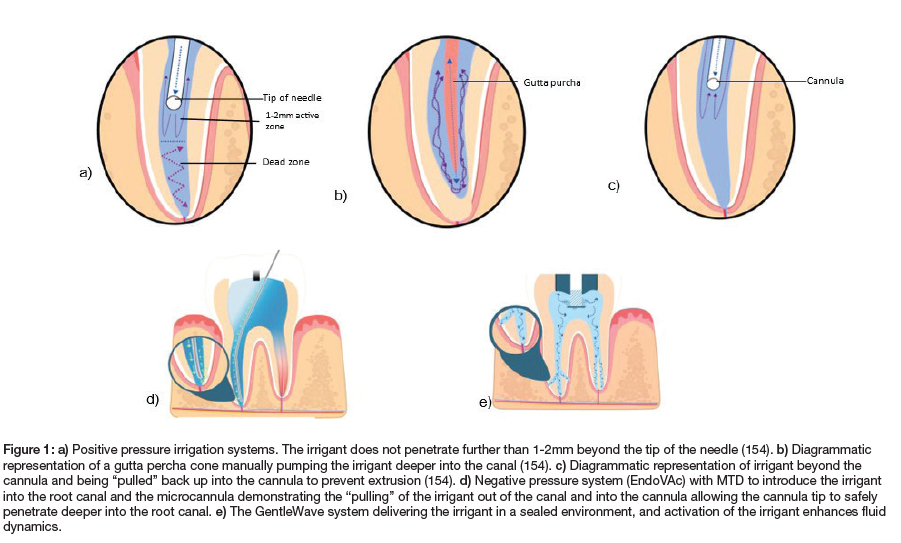
Positive pressure irrigation (Figure 2a and 2c) is the most commonly used irrigation technique.1415
As a result, debris and microbes can be left behind in the apical air pocket beyond the needle tip - the dead zone (Figure 2a). Some believe that this air pocket can be popped with an endodontic instrument. This theory is controversial as it defies the laws of physics and mechanical files will only pass through the air pocket. An alternative suggestion to overcome this air pocket is to use a gutta percha cone to manually agitate the irrigation solution, forcing the solution closer to the apex safely (Figure 2b)1617
Negative-pressure irrigation systems
Negative pressure irrigation systems (Figure 2d) minimise the risk of accidental irrigant extrusion.18,19 This method uses a needle or master delivery tip (MTD), a macro cannula and a micro cannula. The needle is placed in the pulp chamber to deliver the irrigant, and the macro cannula and micro cannula are placed in the root canal to safely pull the irrigant into the canal, towards the apex and then draw it back up the cannula, preventing any risk of extrusion.20 et al. reviewed the effectiveness of negative pressure irrigation against conventional syringe irrigation. The study analysed the following outcomes: antimicrobial effects and removal of pulp tissue remnants, hard tissue debris or both pulp and hard tissue. There was no significant difference between the two methods in disinfecting and debriding the main root canal. Negative pressure irrigation demonstrated an advantage when analysing isthmuses and uninstrumented oval extensions. These "unreachable" areas were debrided significantly better with negative pressure irrigation than syringe irrigation.18
Ultrasonic and Sonic irrigant activation
Ultrasound is a vibration of the same nature as sound but at a frequency higher than the highest frequency perceptible to the human ear (approximately 20,000 Hz).12et al. theorised that applying ultrasonic-induced shear forces in combination with antimicrobial chemicals would be more effective in biofilm obliteration.21 222214
Cavitation is the formation of gas bubbles within a liquid. During each ultrasound cycle of refraction and compression, these bubbles expand during refraction and collapse during compression repeatedly, thus growing with each subsequent cycle (Figure 3a). During these cycles, gas cannot be transported through the bubble-liquid interface, limiting amounts of gas within the bubble. Eventually, without new gas entering the bubble, the expanding bubble violently implodes (Figure 3a). On implosion, high-amplitude shock waves and high-velocity micro jets are released, exerting high shear forces on the surrounding biofilm, disrupting it and lifting it off the surface.23
Acoustic streaming is fluid flow caused by momentum transfer from the acoustic wave to the propagation liquid (Figure 3b).2423, 25
In the root canal environment, such forces can disrupt bacterial biofilms, rupture bacterial cell walls, and remove debris and the smear layer from the root surface. An additional benefit is shockwave generation, which can also increase the breakdown of agents such as H2O2, enhancing the disinfection and debridement actions of the irrigation solutions.2627
There are many different endodontic ultrasound devices available on the market. To simplify matters, there are two ultrasound irrigation methods: active and passive. Active ultrasound irrigation involves the simultaneous use of an irrigant with an active cutting tip, and passive ultrasound irrigation (PUI) is irrigation without simultaneous instrumentation using a non-cutting tip.282927, 30, 31
There are two theories regarding the best time to use ultrasound irrigation. The first is that PUI must be used as part of the initial protocol as this improves the flow action of the irrigant, enabling the irrigant to flow towards the apical part of the canal using fine files. However, the more popular opinion is that ultrasound should be used after mechanical canal preparation. Effective ultrasound irrigation depends on the vibratory potential of the instrument, and wider canals allow for unrestricted vibratory movement. Therefore, ultrasound irrigation is more suited to prepared canals. There is also a risk of defect formation when instruments touch a narrow canal wall during cavitation and, so a wider canal with narrower files is recommended to limit this risk.1218et al. tested the effectiveness of ultrasound irrigation on the healing of apical periodontitis, removal of pulp, hard tissue debris and smear layer.3232 et al. reviewed methods to increase the activation of irrigating solutions and found that NaOCI combined with ultrasound or a wave vibration system had the most excellent antibacterial effect.12et al. , determined that ultrasonic and sonic NaOCI activation was more effective than using NaOCI alone as it allows for improved irrigant penetration.33et al., also found that supplementing irrigation activation with ultrasonic and sonic protocols improved irrigation efficiency.34
There are a variety of irrigant activator systems available on the market today. A few of these systems are GentleWave System (GWS; Sonendo, Inc, Laguna Hills, CA), EDDY (VDW), MM1500 Sonic Air (Micro-Mega) and EndoActivator System (Dentsply Tulsa Dental Specialties, Tulsa, OK). Although each system varies in its armamentarium, the mechanisms by which they work are similar. Gentlewave (Figure 2e) uses a specialised handpiece to deliver NaOCI into the root canal under pressure and is activated by acoustic waves, while suction removes the outflowing fluid through the handpiece simultaneously.353635
Sonic-powered irrigation involves using a noncutting plastic tip mounted on an airscaler or specialised air-driven handpiece operating at a lower frequency than ultrasonic to produce sonic agitation of the irrigant. Kaloustian et al, compared the effectiveness of EDDY and MM1500 Sonic Air in reducing root filling remnants and found no statistical difference between the two systems with both systems improving the removal of residual filling material from distal canals of mandibular molars.3738
A comparative study by Azim et al. tested four different irrigation protocols: Standard needle irrigation, EndoActivator (specially designed sonic handpiece used with non-cutting polymer tips to agitate root canal irrigants), XP Endo finishing file (FKG Dentaire SA, La Chaux-de-Fonds, Switzerland) is a highly flexible mechanical endodontic file that is used to mechanically activate the irrigant solution in the root canal and Photo-induced photoacoustic streaming (PIPS). This study found that while all the tested protocols were able to significantly reduce the bacterial biofllm, the XP Endo finishing file was the most effective in eliminating bacteria from the canal. PIPS, however, was the most effective at the apical third of the canal. The poorest-performing protocol was standard needle irrigation.13et al., compared the efficacy of sonic activation using EDDY, PUI and mechanical activation with XP Endo finishing file in removing CaOH from artificial grooves in straight canals. Their results were slightly different than Azim et al., in that the EDDY and PUI systems were significantly more effective in the removal of calcium hydroxide than the XPendo Finisher regarding the apical region, while the poorest performing system in this study was also standard needle irrigation.39
In conclusion, irrigant activation in some form appears to be more effective at root canal disinfection and medicament removal than standard needle irrigation.
Laser-assisted endodontic disinfection
The popularity of lasers in medical treatments is increasing. The field of dentistry is no exception, and lasers have been used to enhance endodontic disinfection. Lasers activate photosensitisers that associate with bacteria40 35Figure 3c and d) 26). Photosensitisers are molecules that can use light absorption energy to activate chemical reactions in cells.41 4241, 4344, 45
PAD is a promising aid to endodontic disinfection protocols. Studies have shown that traditional root canal debridement may not remove all microbes, and PAD can improve endodontic disinfection.7, 26, 44447, 44, 4546, 4748
However, anatomical complexities can hinder the effectiveness of PAD as its effects are limited to areas where light can penetrate. Isthmuses, ramifications, and curves prevent effective light distribution. Some studies have shown that the effectiveness of PAD is limited and not comparable to NaOCI.474449, 5044
Other important considerations with PAD are the power level, duration of exposure, light absorption in the tissues, light wavelength, and photosensitiser absorbance.43, 51-54 At this stage, PAD demonstrates potential and is a promising adjunct to endodontic disinfection protocols, bearing in mind the anatomical limitations and it cannot be used as a solitary disinfection protocol.
Photon-induced photoacoustic streaming (PIPS) involves using a erbium/yttrium-aluminium garnet (Er:YAG) laser light in a liquid solution to produce photoacoustic shockwaves (Figure 3e). These shockwaves create three-dimensional fluid flow through the isthmuses, anastomoses and lateral canals, allowing for a deeper cleaning of the entire root canal system.5535
Guneser et al. compared various techniques for removing precipitate formed after irrigation with NaOCl and CHX. They compared conventional syringe irrigation, CanalBrush, EndoActivator system, PIPS, and manual instrumentation techniques during which 5 mL of distilled water was used for 1 minute. All experimental groups contained residual precipitate and the authors concluded that none of these techniques were able to completely remove the orange-brown precipitate from the root canal surface.56et al. compared the efficiency of the PIPS technique with conventional, sonic and ultrasonic irrigation on the removal of apically placed dentinal debris from an artificial groove created in a root canal. The authors found that PIPS was significantly more effective than both sonic and ultrasonic irrigation in removing this debris.57
In a randomised clinical trial by Mandras and co-workers, the ability of PIPS technique to reduce root canal bacterial count in vivo was evaluated and compared to conventional irrigation. While there was a reduction in bacterial load with both techniques, PIPS demonstrated greater antibacterial efficacy. However, this difference between the two groups was not statistically significant. Within the limits of this study, the authors concluded that the PIPS technique could be considered a viable protocol for endodontic disinfection, especially in the case of simplified operational protocols and reduced instrumentation times.55et al. compared CaOH removal between PIPS, EndoActivator and needle irrigation. Their study showed that PIPS was more effective at removing CaOH from the central canal and isthmus in maxillary premolars than either of the two techniques.58et al. compared the effectiveness of the PIPS technique combined with NaOCI, the PIPS technique with saline and NaOCI alone. They observed that the PIPS technique combined with NaOCl showed the most efficient bacterial biofilm eradication. They concluded that laser-activated irrigation utilising PIPS may enhance the disinfection of the root canal system.59
Studies have shown that even when placing the PIPS optic tip only in the pulp chamber, it can drive the irrigation solution to the end of the canal without harming the apical tissues and still be effective at removing debris through the length of the canal up to the apex.60-62 In comparison with other techniques, where it has been observed that instrumentation and irrigation needle tips need to be as close to the root apex as possible to be effective along the length of the root canal, PIPS may offer a unique advantage. An added advantage of laser-assisted disinfection is the biostimulatory effects which can enhance healing and reduce inflammation.63, 64
INTRACANAL MEDICAMENTSEndodontic treatment can be completed during single or multiple visits. Both techniques carry benefits; single-visit treatment decrease the number of appointments and allows for good patient acceptance and practice management considerations.65et al. define flare-ups as "severe uncontrollable amount of inter-appointment and postoperative pain that is not relieved by medication, requiring an unscheduled visit to the dental surgery for active treatment".6665, 67-74 Factors that contribute to the decision-making tree of single vs multiple appointments range from operator skill, longer working times, trauma to the periapical tissues which can cause a more severe acute inflammatory response and postoperative pain to psychosocial factors such as high levels of distress before appointments and a patient's desire to control the anticipated unpleasantness associated with treatment.69, 74-76 Each clinical case must be evaluated on its own merit to determine the most predictable and effective protocol for complete endodontic disinfection. A consensus is that the more severe the pre-operative symptoms are, the less likely a single visit is indicated.
With technological advancements such as magnification, heat-treated nickel-titanium instruments and new irrigation protocols, single visit treatment outcomes have improved. 4
However, not all clinical scenarios can be treated with a single visit. In cases with persistent infection, difficulty to target micro-organisms in canals with complex anatomy, presence of large apical cysts or in patients with reduced immune competence, multiple visits, using intracanal medicaments between appointments, improves prognosis. Intracanal medicaments allow time for improved disinfection as the medicaments have time to diffuse and eradicate remaining microbes after canal preparation and provide time to confirm symptom improvement before final sealing of canals.3, 77
In cases where multiple visits are indicated, intracanal medicaments with high residual inhibitory effects can achieve successful outcomes and prevent reinfection.7879
According to Chong and Pitt Ford, intracanal medicaments should:3
1. Eliminate any remaining microbial populations after mechanical instrumentation.
2. Reduce inflammation of periapical tissues and pulp remnants.
3. Render canal contents inert and neutralise tissue debris.
4. Act as a barrier against leakage from the temporary filling.
5. Aid in drying persistently wet canals.
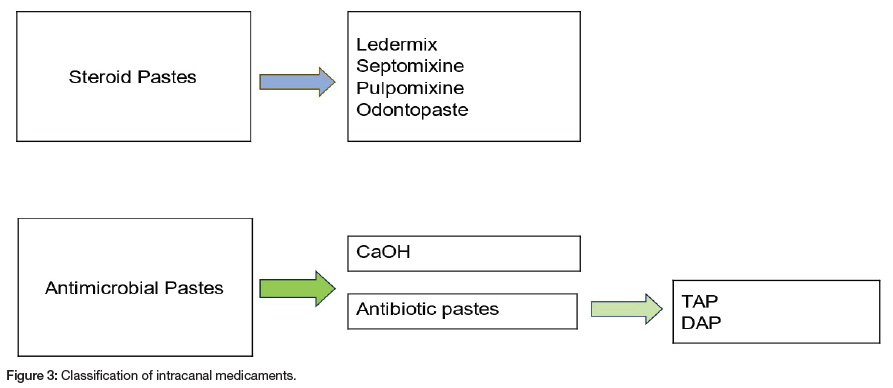
Intracanal medicaments can be classified according to their mechanism of action into steroid based pastes and antimicrobial pastes (see Figure 3).
Steroid pastes
Steroids are known to reduce inflammation and pain, and steroid preparations are used as an adjunct in endodontic disinfection. Gurney stated that local delivery of corticosteroids into the root canal and periapical tissues may provide symptomatic relief from post-treatment pain (80). Smith et al. observed that corticosteroids effectively decreased inflammation secondary to instrumentation.81 82 8382
Ledermix paste contains 1% triamcinolone and 3,2% demeclocycline in a polyethylene glycol paste.848586, 87
Septomixine and Pulpomixine pastes contain the antibiotic neomycin and framycetin, respectively, and dexamethasone as its steroid component. These agents are not as potent against common endodontic pathogens, and dexamethasone is less effective than other steroid agents used in alternative endodontic pastes.8889 90
Antimicrobial pastes
The risks with systemic use of antibiotics are well known, with drug-resistant infections on the increase. Another limitation of systemic antibiotics within the context of root canal infections, is the anatomically complex and closed root canal system where limited amounts of antibiotic reach the infected pulp tissue.91
Calcium hydroxide
Calcium hydroxide (CaOH) is a broad-spectrum antimicrobial commonly used as a disinfectant dressing for vital inflamed pulp between visits. CaOH has an alkaline pH, is biocompatible with bactericidal effects, and has good tissue dissolution capability.4, 927, 78, 93, 947
CaOH has been shown to decrease microbial loads after mechanical instrumentation. In a study by Shuping et al., where mechanical debridement was followed with 1% NaOCI irrigation and CaOH as an intracanal dressing, 61% of cases were bacteria-free after instrumentation and irrigation. After applying CaOH, 92% of cases did not have a positive culture. The results revealed that the apical size of the preparation and the use of the intracanal medication contributed to the reduction in the microbial load.95et al. evaluated the effects of CaOH as a short-term intracanal dressing and found that CaOH was effective at eliminating bacteria that may be left behind after instrumentation and that predictable results can be achieved by dressing the canal for seven days.96E. faecalis, which is the predominant pathogen in secondary infections and therefore, CaOH is more effective in primary endodontic infections than in secondary infections and alternative medicaments are recommended.26
There have been some additions to CaOH to improve its antibacterial and anti-inflammatory effects. In previous years, it was advised to combine CaOH with steroid pastes such as Ledermix. As the two pastes provide different effects, the combination was thought to provide improved antibacterial and anti-inflammatory properties.97,98 However, recent studies have shown that CaOH, being alkaline, degrades the steroid component of the second paste, and there was no benefit in combining the two pastes. It was recommended that its use be reviewed.939910094101
Recently, Afkahami and co-workers tested a novel approach of adding silver nanoparticles (AgNPs) to CaOH. AgNPs are small, inert and biocompatible particles.1021031043578 et al. and Yousefshahi et al.support the idea that AgNPs increase the antibacterial properties of CaOH and are effective as intracanal medicaments.105, 106
Antibiotic pastes
Antibiotic pastes are typically used in teeth with incomplete root formation where regenerative and revascularisation of immature teeth allow apical closure of open apices and thickening of dentine walls.107,108 The microbial biofilm's complexity and diversity necessitates using an antibiotic combination rather than a single antibiotic to increase its efficacy. Triple antibiotic paste (TAP) is most commonly a combination of metronidazole, ciprofloxacin and minocycline, usually in 1:1:1 ratio and mixed with sterile water.78109-111 Ordinola-Zapata et al., compared the antimicrobial activity of TAP, 2% CHX gel and CaOH paste on intraorally infected dentine biofllm models and found that TAP was the most effective at killing live microorganisms. However, the minocycline component causes dentine staining, so an alternative antibiotic paste was suggested. An alternative TAP combination of metronidazole, ciprofloxacin and clindamycin can be used,9178
Nanoparticles
Nanotechnology is becoming increasingly popular in the medical field and uses nanoparticles as its delivery system. Nanoparticles are small particles with diameters between the range of 1 and 100 nm with increased chemical activity due to their large surface area.112113, 11435
A dentist's perspective and the future of endodontic disinfection
Endodontic treatment is a routine dental procedure. It is essential for the clinician to understand tooth morphology, pathosis of pulp infection, and the materials and techniques best suited to debride and disinfect the root canal. Despite the lack of a single ideal irrigant, NaOCI combined with ethylenediaminetetraacetic acid as a chelator remains the most popular protocol for disinfection as it is effective and economical. The limitations of conventional irrigation are well documented, so agitating techniques have been employed to overcome these limitations. Techniques such as ultrasonic activation have been useful in improving disinfection and overcoming limitations around anatomical variations and apical access of irrigants. The introduction of technologies such as laser into the disinfection armamentarium has also shown promising results. To effectively gain maximum output from these technologies, the clinician must understand the mechanisms at work and appreciate the relevant limitations of such technologies. The choice of irrigant and medicaments depends on clinical time, cost, and effectiveness. Effective and predictable combination solutions, such as continuous chelator irrigants have the potential to simplify irrigation while reducing chair time.
The use of intracanal medicaments is still controversial. It is now understood that with the continuous advancements in technologies and if the clinical situation is favourable to single-visit endodontic treatment, then the success rate of single-visit treatments has improved. However, there are still scenarios where multiple visits would be favoured. In cases where the risk of post-operative flare-ups is higher and when shorter appointments better serve operator or patient factors such as in-chair comfort and fatigue, multiple visits are still advised. Furthermore, psychological factors such as the degree of patient anxiety, fear of dentists, and previous traumatic experiences may impact the patient's pain perception and post-operative responses. In these scenarios, it may be beneficial from a psychological perspective to undergo multiple visits to ease the patient into treatment slowly and decrease the likelihood of post-op flare-ups. Therefore, each case should be evaluated on its own merit to determine if a single or multi-visit approach should be used.
Medical treatment is moving away from the generic and generalised approach towards individuality, targeting specific cells or pathogens for a more significant localised effect to minimise unwanted systemic and generalised adverse reactions. Custom antimicrobial functional peptides are a potential source for individualising endodontic disinfection and can be designed to target precise microbial pathogens. Specific endodontic challenges are three-fold: the complexity of the endodontic micro-flora, protease production by pathogens which could degrade these peptides and the high cost of custom peptide manufacturing.115
The future for endodontics includes dental pulp regeneration with revitalising and revascularising diseased pulp. The principles of regeneration hold for dental tissues: an extracellular matrix to provide scaffold support for cellular interactions, stem cells, and secretome complexes to mediate and influence cellular interactions. The first step in successful tissue regeneration is to eliminate infection to provide a clean and biologically healthy environment to facilitate tissue regeneration. This is where endodontic disinfection protocols are critical. The standard disinfection protocols aim to eliminate microbial infection and diseased tissue, destroying all cellular components within the root canal. Therefore, there is a need to create a biologically supportive disinfection protocol that will not only eliminate infection but retain or even stimulate positive cellular responses. Elnawam et al. proposed a novel concept, "minimally invasive regenerative endodontic procedures", by amalgamating the sciences of minimal invasive endodontics with regenerative endodontic procedures (116). This concept will not only regenerate lost tooth structures but conserve those that remain while maintaining the dentinogenic capacity of pulpal stem cells.116116, 117
Data availability statement
No datasets were generated or analysed during the current study.
Competing Interests
The Authors declare no Competing Financial or Non-Financial Interests.
Acknowledgements
This work was supported by the National Research Foundation (NRF) of South Africa (Grant UIDs 64814 and 138006), and the South African Medical Research Council (SAMRC).
REFERENCES
- 1. Pak JG, Fayazi S, White SN. Prevalence of periapical radiolucency and root canal treatment: a systematic review of cross-sectional studies. Journal of endodontics. 2012;38(9):1170-6.
- 2. Tibúrcio-Machado C, Michelon C, Zanatta F, Gomes MS, Marin JA, Bier CA. The globa prevalence of apical periodontitis: a systematic review and meta-analysis. International endodontic journal. 2021;54(5):712-35.
- 3. Chong B, Ford TP. The role of intracanal medication in root canal treatment. International endodontic journal. 1992;25(2):97-106.
- 4. Ordinola-Zapata R, Noblett WC, Perez-Ron A, Ye Z, Vera J. Present status and future directions of intracanal medicaments. International Endodontic Journal. 2022;55:613-36.
- 5. Mohammadi Z, Jafarzadeh H, Shalavi S, Kinoshita J-I. Unusual Root Canal Irrigation Solutions. The journal of contemporary dental practice. 2017;18(5):415-20.
- 6. BYSTRÖM A, SUNDQVIST G. Bacteriologic evaluation of the efficacy of mechanical root canal instrumentation in endodontic therapy. European Journal of Oral Sciences. 1981;89(4):321-8.
- 7. Kennedy J, Hussey D. The antimicrobial effects of root canal irrigation and medication. Oral Surgery, Oral Medicine, Oral Pathology, Oral Radiology, and Endodontology. 2007;103(4):560-9.
- 8. Murray PE, Farber RM, Namerow KN, Kuttler S, Garcia-Godoy F. Evaluation of Morinda citrifolia as an endodontic irrigant. Journal of endodontics. 2008;34(1):66-70.
- 9. Sundqvist G. Ecology of the root canal flora. Journal of endodontics. 1992;18(9):427-30.
- 10. Siqueira Jr JF, Rôças IN. Present status and future directions: Microbiology of endodontic infections. International Endodontic Journal. 2022;55:512-30.
- 11. Seltzer S, Farber PA. Microbiologic factors in endodontology. Oral surgery, oral medicine, oral pathology. 1994;78(5):634-45.
- 12. Mozo S, Llena C, Forner L. Review of ultrasonic irrigation in endodontics: increasing action of irrigating solutions. Medicina oral, patologia oral y cirugia bucal. 2012;17(3):e512.
- 13. Azim AA, Aksel H, Zhuang T, Mashtare T, Babu JP, Huang GT-J. Efficacy of 4 irrigation protocols in killing bacteria colonized in dentinal tubules examined by a novel confocal laser scanning microscope analysis. Journal of endodontics. 2016;42(6):928-34.
- 14. Dutner J, Mines P, Anderson A. Irrigation trends among American Association of Endodontists members: a web-based survey. Journal of endodontics. 2012;38(1):37-40.
- 15. Chow T. Mechanical effectiveness of root canal irrigation. Journal of endodontics. 1983;9(11):475-9.
- 16. Darcey J, Jawad S, Taylor C, Roudsari RV, Hunter M. Modern endodontic principles part 4: irrigation. Dental update. 2016;43(1):20-33.
- 17. Hülsmann M, Schäfer E. Problems in Endodontics. Acta Stomatol Croat. 2010;44(2):79-136.
- 18. Konstantinidi E, Psimma Z, Chávez de Paz L, Boutsioukis C. Apical negative pressure irrigation versus syringe irrigation: a systematic review of cleaning and disinfection of the root canal system. International endodontic journal. 2017;50(11):1034-54.
- 19. Nielsen BA, Baumgartner JC. Comparison of the EndoVac system to needle irrigation of root canals. Journal of endodontics. 2007;33(5):611-5.
- 20. Boutsioukis C, Psimma Z, Van der Sluis L. Factors affecting irrigant extrusion during root canal irrigation: a systematic review. International endodontic journal. 2013;46(7):599-618.
- 21. Koo H, Allan RN, Howlin RP, Stoodley P, Hall-Stoodley L. Targeting microbial biofilms: current and prospective therapeutic strategies. Nature Reviews Microbiology. 2017;15(12):740-55.
- 22. Carver K, Nusstein J, Reader A, Beck M. In vivo antibacterial efficacy of ultrasound after hand and rotary instrumentation in human mandibular molars. Journal of endodontics. 2007;33(9):1038-43.
- 23. Vyas N, Manmi K, Wang Q, Jadhav AJ, Barigou M, Sammons RL, et al. Which parameters affect biofilm removal with acoustic cavitation? A review. Ultrasound in medicine & biology. 2019;45(5):1044-55.
- 24. Nowak T, Cairos C, Batyrshin E, Mettin R, editors. Acoustic Streaming and Bubble Translation at a Cavitating Ultrasonic Horn. AIP Conference Proceedings; 2015.
- 25. Wu J. Acoustic streaming and its applications. Fluids. 2018;3(4):108.
- 26. Jaju S, Jaju PP. Newer root canal irrigants in horizon: a review. International journal of dentistry.2011.
- 27. Plotino G, Pameijer CH, Grande NM, Somma F. Ultrasonics in endodontics: a review of the literature. Journal of endodontics. 2007;33(2):81-95.
- 28. Weller RN, Brady JM, Bernier WE. Efficacy of ultrasonic cleaning. Journal of endodontics. 1980;6(9):740-3.
- 29. Hülsmann M, Hahn W. Complications during root canal irrigation-literature review and case reports. International endodontic journal. 2000;33(3):186-93.
- 30. Al-Jadaa A, Paqué F, Attin T, Zehnder M. Acoustic hypochlorite activation in simulated curved canals. Journal of endodontics. 2009;35(10):1408-11.
- 31. Briseño M B, Wirth R, Hamm G, Standhartfnger W. Efficacy of different irrigation methods and concentrations of root canal irrigation solutions on bacteria in the root canal. Dental Traumatology. 1992;8(1):6-11.
- 32. Cãputã PE, Retsas A, Kuijk L, de Paz LEC, Boutsioukis C. Ultrasonic irrigant activation during root canal treatment: a systematic review. Journal of endodontics. 2019;45(1):31-44. e13.
- 33. Cesar de Gregorio D, Estevez R, Cisneros R, Heilborn C, Cohenca N. Effect of EDTA, Sonic, and Ultrasonic Activation on the Penetration of Sodium Hypochlorite into Simulated Lateral Canals: An In Vitro Study. 2009.
- 34. Elnaghy AM, Mandorah A, Elsaka SE. Effectiveness of XP-endo Finisher EndoActivator, and File agitation on debris and smear layer removal in curved root canals: a comparative study. Odontology. 2017;105(2):178-83.
- 35. Kishen A, Peters OA, Zehnder M, Diogenes AR, Nair MK. Advances in endodontics: Potential applications in clinical practice. Journal of conservative dentistry: JCD. 2016;19(3):199.
- 36. Haapasalo M, Wang Z, Shen Y Curtis A, Patel P, Khakpour M. Tissue dissolution by a novel multisonic ultracleaning system and sodium hypochlorite. Journal of endodontics. 2014;40(8):1178-81.
- 37. Kaloustian M, Nehme W, El Hachem C, Zogheib C, Ghosn N, Mallet J, et al. Evaluation of two shaping systems and two sonic irrigation devices in removing root canal filling material from distal roots of mandibular molars assessed by micro CT. International Endodontic Journal. 2019;52(11):1635-44.
- 38. Boutsioukis C, Arias-Moliz MT. Present status and future directions-irrigants and irrigation methods. International Endodontic Journal. 2022;55:588-612.
- 39. Donnermeyer D, Wyrsch H, Bürklein S, Schäfer E. Removal of calcium hydroxide from artificial grooves in straight root canals: sonic activation using EDDY versus passive ultrasonic irrigation and XPendo Finisher. Journal of endodontics. 2019;45(3):322-6.
- 40. George S, Kishen A. Advanced noninvasive light-activated disinfection: assessment of cytotoxicity on fibroblast versus antimicrobial activity against Enterococcus faecalis. Journal of endodontics. 2007;33(5):599-602.
- 41. Garcez AS, Núñez SC, Lage-Marques JL, Jorge AOC, Ribeiro MS. Efficiency of NaOCl and laser-assisted photosensitization on the reduction of Enterococcus faecalis in vitro. Oral Surgery, Oral Medicine, Oral Pathology, Oral Radiology, and Endodontology. 2006;102(4):e93-e8.
- 42. Lee MT, Bird PS, Walsh LJ. Photo-activated disinfection of the root canal: a new role for lasers in endodontics. Australian Endodontic Journal. 2004;30(3):93-8.
- 43. Wainwright M, Crossley KB. Photosensitising agents-circumventing resistance and breaking down biofilms: a review. International biodeterioration & biodegradation. 2004;53(2):119-26.
- 44. Sabino C, Garcez A, Núñez S, Ribeiro M, Hamblin M. Real-time evaluation of two light delivery systems for photodynamic disinfection of Candida albicans biofilm in curved root canals. Lasers in medical science. 2015;30(6):1657-65.
- 45. Plotino G, Cortese T, Grande NM, Leonardi DP, Di Giorgio G, Testarelli L, et al. New technologies to improve root canal disinfection. Brazilian dental journal. 2016;27:3-8.
- 46. Soukos NS, Chen PS-Y, Morris JT, Ruggiero K, Abernethy AD, Som S, et al. Photodynamic therapy for endodontic disinfection. Journal of endodontics. 2006;32(10):979-84.
- 47. Souza LC, Brito PR, de Oliveira JCM, Alves FR, Moreira EJ, Sampaio-Filho HR, et al. Photodynamic therapy with two different photosensitizers as a supplement to instrumentation/irrigation procedures in promoting intracanal reduction of Enterococcus faecalis. Journal of endodontics. 2010;36(2):292-6.
- 48. Williams J, Pearson G, Colles M, Wilson M. The effect of variable energy input from a novel light source on the photoactivated bactericidal action of toluidine blue O on Streptococcus mutans. Caries research. 2003;37(3):190-3.
- 49. Garcez AS, Fregnani ER, Rodriguez HM, Nunez SC, Sabino CP, Suzuki H, et al. The use of optical fiber in endodontic photodynamic therapy. Is it really relevant? Lasers in medical science. 2013;28(1):79-85.
- 50. Fimple JL, Fontana CR, Foschi F, Ruggiero K, Song X, Pagonis TC, et al. Photodynamic treatment of endodontic polymicrobial infection in vitro. Journal of endodontics. 2008;34(6):728-34.
- 51. Tewfik HM, Pashley DH, Horner JA, Sharawy MM. Structural and functional changes in root dentin following exposure to KTP/532 laser. Journal of endodontics. 1993;19(10):492-7.
- 52. Moshonov J, Sion A, Kasirer J, Rotstein I, Stabholz A. Efficacy of argon laser irradiation in removing intracanal debris. Oral Surgery, Oral Medicine, Oral Pathology, Oral Radiology, and Endodontology. 1995;79(2):221-5.
- 53. Dederich DN, Zakariasen KL, Tulip J. Scanning electron microscopic analysis of canal wall dentin following neodymium-yttrium-aluminum-garnet laser irradiation. Journal of Endodontics. 1984;10(9):428-31.
- 54. Onal B, Ertl T, Siebert Gt, Müller G. Preliminary report on the application of pulsed CO2 laser radiation on root canals with AgCl fibers: a scanning and transmission electron microscopic study. Journal of endodontics. 1993;19(6):272-6.
- 55. Mandras N, Pasqualini D, Roana J, Tullio V, Banche G, Gianello E, et al. Influence of Photon-Induced Photoacoustic Streaming (PIPS) on root canal disinfection and post-operative pain: A randomized clinical trial. Journal of Clinical Medicine. 2020;9(12):3915.
- 56. Guneser MB, Dincer AN, Arslan D. Comparison of conventional syringe, canalbrush, endoactivator, photon-induced photoacoustic streaming, and manual instrumentation in removing orange-brown precipitate: an in vitro study. Photomedicine and Laser Surgery. 2017;35(6):311-6.
- 57. Arslan H, Capar I, Saygili G, Gok T, Akcay M. Effect of photon-initiated photoacousticstreaming on removal of apically placed dentinal debris. International endodontic journal. 2014;47(11):1072-7.
- 58. Li D, Jiang S, Yin X, Chang JWW, Ke J, Zhang C. Efficacy of needle, ultrasonic, and endoactivator irrigation and photon-induced photoacoustic streaming in removing calcium hydroxide from the main canal and isthmus: an in vitro micro-computed tomography and scanning electron microscopy study. Photomedicine and laser surgery. 2015;33(6):330-7.
- 59. Al Shahrani M, DiVito E, Hughes CV, Nathanson D, Huang GT-J. Enhanced removal of Enterococcus faecalis biofilms in the root canal using sodium hypochlorite plus photon-induced photoacoustic streaming: an in vitro study. Photomedicine and laser surgery. 2014;32(5):260-6.
- 60. Peeters HH, Mooduto L. Radiographic examination of apical extrusion of root canal irrigants during cavitation induced by Er, Cr: YSGG laser irradiation: an in vivo study Clinical oral investigations. 2013;17(9):2105-12.
- 61. Peeters HH, Suardita K. Efficacy of smear layer removal at the root tip by using ethylenediaminetetraacetic acid and erbium, chromium: yttrium, scandium, gallium garnet laser. Journal of endodontics. 2011;37(11):1585-9.
- 62. DiVito E, Lloyd A. ER: YAG laser for 3-dimensional debridement of canal systems: use of photon-induced photoacoustic streaming. Dentistry today. 2012;31(11):122, 4-7.
- 63. Walsh L. The current status of low level laser therapy in dentistry, Part 1. Soft tissue applications. Australian dental journal. 1997;42(4):247-54.
- 64. Walsh L. The current status of low level laser therapy in detistry. Part 2. Hard tissue applications. Australian dental journal. 1997;42(5):302-6.
- 65. Sathorn C, Parashos P, Messer H. Effectiveness of single-versus multiple-visit endodontic treatment of teeth with apical periodontitis: a systematic review and meta-analysis. International Endodontic Journal. 2005;38(6):347-55.
- 66. Dhyani VK, Chhabra S, Sharma VK, Dhyani A. A randomized controlled trial to evaluate the incidence of postoperative pain and flare-ups in single and multiple visits root canal treatment. Medical Journal Armed Forces India. 2022;78:S35-S41.
- 67. Schwendicke F, Göstemeyer G. Single-visit or multiple-visit root canal treatment: systematic review, meta-analysis and trial sequential analysis. BMJ open. 2017;7(2):e013115.
- 68. Sathorn C, Parashos P, Messer H. The prevalence of postoperative pain and flare-up in single-and multiple-visit endodontic treatment: a systematic review. International endodontic journal. 2008;41(2):91-9.
- 69. Mergoni G, Ganim M, Lodi G, Figini L, Gagliani M, Manfredi M. Single versus multiple visits for endodontic treatment of permanent teeth. Cochrane Database of Systematic Reviews. 2022(12).
- 70. Imura N, Zuolo M. Factors associated with endodontic flare-ups: a prospective study International endodontic journal. 1995;28(5):261-5.
- 71. de Oliveira Alves V Endodontic flare-ups: a prospective study. Oral Surgery, Oral Medicine, Oral Pathology, Oral Radiology, and Endodontology. 2010;110(5):e68-e72.
- 72. Albashaireh Z, Alnegrish A. Postobturation pain after single-and multiple-visit endodontic therapy. A prospective study. Journal of dentistry. 1998;26(3):227-32.
- 73. Figini L, Lodi G, Gorni F, Gagliani M. Single versus multiple visits for endodontic treatment of permanent teeth: a Cochrane systematic review. Journal of Endodontics. 2008;34(9):1041-7.
- 74. Law A, Logan H, Walton R. Abstract# 23-Identification of a psychosocial model as a predictor of flare-ups. Journal of Endodontics. 1992;18(4):192-3.
- 75. Ikram O, Neal T, Mounce R. Endodontics: single versus multiple visit. Clinical Dentistry. 2021;1(6):57-63.
- 76. Ashkenaz PJ. One-visit endodontics. Dental Clinics of North America. 1984;28(4):853-63.
- 77. Vera J, Siqueira Jr JF, Ricucci D, Loghin S, Fernández N, Flores B, et al. One-versus two-visit endodontic treatment of teeth with apical periodontitis: a histobacteriologic study. Journal of endodontics. 2012;38(8):1040-52.
- 78. Afkhami F, Rostami G, Batebi S, Bahador A. Residual antibacterial effects of a mixture of silver nanoparticles/calcium hydroxide and other root canal medicaments against Enterococcus faecalis. Journal of Dental Sciences. 2022;17(3):1260-5.
- 79. Haapasalo M, Qian W, Portenier I, Waltimo T. Effects of dentin on the antimicrobial properties of endodontic medicaments. Journal of endodontics. 2007;33(8):917-25.
- 80. Gurney B. Clinical pharmacology in endodontics and intracanal medicaments. Dental Clinics of North America. 1974;18(2):257-68.
- 81. Smith R, Patterson SS, El-Kafrawy AH. Histologic study of the effects of hydrocortisone on the apical periodontium of dogs. Journal of Endodontics. 1976;2(12):376-80.
- 82. Schneider D. Triamcinolone acetonide-demethylchlortetracycline HCl treatment in endodontic practice. Journal of Oral Medicine. 1968;23(2):51-5.
- 83. Schroeder A. Corticosteroids in endodontics. Journal of oral Therapeutics and Pharmacology. 1965;2(3):171-9.
- 84. Athanassiadis B, Abbott P, Walsh LJ. The use of calcium hydroxide, antibiotics and biocides as antimicrobial medicaments in endodontics. Australian dental journal. 2007;52:S64-S82.
- 85. Ehrmann E, Messer H, Adams G. The relationship of intracanal medicaments to postoperative pain in endodontics. International endodontic journal. 2003;36(12):868-75.
- 86. Pierce A, Heithersay G, Lindskog S. Evidence for direct inhibition of dentinoclasts by a corticosteroid/antibiotic endodontic paste. Dental Traumatology. 1988;4(1):44-5.
- 87. Mohammadi Z, Abbott P. On the local applications of antibiotics and antibiotic-based agents in endodontics and dental traumatology. International endodontic journal. 2009;42(7):555-67.
- 88. Sivakumar N. Steroids in root canal treatment. Int J Pharm Pharm Sci. 2014;6(3):17-9.
- 89. Lin S, Levin L, Peled M, Weiss EI, Fuss Z. Reduction of viable bacteria in dentinal tubules treated with clindamycin or tetracycline. Oral Surgery, Oral Medicine, Oral Pathology, Oral Radiology, and Endodontology. 2003;96(6):751-6.
- 90. Bansal R, Jain A. Overview on the current antibiotic containing agents used in endodontics. North American journal of medical sciences. 2014;6(8):351.
- 91. Makandar SD, Noorani TY. Triple antibiotic paste--Challenging intracanal medicament: A systematic review. Journal of International Oral Health. 2020;12(3):189.
- 92. Carrotte P. Endodontics: Part 9 Calcium hydroxide, root resorption, endo-perio lesions. British dental journal. 2004;197(12):735-43.
- 93. Athanassiadis M, Jacobsen N, Parashos P. The effect of calcium hydroxide on the steroid component of Ledermix® and Odontopaste®. International endodontic journal. 2011;44(12):1162-9.
- 94. Kwon W, Kim I-H, Kang C-M, Kim B, Shin Y, Song JS. Comparative study of pulpal responses to ProRoot MTA, Vitapex, and Metapex in canine teeth. Journal of Dental Sciences. 2021;16(4):1274-80.
- 95. Shuping GB, 0rstavik D, Sigurdsson A, Trope M. Reduction of Intracanal Bacteria Using Nickel-Titanium Rotary Instrumentation and Various Medications. 2000.
- 96. SJÖGREN U, FIGDOR D, SPÄNGBERG L, SUNDQVIST G. The antimicrobial effect of calcium hydroxide as a short-term intracanal dressing. International Endodontic Journal. 1991;24:119-25.
- 97. Abbott PV, Hume WR, Heithersay GS. Effects of combining Ledermix® and calcium hydroxide pastes on the diffusion of corticosteroid and tetracycline through human tooth roots in vitro. Dental Traumatology. 1989;5(4):188-92.
- 98. Taylor MA, Hume WR, Heithersay GS. Some effects of Ledermix® paste and Pulpdent® paste on mouse fibroblasts and on bacteria in vitro. Dental Traumatology. 1989;5(6):266-73.
- 99. Fava L, Saunders W. Calcium hydroxide pastes: classification and clinical indications. International endodontic journal. 1999;32(4):257-82.
- 100. Estrela C, Estrela CRdA, Hollanda ACB, Decurcio DdA, Pécora JD. Influence of iodoform on antimicrobial potential of calcium hydroxide. Journal of applied oral science. 2006;14:33-7.
- 101. Carrotte P. Endodontics: Part 7 Preparing the root canal. British dental journal. 2004;197(10):603-13.
- 102. Joshi AS, Singh P, Mijakovic I. Interactions of gold and silver nanoparticles with bacterial biofilms: Molecular interactions behind inhibition and resistance. International Journal of Molecular Sciences. 2020;21(20):7658.
- 103. Javidi M, Afkhami F, Zarei M, Ghazvini K, Rajabi O. Efficacy of a combined nanoparticulate/calcium hydroxide root canal medication on elimination of Enterococcus faecalis. Australian Endodontic Journal. 2014;40(2):61-5.
- 104. Sofi W, Gowri M, Shruthilaya M, Rayala S, Venkatraman G. Silver nanoparticles as an antibacterial agent for endodontic infections. BMC Infectious Diseases. 2012;12(1):1-.
- 105. Fernandez CC, Sokolonski AR, Fonseca MS, Stanisic D, Araújo DB, Azevedo V, et al. Applications of silver nanoparticles in dentistry: advances and technological innovation. International journal of molecular sciences. 2021;22(5):2485.
- 106. Yousefshahi H, Aminsobhani M, Shokri M, Shahbazi R. Anti-bacterial properties of calcium hydroxide in combination with silver, copper, zinc oxide or magnesium oxide. European journal of translational myology. 2018;28(3).
- 107. Valverde ME, Baca P, Ceballos L, Fuentes MV, Ruiz-Linares M, Ferrer-Luque CM. Antibacterial efficacy of several intracanal medicaments for endodontic therapy. Dental materials journal. 2017:2016-102.
- 108. Patil U, Yeli M, Tapashetti S, Naik B, Tilakchand M. Effect of varying durations of intracanal medicament application used in regenerative endodontic treatment on the push-out bond strength of a novel cement: NeoMTA Plus. Journal of conservative dentistry: JCD. 2019;22(1):48.
- 109. Ordinola-Zapata R, Bramante C, Minotti P, Cavenago B, Garcia R, Bernardineli N, et al. Antimicrobial activity of triantibiotic paste, 2% chlorhexidine gel, and calcium hydroxide on an intraoral-infected dentin biofilm model. Journal of Endodontics. 2012;39(1):115-8.
- 110. Hoshino E, Kurihara-Ando N, Sato I, Uematsu H, Sato M, Kota K, et al. In-vitro antibacterial susceptibility of bacteria taken from infected root dentine to a mixture of ciprofloxacin, metronidazole and minocycline. International endodontic journal. 1996;29(2):125-30.
- 111. Ordinola-Zapata R, Bramante CM, Minotti PG, Cavenago BC, Garcia RB, Bernardineli N, et al. Antimicrobial activity of triantibiotic paste, 2% chlorhexidine gel, and calcium hydroxide on an intraoral-infected dentin biofilm model. Journal of Endodontics. 2013;39(1):115-8.
- 112. Shrestha A, Kishen A. Antibacterial nanoparticles in endodontics: a review. Journal of endodontics. 2016;42(10):1417-26.
- 113. Samiei M, Farjami A, Dizaj SM, Lotfipour F. Nanoparticles for antimicrobial purposes in Endodontics: A systematic review of in vitro studies. Materials Science and Engineering: C. 2016;58:1269-78.
- 114. Kishen A, Shrestha A. Nanoparticles for endodontic disinfection. Nanotechnology in endodontics: current and potential clinical applications. 2015:97-119.
- 115. Wright PP, Walsh LJ. Optimizing antimicrobial agents in endodontics. Antimicrobial Agents Croatia: InTech. 2017:87-107.
- 116. Elnawam H, Abdelmougod M, Mobarak A, Hussein M, Aboualmakarem H, Girgis M, et al. Regenerative endodontics and minimally invasive dentistry: intertwining paths crossing over into clinical translation. Frontiers in Bioengineering and Biotechnology. 2022;10.
- 117. Padmakumar I, Hinduja D, Mujeeb A, Kachenahalli Narasimhaiah R, Kumar Saraswathi A, Mirza MB, et al. Evaluation of Effects of Various Irrigating Solutions on Chemic lStructure of Root Canal Dentin Using FTIR, SEM, and EDS: An In Vitro Study. Journal of Functional Biomaterials. 2022;13(4):197.

Author Contributions
Fatima Peer: Conceptualisation, Methodology, Writing - original draft. Contribution = 40%
Pradeep Kumar: Writing - review & editing, Methodology, Conceptualisation. Contribution = 30%
Yahya E. Choonara: Writing - review & editing, Methodology, Funding acquisition, Conceptualisation. Contribution = 30%