Prevalence of impacted third molars in the South African Indian population of the eThekwini Metropolitan Region
Abstract
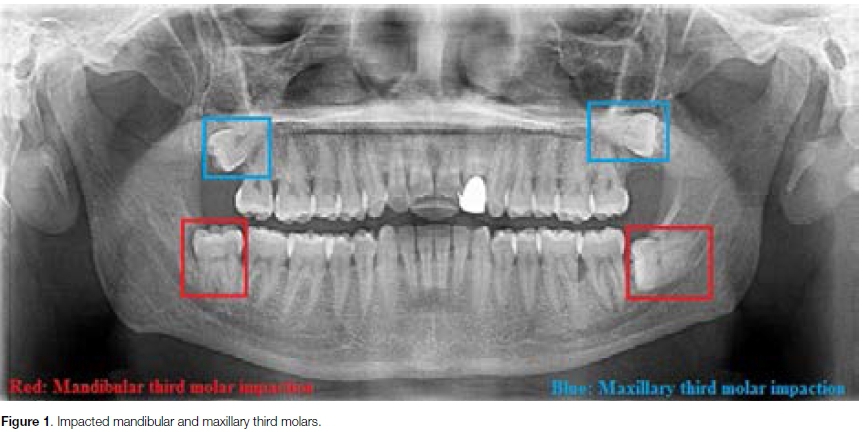
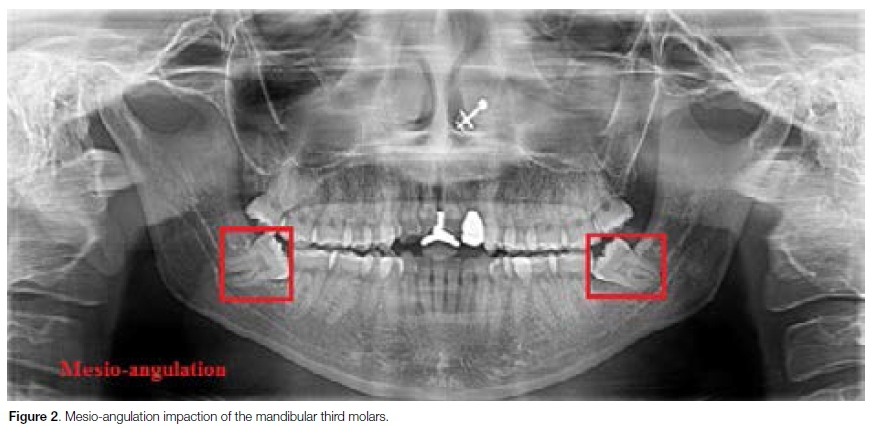
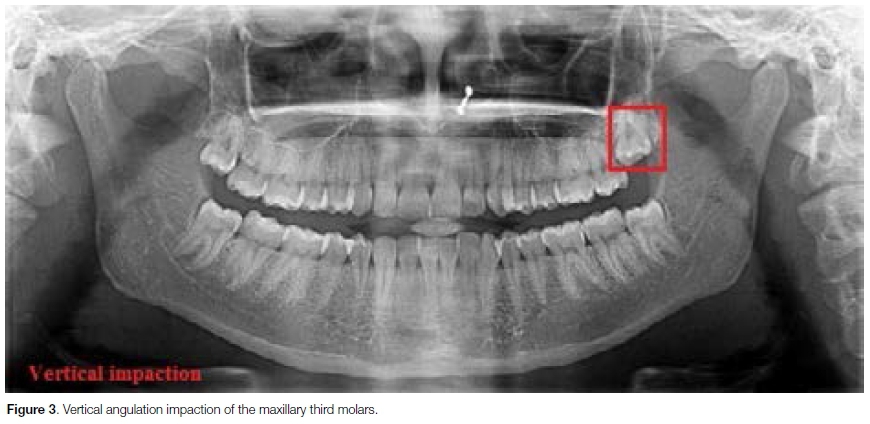
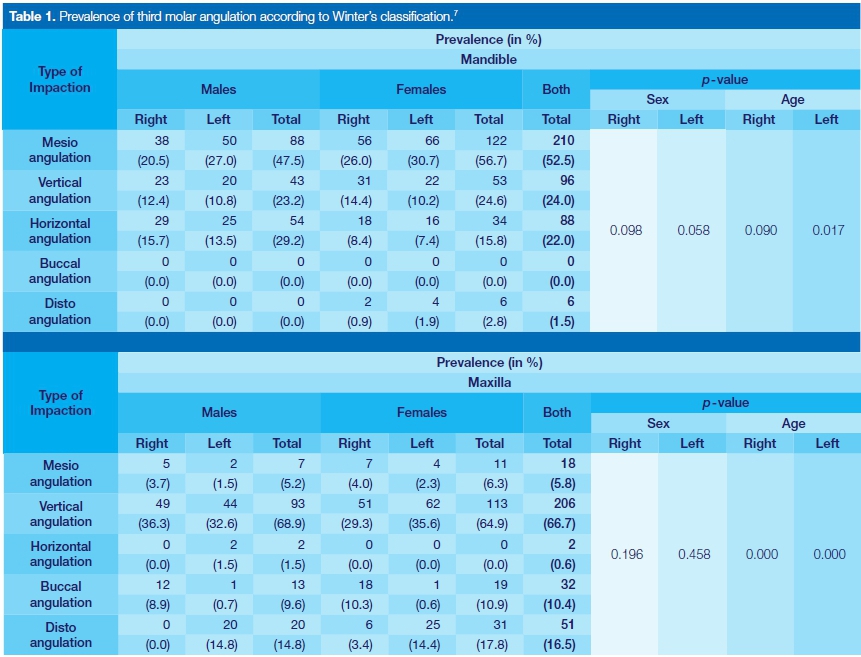
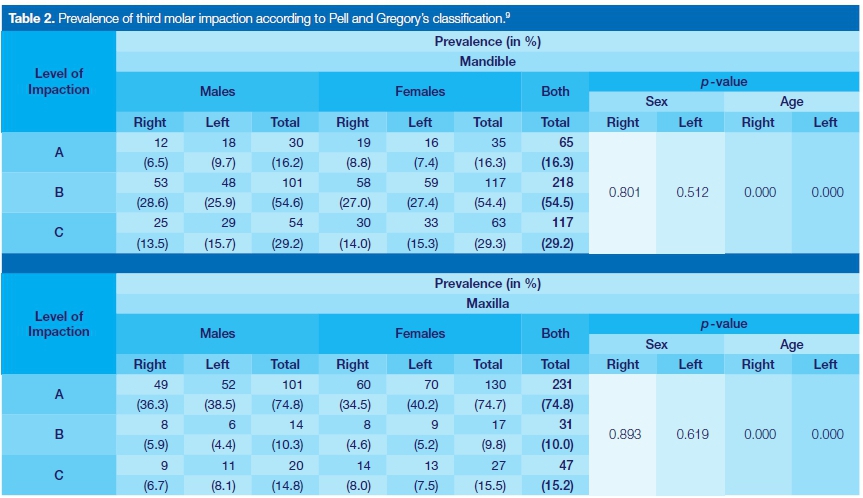
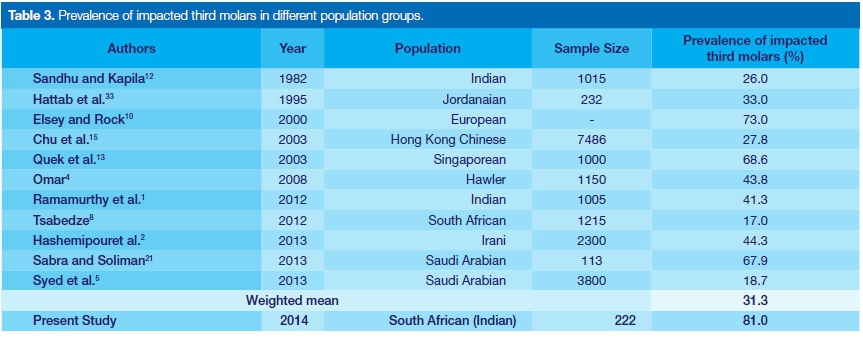
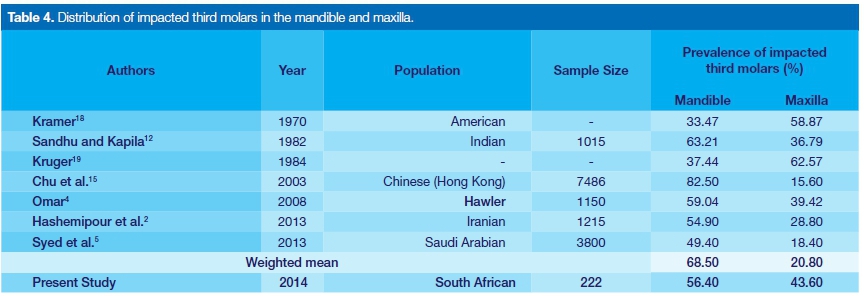
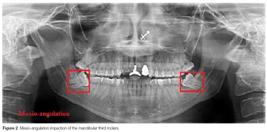
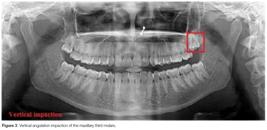
INTRODUCTION: An impacted tooth is partially erupted or un-erupted, positioned against another tooth, bone or soft tissue in such a way as to prevent further eruption. Normal dental arch relationships are disrupted This study investigated the prevalence of impactions of third molar teeth amongst Indians residing in the greater eThekwini Metropolitan area. MATERIALS AND METHODS: A sample of 274 digital panoramic radiographs was examined. Impacted third molars were identified on 222 scans. The impactions were classified using Winter's, and Pell and Gregory's schemes. Statistical analysis was applied to determine any relationship between impac-tions and sex and age. RESULTS: Eighty-one percent of individuals presented with at least one impacted third molar, mandibular frequency being significantly higher in both sexes (p-value = 0.000). The most prevalent types of impaction were mesio-angular (mandibular)and vertical angulation (maxillary For level of impaction, Class B and Class A were respectively most prevalent in the mandible and the maxilla. With the exception of angulation of impacted mandi-bular third molars on the right side, all parameters showed a statistically significant correlation with age (p-value=0.000). CONCLUSION: The high frequency of these eruption problems in this study may alert maxillo-facial and dental surgeons, and forensic investigators, to potential clinical challenges
Mandible; maxilla; prevalence; third molar impaction; radiology
 Thumbnail
 Thumbnail
 Thumbnail