Livestock theft dynamics in the Free State: Analysing perceptions, trends and economic implications (2019-2024)
Abstract
This study investigates livestock theft in the Free State province of South Africa, a region characterised by high livestock ownership and substantial stock theft rates. A quantitative approach was adopted, utilising structured surveys to analyse trends, perceptions, and the economic implications of this phenomenon. Through these structured surveys with farmers, the research investigates community perceptions and other factors that influence the non-reporting of crimes. Additionally, it analyses theft trends from 2019 to 2024, using statistics from the South African Police Service (SAPS). Findings reveal widespread distrust in the SAPS, with 82% of respondents not reporting livestock theft as they believe the police would do nothing about it. Although livestock theft cases, in particular those involving cattle, sheep, and goat theft, have reportedly decreased, significant fluctuations persist, with cattle theft having the most substantial economic implications. Seasonal trends indicate an increase in theft during peak agricultural periods and religious festivals, with economic losses averaging R175 223 940 over the five years, emphasising the urgent need for effective prevention strategies. The study identifies critical gaps in existing literature and recommends future research in longitudinal studies, qualitative methods and technological solutions to address livestock theft.
Introduction
In the Free State province of South Africa, livestock theft has a profound impact on rural livelihoods.2 As a quintessential farm crime, it must be understood within its local context to effectively address the challenges faced by local rural communities.3 Localised strategies tailored to the specific needs of these communities can significantly improve crime prevention efforts. A national perspective might overlook these subtleties, making it harder to tackle local crime effectively.4 Therefore, prioritising localised research and solutions offers a more accurate picture of crime and its impact on community well-being.5
The complexities of livestock theft are further compounded by factors such as the increasing distrust between farmers and the SAPS, as reflected in the growing trend of non-reporting.6 Understanding the local context, including community perceptions, reasons for non-reporting and the seasonal nature of theft, is essential for developing effective crime prevention strategies. This study aims to address these issues by investigating livestock theft in the Free State from 2018 to 2024, examining which livestock were targeted and the role of the SAPS, and identifying factors that influence the occurrence of theft in different areas. By gaining deeper insights into the issue, this research aims to contribute to the development of more effective, community-driven solutions to combat livestock theft in the province.
This article is structured into six key sections. It begins with an overview of the local context of livestock theft in the Free State, emphasising its socio-economic significance and the challenges rural communities face. This is followed by a discussion of the research methodology, which employs a quantitative approach, and the key factors influencing theft in rural areas, including community perceptions, the role of the SAPS, and trends in non-reporting of livestock theft. The third section examines the seasonal patterns of livestock theft and the types of livestock that are most commonly targeted. The penultimate section assesses the economic implications of livestock theft on the farming community in the Free State. Finally, the paper addresses limitations, identifies research gaps in the existing literature, and outlines directions for future studies to address these gaps and enhance crime prevention efforts in the Free State.
The literature on livestock theft in South Africa, particularly in the Free State, is more extensive than commonly perceived in academic circles.7Although Free State Agriculture (FSA) has made significant contributions to this field, much of its work remains unpublished.8 Another challenge stems from South Africa's linguistic diversity, since much of the livestock theft analysis and prevention information is primarily available only in Afrikaans (see notes in Afrikaans). Due to these linguistic barriers, access to this work by a broader audience, particularly within communal and smallholder farming communities, is limited.9
As the Victims of Crime Survey (VOCS) 2017/2018 indicated, the increase in livestock theft has led to the non-reporting of these cases becoming more common. An analysis of the VOCS revealed that non-reporting was a growing trend, increasing from a rate of 36.3% in 2011 to 77% in 2017/2018.10 However, since 2018, the VOCS has excluded livestock theft from the survey. The VOCS 2017/2018 is therefore the last available information from official government statistics, and no reasons have been provided for the omission of livestock theft in any correspondence or publication. The decline in reported cases until 2018 is attributed to the growing trend of non-reporting.11
However, a 2022 study, employing a quantitative approach with non-probability convenience sampling, involving 920 South African farmers and investigating farm crime and police-farmer relations, revealed that 38% of farmers consistently report crimes, 26% report them often, 28% report them occasionally, and only 8% never report any crimes.12 In essence, this means that farmers do report livestock theft and crimes, and the dark figure of crime statistics is not as significant as is generally perceived by analysts and academics who rely solely on VOCS data from 2017/2018. The primary reason cited by respondents for non-reporting, at 85%, was the belief that 'the police will do nothing about it', reflecting a profound lack of trust in the SAPS.13
Lombard examines the relationship between various factors, including reporting delays and proximity to the Lesotho border, and the incidence and severity of livestock theft.14Lombard also highlights discrepancies between official statistics and actual losses, offering crucial insights into the direct and indirect costs of livestock theft and laying a foundation for further studies.15 Another observation often overlooked in the literature on livestock theft in the province is the shifting nature of hotspot stations, which Buys highlighted but did not address.16 Barclay identified factors such as the proximity of national and provincial highways and the terrain where farms are located as possible variables in farm crime. The higher incidence of theft in the northern part of the province (Fezile Dabi and Thabo Mofutsanyana districts) compared to the south (Xhariep district) is rarely considered.17
Routine Activity Theory (RAT), developed by Cohen and Felson (1979), explains crime as an interaction of three key elements: a motivated offender, a suitable target, and the absence of a capable guardian.18 According to this theory, crimes occur when these three factors converge in time and space. Applied to livestock theft, RAT suggests that theft is more likely to occur in areas where valuable livestock (suitable targets) are accessible, motivated offenders are present, and security measures such as fencing, surveillance, or law enforcement (capable guardians) are weak or absent. Understanding livestock theft against this framework enables the identification of risk factors and the development of targeted crime prevention strategies.19 Clack conducted a study on criminological theories, using case studies, and found that the principles of RAT have an impact on conceptions of how perpetrators commit the crime of livestock theft.20 Dooreward and Lombard confirmed these findings in their respective studies.21
Livestock theft remains a significant issue in the Free State. Although research has been conducted on this topic within the province, critical gaps persist in comprehensively understanding its full impact. The decline in theft rates contrasts sharply with the growing distrust in the SAPS, highlighting a paradox in public confidence. Despite this contradiction, little is known about community perceptions and the reasons for non-reporting. Additionally, inconsistencies in data on targeted livestock and the effect of seasonal changes further highlight the need for in-depth research.22 Although the SAPS has provided quarterly crime data corresponding to the seasons since 2019, a seasonal trend analysis has not been conducted. Furthermore, evaluating the effectiveness of interventions such as innovative technologies and community-based solutions is crucial for understanding and developing better prevention strategies. This study seeks to address these gaps by: 1) exploring community views on livestock theft; 2) determining reasons for non-reporting; 3) analysing theft trends from 2019-2024; 4) identifying commonly targeted livestock; 5) assessing seasonal impacts; and 6) calculating the economic implications of livestock theft. These insights aim to strengthen theft prevention strategies in the Free State.
Research methodology
Study area
The Free State province, centrally located in South Africa, has approximately 2.9 million households, with 16.1% of its population engaged in agricultural activities. Among these agricultural households, 80.3% produce exclusively for personal consumption, 7.7% primarily for sale and personal consumption, and 5.8% are engaged solely in commercial farming.23 The number of commercial farming units in the Free State is 7 951, although a breakdown of the number of farmers per district is unavailable.24 In 2017, the Free State's agricultural income was mainly driven by animals and animal products (50.8%) and field crops (43.3%), highlighting the province's reliance on livestock and grain production.25
Research approach
This study received ethical approval from the Unisa College of Law Research and Ethics Clearance Committee, with approval number 4536, by relevant ethical guidelines and regulations. It adopted a quantitative research approach, which is among the most commonly used techniques in criminological studies, particularly for analysing structured surveys and official crime statistics.26 The research employed primary and secondary data to investigate farmers' perceptions of crime, non-reporting behaviour, and livestock theft trends in the Free State.
A structured survey was developed using Microsoft Forms to explore farmers' perceptions of crime severity and non-reporting in the Free State. The respondents indicated in which province they reside and their local police station, ensuring that only farmers from the Free State province were included in the study.
Further, the survey did not collect personal information from respondents.
Data was collected between March and April 2024, using non-probability convenience sampling. It is recognised that this sampling method has the potential to introduce bias in the conclusions drawn from the targeted study respondents.27 The survey was distributed through key agricultural organisations, including Free State Agriculture (FSA), Transvaal Agricultural Union-South Africa (TAU-SA), and commodity-specific groups such as the Red Meat Producers Organisation (RPO), the National Wool Growers Association (NWGA), and the National Livestock Theft Prevention Forum (NSTPF). Membership databases, email lists and WhatsApp groups were utilised for distribution, alongside social media platforms such as X (formerly Twitter) and LinkedIn, to increase response rates.
After data collection, the survey (n=187) was exported to Microsoft Excel, where the nominal data was converted into a numerical format. This data was then imported into the Statistical Package for the Social Sciences (SPSS) (Version 29.0.2.0) for statistical analysis. Descriptive statistics summarised respondents' views on crime and reporting practices. These findings provided a general overview of farmers' perceptions of crime severity and the factors influencing the decision to report or not report livestock theft.
Additionally, the unit of analysis for this research is livestock theft, commonly referred to as stock theft, which is categorised as a property crime primarily motivated by economic factors.28 As defined by the Stock Theft Act No. 57 of 1959, livestock encompasses various animals including horses, cattle, sheep, goats, pigs, poultry, and others.29 However, this study focuses on cattle, sheep, and goats, categories of livestock representing approximately 89% of all livestock theft in South Africa.30
Secondary data from the yearly SAPS Police Recorded Crime Statistics from 2018 to 2024 was analysed to investigate patterns in livestock theft, including the types of livestock targeted and seasonal variations.31 Yearly statistics were used as they provide a clearer picture of tendencies.32 Additionally, specific datasets from the SAPS National Stock Theft and Endangered Species Unit provided detailed information on the number of theft cases and the types of livestock - cattle, sheep, and goats - stolen over the past five years.33
Microsoft Excel was used to perform fundamental statistical analysis, including summary statistics and graphical representations of livestock theft trends. Additionally, SPSS correlation analysis was employed to explore the relationship between the number of theft cases and the number of livestock stolen. The data was segmented by quarters per year to identify patterns or seasonal trends in livestock theft incidents.
This study combines survey data and official statistics to provide a comprehensive understanding of the trends, perceptions, and economic implications of livestock theft in the Free State.
Results and findings
The findings are presented in the following text, along with charts, to address the research question.
Distribution of respondents
The distribution of number of respondents per district in the Free State (n=187) was as follows: Fezile Dabi district (n=44, 24%), Thabo Mofutsanyana district (n=56, 30%), Mangaung metropolitan (n=15, 8%), Xhariep district (n=9, 5%), and Lejweleputswa district (n=63, 34%). Given that Mangaung is primarily a metropolitan area, its lower number of respondents may reflect the smaller farming population in the district. In contrast, the number of respondents in the other districts likely aligns with the overall population distribution.34 However, the exact number of farmers per district remains unknown in official statistics, making it difficult to assess generalisability.
Perceptions of crime seriousness and reporting trends among Free State farmers
The respondents' (n=187) perceptions of the crime situation are indicated as very serious (n=83, 44.2%), a little bit serious (n=60, 31.9%), neutral (n=28, 14.9%), not very serious (n=12, 6.4%), or not at all serious (n=1, 0.5%). This means that 81% of respondents perceive crime in their area as severe. Among respondents (n=187), 81% perceive crime as severe, which is higher than the 72.5% reported in studies from specific USA states.35
The majority of respondents, 142 (80.08%), reported having been victims of a crime in the past, while 35 (19.02%) stated they had not experienced victimisation. These respondents (n=187) represent only 2.6% of the Free State's farmer population, which comprises 7 951 farming units. A larger sample size would have reduced the margin of error and increased confidence in representing the target population. Although achieving higher statistical accuracy was challenging due to the research approach adopted, the sample size was sufficient for this exploratory study. Cumulatively, 93% of respondents consider crime a serious issue in their areas, with 88.8% reporting incidents of livestock theft. When asked to indicate how often, the responses were: 'all the time' (n=79; 42.2%); 'quite often' (n=28; 15.0%); 'occasionally' (n=59; 31.6%); 'never' (n=21; 11.2%).
This distribution highlights a high level of positive respondent reporting behaviour, suggesting that livestock theft reporting is standard in the Free State. Further insights can be drawn from Peterson et al., who noted that no explanation was found for the high reporting rates in their study.36
There is a weak positive correlation (r=0.105) between respondents' perception of crime severity and their likelihood of reporting theft, suggesting that those who view crime as 'very serious' or 'a little bit serious' are only marginally more or less likely to report theft. This finding contradicts Peterson et al., who argued that perceived crime severity significantly increases reporting confidence.37 However, the finding of a higher reporting rate contrasts with previous studies in South Africa, such as those by Clack and Tustin & Van Aardt in 2018, which found low reporting rates among farmers.38 The differences in the study results may stem from the period since the previous studies, variations in population characteristics, and research methodologies used across studies.39
Factors influencing the non-reporting of livestock theft
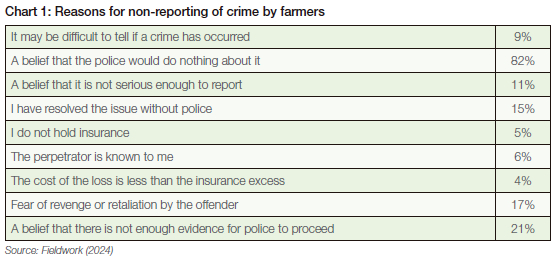
Chart 1 presents the key reasons why farmers choose not to report livestock theft and reveals why individuals often choose not to report crimes. The primary reason is the belief that police will not take effective action, with 82% of respondents citing this concern, which corresponds with the study of Tustin and van Aardt.40 This significant figure indicates a substantial lack of confidence in the SAPS, possibly due to past experiences or perceptions of ineffectiveness. However, the figure corresponds with farmers' perceptions in the United Kingdom and Australia.41
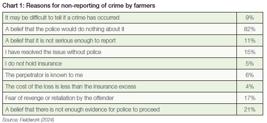
Other factors contributing to crime non-reporting include concerns over insufficient evidence (21%), fear of offender retaliation (17%), a preference for private resolution (15%), and the belief that the crime is too minor for police involvement (11%). Practical issues, such as lacking insurance (5%), knowing the perpetrator (6%) and costs below the insurance excess (4%), also play a role, with overarching concerns about police effectiveness and personal safety influencing these decisions.
Trends and seasonal variations in livestock theft: a five-year analysis of SAPS statistics
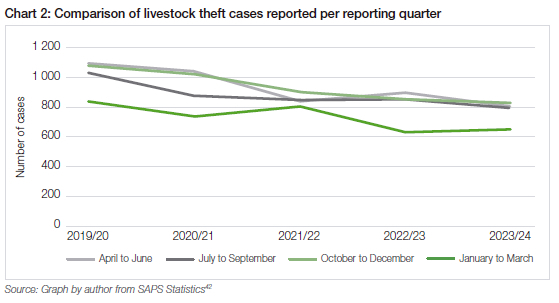
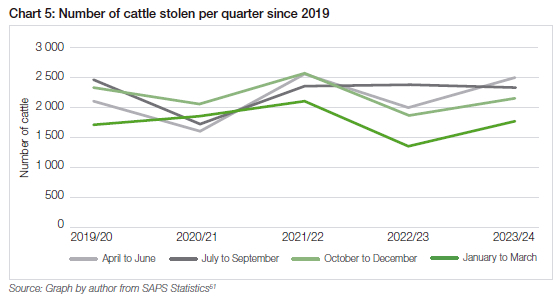
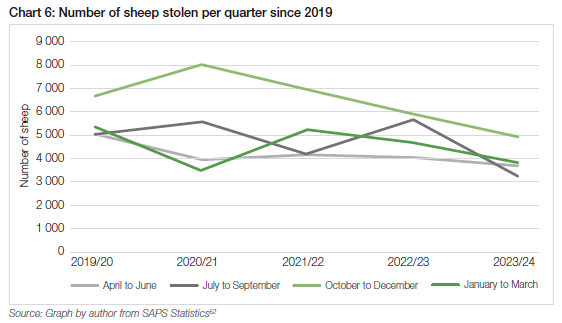
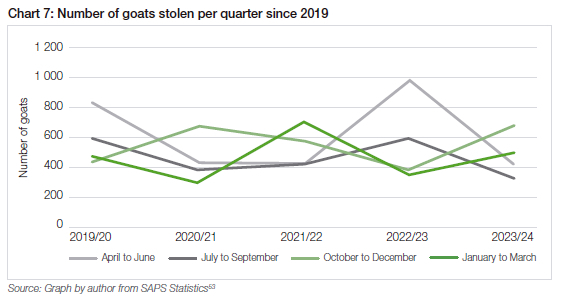
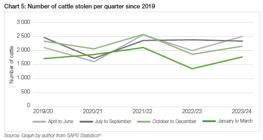
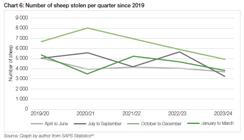
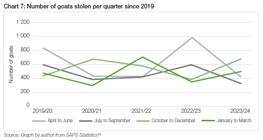
Charts 2, 5, 6 and 7 visually present trends in livestock theft, aiding in pattern identification and comparison over time. Chart 2, based on SAPS yearly statistics, summarises quarterly theft trends, while charts 5 to 7 illustrate seasonal variations and fluctuations.
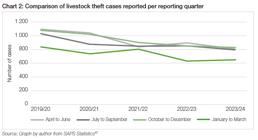
According to SAPS statistics, Chart 2 shows a consistent decline in livestock theft cases, with reported incidents decreasing by 30.99% over the past five years.43 The number of reported livestock theft cases yearly has steadily declined from 2018 to 2024. During the April to June quarter, reported cases decreased from 1 097 in 2018/2019 to 809 in 2022/2023, representing a 26.2% decline over five years. The most significant drop occurred between the 2019/2020 and 2020/2021 periods, when cases declined by 18.7%, indicating that COVID-19 had a substantial impact.
Similarly, from July to September, the number of cases decreased from 1 052 in 2018/2019 to 801 in 2023/2024, representing a 23.9% reduction over the five years. The steepest decline occurred between the 2019/2020 and 2020/2021 periods, when cases dropped by 15%. However, from 2020/2021 to 2022/2023, the numbers remained relatively stable, fluctuating slightly between 847 and 852, indicating that livestock theft remained a challenge but did not increase further.
The October to December quarter consistently recorded the highest number of theft cases in the early years, with 1 199 incidents in 2018/2019. However, by 2023/2024, this number had decreased to 830, representing a 30.8% decline over the five years. The most significant reduction occurred between 2018/2019 and 2021/2022, when cases fell by 25% in just three years. The period from January to March experienced the most substantial overall decrease, from 952 cases in 2018/2019 to 651 in 2023/2024, representing a 31.6% decline. The lowest number of recorded cases was in 2022/2023 (640), 32.7% lower than in 2018/2019. The sharpest drop occurred between the 2019/2020 and 2020/2021 periods, when cases fell by 11.9%, possibly due to external factors such as police actions or disruptions caused by the COVID-19 pandemic.
The 30.99% decrease in reported livestock theft cases can be attributed to several factors. While Free State Agriculture suggests that the decline is mainly due to non-reporting of such crimes, this study found that non-reporting does not have a significant impact on the numbers. On the other hand, the South African Polygraph and Investigation Services (SAPIS) argue that the reduction is a result of improved relationships between farmers and the SAPS.44 This enhanced collaboration is likely to lead to improved communication, faster responses and more effective prevention measures, ultimately contributing to a decrease in reported livestock theft cases. Other strategies that have a significant influence on improved crime prevention measures include the E2 CCTV cameras and community control centres.45
Statistical analysis of livestock theft trends and correlations
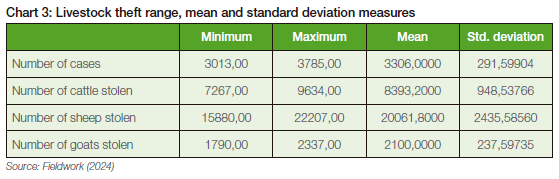
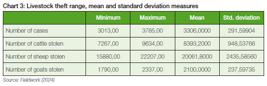
Chart 3 summarises the minimum, maximum, mean, and standard deviation for cases and stolen cattle, sheep, and goats, highlighting trends and fluctuations in livestock theft. This statistical overview offers insights into the dynamics of livestock crime and its influencing factors.
The analysis of livestock theft data in Chart 3 over the five-year period 2019 to 2024, incorporating all the information in charts 2 and 5 to 7, provides valuable insights into the patterns and fluctuations in the theft of cattle, sheep and goats. The statistical summary of the data in Chart 3 reveals significant variability and trends in the number of each type of livestock stolen.
Annually, cattle theft in the province ranges from 7 267 to 9 634, with a mean of 8 393.2 and a high standard deviation of 948.54. This indicates sizable variability and no clear trend.
Sheep theft ranges from 15 880 to 22 207, with a mean of 20 061.8 and a high standard deviation of 2 435.59. This substantial fluctuation suggests that dynamic factors, such as seasonal trends or varying security measures, may have a more significant influence on sheep theft than on cattle theft.
Goat theft shows minor variability, ranging from 1 790 to 2 337, with a mean of 2 100 and a standard deviation of 237,60. This lower variability indicates a more consistent pattern of theft, possibly due to stable demand and supply dynamics.
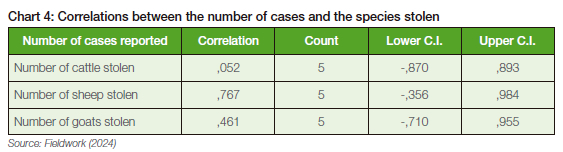
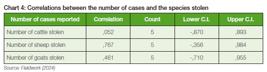
The correlation analysis in Chart 4 highlights the relationships between livestock theft cases and the number of cattle, sheep, and goats stolen. The results reveal varying levels of association and uncertainty, providing valuable insights into trends in livestock theft.
For cattle, the correlation coefficient is 0.052, indicating a very weak positive relationship between theft cases and the number of cattle stolen. This suggests a slight increase in cattle theft, as the number of cases rises. However, the confidence interval (ranging from -0.870 to 0.893) is extremely broad, reflecting high uncertainty and suggesting that the data may not fully meet the normality assumptions.
In contrast, sheep theft shows a much stronger positive correlation, with a coefficient of 0.767. This suggests a clear link between the increase in theft cases and the number of sheep stolen. Although the confidence interval (-0.356 to 0.984) remains somewhat wide, it still supports a notable relationship, despite lingering uncertainty about its exact strength.
The correlation for goats is moderate, with a coefficient of 0.461. This indicates that, as theft cases rise, goat theft also increases, though less strongly than sheep theft. The confidence interval (-0.710 to 0.955) is quite broad, indicating significant variability and uncertainty in this association.
Sheep theft has the strongest correlation with overall theft cases, followed by goat theft, whereas cattle theft shows little to no relationship. However, the large confidence intervals across all cases indicate significant uncertainty, requiring cautious interpretation of the results.
Exploring seasonal influences on livestock theft: a comparative analysis of quarterly crime trends
Since the SAPS Crime Registrar's Office resumed releasing quarterly crime statistics in 2019, the potential benefits of these reports for crime analysis have not been fully explored, as analyses are often limited to quarterly figures.46 This narrow focus overlooks the broader seasonal trends that could provide valuable insights into crime patterns, particularly livestock theft, which research suggests is influenced by agricultural cycles, outdoor activities, and economic pressures during specific times of the year.47
Seasonal factors have been shown to affect crime rates in inconsistent and sometimes contradictory ways.48 However, their predictable variation is crucial for developing crime prevention strategies and forecasting future trends.49 Understanding these seasonal patterns is particularly important for rural communities in developing countries, such as South Africa and Kenya, where the correlation between farming activities and stock theft is a persistent issue, influenced by factors such as the type of farming, the value of goods produced, and perceived security measures.50
Analysing the descriptive statistics for the different livestock species, as shown in charts 5 to 7, across the four quarterly crime reporting periods - April to June, July to September, October to December, and January to March - reveals several key insights.
Identifying peak periods for cattle theft: mean values and quarterly trends
The data in Chart 5 shows that each quarter presents a distinct trend line, indicating a distinct quarterly pattern rather than a consistent yearly trend. However, the mean values for each quarter reveal the following: April to June has a mean of 2164.25, July to September 1816.75, October to December 2408.50, and January to March 1908.50. These variations suggest that cattle theft is more prevalent during the periods of October to December and April to June.
Identifying peak periods for sheep theft: mean values and quarterly trends
The data in Chart 6 shows that, like cattle theft, sheep theft exhibits a clear trend across reporting quarters. The trendline has generally been in decline, with July to September serving as the outlier. The mean values for each quarter are as follows: April to June at 4221.60, July to September at 4769.40, October to December at 6529.50, and January to March at 4530.60. This indicates that both sheep and cattle theft are higher during the period from October to December, while the other quarters exhibit varying trends. The finding suggests a correlation with seasonal patterns rather than the suitable targets element in RAT.
Identifying peak periods for goat theft: mean values and quarterly trends
The goat theft data in Chart 7 shows significant variability, with no clear trend. This suggests a stronger correlation with RAT and the availability of suitable targets, as explained by Clarke's CRAVED model, rather than with seasonal patterns seen in cattle and sheep theft.54 The mean values for each period are as follows: April to June 621; July to September 464; October to December 552; and January to March 78. What is observed is that goat theft is higher in the April to June quarters, when cattle and sheep theft is lower.
Seasonal and cultural influences on livestock theft: festive seasons, environmental factors and economic pressures
The analysis of charts 2 and 5 to 7 further reveals significant seasonal variations in livestock theft activities, highlighting the complex interplay between religious events, environmental factors and criminal behaviour.55 Most periods exhibit moderate variability, with the highest mean observed from October to December.
Seasonal variations may contribute to this trend, as the period from April to June is typically harvest time in mixed agricultural areas, summer rainfall regions, and is the planting season for winter crops, for which the Free State is known. This may reflect an absence of active guardians, as per RAT.56 Additionally, the onset of winter months in the southern hemisphere, as suggested by Doorewaard, Farrel and Peace, and Moremoholo, may correlate with an increase in property crimes, similar to patterns observed in the northern hemisphere.57
South Africa's festive seasons unite communities through celebrations like Christmas and Easter.58 Analysis of species theft trends over the past five years, as shown in charts 2 and 5 to 7, suggests a correlation between the timing of the festive season and the incidence of theft. During festive seasons, many individuals in rural areas face increased financial strain, leading some to resort to livestock theft as a means of coping. While those acquiring the stolen livestock may not be criminals, the actual offenders are opportunistic thieves who target animals to sell to those in need.59 This trend is particularly evident in communities with high unemployment and poverty levels, where the demand for livestock for celebrations can lead to increased livestock theft incidents.60 Festive seasons typically involve communal gatherings and feasting, which traditionally include livestock. The cultural significance of livestock during these times can compel individuals to steal animals to meet social expectations or provide for family gatherings.61
Moreover, it has been observed that the incidence of organised crime syndicates targeting livestock increases during peak festive seasons.62 These syndicates take advantage of festive periods, when security may be lax due to holiday distractions and guardians may be absent, thus facilitating the effortless execution of livestock thefts. It is critical that crime prevention strategies are developed to address the increased risks that stem from seasonal variations and religious and cultural events.
Economic implications of livestock theft
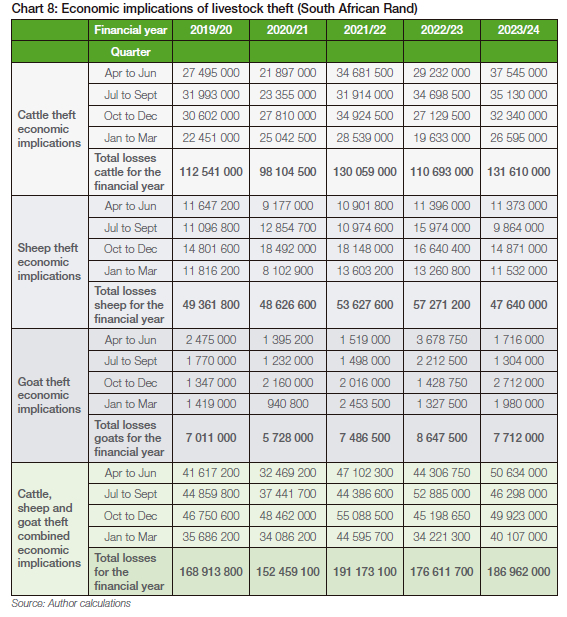
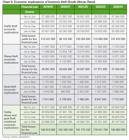
At the NSTPF's annual November meeting, the average monetary value of livestock is established as a baseline for calculating the economic impact of livestock theft in the upcoming financial year.63 This valuation, based mainly on female animal estimates, excludes potential losses from future breeding herds and genetic value considerations.64 Chart 8 highlights the economic impact from 2019 to 2023, illustrating that livestock theft has inflicted substantial financial losses in the Free State, with cattle theft consistently representing the largest portion of these losses. Recovery rates are omitted, as security companies and farmers conduct most recoveries.65 Lombard, Van Niekerk and Mare argue that this omission may skew the data; however, including all recovery information may still not yield a definitive figure.66
The data also shows notable yearly fluctuations, underscoring the persistent financial burden on the agricultural sector in this province.
Chart 8 uses the numbers of species stolen in charts 2 and 5 to 7 to present the yearly and quarterly economic impact of livestock theft from 2019 to 2024. It highlights the financial implications and fluctuations in total losses across different years. Analysing trends across different species provides insight into how economic impacts have evolved and which sectors have been most affected.
Among the three livestock categories, cattle theft consistently has the most severe economic implications. In 2019/2020, the financial implications totalled R112.5 million; however, a notable decrease occurred in 2020/2021, dropping to R98.1 million. This decline was short-lived, as economic implications surged again in the following years, peaking at R131.6 million in 2023/2024 - the highest recorded during the five years.
Sheep theft-related financial implications exhibit a different trend, with more fluctuations than cattle theft. The total economic burden for this sector remained relatively stable, averaging between R48 million and R57 million per year. The highest recorded financial implication was in 2022/2023, at R57.2 million, followed by a decline to R47.6 million in 2023/2024.
Compared to cattle and sheep, goats represent the smallest economic implication category. Over the five years, annual implications ranged between R5.7 million and R8.6 million, with the 2022/2023 financial year experiencing the highest financial burden, at R8.6 million. Despite their lower financial impact compared to cattle and sheep, goat-related implications still show an upward trend, with notable fluctuations in different quarters. This suggests that while goat theft may not have the largest economic consequences, their vulnerability in specific quarters should not be overlooked.
When combining the financial implications of cattle, sheep, and goats, the total economic impact reveals an increasing trend over the five years. The lowest recorded total was in 2020/2021, at R152.5 million, followed by a steady increase, which peaked in 2021/2022 at R191.2 million. The most recent year, 2023/2024, recorded R186.9 million in economic implications, demonstrating a persistent burden on the livestock industry. The total annual loss peaked in 2021 at R191.17 million and was lowest in 2020 at R152.46 million. Cattle theft consistently contributed most to the overall loss in each year, with the highest figure in 2023 at R131.61 million. Sheep and goat theft figures showed less variation but remained significant, with notable increases in sheep losses in 2021/2022 and 2022/2023. While total losses fluctuate annually, no clear upward or downward trend is evident over the five-year period.
This can be attributed to the annual increase in the value of the animals and fluctuations in their numbers.
Limitations of the study
The study faces limitations due to a lack of longitudinal data on seasonal trends in livestock theft, which has only been available since 2019.67 This restricts the ability to track long-term patterns and evaluate the effectiveness of prevention strategies. Relying solely on quantitative data overlooks community-level dynamics that influence theft and non-reporting, while the evaluation of initiatives such as provincial forums and operational rooms (e.g., Bethlehem), is incomplete, thereby hindering the effective assessment of strategies.68
Geospatial analysis remains underdeveloped, and the study lacks an exploration of technological solutions, such as traceability and digital reporting tools, as crime prevention methods.69 The economic impact assessment primarily addresses direct losses without considering indirect costs, like impacts on breeding herds or the psychological toll on farmers, underscoring the need for an interdisciplinary approach.70 Furthermore, the study does not adequately address the role of the SAPS in committing livestock theft, or the socio-economic and cultural factors that influence livestock theft.71
Recommendations and possible future research
Future studies in the Free State should place greater emphasis on theoretical frameworks, potentially exploring civic community theory to understand how social cohesion and collective efficacy can mitigate livestock theft. Longitudinal studies could track evolving theft patterns while incorporating demographic and geographic variables that may clarify how different groups and areas are affected. Qualitative research approaches can illuminate non-reporting, perceptions of crime, and the effectiveness of prevention measures. Evaluating current strategies, including forums and community programmes, is essential to assess their impact on theft rates and reporting behaviours. Geospatial analysis could reveal hotspots for targeted interventions, and economic impact assessments should cover both direct and indirect costs. Ultimately, comparing trends and strategies with those of other provinces may yield valuable insights for more effective local approaches.
Although researchers72 debate the impact of livestock theft along the Lesotho border, this study does not explore the issue. Addressing this topic would require a separate research paper explicitly focused on spatial issues related to crime and geography.
Exploring the socio-economic and cultural factors influencing livestock theft is another critical area. Finally, it is essential to assess the potential of technological solutions, such as surveillance systems (e.g., E2), GPS tracking for livestock, and digital reporting tools, which could significantly reduce livestock theft and improve reporting accuracy.73
Conclusion
This study examined livestock theft in the Free State province of South Africa, focusing on farmers' perceptions of crime severity, non-reporting behaviour, and statistical trends. Using a quantitative research approach, the study combined structured survey responses with official crime data from the SAPS to gain insights into the scale and impact of livestock theft.
The findings highlight that crime, particularly livestock theft, is perceived as a serious issue by the majority of respondents, with 81% acknowledging its severity. However, the correlation between crime severity perception and reporting behaviour is weak. Nevertheless, respondents do report more crimes than is assumed. The primary reason for non-reporting is a lack of confidence in law enforcement, with 82% of respondents believing that the police would not take effective action. Additional factors such as fear of retaliation, insufficient evidence and a preference for private resolution further contribute to the underreporting of theft incidents.
Analysis of SAPS statistics over the past five years has revealed a 30.99% decline in reported livestock theft cases; however, the extent to which this decrease reflects actual crime reduction versus underreporting remains uncertain. Sheep theft exhibited the strongest correlation with overall livestock theft cases, followed by goat theft, while cattle theft showed little relation to the number of cases reported. Seasonal trends also revealed fluctuations in livestock theft trends, with notable declines associated with external factors.
While this study offers valuable insights into the challenges of livestock theft and crime reporting, its findings are limited by the small sample size and non-probability sampling method, which may impact the study's generalisability. Future research should expand on these findings by employing larger, more representative samples and exploring qualitative aspects of farmers' experiences with crime and the SAPS. Addressing the gaps in trust between farmers and the SAPS, improving crime prevention strategies, and enhancing police responsiveness are critical steps in mitigating livestock theft and increasing crime reporting by farmers.
Notes1 Willie Clack is a senior lecturer in the Department Corrections Management in the School for Criminal Justice at the University of South Africa.
Literature review
-
2 Willem Abraham Lombard, The financial impact of sheep theft in the Free State Province of South Africa, Masters Dissertation, University of the Free State, 2016, http://scholar.ufs.ac.za/xmlui/handle/11660/2021> (accessed 1 October 2018).
» http://scholar.ufs.ac.za/xmlui/handle/11660/2021 - 3 Elaine Barclay, Farm victimisation: The quintessential rural crime, in JF Donnermeyer (ed), The Routledge International Handbook of Rural Criminology, New York: Routledge, 2016, 107-117.
-
4 Rob I Mawby, Understanding and responding to crime and disorder: Ensuring a local dimension, Crime Prevention Community Safety 10(3) (2008), 158-73. https://doi.org/10.1057/cpcs.2008.11.
» https://doi.org/10.1057/cpcs.2008.11 -
5 Ibid.
» https://doi.org/10.18061/ijrc.v8i3.9999; -
6 Gerrit Jacobus Schwartz, Calvin Malane and Mogau Mamabolo, The rural frontline: manifestations of police corruption and criminality, Acta Criminologica: African Journal of Criminology & Victimology 37(2) (November 2024), 59-76. https://doi.org/10.10520/ejc-crim_v37_n2_a4.
» https://doi.org/10.10520/ejc-crim_v37_n2_a4 - 7 Jane Buys, The National Rural Safety Strategy in the Free State, South Africa, in Alistair Harkness (ed), Rural Crime Prevention: Theory, Tactics and Techniques, Routledge, 2020, 220-266;
-
Willie Clack, The extent of stock theft in South Africa, Acta Criminologica: Southern African Journal of Criminology 26(2) (2013), 77-91. https://doi.org/10.10520/EJC150914;
» https://doi.org/10.10520/EJC150914; -
Willie Clack and Anthony Minnaar, Rural crime in South Africa: an exploratory review of 'farm attacks' and stocktheft as the primary crimes in rural areas, Acta Criminologica: Southern African Journal of Criminology 31(1) (2018), 103-35. https://doi.org/10.10520/EJC-11c61e6cc3.
» https://doi.org/10.10520/EJC-11c61e6cc3 -
8 Jane Buys, Misdade en veediefstal in eerste kwartaal van 2023/2024: Vrystaat [Crime and livestock theft in the first quarter: Free State], Vrystaat Landbou [Free State Agriculture], 2023, https://vrystaatlandbou.co.za/wp-content/uploads/2024/03/ANALISE-VAN-MISDADE-EN-VEEDIEFSTAL_EERSTE-KWARTAAL-2023-2024.pdf;
» https://vrystaatlandbou.co.za/wp-content/uploads/2024/03/ANALISE-VAN-MISDADE-EN-VEEDIEFSTAL_EERSTE-KWARTAAL-2023-2024.pdf -
Jane Buys, Analise van misdade en veediefstal in derde kwartaal van 2023/2024: Vrystaat [Crime and livestock theft in the third quarter of 2023/2024: Free State], Vrystaat Landbou, 2024. https://vrystaatlandbou.co.za/wp-content/uploads/2024/03/ANALISE-VAN-MISDADE-EN-VEEDIEFSTALSAKE-DERDE-KWARTAAL-2023-2024.pdf;
» https://vrystaatlandbou.co.za/wp-content/uploads/2024/03/ANALISE-VAN-MISDADE-EN-VEEDIEFSTALSAKE-DERDE-KWARTAAL-2023-2024.pdf -
Jane Buys, The role of organised agriculture in rural safety, Stockfarm 11 (2) (2021), 8-9. https://doi.org/10.10520/ejc-vp_stock_v11_n2_a3.
» https://doi.org/10.10520/ejc-vp_stock_v11_n2_a3 -
9 Clack, An analysis of livestock theft in South Africa (2013-2023).
» https://www.statssa.gov.za/?p=16758 -
10 Willie Clack, Rural crimes: Non-reporting of livestock theft by farmers, Acta Criminologica: African Journal of Criminology & Victimology, 31(4) (2018), i-vii. https://doi.org/10.10520/EJC-159754347a.
» https://doi.org/10.10520/EJC-159754347a -
11 Ibid; W Maluleke, R J Mokwena and L L Motsepa, Rural farmers' perspectives on stock theft: police crime statistics, South African Journal of Agricultural Extension 44(2), (2016), 256-74, http://dx.doi.org/10.17159/2413-3221/2016/v44n2a393.
» http://dx.doi.org/10.17159/2413-3221/2016/v44n2a393 - 12 Willie Clack, Crime and safety in rural South Africa (North West) in V Ceccato and A Harkness (eds), Rural perspectives on crime and justice, 2025 (to be published).
-
13 Ibid.
» https://africacheck.org/fact-checks/guides/guide-understanding-crime-statistics-south-africa-what-you-need-know - 14 Lombard, The financial impact of sheep theft in the Free State Province of South Africa.
-
15 Ibid.
» https://doi.org/10.1108/PIJPSM-03-2024-0030 - 16 Buys, Crime and livestock theft in the first quarter: Free State; Buys, Crime and livestock theft in the third quarter of 2023/2024.
-
17 Elaine Barclay, A review of the literature on agricultural crime, University of New England, 2001, Report to the Criminology Research Council <http://criminology.fsu.edu/wp-content/uploads/A-Review-of-the-Literature-on-Agricultural-Crime.pdf> (accessed 11 November 2018).
» http://criminology.fsu.edu/wp-content/uploads/A-Review-of-the-Literature-on-Agricultural-Crime.pdf -
18 Lawrence E Cohen and Marcus Felson, Social change and crime rate trends: a routine activity approach, American Sociological Review, 1979, 588-608, http://dx.doi.org/10.2307/2094589.
» http://dx.doi.org/10.2307/2094589 -
19 Willem J Clack, Criminology theories: An analysis of livestock theft cases, Acta Criminologica: African Journal of Criminology & Victimology 28(2) (January 2015), 92-106. https://doi.org/10.10520/EJC185955.
» https://doi.org/10.10520/EJC185955 -
20 Ibid.
» https://www.landbou.com/landbou/nuus/so-neem-die-platteland-beheer-oor-hul-veiligheid-20240221 -
21 Cecili Doorewaard, Livestock theft: a criminological assessment and sample-specific profile of the perpetrators, Master's dissertation, University of South Africa, 2020, http://hdl.handle.net/10500/26792;
» http://hdl.handle.net/10500/26792; -
Lombard, The financial impact of sheep theft in the Free State Province of South Africa.
» <https://www.up.ac.za/research-matters/news/post_2998144-when-temperatures-rise-so-do-crime-rates-evidence-from-south-africa -
22 Clack, An analysis of livestock theft in South Africa (2013-2023).
» https://doi.org/10.1007/s10940-011-9145-7 -
24 Stats SA, Census of commercial agriculture, 2017: Financial and production statistics, Pretoria: Statistics South Africa, 24 March 2020, http://www.statssa.gov.za/.
» http://www.statssa.gov.za/ -
25 Ibid.
» https://doi.org/doi:10.1057/sj.2008.23 - 26 Walter S DeKeseredy, Gathering data on male-to-female violence in rural and remote places, in W DeKeseredy, JR Peterson and A Pytlarz (eds), Research methods for rural criminologists, London and New York: Routledge, 2022; 55-66;
- A Pytlarz, M Bowden, Crime talk in the countryside, in R A Weisheit, J R Peterson and A Pytlarz (eds), Research Methods for Rural Criminologists, London and New York: Routledge, 2022, 91-102.
-
27 Kreseda Smith, Desolation in the countryside: How agricultural crime impacts the mental health of British farmers, Journal of Rural Studies 80 (2020), 522-531, https://doi.org/10.1016/jjrurstud.2020.10.037.
» https://doi.org/10.1016/jjrurstud.2020.10.037 -
28 Clack, The extent of stock theft in South Africa.
» https://doi.org/10.18061/1811/58846 -
29 Department of Justice, South Africa (1959), Stock Theft Act 57 of 1959, Pretoria: Government Printer, available at: http://www.saps.gov.za/docs_publs/legislation/juta/news1333.pdf.
» http://www.saps.gov.za/docs_publs/legislation/juta/news1333.pdf -
30 Clack, The extent of stock theft in South Africa.
» https://www.netwerk24.com/netwerk24/nuus/misdaad/ooreenkoms-gesluit-om-veediefstal-in-vrystaat-te-probeer-hokslaan-20241113 - 31 SAPS, Police recorded crime statistics Republic of South Africa: 2023-2024 Financial year - annual figures (April 2023-March 2024), Pretoria, South Africa: South African Police Service, 2024.
- 34 Stats SA, Free State home to over 2.9 million people.
- 36 Peterson et al, Rural American farmers' perceptions of crime, safety and policing.
- 37 Ibid.
- author in possession of the document.
- 39 Peterson et al, Rural American farmers' perceptions of crime, safety and policing.
- 40 Deon Tustin and Carel van Aardt, Agri SA 2018 National Agricultural Sector Crime Survey.
-
41 Kreseda Smith and Richard Byrne, Farm crime in England and Wales: A preliminary scoping study examining farmer attitudes, International Journal of Rural Criminology 3(2) (18 July 2017), 191-223, https://doi.org/10.18061/1811/81047;
» https://doi.org/10.18061/1811/81047 -
Alistair Harkness, and Jo-Ann Larkins, Farmer satisfaction with policing in rural Victoria, Australia, International Journal of Rural Criminology 5(1) (2019): 47-68, https://doi.org/10.18061/1811/88729.
» https://doi.org/10.18061/1811/88729 - 42 SAPS, SAPS livestock returns summary: 2022/2024.
- 43 SAPS, Police recorded crime statistics Republic of South Africa: 2023-2024.
-
44 Marita Herselman, Veediefstal daal in Vrystaat, maar vrae oor of boere dit eens nog aanmeld [Livestock theft decreases in Free State, but questions remain about whether farmers are still reporting it], Die Volksblad, 25 February 2025, https://www.netwerk24.com/netwerk24/nuus/misdaad/veediefstal-daal-in-vrystaat-maar-vrae-oor-of-boere-dit-eens-nog-aanmeld-20250226-2, (accessed February 2025).
» https://www.netwerk24.com/netwerk24/nuus/misdaad/veediefstal-daal-in-vrystaat-maar-vrae-oor-of-boere-dit-eens-nog-aanmeld-20250226-2 -
46 Annalise Kempen, Crime statistics 2018/2019 - the hard facts, Servamus Community-Based Safety and Security Magazine 112(11) (2019), 14-15, https://doi.org/10.10520/EJC-192ccf2875;
» https://doi.org/10.10520/EJC-192ccf2875; - Buys, Crime and livestock theft in the first quarter: Free State; Buys, Crime and livestock theft in the third quarter of 2023/2024.
- 47 Clack, An analysis of livestock theft in South Africa (2013-2023); Maluleke et al., Rural farmers' perspectives on stock theft: police crime statistics.
-
50 Julian Dyer, The fruits (and vegetables) of crime: Protection from theft and agricultural development, Journal of Development Economics 163 (2023); 103-109, https://doi.org/10.1016/j.jdeveco.2023.103109;
» https://doi.org/10.1016/j.jdeveco.2023.103109; - Maluleke et al, Rural farmers' perspectives on stock theft: police crime statistics.
- 51 Maluleke et al, Rural farmers' perspectives on stock theft: police crime statistics.
- 52 Ibid.
- 53 Ibid.
-
54 Cohen and Felson, Social change and crime rate trends: a routine activity approach; Aiden Sidebottom, On the application of CRAVED to livestock theft in Malawi, International Journal of Comparative and Applied Criminal Justice 37(3) (1 August 2013), 195-212, https://doi.org/10.1080/01924036.2012.734960; Jessica M Doucet and Matthew R Lee, Civic community theory and rates of violence: A review of literature on an emergent theoretical perspective, International Journal of Rural Criminology 2(2) (2014), 151-165, https://doi.org/10.18061/1811/61596;
» https://doi.org/10.18061/1811/61596 -
Leon Moosavi, A friendly critique of 'Asian criminology' and 'Southern criminology', The British Journal of Criminology 59 (2019), 257-275, https://doi.org/10.1093/bjc/azy045: Johan Prinsloo,
» https://doi.org/10.1093/bjc/azy045: -
A criminological assessment of ritualistic mutilation as a component of predatory theft of livestock in rural South Africa, Acta Criminologica: Southern African Journal of Criminology, 31(4) (2018), 72-83, https://doi.org/10.10520/EJC-159761753c;
» https://doi.org/10.10520/EJC-159761753c; - 55 Clack, An analysis of livestock theft in South Africa (2013-2023)
-
56 Ulrike Grote and Frank Neubacher, Rural crime in developing countries: Theoretical framework, empirical findings, research needs, Working paper, Center for Development and Research, University of Bonn (2016), https://doi.org/10.2139/ssrn.2756542.
» https://doi.org/10.2139/ssrn.2756542 -
; Lawrence E Cohen and Marcus Felson, Social change and crime rate trends: a routine activity approach, American Sociological Review (1979), 588-608, http://dx.doi.org/10.2307/2094589.
» http://dx.doi.org/10.2307/2094589 - 57 Doorewaard, Livestock theft: a criminological assessment and sample-specific profile of the perpetrators; Graham Farrell and Ken Pease, Prediction and crime clusters, Encyclopedia of Criminology and Criminal Justice, 2014, 3862;
-
Manthatisi Corinne Moremoholo, The nature of cross border linkages between Lesotho and KwaZulu-Natal and aspects of Basotho migrants in Pietermaritzburg, University of Natal, 1998, http://hdl.handle.net/10413/5943.
» http://hdl.handle.net/10413/5943 - 58 Lombard, 'The financial impact of sheep theft in the Free State Province of South Africa.'
-
59 Kainos Manyeruke, Lovemore Musemwa and Tavengwa Masamha, Determinants of stock theft and its implication on household dietary diversity in semiarid regions of Zimbabwe: Case of Gwanda District, Scientific World Journal, (2023), 2258042, https://doi.org/10.1155/2023/2258042.
» https://doi.org/10.1155/2023/2258042 -
Clack, An analysis of livestock theft in South Africa (2013-2023); Moremoholo, The nature of cross border linkages between Lesotho and KwaZulu-Natal and aspects of Basotho migrants in Pietermaritzburg, Master's Dissertation, University of Natal, 1998, http://hdl.handle.net/10413/5943.
» http://hdl.handle.net/10413/5943 - 61 Gregory D Breetzke, Nthabiseng Mosesi and Pieter Bester, The 'contestation of crime': Using a spatial theory of crime to examine livestock theft among small-scale farmers in Swartruggens, North West Province, South African Geographical Journal 105(2) (2023), 262-275.
- 63 Clack, The extent of livestock theft in South Africa.
- 64 Ibid.
- 65 Ibid.
-
66 Willem Abraham Lombard, Hermias van Niekerk and Frikkie Mare, Assessing the economic impact of livestock theft in the Eastern Cape Province of South Africa, 2017, https://www.researchgate.net/publication/323424939.
» https://www.researchgate.net/publication/323424939 - 67 Kempen, Crime statistics 2018/2019 - the hard facts.
- 68 Buys, Crime and livestock theft in the third quarter of 2023/2024.
- 69 Breetzke, et al, The 'contestation of crime'.
- 70 Clack, The extent of livestock theft in South Africa; Lombard, The financial impact of sheep theft in the Free State.
-
71 Ernest Mabuza, Three years for station commander who helped steal sheep while on duty, SowetanLIVE & Sunday World, https://www.sowetanlive.co.za/news/2025-03-11-three-years-for-station-commander-who-helped-steal-sheep-while-on-duty/, (accessed 26 March 2025).
» https://www.sowetanlive.co.za/news/2025-03-11-three-years-for-station-commander-who-helped-steal-sheep-while-on-duty/