Factors that influence the usability of a participatory IVR crowdsourcing system in a smart city
Abstract
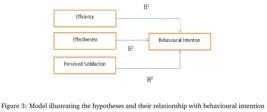
'Smart Cities' is a new and inventive approach that allows city management to use current infrastructure and resources more effectively. Participatory crowdsourcing is an effective method to collect data from the citizens, as it does not require costly new infrastructure and can be used by all citizens, regardless of their literacy level. To date, very few studies have investigated the usability of these participatory crowdsourcing systems in a developing country context. The focus of this paper is then to provide a model for the usability of the IVR system to collect information from citizens to improve public safety in the city. The study makes use of a quantitative survey method. A questionnaire was completed by 361 participants of a public safety project hosted in East London, South Africa. The data analysis was completed making use of factor analysis. The results indicated that efficiency and perceived satisfaction with the system were important elements that determined the usability of the system. The recommendation of the study is that the city management must take these two elements into account when designed or developing a participatory crowdsourcing system.
smart city; participatory crowdsourcing; public safety; usability; effectiveness; efficiency; user experience
 Thumbnail
 Thumbnail
 Thumbnail