Design Requirements for a Teledermatology Scale-up Framework
Abstract
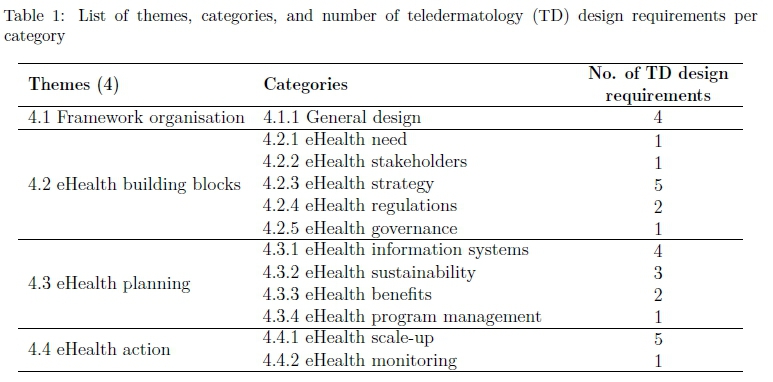
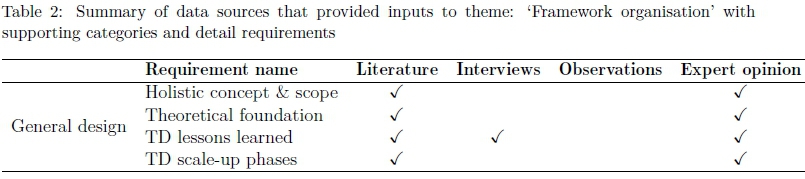
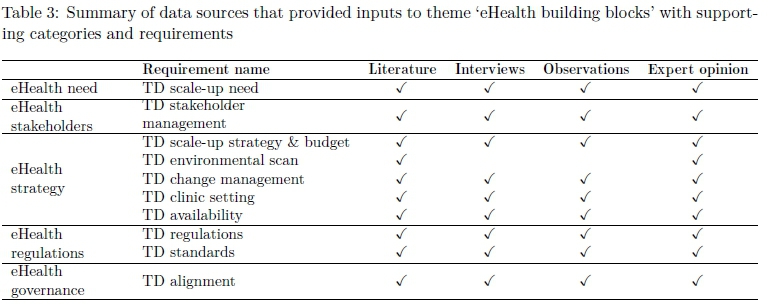
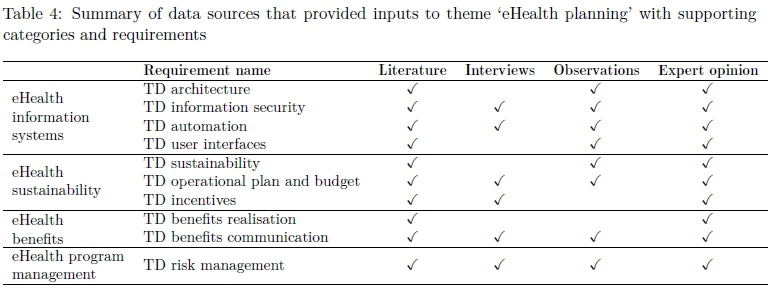
The value proposition of full-scale teledermatology is evidenced in the literature. The public health sector of South Africa's KwaZulu-Natal province began synchronous teledermatology in 2003, followed by spontaneous asynchronous (mobile) teledermatology in 2013. No scale-up has been formally planned. This paper establishes design requirements that will inform the identification or de novo development of a teledermatology scale-up framework. METHODS: A requirements definition process with inductive reasoning approaches was applied. Analysis of semi-structured interviews (19) with key teledermatology stakeholders (17) and observations from two teledermatology programmes, informed by lessons learned from prior teledermatology implementation attempts, eHealth scale-up literature and authors' expert opinion, led to identification of themes, and iterative reflection gave rise to categories and requirements RESULTS: Teledermatology scale-up framework design requirements emerged comprised of themes (4), categories (12), and specific design requirements (30 DISCUSSION: This paper describes a process and resulting evidence-based (stakeholder interviews; programme observations; literature) and experience-based (expert opinion) design requirements to inform the identification and adoption / adaptation or de novo development of a Teledermatology Scale-up Framework (TDSF) for KwaZulu-Natal's public health sector. The proposed approach is recommended as a pre-requisite for scaling, including in other settings and for other telehealth applications
Teledermatology; scale-up framework; requirements definition; requirements elicitation; South Africa