Information architecture for first-year modules on Moodle: A Nelson Mandela University case study
Abstract
Students enrolled in first-year programming modules at higher education institutions often struggle to master the material, resulting in poor performance and high dropout rates. Although blended learning and implementation of various pedagogical approaches have been introduced to address this challenge, the structure and organisation of online course content are underexplored and may affect student engagement and learning. To address this gap, this paper examines the effectiveness of utilising an Information Architecture (IA) specifically designed to structure various types of content in online courses, thereby supporting students' diverse learning styles. Grounded in the Cognitive Theory of Multimedia Learning (CTML), the research employed a multi-method approach: a questionnaire completed by 64 students and focus group discussions with six students. The findings indicated that inadequate navigation and labelling, poorly structured module content, and a lack of engaging learning materials contribute to student frustration, reduced motivation, and higher dropout rates. Building on our earlier work, which proposed information architecture (IA) guidelines for online course content, this paper demonstrates how these IA guidelines can be applied to the design of online course content. This paper extends and empirically evaluates the IA guidelines by demonstrating their practical impact on improving the online learning experience of first-year programming students. The paper demonstrates that a well-designed IA can improve student engagement and success in programming modules. Categories • Architectures → Information Systems Applications → Human Computer Interaction
Information Architecture; Learning Management Systems; Learning Experience Design; User Experience; Usability
1 INTRODUCTION
Traditionally, the face-to-face teaching and learning approach has been commonly used as a mode of instruction in institutions of higher learning (Okaz, 2015). However, the advancement of Information and Communication Technology (ICT) has introduced the concept of e-learning in higher education. E-learning has given students the opportunity to study remotely without attending in-person classes (Alarifi & Song, 2024). In support of this shift, systems such as Learning Management Systems (LMSs) have been developed to facilitate and manage e-learning environments. LMSs are typically used to disseminate learning materials, administer assessments, and perform university administrative tasks (Kaewsaiha, 2019).
During the Covid-19 pandemic, many educational institutions were unable to offer face-to-face teaching and learning due to government-imposed restrictions. These restrictions underscored the need to adopt alternative strategies, such as LMSs, to ensure continuity in teaching and learning (Mthethwa & Luthuli, 2021). As a result, the usability and effectiveness of LMS platforms became increasingly critical. Many students often face usability challenges when using LMSs due to poor Information Architecture, including poorly organised content, unclear labels, limited engaging materials and difficult navigation (Almusharraf, 2024; Simon et al., 2024). IA refers to the organisation, navigation, labelling, and search of content within the system. These IA issues can lead to frustration, demotivation, and higher dropout rates, highlighting the need for clear navigation, intuitive labelling, and well organised content that supports different learning styles (Abdulrahaman et al., 2020; Akpen et al., 2024).
This paper is structured as follows: Section 2 presents the research question and objective. Section 3 provides a review of the literature related to the research problem. Section 4 presents the study's methodology. Section 5 focuses on data analysis, and Section 6 presents the study's findings. Section 7 discusses how the IA guidelines were implemented in redesigning the original WRAV101 module site, and Section 8 discusses how the redesigned WRAV102 module site was evaluated and provides participant feedback. Section 9 concludes this paper and provides recommendations for future research.
2 RESEARCH QUESTION AND OBJECTIVE
The identified problem was the inadequate structuring of learning materials in first-year programming modules, which did not accommodate students' diverse learning styles in Moodle, the LMS used. The following research question was derived:
How can Information Architecture (IA) be used to structure module content in an LMS to enable first-year programming students with diverse learning styles to learn effectively?
In response to this question, the research objective was formulated as:
Develop and implement IA guidelines that will assist in structuring module content on the LMS to support the diverse learning styles of first-year programming students.
The existing literature relevant to this study highlighted areas of concern, such as poor navigation and labelling structures, poorly structured learning material, and a lack of engaging learning material that this study aimed to address. Specific topics reviewed included Information Architecture (IA), Information Architecture in Learning Management Systems (LMSs), Learning Experience Design (LXD), Instructional Design (ID), User Experience (UX), and Usability.
3.1 Foundations of Information Architecture in e-learning Environments
IA is important in e-learning environments, such as LMSs, to improve the student learning experience and facilitate effective learning (Aldabbas et al., 2025; McIntosh, 2024). As noted by Morville and Rosenfeld (2006), IA definitions vary from general to very specific. In the context of this study, IA is defined as the systematic design and organisation of information and resources within the learning systems to optimise findability, usability, and accessibility. IA consists of four components, namely: organisation systems, labelling systems, navigation systems, and search systems, which can be used together to design and organise information within the LMSs (Morville & Rosenfeld, 2006; Sanchez et al., 2024). In LMSs, IA can enhance student learning experiences by improving the UX, including usability, findability, and accessibility (Ardan et al., 2018).
3.2 Information Architecture in Learning Management Systems
LMSs have emerged as essential tools in higher education (Deliwe, 2024; Maluleke & Maake, 2025). They facilitate online learning and enhance the delivery of educational services that support a range of functions such as course content management, personalised learning, and collaborative engagement among students and lecturers (Ndou et al., 2023; Sanchez et al., 2024). IA is a crucial element in the effectiveness and usability of LMSs (Abdulrahaman et al., 2020). Paying attention to the organisation and structure of the online course, IA can enhance the UX and facilitate a better learning experience (Burroughs, 2025). The key focus of the IA is to understand the requirements of the users, which in this context involves students, lecturers, and some administrative staff. IA is vital for creating accessible and engaging learning environments (Sanchez et al., 2024). As a fundamental discipline in the design and usability of digital platforms, IA plays a critical role in how information is organised, labelled, navigated, and searched (Stefanuk, 2025). By structuring course content effectively, IA enhances the UX, making information easier to find and use (Ding et al., 2025). Core activities like content inventory, audits, taxonomy development, and UX research are essential in crafting an IA that aligns with user needs expectations, and behaviours, minimising confusion and improving information retrieval (Sönmez et al., 2022).
3.3 Pedagogical and Cognitive Challenges for First-Year Programming Modules
First-year programming students often face pedagogical and cognitive challenges affecting their mastery of programming concepts (Grawemeyer et al., 2022). Often, these challenges come from the complex nature of programming concepts and the disconnect between theory and practical application. In addition to the struggle to understand concepts, students face challenges in learning the syntax of programming languages (Ding et al., 2025; Stefanuk, 2025). Furthermore, poorly designed online courses with ineffective navigation, vague labelling, poorly structured content, and a lack of engaging learning materials can hinder the student learning experience (Ahn & Oh, 2024; Inan et al., 2024). These challenges may lead to cognitive overload, frustration, confusion, and demotivation in students as they attempt to convert their ideas into code (Skulmowski & Xu, 2021).
3.4 Learning Experience Design (LXD)
The increasing adoption of LMS in educational settings necessitates an effective IA to enhance UX and support diverse learning needs. LXD has an opportunity to contribute to the increasing adoption of LMS by leveraging UX and Instructional Design (ID) (Jahnke et al., 2022). LXD is described as the process of developing a learning experience that helps students attain their desired learning outcomes in a human-centred and goal-oriented manner (Schantong et al., 2024; Švábenský et al., 2024). As a combination of two well-known domains, namely UX and ID, LXD aims to create meaningful learning experiences by prioritising students' needs and motivations. This aligns with the growing recognition that effective learning is not merely about content delivery but about fostering an engaging and supportive environment (Peck, 2025). To create and deliver a positive learning experience, Floor (2024) suggested a six-step process: research, design, development, test, refinement, and launch. Research includes researching the people you are designing for to gather their needs and requirements. Design includes turning needs and requirements into a concept design. The development step turns the concept into a prototype. Test the prototype to ensure it works and meets the requirements; if not, the refinement step will follow, then launch the solution.
The LXD process becomes human-centred and socio-culturally sensitive, resulting in a better learning experience for the students since it combines UX and ID, which typically include design principles from domains such as human-computer interaction (HCI) and software design. LXD focuses on meeting students' requirements through a multidisciplinary approach that includes cognitive science, UX, the learning environment, and ID (Schantong et al., 2024).
3.5 Evaluation of Information Architecture
Assessing the effectiveness of IA in LMSs is essential to ensuring that requirements are met, thereby improving the student learning experience and achieving learning goals. Various techniques, such as expert IA evaluation, tree testing, analytics review, eye-tracking technology, and post-evaluation questionnaires, have been proposed to evaluate IA, focusing on quality attributes, student engagement, and usability (Ahn & Oh, 2024; Skulmowski & Xu, 2021). The expert IA evaluation approach involves two or more IA experts evaluating an IA. This approach involves simple content analysis, findability analysis, and searching analysis. Tree testing is an IA evaluation technique used by designers to assess a system's findability (Cardello, 2019). Analytics indicators such as page views, conversions, entrances, bounce rates, and search query frequency can help identify IA problems. Analytics systems track all the user's actions, and reviewing the behavioural patterns reflected in this data can identify confusing, missing, or underperforming content categories that should be optimised or investigated further during user testing (Whitenton & Sherwin, 2016). Eye tracking is a sensor technology that detects gaze and tracks participants' eye movements in real time. Eye movements are converted into a data stream that includes information such as the gaze vector for each eye, gaze direction, and gaze point (Chang & Kuwata, 2020; Peck, 2025). Post-usability evaluation questionnaires are often used to assess people's perceived satisfaction with a website, software, system, or product at the end of research (Kuric et al., 2025).
4 METHODOLOGY
To address the research question and the objective of this paper, this study followed the Design Science Research (DSR) process model, selected for its effectiveness as a problem-solving methodology for advancing human understanding. The DSR process model achieves its goals by enabling innovative artefacts to be developed and by generating design knowledge through creative problem-solving approaches (Peffers et al., 2007). The DSR process model consists of six activities, namely, problem identification and motivation, objectives of the solution, design and development, demonstration, evaluation, and communication.
4.1 Adopted Theory
This study was supported by the Cognitive Theory of Multimedia Learning (CTML) to inform and guide the creation of proposed IA guidelines for designing and developing online courses on LMSs. According to Mayer and Moreno (2003), CTML defines how the brain processes multimedia information using two distinct channels: one for visual inputs (pictures, films, and charts) and another for auditory stimuli (spoken words and sounds). CTML outlines 12 principles and provides a framework for developing instructional materials that align with human cognitive processes, thereby enhancing learning by reducing cognitive load and promoting meaningful interaction with the content. This paper adopted three principles considered most relevant to the instructional design context under investigation, namely, multimedia, segmenting, and signalling.
The three principles guided the development of the IA guidelines by emphasising the inclusion of multimedia elements, breaking course content into smaller, manageable chunks, and using clear cues such as arrows, highlights, or animations to point out key information. The integration of these elements has the potential to improve students' engagement and to accommodate diverse student learning styles.
4.2 Data Collection
NMU Research Ethics Committee granted ethics clearance (H22-SCI-CSS-002) for collecting participant data from first-year programming students over the age of 18 from the Department of Computing Sciences at Nelson Mandela University.
This study employed purposive sampling to select participants who were relevant to the study. The population size was estimated at 200 students, and the actual sample size was 64. An online questionnaire was used to collect participant data. The questionnaire consisted of three sections: general information, LMS, and learning styles. The link to the questionnaire was posted on the Moodle site for the first-year programming module (WRAV101) in the first semester of the 2023 academic year.
The invitation to participate in the focus group discussions (FGDs) was posted on the Moodle site for the first-year programming module (WRAV102) in the second semester of the 2023 academic year. Students were requested to indicate their willingness to participate in the study.
The probability stratified sampling technique was used to categorise the participants based on their grades obtained from the first semester of 2023. Participants were grouped into three categories: Category A (≥75%), B (54%-74%), and C (<54%). The FGDs were conducted online via MS Teams.
5 DATA ANALYSIS
This section presents the analysis of the data collected. The analysis provides quantitative and qualitative data interpretations to address the research question.
5.1 Quantitative Analysis
Data from the online questionnaire were analysed using frequency distribution. Out of the 63 students who reported their gender, 30 (60.3%) identified as male and 24 (38.1%) as female. Most participants, 63 (98.4%), were aged 18-24, with only one student in the 25-34 age range. In terms of ethnicity, 47 (77%) of students identified as Black, while 8 (13.1%) identified as White.
Regarding technology access, 54 (84.4%) students reported having access to computers either at home or in their residence. Computer literacy varied among participants: 13 (20.3%) rated their skills as excellent, 22 (34.4%) as good, and 9 (14.1%) as poor.
Students were asked to evaluate the LMS pages of their first-year programming module, focusing on the quality and accessibility of learning materials. They considered the presentation of these materials and identified challenges in accessing them.
Overall, students rated their experience with learning materials as good, though they expressed average satisfaction with chats and forums. The learning materials included lecture notes, quizzes, videos, lessons, and exercises, with videos being the most preferred format and PowerPoint slides with audio being the least preferred. Students rated the challenges of accessing materials as neutral, indicating some uncertainty regarding access issues.
Learning styles were also evaluated using Felder and Soloman's Index of Learning Styles questionnaire. The learning style dimensions feedback showed a strong preference for sensing (75%), sequential (75%), and visual (73.4%) learning styles.
5.2 Qualitative Analysis
Focus Group Discussions (FGDs) were conducted with qualifying students (Section 4.2) in the second semester of 2023. During the FGDs, students were asked about their exposure to and preferences for learning materials, as well as any challenges encountered when using the module site. They were also asked about their preferred module structure, whether organised by weeks or topics.
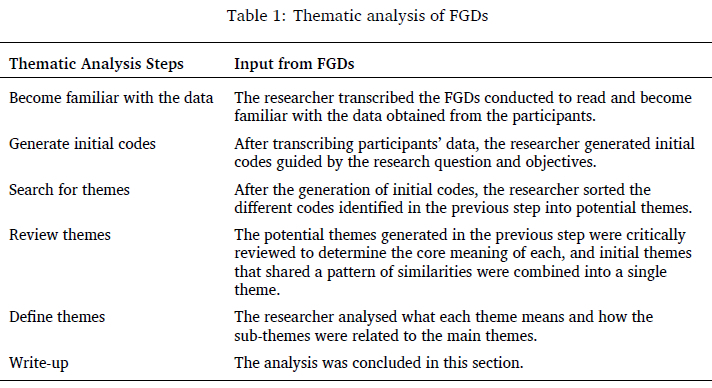
The qualitative data gathered were analysed using thematic analysis. The analysis followed the six steps outlined by (Braun & Clarke, 2006). Table 1 summarises how each step was applied to the FGD data.
The thematic analysis identified the following themes. Accompanying each theme are selected verbatim responses from the participants.
Theme #1 Learning Material Design: "I enjoy videos because they allow me to see the code while the lecturer explains it. Lecture notes are helpful as they summarize key methods I may want to revisit in the future. For this type of module, more practical exercises are necessary to help practice the coding."
Theme #2 Course Structure: "For me, it is better when the module is structured in weeks, as the structure makes it easier to follow and stay clear on what you are working on every week."
Theme #3 Communication tools: "I think it would be beneficial to have tools such as a forum and chats activated on the module site because it would allow us as students to communicate with each other as students, as we sometimes spend time inside Moodle."
Students provided additional feedback, showing interest in using Moodle's communication tools, such as chats and forums, stating that they can use these tools to engage with peers and their lecturers. Finally, students reported no difficulties in accessing the learning materials.
6 FINDINGS
This section discusses the findings from the literature review and data collected from the participants, as well as the proposed IA guidelines. The literature shows that key considerations for online course design, such as the need for well-structured module content in digestible chunks and the use of multimedia to accommodate students' diverse learning styles, are essential (Mayer & Moreno, 2003).
The user research results from the questionnaire and the FGDs indicate that most students have access to computers at home or in their residences. Access to computers is essential for students enrolled in programming modules, as these modules require regular practice to improve coding skills (Section 5). Students indicated that they prefer the module content to be structured into weeks so they can easily follow the syllabus. Incorporating text and graphics in Moodle to enhance engagement and noting the value of multimedia over text-only content were also raised by students.
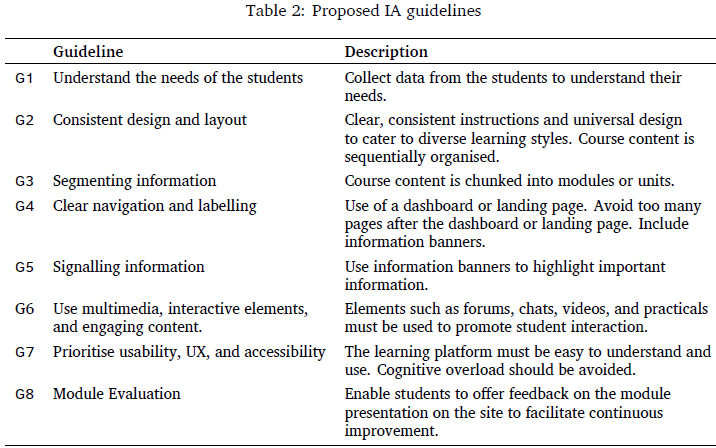
The proposed IA guidelines were developed based on insight gained from the literature review and the results of the analysed user research data. Universal design principles, including multimedia and chunked content, support diverse learning styles and enhance comprehension. Interactive elements like forums and chats are essential for a positive UX and for fostering student engagement. Usability, accessibility, and continuous feedback ensure that all students, including those with disabilities, can fully engage with the module while promoting ongoing improvement. This paper proposes a set of eight (8) IA guidelines in Table 2, which are further implemented for a practical application in Section 7 (Kafile et al., 2025).
Understanding students' needs (G1) before developing the online course is essential, as it ensures the course accommodates students' different learning styles. G2 is important for designing a consistent course design. Clear navigation and labelling (G4) will assist students in moving efficiently in the course site and allow them to find information easily. Prioritising usability, UX, and accessibility on the course will lead to a positive learning experience (G7), and module evaluation is crucial for course improvement (G8).
The three CTML principles, multimedia (G6), segmenting (G3), and signalling (G5), provided a theoretical connection for IA guidelines. Multimedia emphasises the need for guidelines that encourage lecturers to incorporate interactive and engaging learning materials. The segmenting principle supports the creation of a guideline focused on organising course content into manageable chunks to minimise information overload. Finally, the signalling principle informed the development of guidelines to promote clear navigation and use informational banners to highlight key content. These elements contribute to the UX and accessibility of the course. Lastly, allowing students to comment on the course structure can support continuous improvement.
7 APPLICATION OF THE PROPOSED IA GUIDELINES
This section demonstrates the application of the proposed IA guidelines in Table 2 by redesigning the WRAV101 module site, a first-year programming module offered by the Department of Computing Sciences at Nelson Mandela University. In redesigning the module site, the guidelines were not implemented sequentially; they were applied as needed during development.
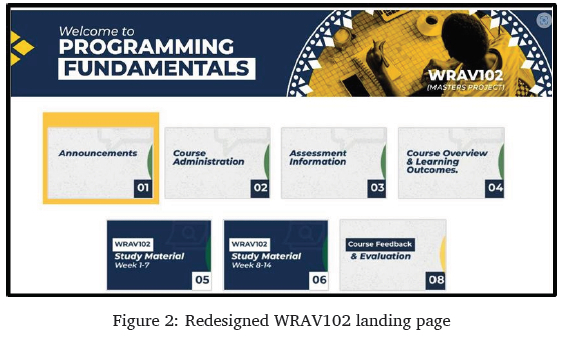
To gain insights into students' needs, questionnaires and FGDs were used to collect data (G1). To enhance the course structure, navigation, and information findability on the module site, the dashboard was created as a landing page (G4). A course overview option was added on the dashboard to provide the students with information about the course (G2).
The researcher ensured that the redesigned WRAV102 module site was consistent and that the course layout was appropriate for ease of access (G3). Interactive components and engaging content (G5 and G6) were included to promote student involvement. By implementing dashboards and chunking course information, the usability and UX of the module site were prioritised (G7). Efforts were made to ensure the module site was inclusive, accommodating a range of learning styles.
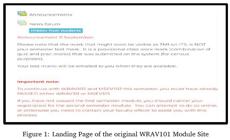
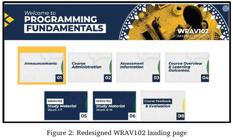
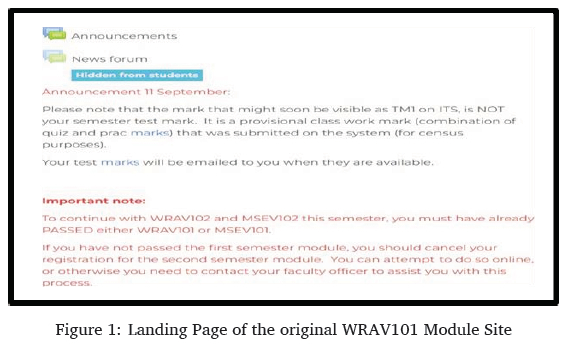
Finally, feedback and evaluation options were incorporated. The feedback option allowed the students to receive progress updates, while the evaluation option enabled students to provide feedback to the lecturer for continuous course improvement (G7 and 8). Figure 1 (Appendix A) shows the landing page of the original WRAV101 module site, and Figure 2 shows the redesigned landing page of the WRAV102 module site.
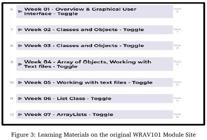
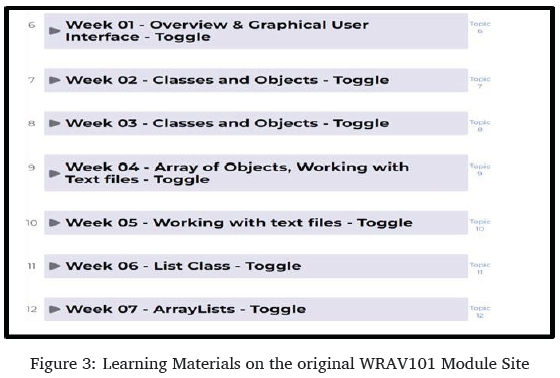
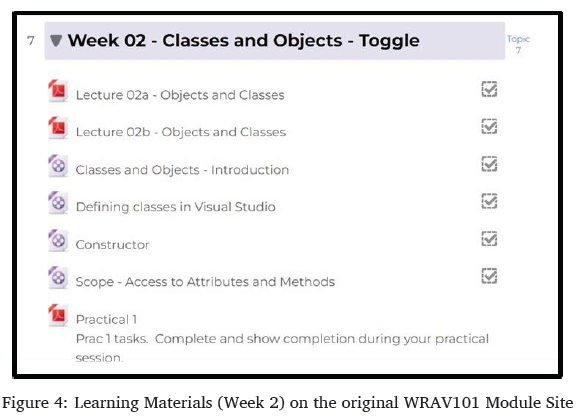
The redesigned dashboard enhances both structure and navigation by consolidating all key course elements, such as announcements, course administration, assessment details, course overview, study materials, and feedback, on a single landing page. Each element links to a dedicated page, making it easier for students to navigate. The dashboard also helps organise and categorise course content, improving the overall accessibility and findability of information. Its visually appealing design further helps capture and maintain students' attention. The structure of the original module site on Moodle is depicted in Figure 3, and the structure of the learning materials in week two of the original module site is shown in Figure 4.
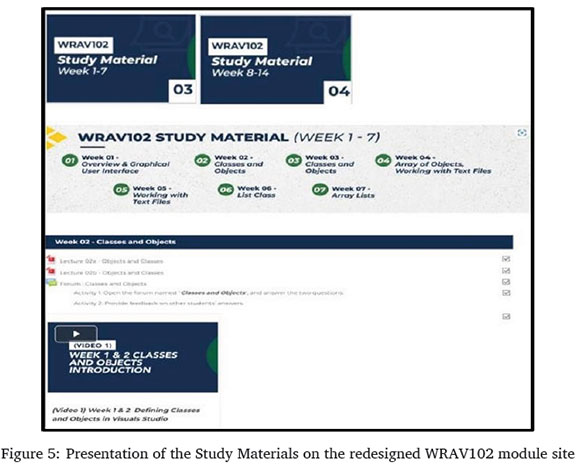
The revised module site structure and the format of the second week's learning materials are depicted in Figure 5. There are two links to the study materials on the dashboard: study material weeks 1-7, which correspond to the work usually covered in the third term, and study material weeks 8-14, which correspond to the work usually covered in the fourth term.
The course material is more easily accessible on the revised structure. Students are directed to a new page where the top section outlines the weekly content coverage after selecting an option on the dashboard. The learning material is organised for easy access, and a visually engaging video icon is included to draw students' attention. Additionally, each week features a dedicated discussion forum where students can engage with the topic(s) covered that week through guided questions posted by the lecturer.
8 EVALUATION OF THE COURSE SITE ENHANCEMENT
This section covers the procedure for evaluating the redesigned WRAV101 module site. The redesigned module site was evaluated using eye-tracking software, and students' opinions were collected via a post-evaluation questionnaire. Two students evaluated the redesigned module site; a few students were willing to participate, but the evaluation was conducted during the exam period. The researcher assigned three tasks to the students. The purpose of the activities was to evaluate how quickly the students could find information and complete the tasks.
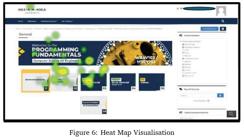
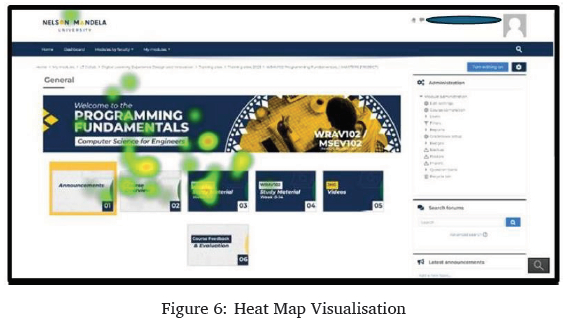
One of the tasks assigned to students was to locate and open the document named "Plagiarism Guidelines Dep CS." Figure 6 demonstrates that the "Course Overview" option on the dashboard was the primary focus of the students' attention. This indicates that the labelling of "Course Overview" helped the students understand that the necessary file was in that area. After selecting the course overview option, the students found the file by scrolling down. Students completed the assignment and swiftly located the information.
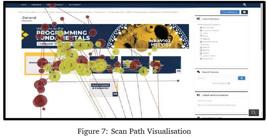
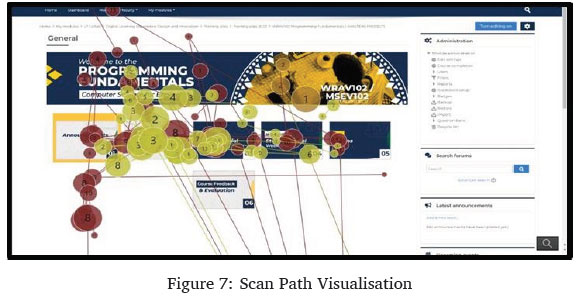
Additionally, Figure 7 shows that students' attention was focused on "Course overview," indicating that they understood the necessary file could be located under that option. This indicates that the students were able to easily find the file and finish the assignments thanks to the labelling and navigation features.
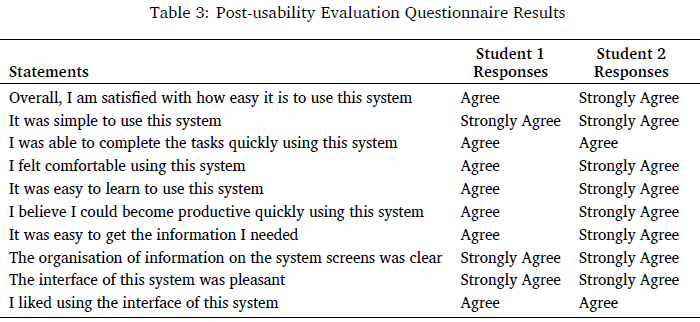
Table 3 presents the responses from the two students who completed the post-usability evaluation questionnaire. The questionnaire used the five-point Likert scale, starting from Strongly Disagree to Strongly Agree. The results indicate that both participants expressed satisfaction with the redesigned module site. This suggests that the guidelines have effectively addressed the identified problem.
Table 3 shows that the participants' feedback is positive about the redesigned module site. However, the results suggest that further evaluation with a larger, more diverse sample may be needed to confirm the guidelines' overall effectiveness.
9 CONCLUSION AND RECOMMENDATIONS
The literature shows that challenges such as poorly designed module sites with ineffective navigation, unclear labelling, poorly structured content, and a lack of engaging learning materials can hinder the student learning experiences. IA promises to address these challenges by ensuring that the design of the module site is student-centred, including well-structured content, clear labelling, and engaging materials. Addressing these challenges through IA can reduce cognitive overload, improve findability, and create an easy-to-use module site. To ensure requirements are met, the literature suggests using evaluation techniques such as IA expert evaluations, tree testing, eye-tracking, and a post-usability evaluation questionnaire to assess the IA.
This study applied the IA guidelines proposed in our previous paper (Kafile et al., 2025). The redesign of the WRAV102 Moodle site, a first-year programming module offered at the Department of Computing Sciences at Nelson Mandela University, served as the basis for evaluating the practical application of the IA guidelines. Eye-tracking and a post-usability evaluation questionnaire result suggested a positive impact in addressing the identified problem. The findings indicate that these IA guidelines may offer valuable support to lecturers developing Moodle sites, particularly in programming-related courses. Lecturers and educational institutions can use the IA guidelines to enhance the design of online material for first-year programming modules, either by applying each guideline as needed to fit the course-specific context or by following the suggested sequence. A broader application across multiple fields and institutional settings would require additional research. It is therefore recommended that future research investigate the adaptability and scalability of these IA guidelines in other learning environments before being implemented.
References
3 LITERATURE REVIEW
- Abdulrahaman, M., Faruk, N., Oloyede, A., Surajudeen-Bakinde, N., Olawoyin, L., Mejabi, O., Imam-Fulani, Y., Fahm, A., & Azeez, A. (2020). Multimedia tools in the teaching and learning processes: A systematic review. Heliyon, 6(11), e05312. https://doi.org/10.1016/j.heliyon.2020.e05312
- Ahn, S., & Oh, K. (2024). An analysis of the effects of learner-centered software education and required support strategies. Frontiers in Education, 9. https://doi.org/10.3389/feduc.2024.1434700
- Akpen, C. N., Asaolu, S., Atobatele, S., Okagbue, H., & Sampson, S. (2024). Impact of online learning on student's performance and engagement: A systematic review. Discover Education, 3(1). https://doi.org/10.1007/s44217-024-00253-0
- Alarifi, B. N., & Song, S. (2024). Online vs in-person learning in higher education: Effects on student achievement and recommendations for leadership. Humanities and Social Sciences Communications, 11(1). https://doi.org/10.1057/s41599-023-02590-1
- Aldabbas, H., Elamin, A. M., Ahmed, A. Z. E., & Gernal, L. (2025). Assessing learning management system success in the UAE universities: How quality measures linked to students' academic performance. Frontiers in Education, 10. https://doi.org/10.3389/feduc.2025.1554641
- Almusharraf, A. I. (2024). An investigation of university students' perceptions of learning management systems: Insights for enhancing usability and engagement. Sustainability, 16(22), 10037. https://doi.org/10.3390/su162210037
- Ardan, A. S. L., Garcia, M. J. G., Tenio, V. G., & Kurata, Y. B. (2018). Usability evaluation of an educational management system affecting the user-satisfaction among tertiary students in an undergraduate engineering program in the Philippines. Proceedings of the International Conference on Industrial Engineering and Operations Management. https://www.ieomsociety.org/ieom2018/papers/601.pdf
- Burroughs, A. (2025). Which classroom technologies do college students actually like? [EdTech Magazine]. Retrieved September 9, 2025, from https://edtechmagazine.com/higher/article/2024/08/which-classroom-technologies-do-college-students-actually
- Cardello, J. (2019). Low findability and discoverability: Four testing methods to identify the causes [Nielsen Norman/Group]. Retrieved October 6, 2025, from https://www.nngroup.com/articles/navigation-ia-tests/
- Chang, Y. K., & Kuwata, J. (2020). Learning experience design: Challenges for novice designers. In Learner and user experience research: An introduction for the field of learning design & technology (pp. 145-163). EdTech Books. https://edtechbooks.s3.us-west-2.amazonaws.com/pdfs/36/3234.pdf
- Deliwe, A. (2024). The importance of a learner management system in implementing data-driven instruction in higher education institutions. Journal of the Digital Humanities Association of Southern Africa (DHASA), 5(1). https://doi.org/10.55492/dhasa.v5i1.5021
- Ding, W., Lin, X., & Zarro, M. (2025). Information organization and navigation design. In Information architecture and ux design: The integration of information spaces (pp. 67-81). Springer Nature Switzerland. https://doi.org/10.1007/978-3-031-72138-0_5
- Floor, N. (2024). What is learning experience design? [LXD.org]. Retrieved September 12, 2024, from https://lxd.org/fundamentals-of-learning-experience-design/what-is-learning-experience-design/
- Grawemeyer, B., Halloran, J., England, M., & Croft, D. (2022). Feedback and engagement on an introductory programming module. Proceedings of the 6th Conference on Computing Education Practice, 17-20. https://doi.org/10.1145/3498343.3498348
- Inan, F. A., Bayne, G. A., Sosi, E. T., Marzban, F., & Unal, D. (2024). Mental fatigue in online learning: Designing mentally friendly learning environments. In Handbook of research in online learning (pp. 450-482). BRILL. https://doi.org/10.1163/9789004702813_019
- Jahnke, I., Schmidt, M., Earnshaw, Y., & Tawfik, A. A. (2022). Theoretical considerations of learning experience design [Edtech books]. Retrieved July 17, 2026, from https://edtechbooks.org/eme_6606/toward_theory_of_LXD_jahnke_earnshaw_schmidt_tawfik
- Kaewsaiha, P. (2019). Usability of the learning management system and choices of alternative. International Conference on Education, Psychology, and Social Sciences (ICEPS). https://www.researchgate.net/publication/335788020
- Kafile, A., Barnard, L., & Kunjuzwa, D. (2025). Guidelines for designing an information architecture for a first-year programming module on Moodle: Nelson Mandela University case study. 2025 IST-Africa Conference, 1-10. https://doi.org/10.23919/ist-africa67297.2025.11060481
- McIntosh, A. (2024). How digital transformation efforts foster student success in higher ed [EdTech Magazine]. Retrieved September 9, 2025, from https://edtechmagazine.com/higher/article/2024/12/how-digital-transformation-efforts-foster-student-success-higher-ed
- Morville, P., & Rosenfeld, L. (2006). Information architecture for the World Wide Web: Designing large-scale web sites (3rd ed.). O'Reilly Media.
- Mthethwa, R. M., & Luthuli, C. (2021). The impact of COVID-19 pandemic on teaching and learning at tertiary institutions. African Journal of Public Affairs, 12. https://hdl.handle.net/10520/ejc-ajpa_v12_n3_a6
- Peck, D. (2025). UX and LXD vs ID: What you need to know. Retrieved October 15, 2025, from https://www.devlinpeck.com/content/ux-lxd-vs-id
- Schantong, B., Gorgosch, D., & Siegmund, J. (2024). Toward finding and supporting struggling students in a programming course with an early warning system. https://doi.org/10.48550/ARXIV.2402.01709
Accepted: 2 April 2026
Online: 31 July 2026