Spectrum-Aware Transitive On-Demand Routing Protocol for Military Cognitive Radio Ad Hoc Networks
Abstract
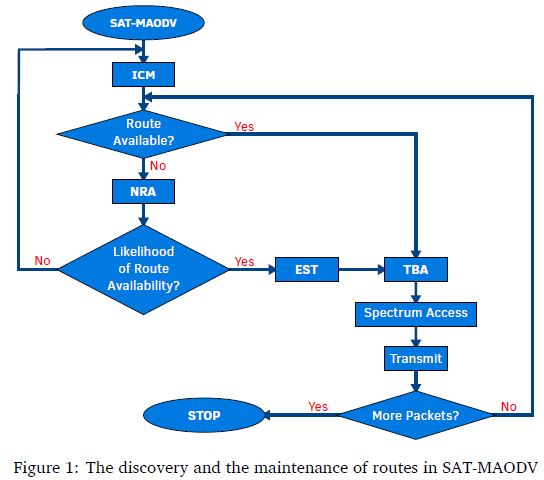
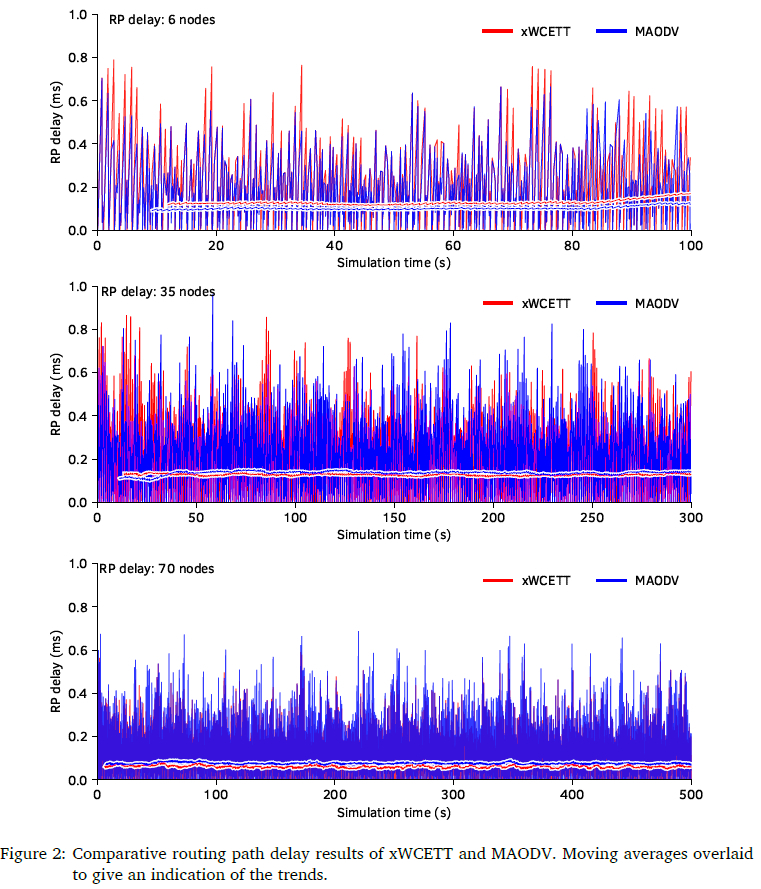
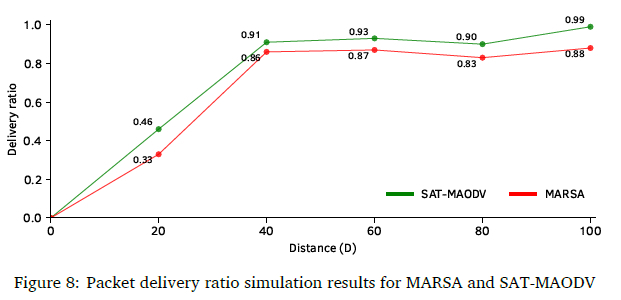
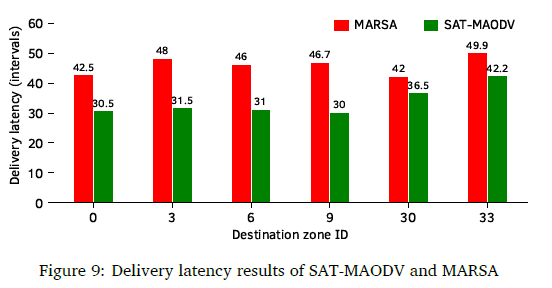
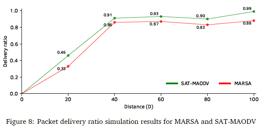
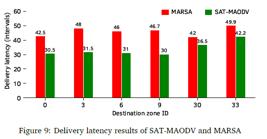
The advancement of wireless technology is increasing the demand for scarce spectrum. Cognitive radio ad hoc networks (CRAHNs) were proposed as a solution to spectrum scarcity which is also deployed in combat. However, military cognitive radio ad-hoc networks (MCRAHNs) are subject to destruction and frequent link breakages. The challenge with MCRAHNs routing is the timing-out of packets. This paper proposes the spectrum-aware transitive multi-cast on-demand distance vector (SAT-MAODV), optimised for throughput and delay. The relay nodes are selected based on zonal data and mobility. This is achieved through handshaking and sharing of location data. The nodes are expected to store location data of nodes encountered, which is used in routing and in determining the movement of the node. The mobility of military nodes is organised and structured, which simplifies routing. The SAT-MAODV was evaluated in network simulator 2 and the results show that the scheme is effective. Using SAT-MAODV instead of xWCETT, it reduced routing path and node relay delay by at least 65% and 13% respectively, and increased achievable throughput by 31%. It also improved the delivery ratio by 9% while reducing latency by 27% in comparison with MARSA. Categories · Networks ~ Network protocols, Network layer protocols, Routing protocols
Spectrum Depletion; Cognitive Radio Ad Hoc Network; Routing Path delay; Throughput
 Thumbnail
 Thumbnail
 Thumbnail
 Thumbnail