A digital health design model for a live healthcare console from a South African public healthcare perspective
Abstract
Digital health systems can be effective when they are connected to each other and are able to share relevant information with stakeholders. In South Africa, however, not all digital health systems within the public healthcare environment are connected. The public healthcare system could therefore benefit from the implementation of a Live Healthcare Console which could connect disparate systems and combine and disseminate healthcare information such as hospital bed occupancy and ambulance diverts in real-time. The study proposes a graphical Design Model for a Live Healthcare Console. An initial first version was designed based on a review of the literature. Thirty-one semi-structured online interviews were then conducted with healthcare stakeholders from Gauteng's public healthcare system. The interviews were analysed using an interpretive approach involving three cycles of coding. This resulted in the formulation of six themes (connect, combine, communicate, contain, collaborate and cooperate). The themes were applied to a revised second version, which was presented to a subset of the research participants. These participants provided feedback which was incorporated into the final and third version of this study. Categories • Information systems → Information systems applications → Enterprise information Systems → Enterprise applications • Information systems → Data management systems → Information integration
Live Healthcare Console; design model; hospital bed occupancy; emergency patient transport; qualitative interpretive analysis; semi-structured interviews
1 INTRODUCTION
South Africa's public healthcare system is preparing to undergo a major transformation with the implementation of the National Health Insurance (NHI) despite concerns from various healthcare stakeholders (BusinessTech, 2022, 2023). The effort involved in the pending implementation of the NHI increases the amount of work required to maintain the already constrained healthcare system (Moonsamy & Singh, 2024a).
The management of Gauteng's public healthcare system, though supported by the recent implementation of the SAP Health Information System (HIS) (Moonsamy & Singh, 2024a; Sobuwa, 2023), is missing a resource management element such as a Live Healthcare Console which could assist with hospital bed occupancy and emergency patient transport processes (Moonsamy & Singh, 2024c). Prior to the implementation of a Live Healthcare Console, the system would first need to be designed, preferably through the use of a graphical design model (Moonsamy & Singh, 2024c).
A gap exists in the current literature as no design model for a Live Healthcare Console which caters for the unique South African healthcare system has been proposed. The aim of this study is therefore to contribute to the existing research by proposing a graphical design model.
This research paper is structured as follows: Section 2 provides a review of literature relevant to the South African healthcare system landscape, Section 3 presents the research method and explains the qualitative method used, Section 4 presents the analysis and results, Section 5 discusses the results, Section 6 presents the concluding statements and Section 7 lists ideas for future research.
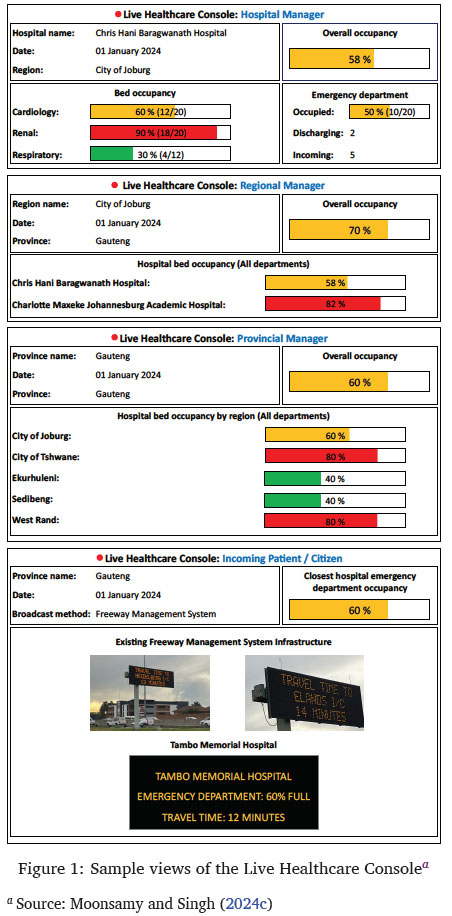
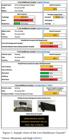
Moonsamy and Singh (2024c) conceptualised the idea of a Live Healthcare Console which is a system that can assist provincial healthcare managers to observe the status of the public healthcare system in terms of hospital bed occupancy and emergency patient transport services. The system could also provide views for district and hospital managers who need more detailed insights into their localised areas of responsibility. The public were included in this concept as patients and those assisting patients also have an interest in the healthcare system. Figure 1 is an illustration of the possible views of the Live Healthcare Console.
The Live Healthcare Console also aligns with the City of Johannesburg's goals of elevating the city to a smart city that utilises innovative technology to improve public services that includes healthcare (Bwalya, 2019; City of Johannesburg, 2019, 2024). Furthermore, the Live Healthcare Console, if used to optimise processes in the healthcare system, will also support the service delivery principles unique to South Africa, called the "Batho Pele Principles" (Department of Social Development, 2026; Joel, 2022; Khoza & Du Toit, 2011).
Batho Pele is a Sotho term which means "people first" (Singh, 2014). Batho Pele aims to support service delivery through nine principles (Department of Social Development, 2026):
Consultation - Engaging with customers to understand their needs,
Service standards - Meeting customers' expectations,
Access - Supporting access to public services,
Courtesy - Treating customers with respect,
Information - Supporting access to information on available services,
Openness and Transparency - Being honest with customers,
Redress - Rectifying issues,
Best value - Effectively awarding customers with maximum benefit, and
Customer impact - Supports synergy amongst the other principles.
Though the Batho Pele Principles refer to "customers", within the e-Government service delivery perspective, "customers" are difficult to define. In some cases, a customer might be a citizen or a child (Singh, 2014), however, for the purposes of this research, by customer we are referring to a patient.
Prior to development of the Live Healthcare Console, Moonsamy and Singh (2024c) argue that the system first needs to be designed. Since models can be utilised in the designing of complex information systems (Olivier, 2004), a (graphical) design model would first need to be created. The following sections describe the elements that need to be considered for the designing of a practical model that describes the design of the Live Healthcare Console.
2.1 South Africa's existing healthcare system burdens
Moonsamy and Singh (2024a) highlight several existing challenges faced by the South African public healthcare system which were categorised as training, resources and legal. Training related challenges resulted in a patient being pronounced as dead and was sent to a morgue hours before she awoke (Rall, 2023). Resource challenges include a shortage of ambulances (Kahn, 2022) which result in issues with patient transfer, an exodus of doctors (Kahn, 2022), many of whom emigrate over concerns related to the NHI and, outbreaks such as Cholera (Seleka, 2023) which cause an influx of patients into healthcare facilities. Legal challenges relate to the implementation of the NHI (BusinessTech, 2022, 2023).
To ensure the optimisation of public healthcare facilities, South Africa implemented SAP HIS (Sobuwa, 2023). This system has been rolled out to most of the public hospitals in Gauteng and aims to centralise patient health and other records within the province. The system also performs hospital bed management functions and centralises hospital bed occupancy information. Introducing a new digital system into an already complex technology landscape, however, introduces new challenges such as integrating the new system with existing systems and processes. Additionally, centralising all forms of healthcare data and processes should consider cybersecurity threats.
2.2 Towards the interoperability of healthcare data
Torab-Miandoab et al. (2024) argue that interoperability of systems can improve healthcare service delivery. Gazzarata et al. (2024) supplement this view by suggesting that standardised interfaces should be used to connect healthcare systems as this approach may reduce costs. The basic tenet of interoperability, however, is that the systems which need to share data must first be connected either directly or by using a message broker. Once the systems have been connected, the information exchange protocols can then be established.
South Africa aims to unite the two parallel healthcare streams (public and private) by implementing the NHI. The explicit impact of this implementation on digital healthcare systems led Moonsamy and Singh (2024b) to examine the Federated Health Information Architecture (FHIA) proposed by the Department of Health to determine whether the architecture sufficiently catered to the connecting and sharing of healthcare information. They established that the FHIA did not adequately illustrate how the various systems would connect and share information as a specialist integration layer was not explicitly included.
2.3 Digital health models for connecting and sharing information
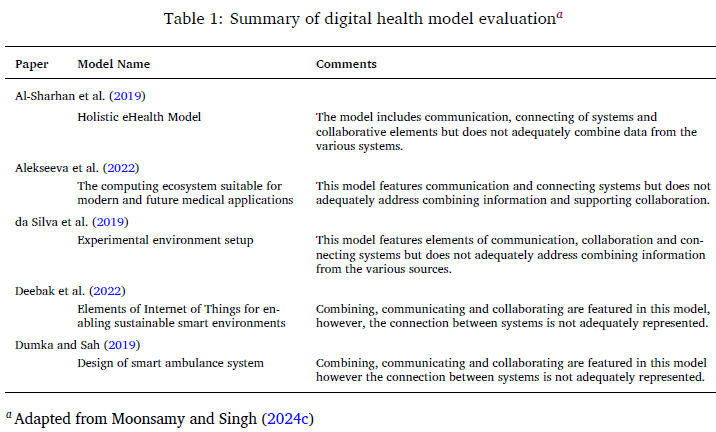
It is broadly accepted that information systems and designs should incorporate the reuse of existing components if they are fit for purpose. Prior to creating a new design model, Moonsamy and Singh (2024c) first evaluated five appropriate digital health design models to determine whether they were suitable for the design of the Live Healthcare Console. These models were based on countries in the Asian, European, Middle Eastern and South American regions. The evaluation of the five models is summarised in Table 1.
Since none of the five investigated models catered to the unique South African requirements such as the Batho Pele Principles, Moonsamy and Singh (2024c) conclude that a new model needs to be developed. This model should be driven by the South African context so that it is relevant and implementable.
2.4 Gap in the literature
To the best of the authors' knowledge, no digital health design model which caters to the unique South African requirements to steer the development of the Live Healthcare Console exists. Furthermore, the design models evaluated so far originated from regions outside of Africa. It is reasonable to assume that countries in other regions may experience challenges in their healthcare systems that differ to that of South Africa. Though two of the models discussed in Table 1 were designed for the Indian and Brazilian contexts, the Batho Pele Principles which are unique to South Africa reduces the appropriateness of those models to South Africa. During this research, we designed the model by applying the Batho Pele Principles and considering inputs from the stakeholders through the use of interviews and a qualitative interpretive analysis.
2.5 Design Model for a Live Healthcare Console version 0.1
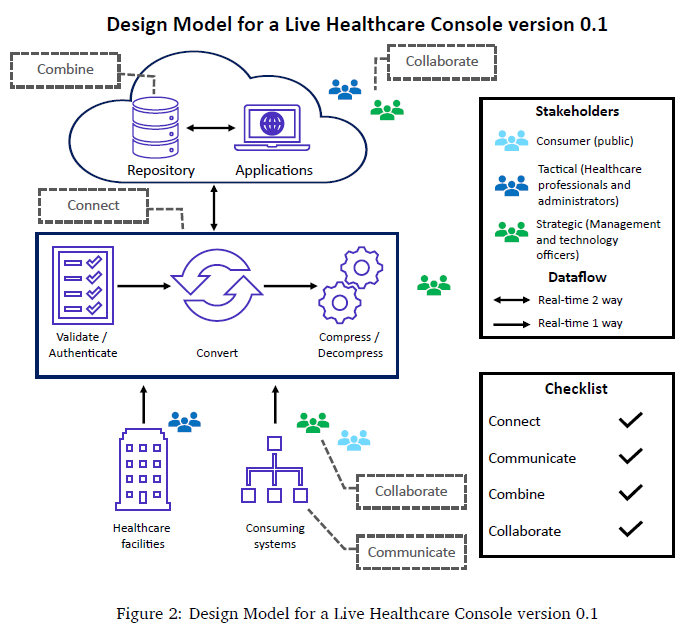
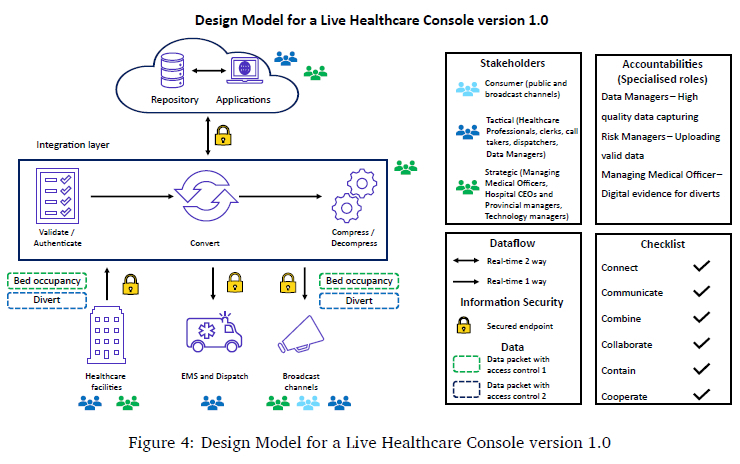
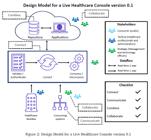
The gap in the existing literature prompted the construction of the Design Model for a Live Healthcare Console version 0.1 which has been presented in Figure 2. Version 0.1 was created based on the existing literature only, it was therefore necessary to refine version 0.1 through the use of empirical data by engaging with the healthcare stakeholders. Version 0.1 features at its core, an integration layer responsible for receiving messages from a sender and redirecting the messages to the appropriate receiver. The integration layer is also responsible for converting incoming messages into a format that can be recognised by the receiving system, to support interoperability. Stakeholders have been included to illustrate how the model supports collaboration. The research method is presented in the next section.
3 RESEARCH METHOD
This study utilised a qualitative interpretive analysis which led to a data collection strategy that consisted of online semi-structured interviews.
3.1 Sample and Sampling Method
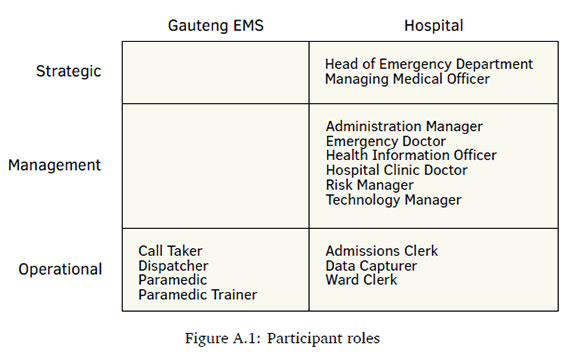
Data were collected from stakeholder groups that could be classified as strategic (stakeholders who use digital health data for long-term decision-making such as load-balancing), management (stakeholders who use digital health data for the coordination of tasks involving patient care) and operational (stakeholders who capture data or digitise records which were previously captured on paper).
To supplement data variation, stakeholders who work at public hospitals from four out of five healthcare districts in the Gauteng province were invited to participate. The fifth healthcare district would have been included in the study, however, their ethical clearance approval was obtained once the data collection phase had ceased. The research was conducted exclusively in Gauteng as this is the province with the largest population in South Africa (StatsSA, 2021) and Gauteng has the largest amount of hospital beds in South Africa.
3.2 Data collection strategy
Semi-structured interviews were conducted with the participants once the relevant gatekeeper permissions were received. This resulted in a staggered data collection phase which also served to spread out the data collection. Participants were selected using purposeful sampling which can be described as the "intentional selection of information-rich individuals" (Ng et al., 2023). As it was anticipated that response rates to the call for interviews would be low, the purposeful sampling method was supplemented with snowball sampling which allows for participants to identify other potential participants (Zickar & Keith, 2023). Once gatekeeper approval was obtained, hospital management was contacted, and the contact details of the potential participants were obtained. Participants were contacted via email and telephone call. In the case of the hospital managers, their personal assistants were asked to schedule time.
3.3 Research instrument
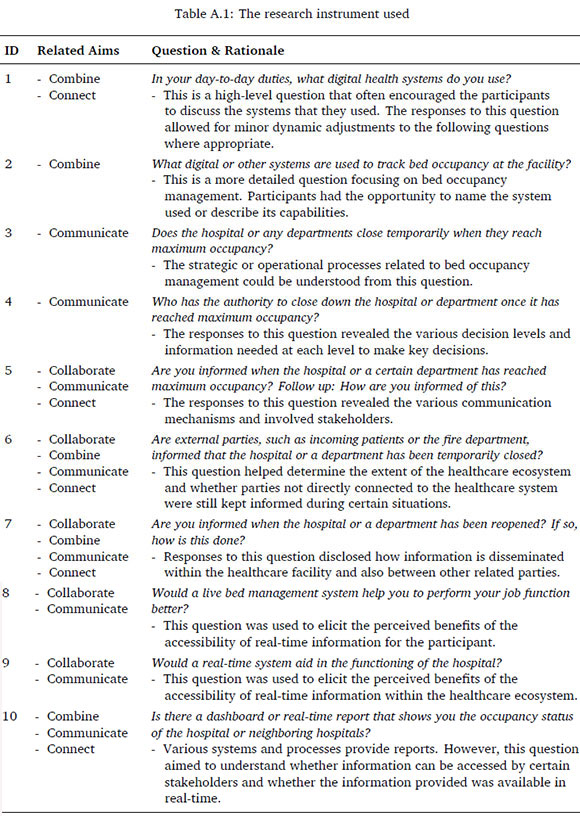
Semi-structured interviews are a data collection method used in the evaluation of eHealth systems (Wronikowska et al., 2021) and was the data collection method used in a qualitative study relating to the attitude of doctors towards the use of eHealth systems (de Wilt et al., 2020). This type of interview structure was used for the study as it allowed for follow-up questions and considered user narratives and processes (Stahl & King, 2020) that the participants could share. The research instrument and its relation to the study aims are presented in Table A.1. The ten primary questions allowed for follow-up questions to be spontaneously asked as the participants shared their experiences. The research instrument was piloted with three participants whose feedback was incorporated into the refinement of the research instrument.
3.4 Data analysis
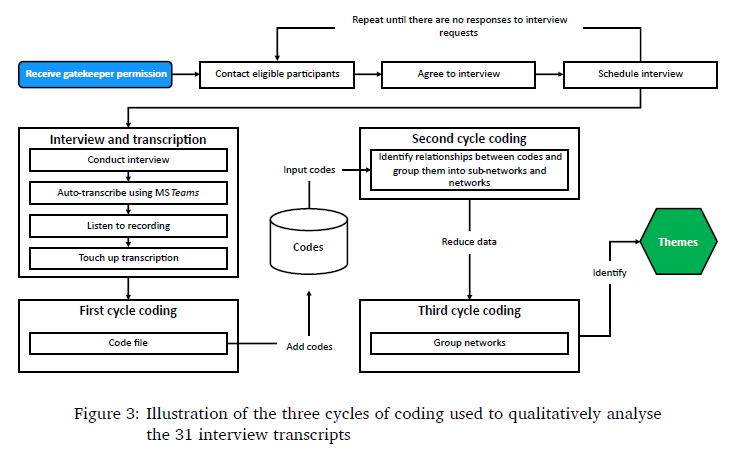
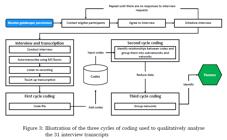
A combination of content analysis (Lindgren et al., 2020), thematic analysis (Castleberry & Nolen, 2018; Kiger & Varpio, 2020), and basic interpretive analysis (Hendren et al., 2023) were used in this study. This resulted in a qualitative interpretive analysis that was used to analyse the data. The interview transcripts were analysed using three cycles of coding, illustrated in Figure 3. Text from the interviews was labelled (codes) then grouped into networks of associated codes. The networks were then associated with other related networks to form themes. The coding process is essential as it allows the researcher to condense large amounts of text into smaller components which can be analysed and related. Once the themes were identified, they were used to refine version 0.1 to form version 0.2.
4 ANALYSIS AND RESULTS
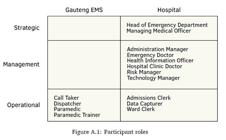
Thirty-one semi-structured interviews were conducted with participants occupying 15 unique roles (Figure A.1) from four health research districts in Gauteng. All interviews were conducted online and were transcribed using Microsoft Teams and had an average duration of 31 minutes.
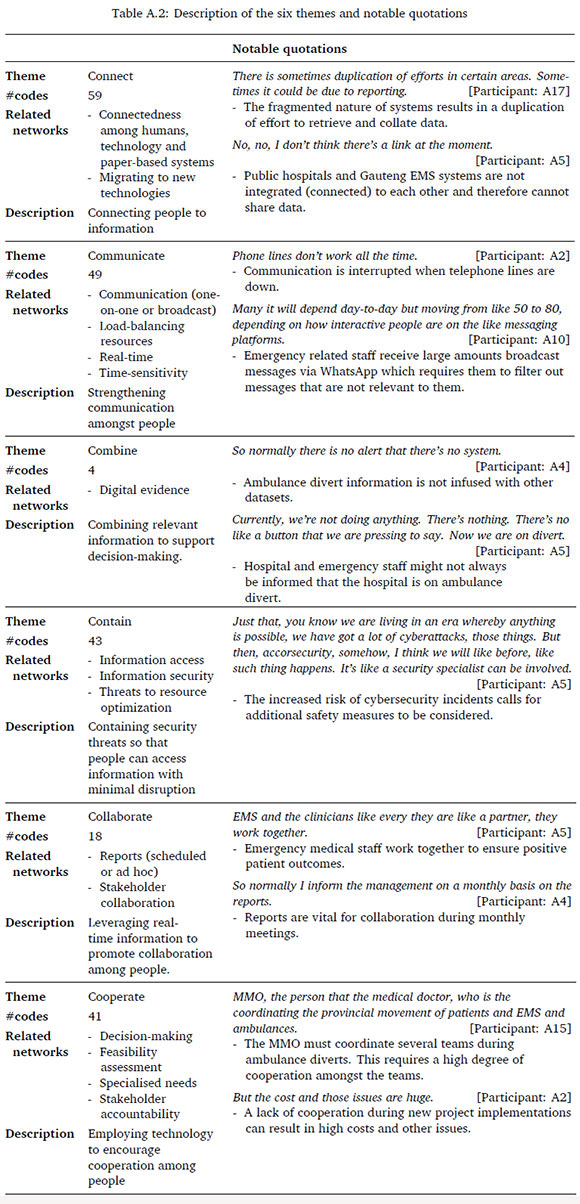
During the first cycle of coding, the 31 interviews led to 214 codes. The 214 codes were grouped and related to each other during the second cycle of coding to form 16 networks (sometimes referred to as clusters). In the third cycle of coding, relationships between the 16 networks were identified resulting in the identification of six themes. The six themes are: connect (connecting people to information), communicate (strengthening communication among people), combine (combining relevant information to support decision-making), contain (containing security threats so that people can access information with minimal disruption), collaborate (leveraging real-time information to promote collaboration among people) and cooperate (employing technology to encourage cooperation among people). The six themes and quotations are described in Table A.2.
4.1 Design Model for a Live Healthcare Console version 0.2
Figure 2 illustrates version 0.1's emphasis on four aims which were connect, communicate, combine and collaborate. These aims also emerged as themes during the data analysis. Subsequently, two new themes were identified, contain and cooperate (Table A.2). Participant A5 noted the importance of cybersecurity in healthcare systems while Participant A15 noted the importance of cooperation among medical teams.
Just that, you know, we are living in an era whereby anything is possible, we have got a lot of cyberattacks, those things. But then, according to security, somehow, I think we will like before, like such thing happens [sic]. It's like a security specialist can be involved.
[Participant: A5]
The increased risk of cybersecurity incidents calls for additional safety measures to be considered. Secured endpoints were subsequently included in the model.
MMO, the medical doctor, who is coordinating the provincial movement of patients and EMS and ambulances.
[Participant: A15]
The MMO must coordinate several teams during ambulance diverts. This requires a high degree of cooperation amongst the teams. The model highlights this by including the stakeholders who must cooperate, and the accountabilities of specialist roles.
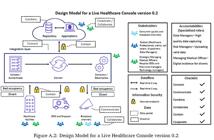
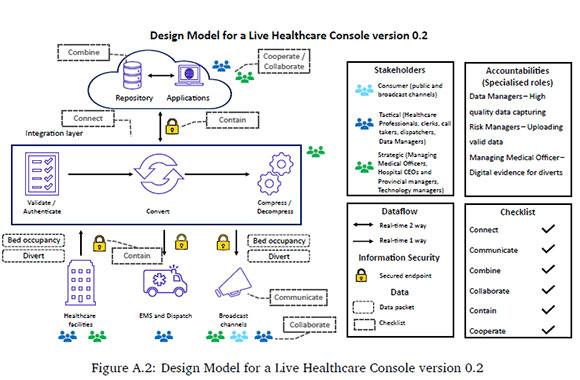
The contain and collaborate themes were combined with other inputs from the interviews to form the Design Model for a Live Healthcare Console version 0.2 which is presented in Figure A.2.
Version 0.2 improves on version 0.1 by introducing data packets for hospital bed occupancy and ambulance diverts. Version 0.2 also supplements version 0.1 by illustrating accountabilities for specialised roles, revealed during the interviews. EMS and dispatch systems were distinctly represented due to their key role in emergency patient care within the digital health landscape. Cybersecurity concerns led to the representation of secured endpoints.
4.2 Design Model for a Live Healthcare Console version 1.0
The final version of the design model has been named Design Model for a Live Healthcare Console version 1.0 as it is anticipated that further improvements could be applied in future research.
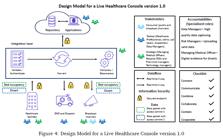
Version 0.2 improves upon version 0.1 by including the two additional themes (contain and cooperate) which were identified during the interviews. Stakeholder accountabilities were added to the model to contextualise the three stakeholder types (operational, management and strategic). The data packets containing hospital bed occupancy and emergency medical operational information were also added. Interoperability discrepancies resulting from the movement of the data packets would be resolved by the integration layer within the Live Healthcare Console.
Version 0.2 was presented to a subset of the initial research participants during an online discussion where the participants shared their views on the model. The participants were satisfied that the model could be used as a blueprint for the Live Healthcare Console, but some noted that though secured endpoints and data packets were introduced, emphasis should be placed on governance or access control to these data packets. Access control was therefore added to the data packets in version 0.2 to form version 1.0 (Figure 4).
5 DISCUSSION
The participants highlighted the role of SAP HIS in the management and centralisation of patient records. Information related to the management of resources, however, did not seem to fall under SAP HIS. Participants noted that hospital bed occupancy information was accessible only to managers of their respective hospital. They cannot view the occupancy of another hospital. Ambulance divert information has not yet been digitised. When a hospital is placed on ambulance divert, they manually inform neighbouring hospitals and emergency medical services by telephone call. If the message is not received in time, this can result in patient transport issues.
The benefits of a Live Healthcare Console include providing real-time information to healthcare stakeholders which includes patients who are currently excluded from receiving public healthcare related information. Existing infrastructure such as the variable message signs scattered along the 185km of freeway management system (Bester, 2009) potentially provides a platform for sharing healthcare information to road-users (patients and paramedics). Such a vision begins with designing the digital health systems which store and communicate healthcare data. This research contributes by providing a graphical design model that illustrates a subset of the healthcare systems within the healthcare ecosystem, lists the important stakeholders together with their responsibilities and presents two critical datasets that need to be shared (if not directly with the public, then with other healthcare systems). System designers can use this model as a blueprint for future designs in its current state or can improve upon the design.
6 CONCLUSION
The benefits of a Live Healthcare Console primarily include connecting people to (preferably) real-time information to facilitate decision making at operational, management and strategic levels. Achieving this, however, in a constrained environment containing a plethora of existing systems, not all of which are connected to each other is a complex task, first requiring an informed design. The aim of this research is to contribute a design that can guide healthcare system architects on how to build the Live Healthcare Console based largely on what systems to connect and which stakeholders to consider.
Graphical design models can facilitate the development of an information system as they can illustrate the systems that need to be connected, data packets that need to be shared, related stakeholders and can specify the directional flow of information. Our previous research (Moonsamy, 2024; Moonsamy & Singh, 2024c) emphasised that using design models from other countries would not suit the unique South African situation which includes guidelines such as the Batho Pele Principles (Joel, 2022; Khoza & Du Toit, 2011).
Lessons learned from existing design models were therefore combined with evidence collected from semi-structured interviews conducted with public healthcare stakeholders to develop the Design Model for a Live Healthcare Console 1.0. To achieve this, the authors combined existing information with the six themes identified during this research.
Connect - people to information,
Combine - information from disparate sources,
Communicate - share information with systems and people,
Contain - secure systems and communication methods,
Collaborate - allow operational teams to share information and,
Cooperate - provide information for management and strategic purposes.
Though version 1.0 can be used as a blueprint for the design of the Live Healthcare Console, it is anticipated that future research could improve on version 1.0. No shortcomings of version 1.0 have been noted thus far.
7 FUTURE RESEARCH
This research contributes a design model, constructed exclusively from the public healthcare perspective. Future research can refine the proposed model by considering the views of private healthcare providers and how data can be shared between the two systems following the implementation of the NHI. Additionally, a technical model for the Live Healthcare Console, based on Enterprise Architecture principles can be developed.
References
2 LITERATURE REVIEW
- Alekseeva, D., Ometov, A., Arponen, O., & Lohan, E. S. (2022). The future of computing paradigms for medical and emergency applications. Computer Science Review, 45, 100494. https://doi.org/10.1016/J.COSREV.2022.100494
- Al-Sharhan, S., Omran, E., & Lari, K. (2019). An integrated holistic model for an eHealth system: A national implementation approach and a new cloud-based security model. International Journal of Information Management, 47, 121-130. https://doi.org/10.1016/J.IJINFOMGT.2018.12.009
- Bester, G. (2009). SANRAL freeway management system (FMS) [Accessed: 18 July 2026]. https://www.itssa.org/wp-content/uploads/files/events/2009/e_transport/presentations/sitevisit/Gail_Bester_SANRAL_FMS.pdf
- BusinessTech. (2022). South Africa faces exodus of doctors and other professionals because of the NHI [Accessed: 29 May 2023]. https://businesstech.co.za/news/government/572964/south-africa-faces-exodus-of-doctors-and-other-professionals-because-of-the-nhi/
- BusinessTech. (2023). Government pushes through NHI - now legal trouble is on the way [Accessed: 29 May 2023]. https://businesstech.co.za/news/finance/691553/government-pushes-through-nhi-now-legal-trouble-is-on-the-way/
- Bwalya, K. J. (2019, January). The smart city of Johannesburg, South Africa. In Smart city emergence: Cases from around the world (pp. 407-419). Elsevier. https://doi.org/10.1016/B978-0-12-816169-2.00020-1
- City of Johannesburg. (2019). Joburg 2040 growth and development strategy (GDS) [Accessed: 15 Sep 2024]. https://joburg.org.za/documents_/Documents/Joburg%20GDS%202040/Joburg%202040%20GDS_March%202019.pdf
- City of Johannesburg. (2024). Joburg 2040 GDS [Accessed: 25 Jul 2024]. https://joburg.org.za/documents_/Pages/Key%20Documents/Joburg%202040%20GDS/Joburg-2040-GDS.aspx
- Department of Social Development. (2026). Batho Pele [Accessed: 18 July 2026]. https://www.dsd.gov.za/index.php/about/batho-pele
- Dumka, A., & Sah, A. (2019). Smart ambulance system using concept of big data and internet of things. Healthcare Data Analytics and Management, 155-176. https://doi.org/10.1016/B978-0-12-815368-0.00006-3
- Gazzarata, R., Almeida, J., Lindsköld, L., Cangioli, G., Gaeta, E., Fico, G., & Chronaki, C. E. (2024). HL7 fast healthcare interoperability resources (HL7 FHIR) in digital healthcare ecosystems for chronic disease management: Scoping review. International Journal of Medical Informatics, 189, 105507. https://doi.org/10.1016/J.IJMEDINF.2024.105507
- Kahn, T. (2022). Provinces have half the ambulances they need, minister admits [Accessed: 29 May 2023]. https://www.businesslive.co.za/bd/national/health/2022-12-05-provinces-have-half-the-ambulances-they-need-minister-admits/
- Khoza, V., & Du Toit, H. (2011). The Batho Pele principles in the health services. Professional Nursing Today, 15(3), 8-11. https://hdl.handle.net/10520/EJC79438
- Kiger, M. E., & Varpio, L. (2020). Thematic analysis of qualitative data: AMEE guide No. 131. Medical Teacher, 42(8), 846-854. https://doi.org/10.1080/0142159X.2020.1755030
- Lindgren, B. M., Lundman, B., & Graneheim, U. H. (2020). Abstraction and interpretation during the qualitative content analysis process. International Journal of Nursing Studies, 108, 103632. https://doi.org/10.1016/J.IJNURSTU.2020.103632
- Moonsamy, W., & Singh, S. (2024a). Digital healthcare champion: A new healthcare professional role leveraging 4IR to promote sustainable healthcare in South Africa. In Research in Southern African digital business (pp. 62-87, Vol. 2). Mercury Books. https://mercury-books.com/product/research-in-southern-african-digital-business-vol-ii/
- Moonsamy, W. (2024). Digital health : A live healthcare console for public health in Gauteng, South Africa [PhD Information Systems]. https://hdl.handle.net/10500/31888
- Ng, M. Y., Youssef, A., Miner, A. S., Sarellano, D., Long, J., Larson, D. B., Hernandez-Boussard, T., & Langlotz, C. P. (2023). Perceptions of data set experts on important characteristics of health data sets ready for machine learning: A qualitative study. JAMA Network Open, 6(12), e2345892-e2345892. https://doi.org/10.1001/JAMANETWORKOPEN.2023.45892
- Olivier, M. S. (2004). Information technology research (2nd ed.). Van Schaik Publishers.
- Rall, S. (2023). Not the first time a person has 'woken up' after being declared dead at Durban morgue [Accessed: 29 May 2023]. https://www.iol.co.za/news/south-africa/kwazulu-natal/not-the-first-time-a-person-has-woken-up-after-being-declared-dead-at-durban-morgue-230e2874-0e9e-4aac-a748-1345b423d908
- Seleka, N. (2023). Cholera outbreak: Death toll rises to 23 as more people hospitalised [Accessed: 29 May 2023]. https://www.news24.com/southafrica/news/cholera-outbreak-death-toll-rises-to-23-as-more-people-hospitalised-20230528
- Singh, S. (2014). Towards understanding the process of e-Government application design in South Africa [PhD Information Systems]. University of the Witwatersrand, Faculty of Commerce, Law and Management. https://wiredspace.wits.ac.za/items/a6e502ac-1c24-493a-bc01-be7dd5f4aebf
- Sobuwa, Y. (2023). How Gauteng's new information system will improve the quality of healthcare accreditation [Accessed: 24 Aug 2023]. https://www.news24.com/news24/southafrica/news/how-gautengs-new-information-system-will-improve-the-quality-of-healthcare-20230822
- Stahl, N. A., & King, J. R. (2020). Expanding approaches for research: Understanding and using trustworthiness in qualitative research. Journal of developmental education, 44(1), 26-28. https://www.proquest.com/scholarly-journals/expanding-approaches-research-understanding-using/docview/2467348904/se-2
- StatsSA. (2021). P0302 - mid-year population estimates, 2021 [Accessed: 18 July 2026]. https://www.statssa.gov.za/?page_id=1854&PPN=P0302&SCH=72983
- Torab-Miandoab, A., Samad-Soltani, T., Jodati, A., Akbarzadeh, F., & Rezaei-Hachesu, P. (2024). A unified component-based data-driven framework to support interoperability in the healthcare systems. Heliyon, 10(15), e35036. https://doi.org/10.1016/j.heliyon.2024.e35036
- Zickar, M. J., & Keith, M. G. (2023). Innovations in sampling: Improving the appropriateness and quality of samples in organizational research. Annual Review of Organizational Psychology and Organizational Behavior, 10, 315-337. https://doi.org/10.1146/ANNUREV-ORGPSYCH-120920-052946/CITE/REFWORKS
Accepted: 18 May 2026
Online: 31 July 2026