Green Finance Development, Governance Quality, and Environmental Sustainability: Evidence from Sub-Saharan Africa
Abstract
PURPOSE: Studies on the relationship between green finance (GFS), government effectiveness (GOVI), technology (TECH), and environmental quality (EVQ) focus on developed regions due to their high carbon dioxide emissions, robust institutional frameworks, and well-integrated green finance mechanisms. However, despite sub-Saharan Africa's (SSA) low emissions, the region faces severe climate vulnerability due to lax governance and limited access to green finance. This study examines the impact of GFS, TECH, and GOVI on EVQ in SSA from 1999 to 2023, addressing a key literature gap. Green finance is measured through financial development indicators, while environmental quality is assessed using sustainability metrics, reflecting the multidimensional impacts of economic activities on EVQ METHODOLOGY: Using the pooled mean group autoregressive distributed lag (PMG-ARDL) model, the study addresses key methodological issues in previous studies, such as endogeneity and serial autocorrelation. This approach enables a comprehensive analysis of both long- and short-run relationships between GFS and EVQ FINDINGS: Results reveal that GFS promotes sustainable development through investment in technology and education, which enhances environmental conservation and biodiversity. However, foreign direct investment negatively impacts EVQ due to lax regulatory framework allowing detrimental environmental practices by multinational corporations. The results emphasise the need for institutional reforms to align investments with stringent environmental frameworks and sustainable economic growth objectives CONTRIBUTION: By focusing on SSA, a region facing severe climate vulnerability and ecological challenges, the study provides practical policy recommendations for achieving zero-emission targets by 2060 by enhancing green finance integration, strengthening institutional frameworks, and fostering technological innovation. Additionally, the results emphasise the importance of public awareness, policy enforcement, and green energy adoption to mitigate environmental degradation JEL CLASSIFICATION: Q53; Q54; O40; O44; Q56; Q58; G20
carbon dioxide emissions; economic growth; environmental quality; financial development; greenhouse emission
Introduction
The sustainability of sub-Saharan Africa's (SSA) financial and economic structure has emerged a critical focal point, particularly in the aftermath of the 2020 recession resulting from the COVID-19 pandemic and the financial disruptions triggered by the Russian invasion of Ukraine in 2022. These global shocks underscored the urgent need for economic resilience and stability in SSA, a region characterised by significant diversity and heightened vulnerability to environmental degradation (Abner et al. 2022; Udoh et al. 2023). The integration of the green finance (GFS) mechanism into these economic and financial policies presents a transformative pathway to align financial systems (FS) with environmental resilience and resource efficiency practices. GFS encompasses financial activities, investments, and initiatives aimed at EVQ and addressing climate change challenges (Inim et al. 2024; Udo et al. 2024).
SSA's unique economic and financial environment underscores the critical role of GFS in the region. Despite accounting for only 4% of global greenhouse gas (GHG) emissions, the region is home to seven of the ten countries most vulnerable to climate change (Inim et al. 2024; Udo et al. 2024). This imbalance underscores the need to strengthen government effectiveness (GOVI) while expanding investment in green energy. However, lax regulatory frameworks and limited access to GFS hinder these efforts, constraining SSA's progress toward achieving net-zero emissions by 2060. The funding gap in SSA's green energy sector further exacerbates these challenges.
According to the 2023 Africa Climate Summit report, although Africa holds 40% of the world's green energy resources, the continent only secured 2% ($60 billion) of the $3 trillion in global green energy investments over the past decade. This financial shortfall reinforces SSA's vulnerability to climate-related risks and hinders its economic growth (EGR), making it a focal area for this study. Access to affordable and sustainable energy is widely recognised as a fundamental pillar for economic development in the twenty-first century.
The development of green energy in SSA is closely linked to the expansion and stability of the FS. Patrick (1966) and Udo et al. (2019) posit that as economies expand, financial stability becomes a cornerstone of economic development and resource management. In resource-constrained economies, a stable FS is essential for maximising productivity and driving EGR (Udo et al. 2019). A well-functioning FS attracts investors, facilitates foreign direct investment (FDI), lowers financial costs, and enhances industrial borrowing. These factors collectively promote economic and financial stability by supporting sustainable production processes and fostering the adoption of green technologies (Emmanuel et al. 2023).
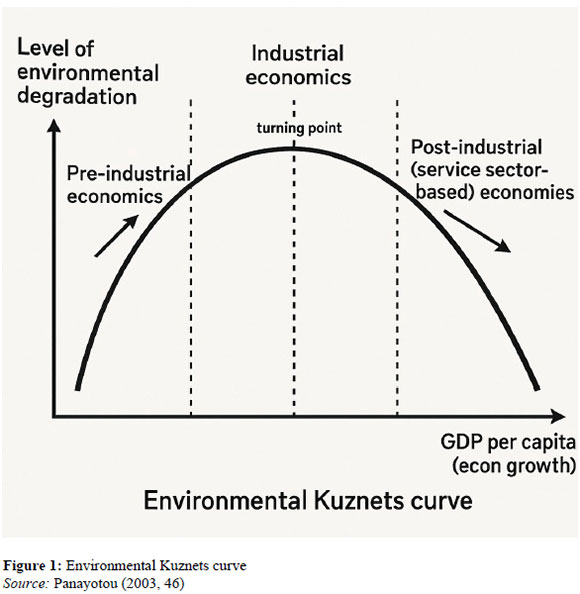
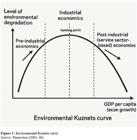
The theoretical foundation of the FS-EGR-EVQ nexus is explored through the environmental Kuznets curve (EKC) framework (figure 1). According to the EKC hypothesis, industrialisation initially leads to environmental degradation due to reliance on fossil fuels (Inim et al. 2024; Udo et al. 2024; Udoh et al. 2024). However, as economies transition from pre-industrial to post-industrial phases, increase in green investments, and energy-efficient technologies drive improvements in EVQ (Udo et al. 2024). Empirical studies by Emmanuel et al. (2023), Udo et al. (2024), Udo et al. (2019), and Udoh et al. (2024) highlight the intricate relationship between FS and EVQ. These studies reveal that while FS can drive EGR, they also exacerbate environmental degradation when financial resources are directed toward unsustainable industrial expansion. Conversely, FS that prioritise green investments act as catalyst for EVQ improvement and climate resilience. This duality raises the central research question of this study: To what extent does the FS influence EVQ in SSA, and how does GOVI mediate this link? By addressing this question, the study highlights the theoretical and practical importance of prioritising sustainable economic growth and environmental resilience in SSA's development trajectories.
To investigate the FS-EVQ-GOVI nexus in SSA, this study aims to:
1. Assess the impact of FS on EVQ: Evaluate the extent to which financial instruments, credit availability, and investment flows influence green energy adoption and EVQ conservation in SSA.
2. Analyse the role of GOVI in EVQ: Examine how institutional strength, policy frameworks, and regulatory effectiveness shape EVQ outcomes in SSA.
3. Investigate the interconnection between FS and GOVI: Explore how the interaction between FS and GOVI collectively influences SSA's sustainability trajectory.
This study builds on the EKC hypothesis by integrating GOVI and disaggregating FS indices to capture their individual and combined effects on EVQ. Previous studies by Afzal et al. (2022) and Inim et al. (2024) examined the GFS-EGR link in developed and emerging economies using a single financial indicator, such as bank credit to the private sector. However, these studies ignored critical factors, such as capital market development, green bond issuances, and microfinance initiatives, which are essential for a comprehensive understanding of the FS-EVQ link. These studies focused on high-emission economies (contributing 50-80% of global GHG emission), neglecting SSA's unique vulnerabilities to climate change.
The FS-EVQ relationship is inherently nonlinear, as proposed by the EKC hypothesis, exhibiting a U-shaped nexus. However, prior studies predominantly relied on the ordinary least squared models, which assume a static linear association. This methodology fails to capture the temporal complexities of time-series data, particularly given the skewness, leptokurtosis, and high variability in FS and EVQ indicators, violating the assumptions of normality and homoscedasticity, leading to biased or unreliable estimates. As such, Udo et al. (2023) advocate for the adoption of more diverse analytical approaches to enhance policy insights.
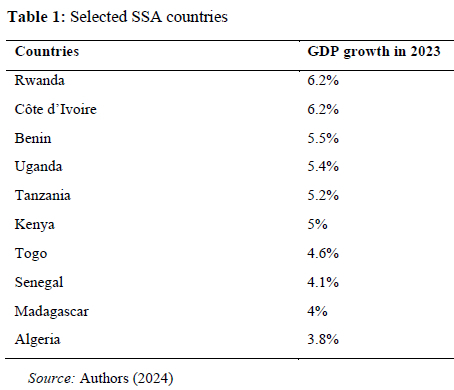
To address these limitations, this study adopted the pooled mean group autoregressive distributed lag (PMG-ARDL) model, which allows for an in-depth examination of both short- and long-term effects of GFS on EVQ. The study focuses on ten SSA countries recognised by the World Bank in 2023 for their post-COVID-19 economic resilience, with GDP growth rates ranging from 3.8% to 6.2%. These countries are positioned as potential regional leaders in green finance and sustainable development.
The study covers a period (1999-2023) of significant economic transitions, climate change challenges, and governance reforms, thereby providing a robust context for evaluating the dynamic interplay between FS, EGR, and GOVI. By incorporating a multidimensional approach to FS assessment, utilising the PMG-ARDL model, and aligning policy recommendations with the net-zero emissions target by 2060, this study bridges the existing research gap on SSA's role in global green finance. The layout of the rest of the articles is as follows: In the next section, the literature review and theoretical underpinning are discussed. This is followed by literature review, theoretical underpinning, methodology and empirical estimation, and conclusion.
The sustainability of the FS plays a crucial role in the process of facilitating access to resources that support investment in economic and financial activities aimed at combating climate change and promoting sustainable development. However, the adverse effects of EGR driven by fossil fuel consumption have contributed to the degradation of EVQ, particularly in SSA. In SSA, resource depletion and ecological damage remain a persistent and significant challenge (Emmanuel et al. 2023; Umar et al. 2021). In response to these challenges, green finance (GFS) emerged as a transformative mechanism to address EVQ concerns. GFS facilitates the transition to renewable energy, supports eco-friendly technologies, reduces credit risks, and mitigates business volatility. While emerging economic blocs such as the BRICS and MINT economies have made notable strides in adopting GFS, SSA lags considerably behind.
This gap is deepened by SSA's disproportionate vulnerability to climate change, limited access to green financing, and lax institutional frameworks (Inim et al. 2024; Udo et al. 2024). Despite contributing only 4% to global GHG emissions, SSA remains highly vulnerable to climate change, facing the unique challenge of aligning FS with EVQ goals. The region's lax regulatory frameworks, limited adoption of green finance, and continued dependency on fossil fuels hinder its progress toward sustainable development. These challenges underscore the urgency of designing financial mechanisms tailored to SSA's unique economic and environmental contexts.
Theoretical Underpinning
Environmental Kuznets Curve (EKC)
The EKC framework explains the dynamic nexus between FS and EVQ, positing a curvilinear (U-shaped) relationship between EGR and EVQ. In the initial phase of economic development, industrialisation driven by fossil fuels leads to EVQ degradation. However, as economies grow and income levels rise, resource conservation and sustainable practices are prioritised to improve EVQ through investment in research development for green energy development (Inim et al. 2024; Udo et al. 2024; Udoh et al. 2024). This framework highlights SSA's potential to transit from fossil fuel to green energy consumption, which align with global sustainability objectives. The EKC framework forms the basis for the hypothesis that FS exhibits a curvilinear link with EVQ in SSA.
Pollution Haven (PH) and Pollution Halo Hypotheses (PHH)
The PH and PHH theories offer contrasting perspectives on the role of foreign investment in EVQ. PHH reveals that multinational corporations (MNCs) relocate their operations to regions with lax environmental regulations to minimise compliance costs (Emmanuel et al. 2023; Inim, et al. 2024). In SSA, where governance and institutional frameworks are weak, the relocation of these carbon-intensive industries further degrades EVQ. In contrast, PH argues that the inflow of foreign investment can improve EVQ, provided MNCs introduce green technologies, cleaner production methods, and sustainable business practices. With robust governance structures and environmental policies, FDI can drive technological spillovers and eco-innovation that will enhance EVQ rather than degrade it (Musah et al. 2021).
These contrasting perspectives underscore the dual-edged nature of foreign investment. While it can exacerbate pollution in regions with lax environmental regulation, it can also foster sustainability through innovation and green practices when governance mechanisms are robust.
Government Effectiveness (GOVI) and Environmental Quality (EVQ)
GOVI plays a critical role in fostering sustainable development. Effective governance and robust institutional frameworks are essential for aligning FS with EVQ goals. Robust GOVI ensures the enforcement of GFS policies, encourages eco-friendly industrial practices, and checkmates carbon-intensive activities of polluting industries (Abner et al. 2023; Emmanuel et al. 2023; Ntow-Gyamfi et al. 2020). Despite its importance, the mediating role of GOVI in the FS-EVQ nexus remains underexplored, particularly in SSA. This study aims to fill this gap by analysing how GOVI influences the link between FS development and EVQ.
Based on the theoretical underpinnings, the proposed hypotheses are as follows:
H1: FS development exhibits a curvilinear (U-shaped) relationship with EVQ in SSA.
H2: High-quality institutional frameworks mediate the link between FS and EVQ, promoting greener outcomes.
These hypotheses align with the study's objectives which seek to explore the linkages between FS, GFS, and EVQ in SSA. By incorporating governance mechanisms, the study aims to offer a comprehensive understanding of how GFS can facilitate sustainable development in the region. This article advances the frontiers of extant literature by assessing the curvilinear link between FS and EVQ while also investigating mediating influence of GOVI. Through this framework, the study aims to provide a more nuanced understanding of the link between GFS, GOVI, and EVQ in the context of SSA countries.
Methodology
The study adopted the ex-post facto research design, utilising a panel dataset sourced from the World Bank Indicators (2023). The dataset spans a 24-year period (1999-2023) and includes ten heterogeneous SSA countries. These countries were selected based on their economic stability and resilience, as reflected in their GDP growth rates ranging from 3.8% to 6.2% (see table 1). Furthermore, the countries selected represent a mix of high-growth and moderate-growth economies, ensuring a diverse representation of SSA's economic, financial, and governance characteristics. This heterogeneity allows the study to capture varying levels of FS development, EGR, GOVI, and EVQ challenges, providing a comprehensive basis for analysing the interactions among these factors.
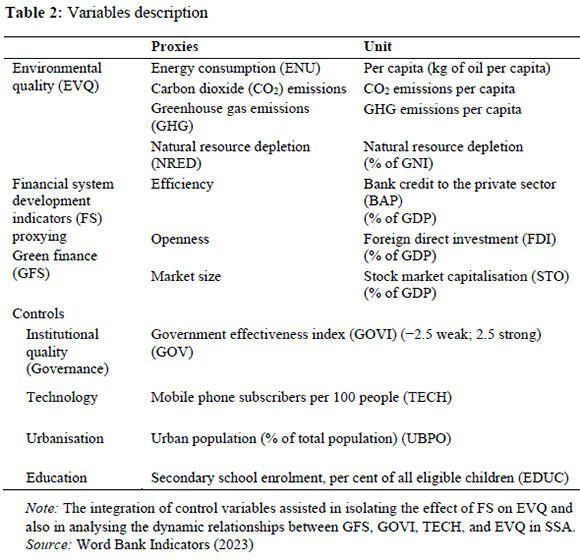
The comprehensive description of the study variables, along with their respective proxies and units of measurement is presented in table 2. The selected proxies are designed to capture the multidimensional effects of economic activities on environmental sustainability, governance, and socioeconomic development.
Model
Pooled Mean Group Autoregressive Distributed Lag Model (PMG-ARDL)
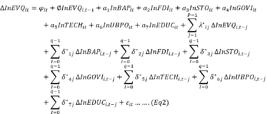
The study adopted the PMG-ARDL model to assess the short- and long-term dynamics between FS, GOVI, and EVQ in SSA. This model is particularly appropriate for the study's context due to its ability to accommodate heterogeneity in economic, financial, and governance structures across SSA while maintaining homogeneity in the long-run nexus. The PMG-ARDL model effectively captures country-specific short-term dynamics and the delayed effects of FS and GOVI on EVQ. The model also addresses endogeneity concerns, such as omitted variable bias and serial correlation, enhancing the robustness and reliability of the results. Its flexibility in handling variables with mixed integration orders, level I(0) or first difference further underscores its suitability for this study.
Pre-Tests
Before estimating the PMG-ARDL model, an array of pre-tests was conducted to ensure the validity of the results.
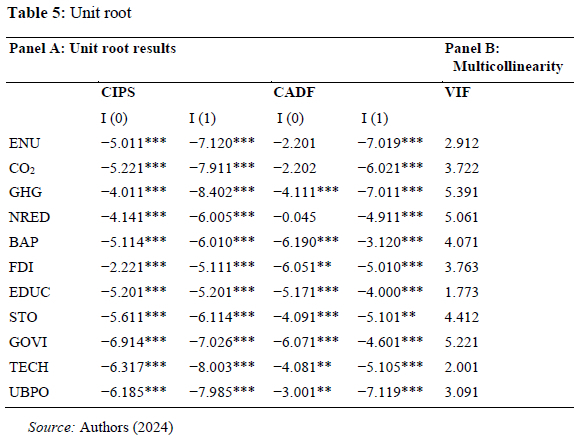
The cross-sectional augmented Dickey-Fuller (CADF) and cross-sectional augmented Im, Pesaran, and Shin (CIPS) tests were used to assess the stationarity properties of the dataset. The results (see table 5, panel A) confirm the stationarity of the variables. To further ensure the robustness of the analysis, additional tests were conducted to examine multicollinearity using variance inflation factor (VIF) and cross-sectional dependency. The multicollinearity diagnostics tests (presented in table 5, panel B) confirm the absence of multicollinearity in the model. Pesaran's (2004) cross-sectional dependence test was conducted to address potential dependencies among study variables. Neglecting this test would lead to spurious results.
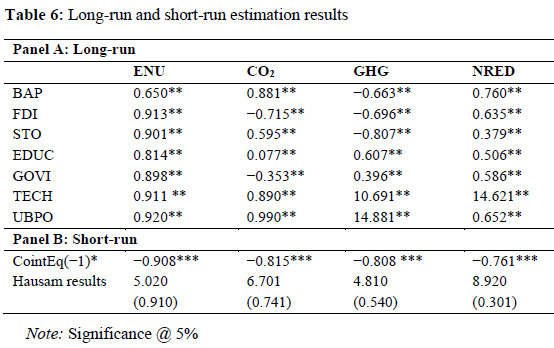
The diagnostic tests conducted include autocorrelation tests (Breusch-Godfrey serial correlation LM test); heteroskedasticity tests (Breusch-Pagan-Godfrey Test); and model specification tests (Ramsey RESET test [checking for omitted variable bias or model misspecification]). The Hausman test was adopted to select the pooled mean group (PMG) as the most efficient model. The Hausman results (in table 6, panel B) support the PMG estimator over other models.
The PMG-ARDL model

For this study, the specific equation is:
Empirical Estimation
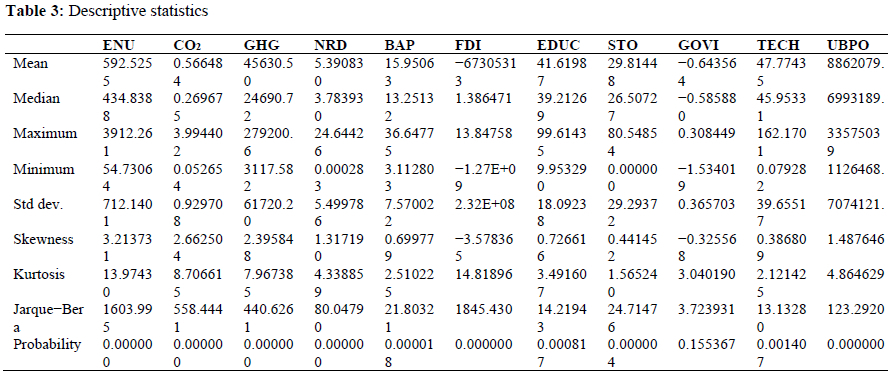
The results in table 3 provide a detailed overview of the descriptive statistics for ten selected fast-growing and stable SSA countries post-COVID-19. Key results are as follows.
Energy and Emissions
The average energy consumption is 592.53 kg per capita, with a substantial standard deviation of 712.14, indicating significant disparities in energy use and efficiency across the countries. CO2 emissions average 0.57 kilotons per capita, while GHG emissions reach an average of 45,630.50 kilotons. The high variability indicates unequal environmental impacts and differences in emission levels across SSA. NRED stands at 5.39% of gross national income (GNI) annually, underscoring concerns related to the unsustainable use of resources in the region.
Financial Development
Bank credit to the private sector has a positive average of 15.95, with a median value of 13.25, reflecting increased credit availability to businesses. However, the high standard deviation highlights significant variations in financial access across countries. FDI shows a negative average, indicating limited FDI inflows, with a high standard deviation indicating unequal access to foreign investment across the region. Stock market capitalisation exhibits considerable variation, emphasising disparities in the size and development of financial markets within SSA.
Institutional and Technological Development
On average, government effectiveness supports sustainable development, with positive skewness showing a trend toward effective governance structure development across SSA countries. The standard deviation of 39.66 for mobile phone subscribers highlights significant differences in technological infrastructure and access to communication services across the region. Urbanisation levels vary significantly, with a standard deviation of 29.29, reflecting diverse economic structures and urban development rates within the region.
Cross-Sectional Dependence
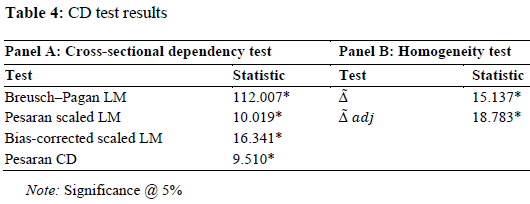
The cross-sectional dependency results in table 4 below reveal cross-sectional dependency among SSA countries, reflecting their interconnectedness. Thus, global shocks, such as financial crises or cross-border pollution, can be easily spread across the region. These results support the adoption of second-generation econometric techniques to account for these interactions. The homogeneity test (panel B) confirms heterogeneity across SSA countries, validating the methodology used in the study.
The unit root and multicollinearity test results are presented in table 5. Panel A shows the unit root results, assessing the stationarity of the variables, while panel B examines potential multicollinearity issues in the model.
The unit root test results reveal that the series are integrated at mixed orders (I(1) and I(0)). This implies that the variables did not exhibit significant trends over time after differences. The multicollinearity results in panel B show that the VIF values are (> 10), indicating the absence of multicollinearity in the model. This implies that the model variables are not highly correlated with each other.
Panel PMG-ARDL Results
Table 6 shows the long-run and short-run estimation results of the analyses between GFS, GOVI, TECH, and EVQ in SSA. The table is structured into two main panels: panel A: long-run results capture the sustained impact of these factors over time, and panel B: short-run results capture the speed of adjustment from short-run deviations to long-run equilibrium.
Long-Run Results
Greenhouse Gas (GHG) Emissions
A unit increase in BAP encourages the relocation of MNCs to SSA due lax environmental standards. While this relocation initially boosts local economic and financial activities in the short term through job creation and increased industrial activity, the long-term costs of increased healthcare burdens and natural resources depletion exacerbate the climate change crisis by 66.3%. The lack of adequate funds for GFS investment forces businesses to pursue cost-saving but EVQ detrimental practices. The relocation of polluting industries reflects a broader inequity where wealthier nations export their EVQ burdens to less developed regions. Without global accountability mechanisms, SSA disproportionately bears the environmental and social costs of industrial pollution. These results align with the PHH, indicating that lax governance and institutional framework attracts carbon-intensive industries. Studies by Emmanuel et al. (2023) and Ji et al. (2021) confirm these results. The results support (H1), which posits that FS initially increases emissions during industrialisation before improvements occur in post-industrial stages, as predicted by the EKC.
The negative nexus between FDI and GHG shows that FDI inflow from countries with stringent environmental laws to SSA countries with lax environmental standards lead to a 69.6% increase in EVQ degradation. Conversely, GOVI, TECH, and UBPO positively improves EVQ through investment in green energy sources. UBPO supports energy-efficient infrastructure to enhance EVQ. These results resonate with Emmanuel et al. (2023), who reported that lax environmental governance in SSA fosters the PH effect. Similarly, the results by Ji et al. (2021) highlighted GOVI's role in mitigating the PH effect. Udo et al. (2024) affirmed that GFS promotion of green energy is consistent with their assertion of FS driving sustainable practices. Theoretically, these results support the EKC framework, where lax governance during industrialisation increases emissions, but robust GOVI and UBPO foster post-industrial transitions to lower emissions through green initiatives.
Natural Resource Depletion (NRED)
BAP improves resource conservation by 76% through investments in sustainable practices, such as biodiversity preservation. FDI mitigates the negative impact of MNCs on resources by 63%, thereby ensuring that FDI flows into industries that prioritise EVQ. Companies with robust market performance attract 39% more investments into eco-conscious growth. GOVI enhances resource management by 50%, while UBPO boosts consumption efficiency by 65%. Higher EDUC levels raise EVQ awareness and encourage responsible consumption and NRED preservation. These results align with findings by Abner et al. (2023) and Emmanuel et al. (2023), emphasising the importance of green industry investment to reduce resource depletion. The results support the financial development hypothesis, which links financial stability to resource-efficient investments. The findings also confirm hypothesis H2, thereby demonstrating that institutional frameworks play a critical role in resource preservation and sustainability.
Carbon Dioxide (CO2) Emissions
GFS as proxied by BAP and STO significantly drives investment in green technologies by 88.1% and 59.5%, respectively, hence improving EVQ. UBPO increases energy demand, thereby depleting EVQ by 82.0%; while EDUC raises awareness, it indirectly impacts EVQ. Poor governance weakens the enforcement of environmental standards, amplifying harmful industrial practices. This result supports the findings by Ntow-Gyamfi et al. (2020) which highlights the significance of FS reforms in improving EVQ. It also aligns with the EKC framework, where industrial growth initially increases emissions, but green initiatives during the post-industrial phases reduces emissions. Theoretically, this result reinforces the dual role of UBPO in the EKC.
Energy Consumption (ENU)
Green finance through BAP and STO significantly enhances green infrastructural investment by 65% and 90% respectively. Influx of FDI promotes the adoption of green technologies, while fostering energy transition by 91%. TECH and EDUC support green energy adoption by 91% and 81%, respectively. Strong governance and transparent institutions enhance the implementation of energy-efficient practices by 89%. Urban areas, with high population densities, adopt energy-efficient technologies more rapidly, although population growth can lead to an increase in fossil fuel consumption by 92%. Given SSA's vulnerability to climate change, harmonising growth and stability with green energy practices is critical. The results underscore the significance of GFS and GOVI in advancing energy efficiency and sustainable development in SSA. The results are consistent with the results of Afzal et al. (2022), who emphasise the importance of the role of GFS in promoting energy efficiency and renewable energy adoption. This study also reveals that UBPO promotes renewable adoption in SSA.
These results resonate with the EKC theory, where financial mechanisms and governance frameworks drive transitions to sustainable energy sources in post-industrial phases. Empirically, these results support (H1), which posits that financial flows influence sustainable development through energy conservation and efficiency.
The long-run results align with the study's objectives, emphasising the significant role of FS and GOVI frameworks in facilitating sustainable energy transitions in SSA. These results address research question 1, by revealing how financial flows influence the adoption of green energy and environmental conservation practices. The results also align with objective 2, showing the mixed effects of GOVI on EVQ, providing empirical support for (Hi) by confirming that FS development initially degrades EVQ during industrialisation but subsequently improve EVQ as economies transition to postindustrial stages, these results is consistent with the EKC framework (figure 1).
The results further address research question 2, by demonstrating that GOVI positively affects EVQ by promoting sustainable practices and reducing emissions. This result aligns with objective 3, showcasing the interconnected roles of FS and GOVI in preserving natural resources. Finally, the results validate the financial development hypothesis, which posits that financial stability fosters resource-efficient investments and enhances sustainability. These insights offer a solid foundation for policy recommendations aimed at harmonising EGR with EVQ in SSA.
Short-Run Results
Error Correction Model (ECM)
The ECM results in panel B are rightly signed negative and significantly confirm the speed of convergence from short-term divergence caused by lax regulatory frameworks, technological constraints, climate change impacts, global market dynamics, and lack of funds for green financing in the region. To circumvent the influence of PH, the study reveals that short-term EVQ divergence can converge to long equilibrium by 0.29 years (approximately three months and fifteen days), as adaptive regulatory frameworks and market adjustments take effect. CO2 and GHG emission will take approximately 0.410.42 years (i.e., five months) to return to equilibrium, indicating inertia in the emission reduction processes in the region. NRED requires 0.48 years (i.e., six months), to converge back, thus reflecting the complexities of addressing resource exploitation and governance barriers. These results emphasise the need for tailored regulatory policy interventions to accelerate the convergence process from short-run EVQ deviation to long-run equilibrium. However, the slower convergence for NRED underscores the need for policies focused on sustainable resource management. These results confirm the objectives and hypotheses of the study:
H1: FS drives green energy adoption and EVQ conservation, validating the EKC framework.
H2: GOVI plays a critical role in improving EVQ, revealing its dual function in fostering and enforcing sustainable practices.
H3: The interaction of FS and GOVI is essential for preserving NRED, supporting and addressing sustainability challenges in SSA.
Conclusion
This article examines the intricate relationship between GFS, GOVI, and EVQ across ten selected SSA countries. The key EVQ indicators, such as NRED, GHG, CO2 emissions, and ENU, are analysed to provide insights into the dynamics shaping sustainable development in SSA. The results highlight the transformative role of GFS in fostering sustainability. FS, particularly BAP, significantly drives investments in eco-friendly technologies and resource conservation, demonstrating the potential of GFS in promoting environmental sustainability.
The study reveals that the lax GOVI structures hinder the full realisation of these benefits, thereby allowing MNCs to relocate to SSA in response to lax environmental regulations which intensifies environmental degradation. While financial inflows improve access to capital for green investments, the effectiveness of these investments depends on the strength of governance frameworks. Strong GOVI enhances the enforcement of environmental policies, while technological advancements support energy efficiency and sustainable resource management. EDUC enrolment plays a critical role in boosting climate change awareness and promoting long-term sustainable practices. UBPO presents dual effects: it accelerates the adoption of energy-efficient technologies while also increasing the overall energy consumption. These results highlight the need for balanced and well-planned growth strategies.
This study contributes to the literature by addressing the multidimensional factors influencing EVQ in SSA. The results emphasise that sustainable development is contingent on integrating financial, governance, and technological interventions with broader EVQ and social objectives. By aligning GFS policies with the Sustainable Development Goals, SSA countries can create a synergistic approach that balances EGR with EVQ.
Recommendations
Based on the results of the study, the following policy recommendations are proposed to enhance EVQ and promote sustainable development in SSA.
Expand green finance access: By aligning financial investments with the Sustainable Development Goals, the government increases industries' access to green finance for sustainable practices through financial incentives for green infrastructure projects and renewable energy investments.
Strengthen governance and regulatory frameworks: By enforcing stringent environmental regulations, through transparent and accountable institutions, the government can deter industries from exploiting the lax governance structures in SSA, checkmating corruption in resource management and policy implementation.
Enhance education for sustainability: The integration of climate change awareness and sustainability principles into educational curricula at all levels would promote capacity-building programmes to develop expertise in green finance, sustainable development, and environmental management.
Optimise urbanisation for sustainability: Urbanisation strategies should prioritise energy-efficient infrastructure and renewable energy adoption. The development of a balanced urban expansion policy aligning with environmental conservation would mitigate the adverse effects of population growth.
Integrate environmental goals into economic growth strategies: Policymakers should ensure that environmental goals are interwoven with national economic policies and investments decisions. To achieve sustainable growth, the policymakers must promote cross-sectoral collaboration between financial institutions, governments, and environmental agencies.
The results of this study serve as a call to action for policymakers, researchers, and development practitioners to adopt integrated approaches that balance economic growth with sustainability. Addressing systemic challenges, such as lax governance and inefficient resource management, would enhance SSA's transition towards a resilient and environmentally sustainable future. By implementing these policy recommendations, SSA can set a precedent for other developing regions striving to achieve sustainable development.
Glossary of AcronymsBAP Bank credit to the private sector
CADF Cross-sectional augmented Dickey-Fuller
CIPS Cross-sectional augmented Im, Pesaran, and Shin
ECM Error correction model
EDUC Education
EGR Economic growth
EKC Environmental Kuznets curve
ENU Energy consumption
EVQ Environmental quality
FDI Foreign direct investment
FS Financial systems
GFS Green finance
GHG Greenhouse gas
GNI Gross national income
GOVI Governance effectiveness
MNC Multinational corporation
NRED Natural resource depletion
PH Pollution haven
PHH Pollution halo hypotheses
PMG Pooled mean group
SSA Sub-Saharan Africa
STO Stock market capitalisation
TECH Technology
UBPO Urban population
VIF Variance inflation factor
References
Literature Review
-
Abner I. P., V. E. Inim, O. Izuchukwu, E. S. Udo, V. C. Ndubuaku. 2022. "Oil Price Surge and Oil Output in Nigeria: Effects of the Ukraine-Russia Crisis." Journal of Positive School Psychology 6 (11) 439-444. https://joumalppw.com/index.php/jpsp/article/view/13964.
» https://joumalppw.com/index.php/jpsp/article/view/13964 -
Abner, I. E., I. V. Akpan, B. L. Udo, E. S. and E. E. Akpan. 2023. "Energy Efficiency, Renewable Energy and Economic Growth Nexus on CO2 Emission: Evidence from MINT Countries." Seybold Report Journal 18 (10): 253-273. https://doi.org/10.5110/77.1091.
» https://doi.org/10.5110/77.1091 -
Afzal, A., E. Rasoulinezhad, and Z. Malik. 2022. "Green Finance and Sustainable Development in Europe." Economic Research-Ekonomska Istrazivanja 35 (1): 5150-5163, https://doi.org/10.1080/1331677X.2021.2024081.
» https://doi.org/10.1080/1331677X.2021.2024081 -
Emmanuel, N. E., I. P. Abner, V. E. Inim, C. E. Nwude, O. J. Samuel, and S. E. Udo. 2023. "Financial Development, Foreign Direct Investment, and CO2 Emissions Nexus: Evidence from Sub-Saharan Africa." Journal of Hunan University Natural Sciences 50 (6): 12-24. https://doi.org/10.55463/issn.1674-2974.50.6.12.
» https://doi.org/10.55463/issn.1674-2974.50.6.12 -
Inim, V. E., E. S. Udo, E. J. Akpan, and P. A. Ishaku. 2023. "Green Finance and Sustainable Development Nexus in Sub-Saharan Africa." FWU Journal of Social Sciences 18 (2): 7890. https://doi.org/10.51709/19951272/summer2024/8.
» https://doi.org/10.51709/19951272/summer2024/8 -
Ji, X., Y. Zhang, N. Mirza, M. Umar, and S. K. A. Rizvi. 2021. "The Impact of Carbon Neutrality on the Investment Performance: Evidence from the Equity Mutual Funds in BRICS." Journal of Environmental Management 297: 113228. https://doi.org/10.1016/j.jenvman.2021.113228.
» https://doi.org/10.1016/j.jenvman.2021.113228 -
Musah, M., M. Owusu-Akomeah, J. D. Nyeadi, M. Alfred, and I. A. Mensah. 2021. "Financial Development and Environmental Sustainability in West Africa: Evidence from Heterogeneous and Cross-Sectionally Correlated Models." Environmental Science and Pollution Research 29 (8): 12313-12335. https://doi.org/10.1007/s11356-021-16512-8.
» https://doi.org/10.1007/s11356-021-16512-8 -
Ntow-Gyamfi, M., G. A. Bokpin, A. Q. Aboagye, and C. G. Ackah. 2020. "Environmental Sustainability and Financial Development in Africa: Does Institutional Quality Play Any Role?" Development Studies Research 7 (1): 93-118. https://doi.org/10.1080/21665095.2020.1798261.
» https://doi.org/10.1080/21665095.2020.1798261 -
Patrick, H. T. 1966. "Financial Development and Economic Growth in Underdeveloped Countries." Economic Development and Cultural Change 14: 174-189. https://doi.org/10.1086/450153.
» https://doi.org/10.1086/450153 -
Pesaran, M. H. 2004. "General Diagnostic Tests for Cross-Section Dependence in Panels." Cambridge Working Papers in Economics No. 0435. https://cir.nii.ac.jp/crid/1370002214340987648.
» https://cir.nii.ac.jp/crid/1370002214340987648 -
Udo, E. S., I. P. Abner, V. Ndubuaku, B. E. Udoh, and J. I. Okoh. 2023. "Effect of FinTech on Cash Holding: Quarterly Evidence from Nigeria." The Economics and Finance Letters 10 (2): 172-182. https://doi.org/10.18488/29.v10i2.3407.
» https://doi.org/10.18488/29.v10i2.3407 -
Udo, E. S., I. H. Rosemary, V. Inim, A. J. Ededem, and V. Ndubuaku. 2021. "Energy Consumption and Sectorial Value Addition on Economic Growth in Nigeria." Universal Journal of Accounting and Finance 9 (1): 74-85. https://doi.org/10.13189/ujaf.2021.090108.
» https://doi.org/10.13189/ujaf.2021.090108 -
Udo, E. S., I. P. Abner, V. Inim, and E. J. Akpan. 2020. "SARS-CoV-2 Pandemic on the Nigerian Educational System." International Journal of Management 11 (10): 626-635. https://ssm.com/abstract=3738925.
» https://ssm.com/abstract=3738925 -
Udo, E. S., E. J. Akpan, I. P. Abner, K. Idogen, and V. Ndubuaku. 2019. "Finance-Led Growth and Growth-Led Finance: Evidence from Nigeria Economic and Financial Sector Development." Humanities and Social Sciences Letters 7 (4): 191-198. https://doi.org/10.18488/joumal.73.2019.74.191.198.
» https://doi.org/10.18488/joumal.73.2019.74.191.198 -
Udo, E. S., E. J. Akpan, V. Inim, E. J. Agama, O. A. Ugar, and S. O. James. 2024. "Unveiling the Transformative Nexus of Energy Efficiency, Renewable Energy, and Economic Growth on CO2 Emission in MINT Countries." Journal of Renewable Energy and Environment (JREE) 11 (2): 89-101. https://doi.org/10.30501/JREE.2024.430213.1770.
» https://doi.org/10.30501/JREE.2024.430213.1770 - Udo, S. E., A. I. Prince, I. V. Edet, C. O. Manasseh, C. O. Daniel, O. C. Okanya, I. C. Mgbobi, and J. U. J. Onwumere. 2023. "Financial Technology and Economic Growth Nexus: Quarterly Evidence from Nigeria." Seybold Report Journal 18 (07): 106-129.
-
Udoh, B. E., I. P. Abner, J. I. Enemuo, S. C. Moguluwa, C. C. Onyejiaku, I. J. Attamah, and E. S. Udo. 2023. "Oil Price Fluctuation, Business and Economic Growth Effect: Evidence from Nigeria." European Journal of Sustainable Development 12 (2): 119. https://doi.org/10.14207/ejsd.2023.v12n2p119.
» https://doi.org/10.14207/ejsd.2023.v12n2p119 -
Udoh, B. E., J. I. Enemuo, S. E. Udo, E. J. Akpan, O. A. Ugar, and N. N. Caroline. 2024. "Effects of Industrialization on Business and Economic Climate in Nigeria: Evidence from Sectoral Analysis." Global Business Review. https://doi.org/10.1177/09721509241261859.
» https://doi.org/10.1177/09721509241261859 - Umar, M., X. Ji, N. Mirza, and B. Naqvi. 2021. "Carbon Neutrality, Bank Lending, and Credit Risk: Evidence from the Eurozone." Journal of Environmental Management 296: 113156.
-
World Bank. 2023. "World Development Indicators." World Bank Databank. https://databank.worldbank.org/source/world-development-indicators.
» https://databank.worldbank.org/source/world-development-indicators