Stability Optimisation of an Assistive Lower Limb Exoskeleton
Abstract
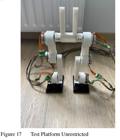
This paper explores the optimisation of stability in powered lower limb exoskeletons for stroke rehabilitation. Employing the linear inverted pendulum model and a genetic algorithm-based optimisation approach, the study utilised MATLAB simulations to predict hardware requirements and stability enhancements. The exoskeleton design was informed by existing systems, and a scaled physical test platform, while not achieving walking functionality, provided crucial insights into the challenges of translating simulation results to hardware. Results showed the linear inverted pendulum model achieved a stable gait, and the optimisation technique exhibited progressive improvements, contributing valuable insights for developing more stable and human-like walking gaits in powered lower limb exoskeletons. This research sets the groundwork for enhancing rehabilitation systems, potentially benefiting patients with spinal cord injuries, and supporting healthcare professionals.
Powered Lower Limb Exoskeleton; Genetic Algorithm; Linear Inverted Pendulum Model
 Thumbnail
 Thumbnail
 Thumbnail
 Thumbnail
 Thumbnail
 Thumbnail
 Thumbnail
 Thumbnail
 Thumbnail
 Thumbnail
 Thumbnail
 Thumbnail
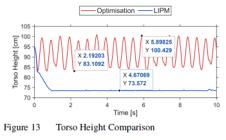 Thumbnail
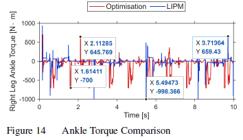 Thumbnail
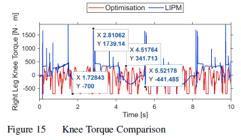 Thumbnail
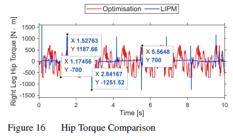 Thumbnail
 Thumbnail