Vaporisation of Water Droplets in a Laminar Gas Boundary Layer
Abstract
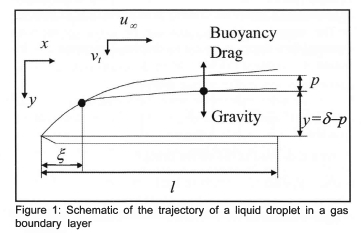
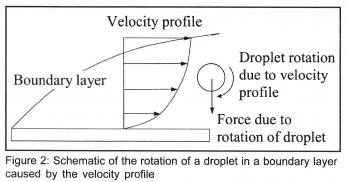
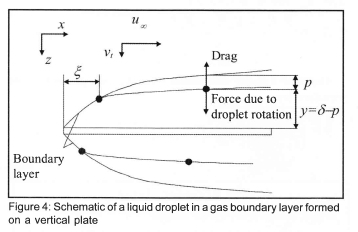
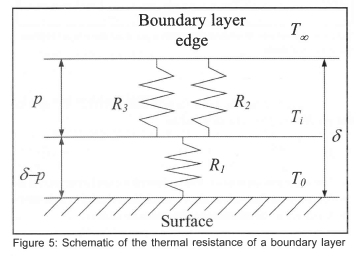
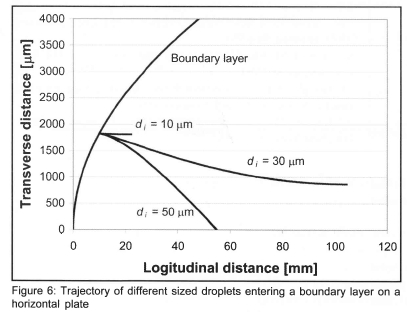
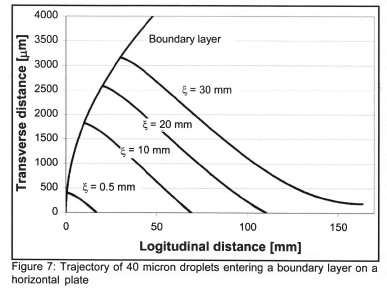
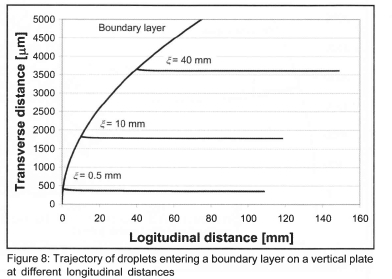
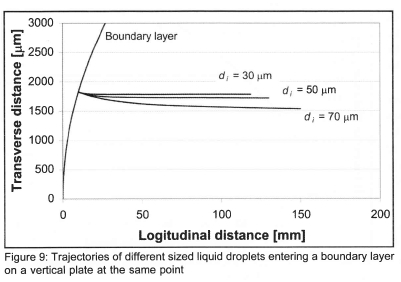
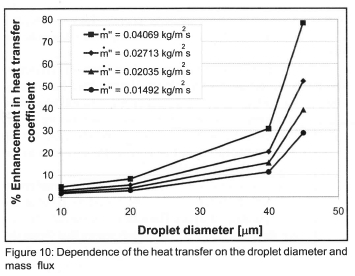
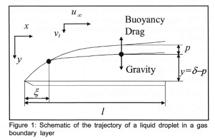
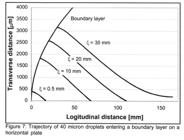
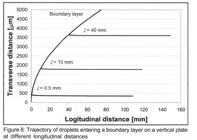
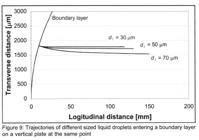
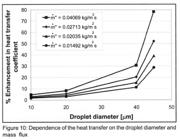
A theory is developed for two-phase flow where water droplets in a gas stream penetrate a boundary layer. This theory is developed in order to determine the trajectory of different sized droplets in the boundary layer and to determine the improvements in heat transfer rate as a result of the evaporation of the droplets. The equations of motion of the droplets are derived for both a horizontal configuration and a vertical configuration and a model is derived for determining the heat transfer rate. The theory is applied to calculate droplet trajectories and enhancements in heat transfer rate for the surface of a fin tube heat exchanger. The results indicated that even droplets of very small size will impact the fin surface rapidly, while a horizontal plate will experience less wetting. The heat transfer calculations showed a marked improvement in heat transfer (up to 77%) with the introduction of droplets into the boundary layer.
 Thumbnail
 Thumbnail
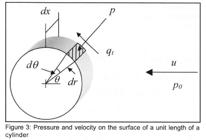 Thumbnail
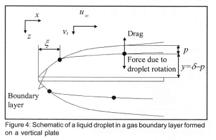 Thumbnail
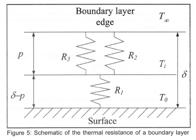 Thumbnail
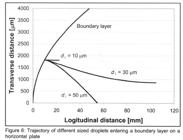 Thumbnail
 Thumbnail
 Thumbnail
 Thumbnail
 Thumbnail