Aerodynamic Coefficients of Stationary and Spinning Cricket Balls
Abstract
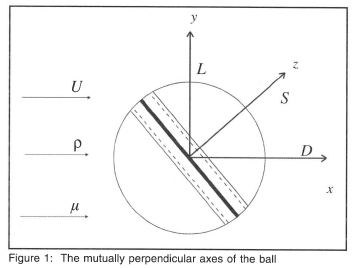
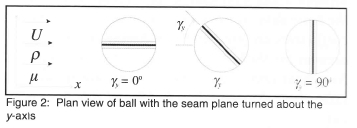
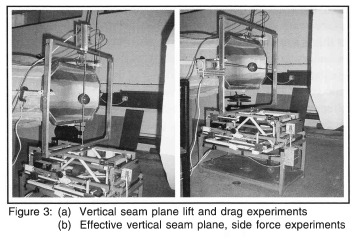
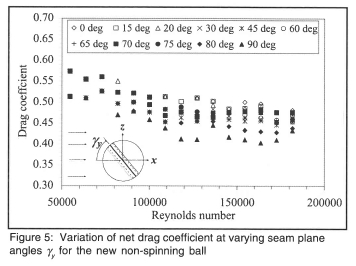
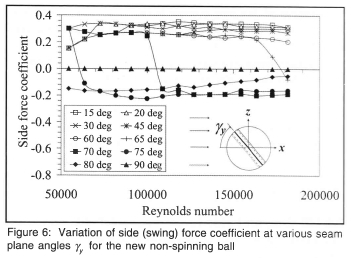
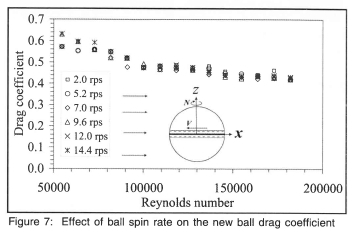
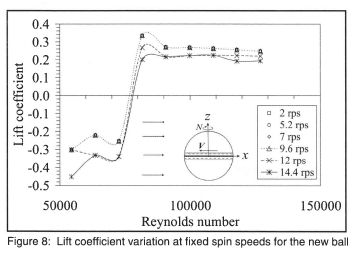
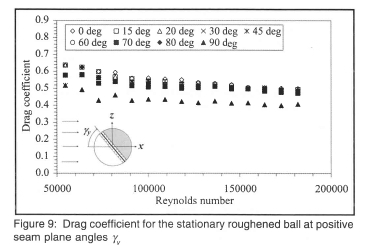
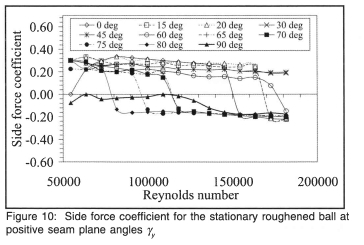
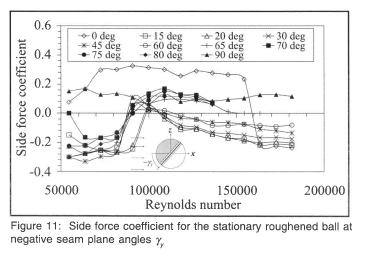
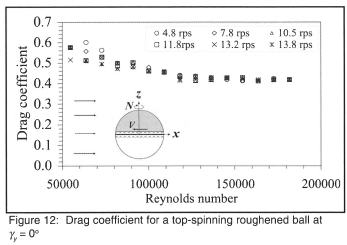
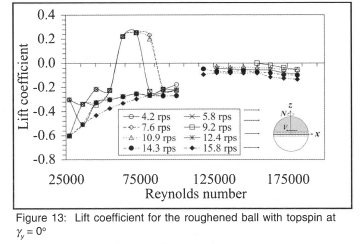
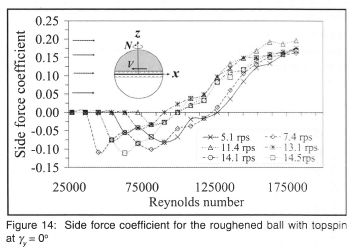
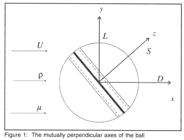
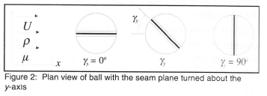
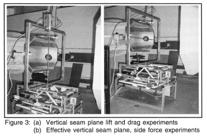
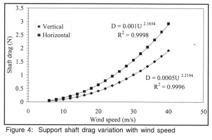
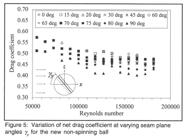
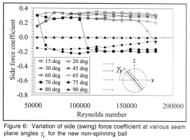
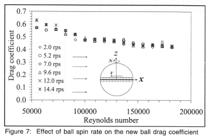
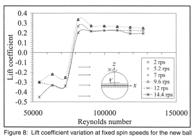
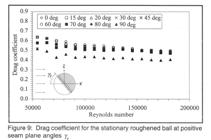
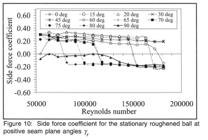
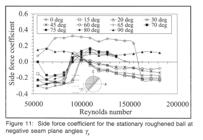
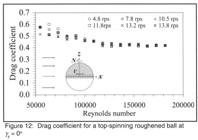
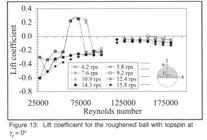
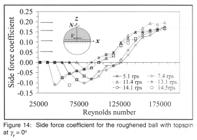
The flight of a cricket ball after leaving the hand of a bowler is, for given atmospheric conditions, principally governed by the speed of the ball, the angle of the seam to the direction of flight, any rotational spin applied to the ball, and the state of its outer surface with regard to the degree of wear and roughness. This paper describes the design of a wind tunnel test rig to accurately measure the net lift, drag and side (swing) forces on stationary and spinning cricket balls. The measurements were performed on new unused balls and artificially roughened balls at wind tunnel air velocities between 6 and 40 m/s (2.7 x 10⁴< Re < 1.8 x 10s), and seam angles between 0 and 90°. The spin speed range was between 2 and 8 revolutions per second (rps). From the basic data, aerodynamic lift, drag and side force coefficients are presented and display anomalies to account for the behaviour of the ball during play. Numerous critical Reynolds numbers are shown to exist where discontinuities in lift and side force occur.
Seam; lift; drag; side forces
 Thumbnail
 Thumbnail
 Thumbnail
 Thumbnail
 Thumbnail
 Thumbnail
 Thumbnail
 Thumbnail
 Thumbnail
 Thumbnail
 Thumbnail
 Thumbnail
 Thumbnail
 Thumbnail