Modelling of scull drag at the orthogonal point of a rowing stroke
Abstract
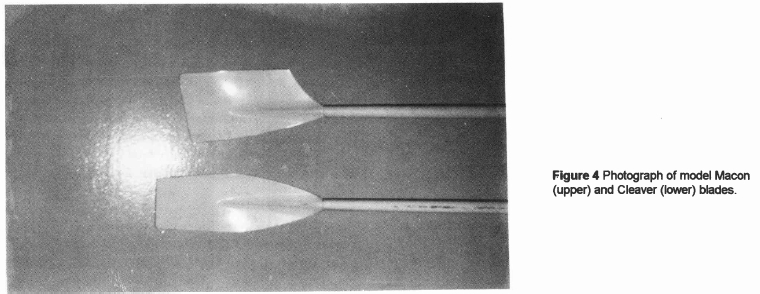
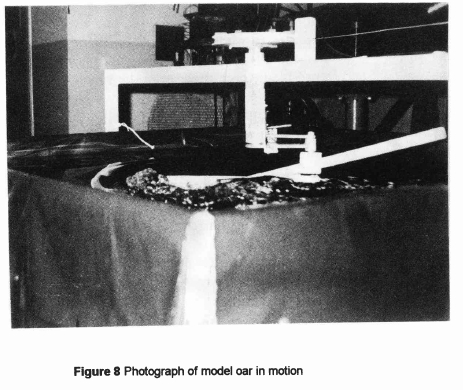
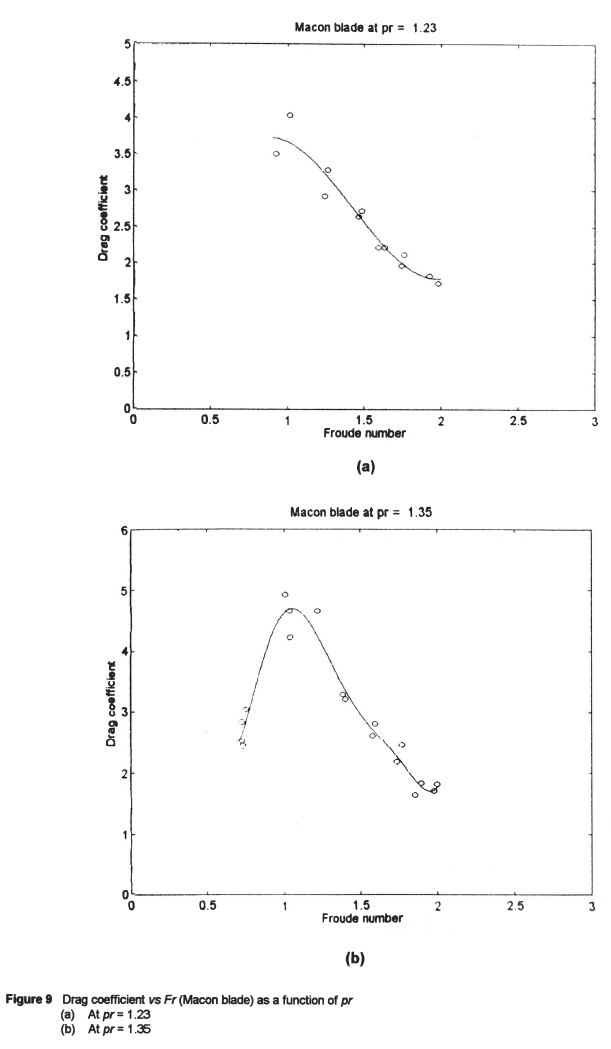
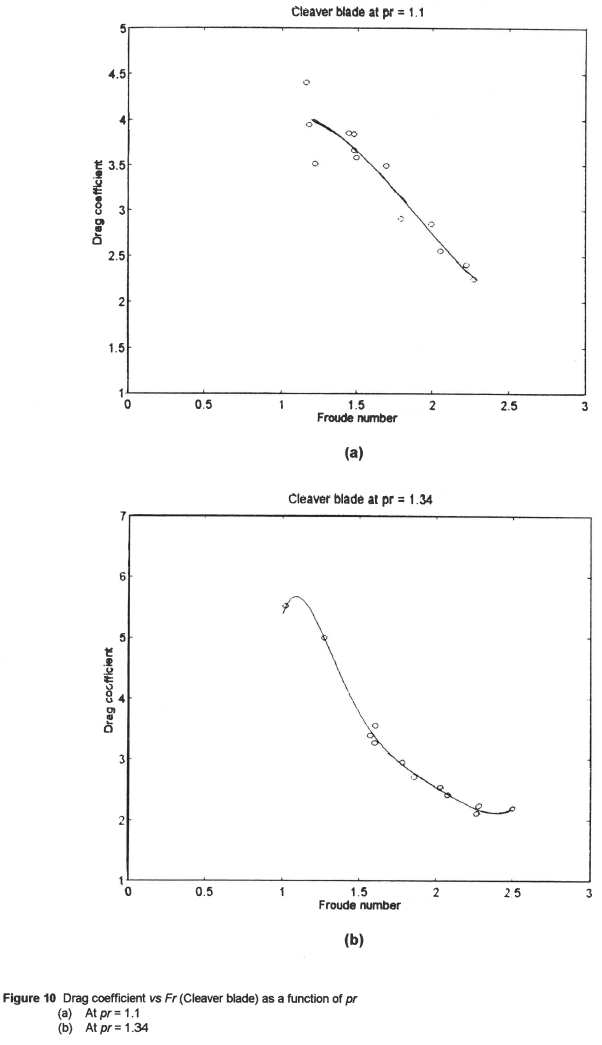
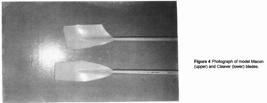
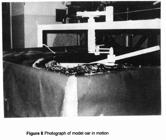
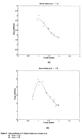
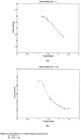
Model experiments (at half scale) were performed to determine the drag coefficient of two standard designs of scull, namely, the Macon and the Cleaver, at the position of the stroke when the oar is perpendicular to the boat. The measurement procedure involved the use of a gravity dynamometer to rotate a model blade through a limited angle in stationary water. It was found that the Cleaver blade showed on average a 3% improvement in blade efficiency - equivalent to only a 1.2% improvement in boat speed. The drag coefficient curve of the sculls as a function of the Froude Number Fr was similar to that experienced by a ship in shallow water in the region of the critical speed (Frh = I); however, the drag coefficient peaked at a lower value of Fr than corresponds to the normal operating range of the blades (1.4 < Fr < 2.2). This suggests that an increase in blade drag - and hence in blade effectiveness - is possible if the operating Fr can be reduced so that normal oar operation occurs closer to the peak of the drag curve (where the drag coefficient was found to exceed by a factor of up to nearly 3 its value at higher values of Fr).
 Thumbnail
 Thumbnail
 Thumbnail
 Thumbnail
 Thumbnail
 Thumbnail
 Thumbnail