Heat Transfer Simulation Modelling for Unclothed Human Infants
Abstract
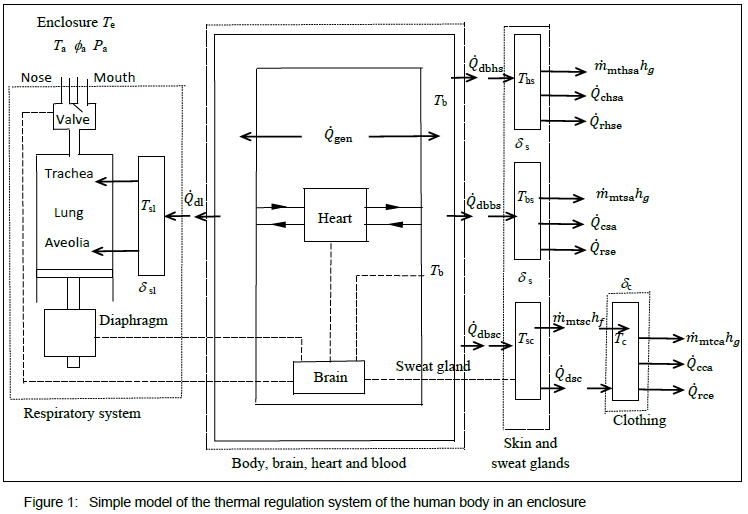
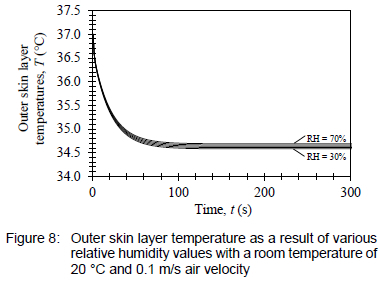
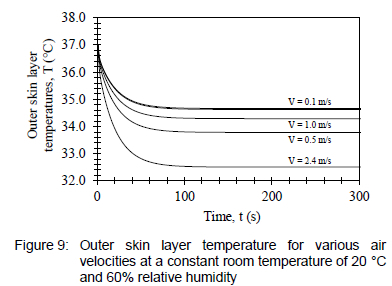
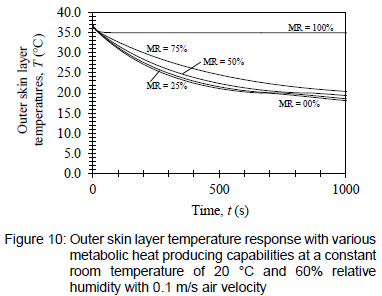
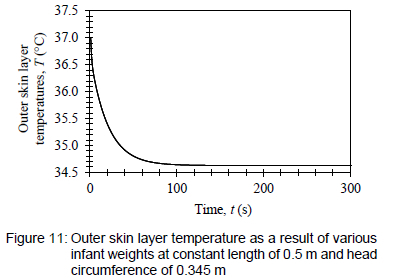
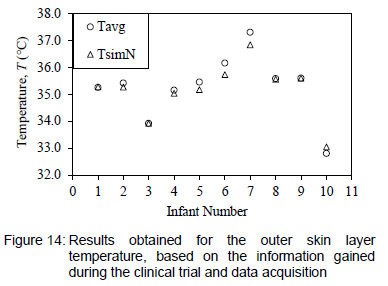
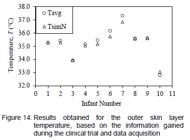
The thermal regulation response of a neonate has to maintain temperature homeostasis, thereby resisting the changes to core temperature caused by heat loss to the unstable external environment. In this paper a theoretical heat transfer simulation model for a human infant subject to a well-defined environment is presented. This model will aid in understanding the influences of environmental effects, such as temperature, relative humidity and air velocity, on core and skin temperature. The influence of subject-specific properties, such as metabolic heat production capability, weight and surface area subject to heat loss is also evaluated. A clinical trial was conducted to facilitate a better understanding of thermal stability in neonates. The data acquired during the clinical trial was used to validate the theoretical simulation model. From the results gleaned it can be concluded that this theoretical simulation model can be used with reasonable confidence and accuracy to predict the outer skin layer temperature of the neonate.
Temperature response; neonate; heat transfer; numerical modelling; thermal environments
 Thumbnail
 Thumbnail
 Thumbnail
 Thumbnail
 Thumbnail
 Thumbnail
 Thumbnail
 Thumbnail
 Thumbnail
 Thumbnail
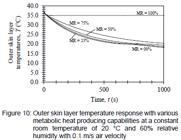 Thumbnail
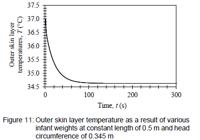 Thumbnail
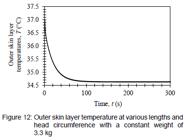 Thumbnail
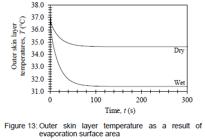 Thumbnail
 Thumbnail