Effectiveness of a vertical passive solar panel containing CaCl2.6H2O [for room heating by latent heat exchange]
Abstract
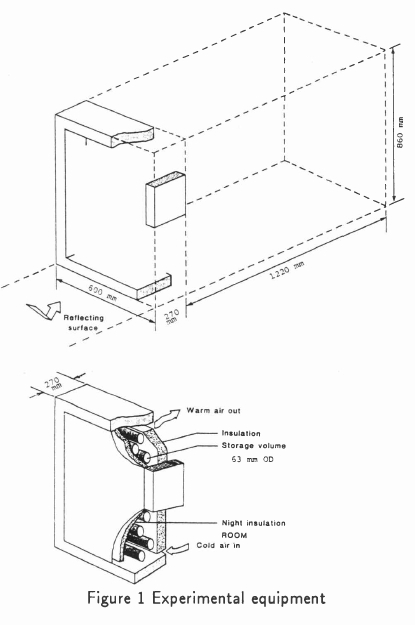
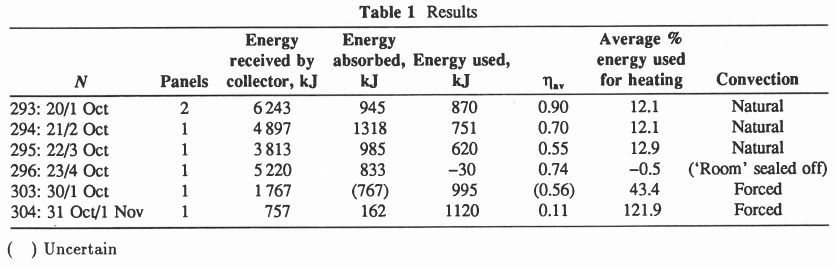
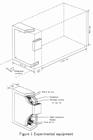
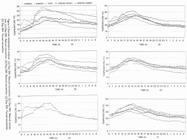
A small passive vertical wall thermal panel comprising tubes containing CaCh.6H2O (of melting temperature 29.8°C, i.e. close to ambient temperatures in Johannesburg at the time of the experiment) to transfer heat to a simulated living space ('room') on recrystallisation at night was built and tested. This chemical was chosen on account of its small volume change during phase change and for its suitability in relation to the diurnal temperature range. The chemical was contained in pipes behind glass, with natural or forced convection to distribute heating. Operation was satisfactory, with the temperature of the air discharged to the 'room' raised by up to 12° C higher than ambient, but under the test conditions employed the efficiency (conversion of incident solar energy to heat) was only in the neighbourhood of 12%.
 Thumbnail
 Thumbnail
 Thumbnail
 Thumbnail