Bending Behaviour of Laser formed High Strength Low Alloy (HSLA) Steel Sheet
Abstract
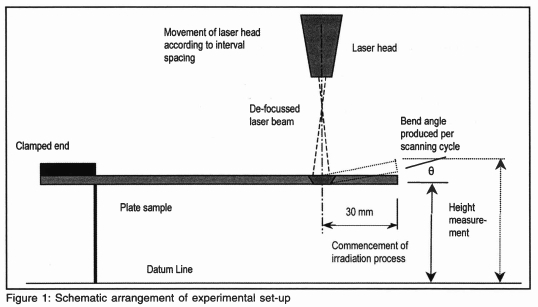
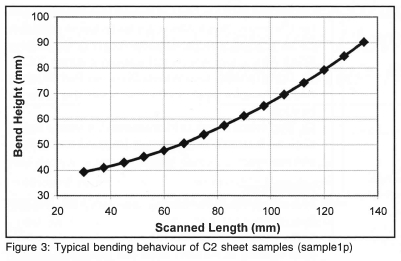
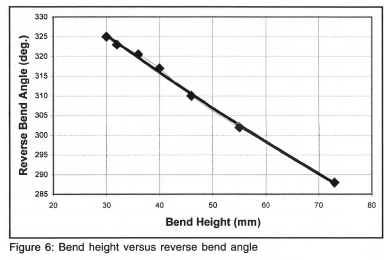
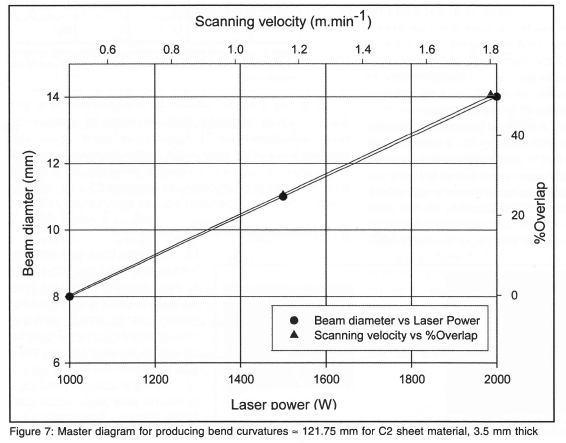
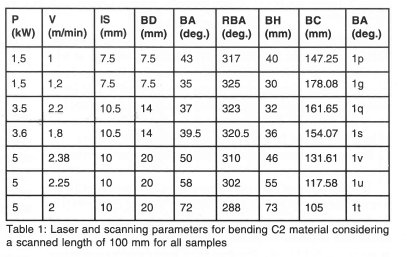
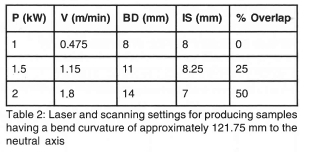
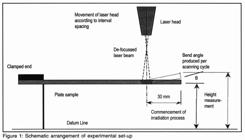
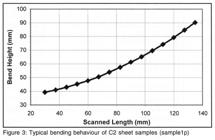
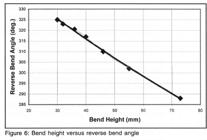
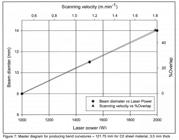
The application of bending/forming steel plate by thermo-mechanical means is extensively and successfully employed in the ship building industry. However, the radius of curvature resulting from this flame line-heating process is considered relatively large compared to the bend radii that can be produced by the application of lasers. The laser technique for bending steel plate to specific bend radii for a given set of laser process parameters is still underdeveloped, requiring further research in order to make this application 'production friendly9. The applied approach reported in this paper considers the bending of HSLA sheet samples using a 5 kW Continuous Wave (CW) CO2 Trumpf Laser in which the radii of curvature of the bend samples produced are characterised with respect to the laser process parameters. An interesting feature when characterising process parameters for producing a bend sample having a specific radius of curvature, is that the indicated trend was found to be linear. A further observation was in characterising the bend angle (or reverse bend angle) against bend height; not only was the indicated trend linear but the equation best describing this trend indicates that when the bend height tends to zero the bend angle tends to 0° (or reverse bend angle tends to 360°).
Radius of curvature; laser forming; line heating; laser forming mechanisms
 Thumbnail
 Thumbnail
 Thumbnail
 Thumbnail
 Thumbnail
 Thumbnail