Developing a Low-cost Seven Degree of Freedom Minimally Invasive Surgical Manipulator
Abstract
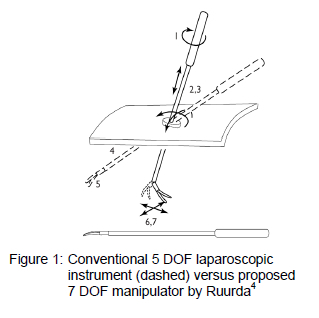
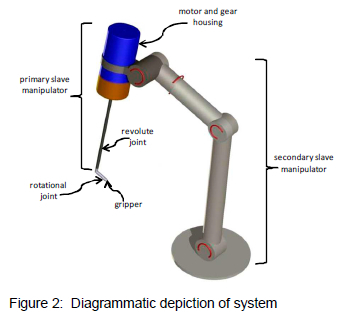
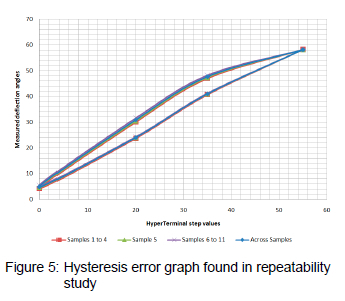
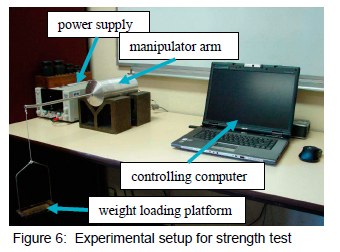
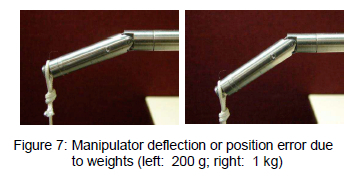
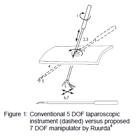
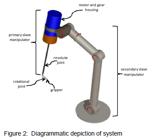
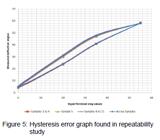
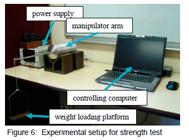
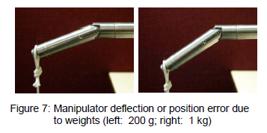
Minimally invasive surgery (MIS) gives surgeons the ability to operate through a few small incisions made in the patient's body. Through these incisions, long rigid instruments are placed into the body and manipulated to perform the necessary surgical tasks. Conventional instruments are constrained, however, through having only fíve degrees of freedom (DOF), as well as having scaled and mirrored movements, thereby limiting the surgeon's dexterity. Surgeons are also deprived of depth perception and hand eye coordination through having only two-dimensional visual feedback. Surgical robotics attempts to alleviate these drawbacks by increasing the dexterity, eliminating the fulcrum effect and providing the surgeon with three dimensional visualisation, therefore reducing the risks to patients as well as to the surgeons. However, existing robotic MIS systems are hugely expensive and bulky in operating rooms, preventing their more widespread adoption. In this paper, a new, inexpensive seven DOF primary slave manipulator (PSM) is presented. The four DOF wrist is actuated through a tendon mechanism driven by live direct current motors. A repeatability study on the wrist's joint position showed a standard deviation of 0.38 degrees and the strength test demonstrated that the manipulator is able to resist a 10N opposing tip force and is capable of a theoretical gripping force of 15 N.
Minimally invasive surgery; laparoscopic instrumentation; robotic manipulator; surgical robotics
 Thumbnail
 Thumbnail
 Thumbnail
 Thumbnail
 Thumbnail
 Thumbnail
 Thumbnail
 Thumbnail
 Thumbnail