Composite tube testing and failure theory computational comparison
Abstract
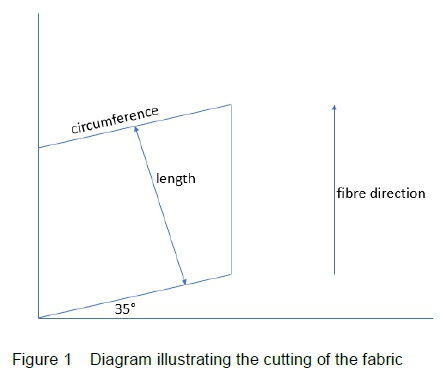
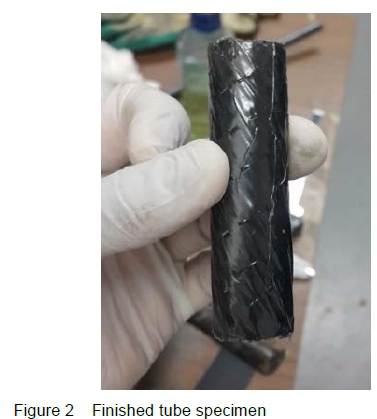
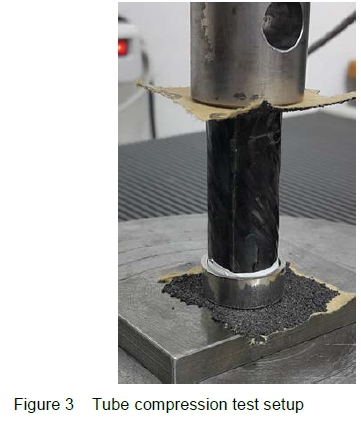
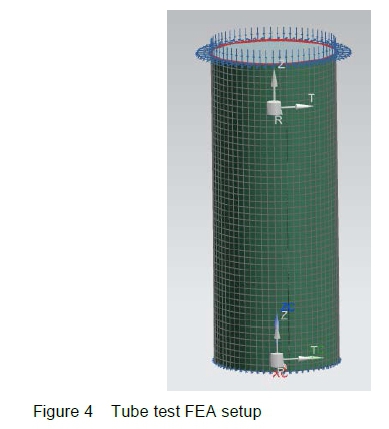
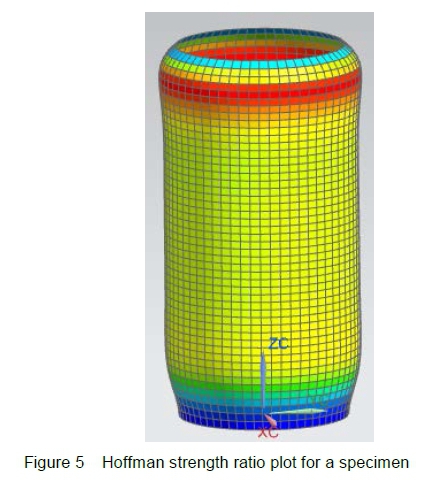
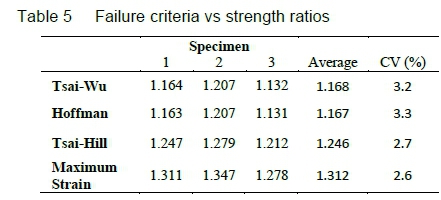
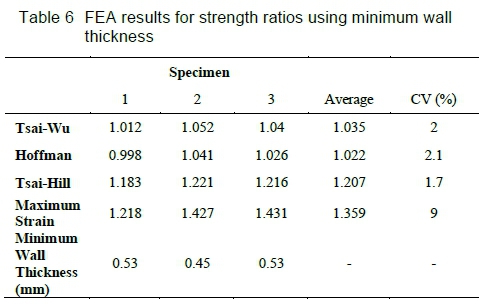
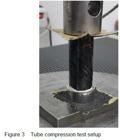
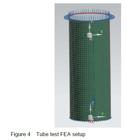
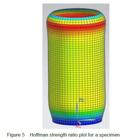
Composites are used in lightweight structural designs. This paper describes experimental tests conducted on composite tubes and a comparison with computational results. A test method was developed which involves an applied axial compressive load on tubes fabricated using Unidirectional (UD) carbon fibre set at +35°, to induce compressive and shear stresses along thefibres. Four major failure criteria were compared against test results: Tsai-Wu, Hoffman, Tsai Hill and Maximum Strain. The Hoffman and Tsai-Wu criteria were shown to be accurate and conservative. The Tsai-Hill criteria produced high strength ratios. The Maximum Strain criteria had the highest strength ratio, proving to be the least conservative and deviated most from computational results. This paper shows that the Hoffman and Tsai-Wu failure criteria may be used confidently in applications such as filament winding and continuous pultrusion methods, which are widely used in producing closed sections. Additionally, elastic and shear moduli were varied in simulations to show that small inaccuracies in those properties do not substantially change the maximum failure index output.
Finite Element Analysis; Destructive Testing; NX Nastran
 Thumbnail
 Thumbnail
 Thumbnail
 Thumbnail
 Thumbnail