Financing Renewable Energy in South Africa's Wind Industry
Abstract
The transition to green energy is a pivotal endeavour for countries worldwide, and South Africa has placed a substantialfocus on wind energy in pursuit of this transition. This paper delves into the intricate relationship between the cost of finance and South Africa's transition to green energy, particularly within the wind sector. The energy transition presents an opportunity for South Africa to tackle the current electricity supply constraints while addressing developmental goals of improving access and meeting decar-bonisation efforts. Green economies are economic systems considering holistic remedial measures incorporating economic environmental and social challenges that halt or diminish economic activities and growth. Expanding renewable technologies like wind energy can support these efforts. Because of the nature and scale of these projects, they are capital-intensive, and financing costs have a significant role in their viability. Mobilising external funding entails substantial financial expenses, adding to the complexities associated with transitioning. Despite having abundant renewable resources, South Africa faces shortages in grid connectivity in several regions, elevating investment risks, particularly in the wind energy sector. Consequently, expanding the transmission and distribution infrastructure is essential to accessing and modernising grid capacity. This requires additional investment. By reviewing existing literature from peer-reviewed journals, industry reports, policy documents, and financial indicators on the relationship between the cost of finance and the viability of wind energy projects in South Africa, this study seeks to explore the key issues affecting the de-risking of finance for renewable and wind energy. This study identifies what impacts the substantially high cost of financing renewables in South Africa. The paper demonstrates that the success ofthis transition lies in looking for sustainable and creative financial avenues to secure investments to support costs associated with transitioning, requiring extensive policy reform. The implications of the research findings reverberate across policy formulation and investment strategies. For South Africa, favourable financing conditions are necessary to materialise the deployment ofemerging low-carbon technologies and are conducive to increasing the overall degree of electrification of the energy system in South Africa.
De-risking; Renewable-Energy; Finance; Africa; Wind-Energy
1 Introduction
South Africa is undergoing a green transition to achieve a more sustainable and environmentally friendly energy landscape. The transition involves a shift from fossil fuels, primarily coal, towards renewable energy sources, electrification of various sectors, and the exploration of green hydrogen. Green economies are associated with this transition and are defined as "economic systems that take into account holistic remedial measures incorporating economic, environmental (including ecological), and social challenges that stop or reduce economic activities and growth" [1]. This shift has been primarily influenced by global commitments to support the Sustainable Developmental Goals (SDG), particularly goal number 7, which envisages access to affordable, reliable, modern, and sustainable energy for all [2]. Coal is the predominant source of electricity generation in South Africa, representing the most substantial source of carbon dioxide emissions and a distinctive hurdle in the shift towards low-carbon energy systems [3]. Furthermore, it has been pivotal in South Africa's energy infrastructure and economic framework [4]. African nations including South Africa find themselves in a distinctive position to harness renewable resources' socio-economic and environmental advantages but grapple with the challenge of securing an adequate and cost-effective influx of financing [5, 6]. Advancements in technology, declining costs of renewable energy, creative strategies, the influence of network effects, and the process of digitalisation are creating fresh avenues for Africa to harness its renewable energy potential [6]. According to the International Energy Agency (IEA), Africa possesses a remarkable 60 % share of the world's primary energy resources. Surprisingly, however, its utilisation of solar photovoltaic (PV) capacity is currently limited to a mere 1 % [3]. Moreover, 72 % of the new electricity generation capacity added globally in 2019 was renewable, but only 2000 MW were added to the African continent [7]. Nevertheless, realising the full advantages of renewable energy in the region demands a steadfast commitment to political leadership, establishing appealing investment structures, and implementing a comprehensive policy approach [7]. The IEA [3] also envisions a future where renewable energy sources could constitute as much as 80 % of new power generation capacity if investments are redirected towards renewables, ultimately rendering them more cost-effective. Therefore, a central aspect of this transition is the financial implications associated with large-scale renewable energy projects. Despite South Africa's notable progress in increasing its presence in the renewable energy sector, it continues to encounter comparable financial obstacles that impede substantial investments in renewables. This transition is capital-intensive and thus sensitive to financing costs, making it essential to understand the impact of economic considerations. Due to higher CAPEX costs, renewable energy technologies are more sensitive to rising financing costs than their fossil fuel-based counterparts. These variations are mainly due to the financial conditions and practices that exist and tend to disadvantage renewables, making them more expensive and costly than fossil fuel projects [5]. This challenge is compounded by the difficulty of attracting project financing in Africa, primarily because of the perceived and actual investment risks [5]. The capital-intensive nature of renewable energy and its comparative disadvantage in terms of costs underscores the urgency to create environments that level the playing field with fossil fuel projects. Moreover, considering the unique challenges faced in attracting project financing for renewable energy in Africa, it is necessary to identify and address the perceived risks to improve investor confidence in the sector. This knowledge is limited and essential as it informs policy and drives interventions to reduce the cost of financing renewable energy like wind energy. In South Africa, identifying these challenges is of utmost importance as this will influence the cost of financing renewables and help develop effective policy measures to drive investments in the sector. South Africa must establish avenues that de-risk the renewable energy sector, such as the solar and wind industries. Investment in these sectors like wind is costly and driven by some elements such as the import-based nature of the sector, where components of the technology for example, nacelles and turbine blades are imported. In addition, the human capital is also largely absent locally so needs to be imported. These examples demonstrate some of the compounding challenges faced in the transition to renewables for South Africa, which negatively influence the cost of financing renewables. Based on the above factors that affect renewable energy financing, this paper examines the effects of finance costs on South Africa's transition to green energy, considering the current energy landscape, potential sources of finance, and policy implications through a systematic review of the literature, that focuses on wind energy. Sweerts et al. [5] delved into how financing influences the expenses of electricity production across various technologies and examined how real and perceived risks affect the WACC. This investigation was carried out through the utilisation of a model comprising three key elements: country risk, technology premium, and financial de-risking. Utilising the same three scenarios modelled by Sweerts et al. [5], this paper further examines existing literature that discusses and delineates these three components and their impact on the financing costs of renewable energy projects in South Africa, with a specific focus on wind energy. Following the introduction, the paper will discuss and conceptualise green financing and renewable energy in the literature review. Then it will continue by addressing South Africa's current energy landscape, transition to renewables, the costs of financing, and policy associated with the move. In the methodology, the paper will systematically review the literature on the cost of financing renewable energy projects in South Africa using multiple keyword searches in Scopus. This is followed by the results, discussion, and concluding remarks. The paper seeks to demonstrate the relationship between the cost of financing and increased renewable energy deployment in South Africa, which is necessary to avert supply constraints and meet decarbonisation targets.
2.1 Conceptualising Green Financing and Renewable Energy
Green finance has emerged as a tool that supports and aligns with global commitments to tackle climate change and sus-tainability and manage the planet's resources. Significant convergence exists among the various categories of "green finance," which encompasses "sustainable finance," "climate finance," and "low carbon finance". Zhang and Wang [8] proposes that financing primarily linked to Sustainable Development Goals (SDGs) falls under the umbrella of sustainable finance, while Srivastava et al. [9] connects green finance with more focused projects that deliver direct environmental benefits, such as the reduction of greenhouse gas emissions. While it may lack a precise definition, green finance has evolved to include solutions for reducing greenhouse gas emissions, which includes renewable energy, climate adaptation, and a more comprehensive array of environmental issues, such as industrial pollution control, waste management, sanitation, and ecological preservation [10, 11]. Green finance stands at the core of the green economy. It involves creating green credits and using financial tools such as green bonds, socially responsible investment funds, and sustainable infrastructure financing [10]. These financial instruments support ethical practices and introduce non-financial elements into finance [12]. Tripathi [11] noted that this development has piqued the interest of potential investors, policymakers, and academics. It is also well-aligned with the presence of established financial institutions like green banks and green funds [10]. Green financing, therefore, supports efforts to decarbonise and transition to renewable energy. Investments in the global energy transition hit an all-time high of 1.3 trillion USD in 2022. However, the annual expenditure needs to increase by over four times to align with the world's climate objectives, as highlighted in the International Renewable Energy Agency's (IRENA) World Energy Transition Outlook 2022 [7]. This further emphasises the need to continue to de-risk renewable energy projects to provide affordable financing. Additionally, it is essential to adapt the financing structure for energy investments in Africa in order to support the more than twofold increase in energy investments expected by 2030 and to facilitate SSA's transition to low-carbon projects, amounting to approximately 40 to 65 billion USD [3, 6]. The initial investment and ongoing operational expenses for renewable energy initiatives surpass those of fossil fuels, as indicated in prior studies [13]. This can be achieved by a well-developed financial industry that can expedite the growth of the renewable energy sector by effectively directing financial resources into this field [14]. The financing of mega energy projects in developing countries hinges on international institutional investors and the flow of financial resources across borders [15].
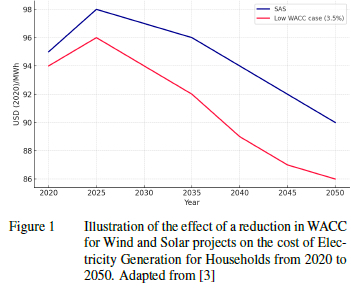
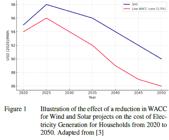
As the transition toward more capital-intensive renewable energy projects occurs, the expense associated with capital plays a pivotal role in influencing the overall investment costs. Models for SAA by IEA demonstrate that the financing costs for power generation capacity increase from 2 % of electricity generation expenses during 2016 to 2020 to 10% in 2026 to 2030. Both scenarios, including actual and perceived risks, result in a variable WACC, leading to an average cost of up to seven times higher in Africa than in Europe and North America. Further illustrated in Figure 1, a comparable reduction in WACC for wind and solar projects to those in developed economies would significantly reduce financing costs and, subsequently, the levelised cost of electricity (LCOE) [3]. Therefore, the primary objective of an enduring renewable energy (RE) strategy is to reduce the capital expenses of RE technology. Hence, policymakers should base their choices on the factors that impact investors [15].
2.2 SA's Current Energy Landscape and the Transition to Renewable Energy Resources such as Wind Energy
South Africa's energy mix is heavily reliant on coal, which accounts for 65 % of the electricity supply, with most of the other primary sources being Crude Oil (18 %), and renewables and waste (11 %) [16]. The country emits 80 % of GHG emissions from the energy sector [17], with Eskom, South Africa's primary energy producer and distributor, emitting 44 % of the country's carbon emissions [18]. The electricity demand is set to increase with economic and population growth. An estimate by TIPS shows that South Africa's energy consumption is expected to increase from 245 TWh to 522 TWh in 2050, with an annual growth rate of 2.3 %. Consequently, this would increase GHG emissions if the status co remains [19]. As a signatory to the Paris Agreement, guided by other policies and national plans like the National Climate Change Adaptation Strategy, The White Paper on Energy, The National Development Plan, the Climate Act (yet to be passed), and others, South Africa must reduce its carbon footprint [20, 21, 22, 23]. While coal has historically been a cheaper energy source, recent advancements in renewable technology have made renewables more competitive. Renewable energy sources such as wind, solar, and hydro are essential for the green transition. The country needs to increase the percentage of renewable energy in the energy mix, emphasising the potential of renewables to diversify South Africa's energy sources while improving energy security.
South Africa's dependence on non-renewable energy sources underscores the need for greener alternatives. Arguably, the South African energy landscape has evolved, with its direction influenced by global energy trends known as the four Ds: digitisation, democratisation, decentralisation, and de-carbonisation [24]. These factors and others have influenced South Africa's transition objective. Policy plays a crucial role, exemplified by the Renewable White Paper, which helped to spur renewable energy updates in South Africa through the Renewable Energy Independent Power Producer Procurement Program (REIPPPP). The economic benefits of the green transition are significant. Decommissioning coal power stations and eliminating load shedding could save the country billions of dollars. Additionally, adopting tax incentives tied to carbon reduction and expanding trade with regional power markets like the South Africa Power Pool (SAPP) could enhance South Africa's competitiveness and financial viability [25]. The dual "green challenge" is then to electrify the economy while also transitioning electricity generation from sources that are large carbon emitters to renewable sources or sources with lower emissions. Furthermore, the challenges of transitioning in South Africa are also embedded within the energy trilemma of energy security of supply, energy equity, and environmental sustainability, ranking 64 out of 104 countries in the energy trilemma index [26]. With these technical challenges in mind, the financial cost must also be considered, posing the most significant risk for the success of the transition.
2.3 Economic and Financial Opportunities and Risks for Supporting South Africa's Transition
Mobilising external funding requires substantial investments in power generation, transmission infrastructure expansion, and modernisation. The cost of transitioning to green energy in South Africa is substantial. Estimates by the World Bank suggest a cost of $55 billion USD or 1.6 % of GDP between 2022 and 2030. Achieving net-zero emissions by 2050 would require annual injections of $245 billion or 2. 1 % of GDP per year [27]. South Africa's commitment to these goals was demonstrated at COP27, where it pledged to reduce emissions. It announced a Just Energy Transition (JET) plan costing approximately $97 billion over the next five years through the Just Energy Transmission (JET) [28]. This would partly be supported by a $8.5 billion pledge from the EU [29]. Only 4 % of this total, however, was concessional funding, and the 76 % of this funding went to non-South African entities [30]. Several factors drive the costs associated with transitioning to renewable energy sources, including decommissioning ageing coal plants, which incurs significant expenses. Komati coal power station, for example, was deemed too expensive to run due to its age; however, decommissioning costs are part of the transition expense, with the World Bank funding the $497 million project to support its decommissioning [31]. Additionally, expanding infrastructure to support the transition, while keeping the price of electricity affordable is crucial. Eskom for instance, has plans to decommission up to half of its 45 GW installed capacity by 2035, which is costly [17]. It is imperative to replace this shortfall, preferably with affordable renewable energy. Achieving this in South Africa is a function of costs associated with financing renewable energy together with decommissioning the coal fleet. Renewable energy projects are capital-intensive, and the cost of financing directly affects their viability [32]. Renewable energy projects' high upfront investment cost makes them sensitive to variations in required returns. These financing costs make up a significant portion of the total cost of producing electricity, as they are a function of the capital needs of investors and the returns demanded by these investors. In South Africa, WACC values range from 10 % to 33 % [19], which is relatively high compared to developed economies. This high WACC can lead to a higher LCOE and tariffs, potentially slowing down the transition to renewable energy. Interest rates significantly impact financing costs, and higher interest rates can lead to a higher LCOE and tariffs for consumers [33]. Renewable energy technologies have high upfront investments, resulting in debt and equity costs rising quickly. In contrast, fossil fuel options see much of their power generation costs arising from fuel expenses. Therefore, the high financing costs of renewable energy projects can make them less competitive than fossil fuel options [34].
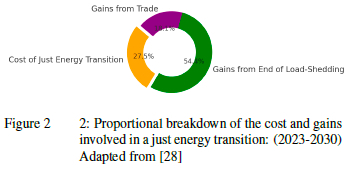
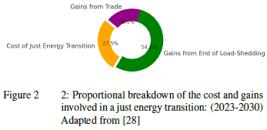
The size and the long lifetime of energy projects result in high financing costs, which will impact South Africa as it transitions towards sustainable energy sources. However, strategically exploring options that reduce these expenses and extrapolate mechanisms that result in economic growth or release funds is essential. For example, economic gains from transitions in South Africa are expected to at least double the projected costs by 2030, with additional gains from trade as illustrated below in 2 [28], and these gains are further experienced as the country decarbonises. This is a particular opportunity within the wind sector if certain components of the plants can be more easily localised, including the manufacturing of wind turbine towers or the local assembly of nacelles [35]. This opportunity can be seen in policy documents, such as the South African Renewable Energy Masterplan, which lays out the opportunities for the sector in terms of localisation [36]
In a country where grid capacity shortages have resulted in supply constraints and subsequent extensive load-shedding, a process of nationally planned regional load reduction, which was predicted to cost the country $24 billion in economic losses, a move to renewables would minimise these losses. Eliminating load-shedding by 2030 would save the country 24 billion a year, totalling $192 billion by simple extrapolation [28]. Furthermore, implementing of low 'tax incentives' for countries reducing their carbon footprint in line with the Carbon Tax rebates is further shaping the future of energy consumption and production. This could be favourable for SA, improving its competitiveness in global markets. However, it stands to lose close to $8 billion per year in exports if it does not reduce its emissions, missing another source of financing for transition [28]. Morisset and Salto [28] further state that the expenses incurred supporting the embattled national power utility, Eskom, could be reduced by half by allocating $31 billion per year towards transition instead of bailing out the utility. For example, the government spent about $3 billion in 2021/22 to support the financially distressed utility, which, if redirected, could save as much as $12 billion in taxpayers' money in 2023 to 2030 and help the utility recover in the process [28]. The ultimate cost of this transition is shown in Figure 2.
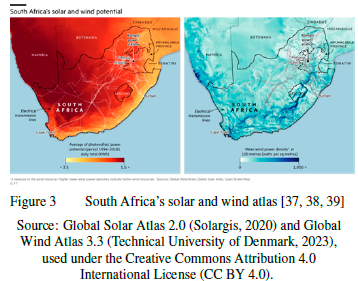
The Country Climate and Development Report of South Africa advocates for a low-carbon transition that supports economic growth by improving energy efficiency to reduce energy demand, mobilising more external resources (both public and private), expanding carbon pricing mechanisms and promoting green hydrogen (H2) exports [27]. Energy efficiencies are expected to increase GDP by about 2 per cent in 2030 and are largely inexpensive and driven by behavioural change compared to the building of new infrastructure [27]. IEA [2] further expands that considerable energy savings in transport and industrial sectors of about 37 % could be realised in South Africa by improving energy efficiency. Hence, energy efficiency could be used as a tool to source transition financing. The capability of South Africa to transition is also dependent on the availability of renewable energy resources, which, are of exceptionally high quality, Figure 3.
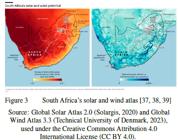
For South Africa, mapping of possible sites for renewables has been done. It has an average of 2500 h of sunshine a year and the potential to generate 6700 GW of power, see Figure 3 [37, 38, 39]. However, these are clustered in areas with limited transmission lines to the national power grid [27, 40]. This has particularly impacted the wind industry [41], as seen in the failure of bid for wind 6 of REIPPP, where no wind projects were successful. This subsequently affects the wind energy market and project risk, influencing project costs. Mobilising external funding is a significant financial cost to transitioning and involves securing about $66 billion until 2030 in investment in power generation alone [27, 28]. Additional investment is required to expand the transmission and distribution infrastructure to open grid space and modernise it, particularly in wind-rich areas, as seen in Eskom's Renewable Energy Grid Survey [42]. Transmission infrastructure costs include substations and aspects like inertia that provide network stability [27]. The cost is estimated to be about $11 billion by 2030 [28]. The appetite for grid capacity is evident, in the South African Renewable Energy Grid Survey [42]. An excellent example is the potential development of offshore wind power plants in South Africa, investigated by [43]. This paper focused on how investing in the energy network can help promote new technologies such as offshore wind, and through investment into infrastructure, the cost of this energy supply can be reduced. The primary example is the number of connection points required for offshore wind plants to the grid. These plants require available connection points to the onshore transmission grid to become feasible, a very analogous position to onshore wind and solar PV in the South African market. However, these types of investments need to attract funding, which can be supported by Development Finance Institutions, de-risking such renewable projects. There are advantages to intentional transitioning, such as job creation and skills development, especially in sectors where fossil fuels are used, as this gradual move to renewables creates green jobs, but unique approaches are required as socio-economic losses tied in with transitioning [7, 27, 29, 44]. Supporting this transition and decommissioning coal stations is estimated to cost about $20 million by 2030 [28]. Supporting the JET would also require financing employment and training necessary for green jobs, as the deployment of new technology requires skilled and experienced personnel [3, 27, 29, 45] South Africa's aspiration to achieve carbon neutrality by the mid-21st century calls for a profound economic overhaul. This transformation hinges on substantial investments in sustainable initiatives, which, in return, are underpinned by an environment conducive to business, a labour market facilitating job creation, and improved governance and transparency.
2.4 Policy Implications and Cost of Credit Summary on Risk and the Financing of Renewables
Public policy plays a crucial role in shaping project risks and project financing costs. Reducing country risk through political stability and anti-corruption measures can attract investments at more favourable terms, as highlighted by [5]. The authors identified three mechanisms influencing financing costs: country risk, technology, and financial de-risking. Strategies that can reduce financing costs by lowering the country's risk status through transparent governance, anti-corruption measures, and stable political environments are perhaps vital in South Africa.
To accelerate the green transition, the South African government should consider policies that attract investment, reduce country risk, and lower the cost of finance for renewable projects. Such policies are demonstrated by the successful investments into the renewable energy space in South Africa, which have traditionally been performed through public procurement, through a renewable energy auction driven by the REIPPPP, which saw $19 billion in private investment from 2011 to 2016 [46]. This policy intervention successfully resulted in wind and solar energy prices falling. The market was structured as 20-year take or pay-based Power Purchase agreements, which were backed by the government of South Africa and were largely financially successful due to the due diligence requirements of commercial banks before project bids were offered. The projects not deemed bankable did not bid into the procurement round. The primary drivers of downward costs in the REIPPP programme in future bid windows were noted to be technological improvement, increased competition, and, importantly, cost of finance [46]. It is important to note that a policy decision, then backed by a robust financial process, led to a booming market with rapidly lowering costs. This shift demonstrates how a shift in policy direction can reduce the cost of financing renewable energy deployment. The policy also directly impacts the risk of siting for renewable energy power plants and wind power plants. This complex process involves a lot of quantitative and qualitative analysis, including environmental impact assessments, energy yield projections and other regulatory hurdles at a national and municipal level. Adedeji et al. [47] exemplifies this process by stating that local land ownership and the avian environment are challenges in the siting process in South Africa. Despite recent efforts such as the Renewable Energy Development Zones, which create sensitivity categories and facilities development [48], the siting of plants does create risk and increase associated costs for renewable power plants. However, it is worth noting that the South African government is making an impact on de-risking Renewable energy through policy publications, which include the Just Energy Transition Investment Plan and the Schedule 6 Amendment of the Electricity Regulation Act [49, 50]. These are aimed at creating a more favourable environment for the deployment of renewables while considering their impact on the environmental spaces, they may occupy and have implications on financing costs.
As shown above, infrastructure projects require a significant degree of capital, and in Africa, these energy projects are susceptible to interest rates [5]. [19] shows the broad range of outcomes possible for the green transition in South Africa, which are impacted by public policy. Modelling cases reveal that solar PV and wind energy, supplying about 71 % and 28 % of the demand respectively in the best policy scenario for 2050, can overcome coal dependency of the power sector, while also being 25 % cheaper than if the current policy scenario continues.
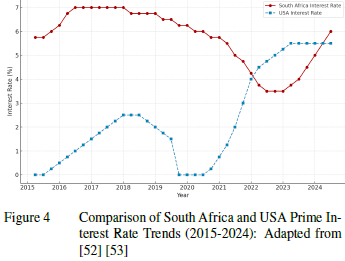
Public policy also significantly impacts the cost of finance, as seen in policy decisions in various sectors in South Africa over the last decade, which has led to a significant increase in average interest rates, Figure 4. South Africa's recent credit rating downgrade has resulted in higher interest rates, impacting the cost of finance. This can be seen in the major rating agencies dropping South Africa's investment grade from BBB+ in 2008 to BB- in 2022 [51]. This directly impacts interest rates as it makes foreign investors less likely to buy government bonds due to the security of the investment while also ensuring the government issues bonds at higher yield rates.
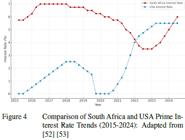
Excluding the pandemic years, where interest rates were lowered to encourage spending, interest rates have generally risen, with a low percentage in 2013 and are currently at 7.25% in 2023 [52]. In comparison, developed economies, such as the United States, have been significantly lower. As shown below, the US has had rates of between 0.25 % to 4.75 %, with only a recent inflation-driven hike raising interest prices [53], Figure 4. This means South African projects have higher returns to meet debt repayments, also experienced in the renewable energy sector.
South Africa's high interest is also particularly pertinent considering that renewable energy projects have almost been entirely private sector projects, with financing from the Industrial Development Corporation, African Development Bank, and other African development corporations being significant investors in the programme. These higher interest rates lead to higher LCOEs, which may make renewable energy technologies less competitive [33]. Exploring other avenues that redirect governance mandates in the energy sector can influence the affordability of the transition. For example, expanding trade with regional power markets, such as SAPP, can enhance financing options by opening other renewable energy sources and enhancing security. Examples of how these governance procedures can be changed are seen in the OECD Guidelines on Corporate Governance of State-Owned Enterprises (SOEs) [54], demonstrating that SOEs participating in the market have a dominant position and are free from political influence levels [54]. This creates an enabling financial and regulatory environment that can attract investment on favourable terms.
3 Method
To gain a sense of the factors that influence the cost of financing renewable energy projects in South Africa, together with the criteria based on country risk, technology premium and, financial de-risking as identified and modelled by Sweerts et al. [5], a conceptual analysis, was required. The research question was answered with the qualitative systematic literature research approach, and the results were summarised in narrative form. A literature search in the databases Scopus was performed. Two authors reviewed the full texts of potentially relevant studies to determine eligibility for inclusion. Literature on the cost of financing renewables was discussed. The research employs a systematic review combined with a narrative synthesis to analyze the factors influencing the cost of financing renewable energy projects. It synthesizes both quantitative and qualitative findings from selected literature, applying specific inclusion and exclusion criteria, counting relevant articles, and removing duplicates to refine the dataset. Consequently, a mixed-method approach was utilised.
3.1
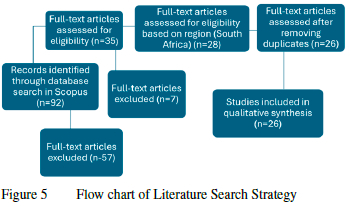
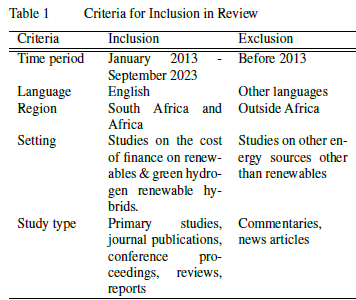
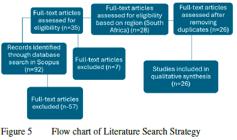
Search strategy & Eligibility criteriaA systematic literature search was conducted using various keywords from the electronic database Scopus. These included: "financial AND de-risking AND of AND renewable AND energy AND projects," "cost AND of AND finance AND the AND viability AND of AND wind AND energy AND projects," "financing AND green AND projects AND south AND Africa," "wind AND energy AND financing AND south AND Africa", and "wind AND energy AND investments AND south AND Africa." We examined pertinent titles and abstracts in English literature released from January 2013 to September 2023. Within this systematic review, articles were deemed eligible for inclusion if their titles and/or abstracts signalled the presentation of findings from original research investigations utilising quantitative, qualitative, or mixed-method methodologies. Excluded from consideration were studies set entirely outside of Africa or those failing to address the cost of financing for the projects associated with renewable energy. Additionally, commentaries and news articles were not included in the analysis. Duplicates were removed at the final stage, resulting in 26 articles to review. Criteria for inclusion and exclusion are illustrated in Table 1. The key outcomes of the studies and the main findings were summarised, and authors reached a consensus on the eligibility of the selected papers for the analysis. A narrative synthesis of the final selected papers was then conducted.
3.2
Data Extraction & SynthesisData extraction involved the creation of a structured table to condense study findings. The two authors directly recorded information, including author details, country/region, publication year, cost financing measures, and principle for renewable projects, into a pre-designed data collection form. Subsequently, the collected literature was deliberated upon and amalgamated into thematic categories. To evaluate individual studies, checklists were employed, specifically looking at the three criteria based on country risk, technology premium, and financial de-risking identified and modelled by Sweerts et al. [5]. The decision not to pursue meta-analysis was made due to the considerable diversity among studies regarding renewable energy types, study populations, technology setups, e.g., hybrid systems, and scale of projects.
A narrative synthesis was executed to amalgamate the outcomes of the various studies. Given the diverse studies encompassed in the review, we determined that a narrative synthesis would be the most effective approach for synthesising the findings. Initially, a preliminary synthesis was conducted through a thematic analysis, encompassing the exploration of studies and the compilation and presentation of results in a tabular format. Subsequently, the results were reevaluated and organised into thematic categories. Following this, the authors identified studies that included the three criteria on country risk, technology premium and financial de-risking as factors influencing the cost of financing through documentary analysis. Furthermore, articles that at least included wind energy were also identified and analysed. The documentary analysis included official and solicited government publications.
4 Results and Discussion
The initial search across the Scopus database yielded 92 records. Among these records, a comprehensive screening process was applied to 35 full-text articles to determine their eligibility. Subsequently, 57 full-text articles were excluded from consideration, as they did not include information regarding renewable energy. Ultimately, 26 studies met the criteria for inclusion in this review as they included studies within the South African context. The outcomes of this search strategy are presented in Figure 5. Our search encompassed various types of documents, with a primary focus on original research studies and reports.
The Scopus search yielded multiple papers that included the cost of financing renewable energy in the South African context, with some cases studying South Africa and another country for comparative purposes. Raw results are shown in the Appendix, which indicates the final journal articles reviewed based on regions, renewable energy technologies, and several other factors.
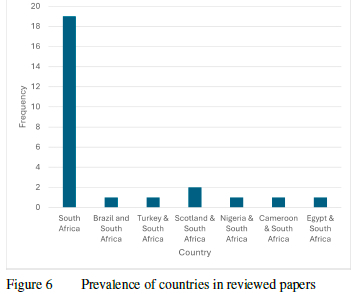
Most case studies on South Africa's renewables financing were exclusively focused on South Africa, but included comparative case studies, as shown in Figure 6. Many of the other countries used the South African REIPPP process as a model to enhance their market structures. The REIPPP is seen as a way of de-risking investment through private investment diligence and the assurance of reliable return from a 20-year government-backed PPA fostering investors' confidence [55, 56].
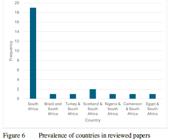
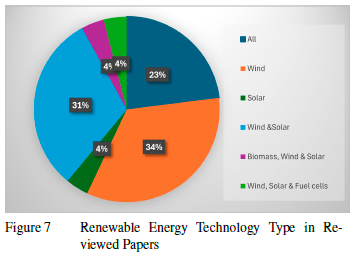
Figure 7 shows the myriad of technologies under review. Boadzo et al. [57], Pullinger et al. [58], Chauke [59] underscored the importance of accurate wind resource assessment for evaluating the value of a proposed wind farm involving measured data analysis, wind flow modelling, and other attributes that influence the viability of selected wind sites and subsequently the cost of financing them. While wind energy was the most studied, most papers discuss various technologies as they focus on the structures and costs associated with renewables. Due to the growing market, this can also show the lack of specialist knowledge in each renewable technology, as research is still being done across all technologies, and wind-specific research is scarce. Furthermore, it also possibly shows renewables requiring hybrid systems to be financially and technically viable, influencing mechanisms of financing such projects [57, 60, 61]). In addition, storage solutions are an essential component influencing the cost of wind hybrid systems as noted by [60].
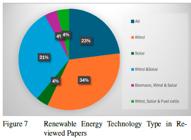
Wind energy has proven to be a highly effective renewable energy technology with a growing footprint, especially in South Africa, where it is the dominant technology by installed capacity in the South African REIPPPP. However, despite its success in South Africa, it faces challenges in developing in the rest of Africa, as seen in Nigeria and Cameroon [62]. These challenges could be related to factors such as lack of infrastructure, ineffective and insufficient policy development, economic incapacities, and inadequate government support. The decision to localise, multi-billion-Rand renewable investments to just three provinces in South Africa is a strategic one that takes into account the occurrence of the resource and the cost of grid expansion and capacity [29, 60]. While some may argue that this approach limits the reach of renewable energy to the broader population, it is important to note that, individual customer-scale investments should be promoted and developed [60]. Moreover, the localisation of components in South Africa presents both a challenge and an opportunity for the technology. By developing local manufacturing capabilities, South Africa can create a more resilient and sustainable renewable energy industry, with the potential benefit of reducing supply chain risks and providing potential employment [61, 63]. There is however also the possibility that localisation drives up costs through comparative production inefficiencies [64], thus it is vital to ensure that such initiatives are well planned and that there is a study demand for localised products.
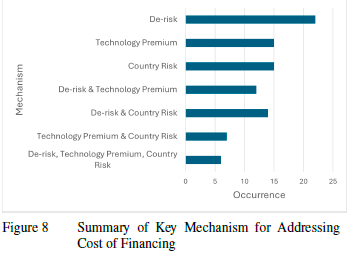
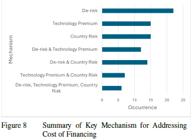
Various financing mechanisms are present that are associated with the costs of financing renewable energy in South Africa as identified by several researchers, Figure 8. For example, wind energy is a promising source that has seen significant development. However, the same technological advancements and country risks, such as regulatory burdens can increase the cost of financing the technology in South Africa. To counter these risks, several authors proclaim that policy levers such as market energy auctions or the easing of regulatory burdens can be applied to make renewable energy more accessible and affordable [46, 62, 65, 66, 67]. South Africa does not currently produce many of the critical technologies necessary for the transition within its borders. However wind towers have been manufactured in South Africa [55], demonstrating the industry's efforts to localise the production of the most readily available components. With additional support, the industry could expand its localisation efforts to include manufacturing other components, such as nacelles [55]. Thus, South Africa largely controls the policy, which may impact the policy landscape and significantly influences country risk, as noted by [55, 61, 63], with technology maturity also impacts risk in a nation[68].
In the context of South Africa, policy issues impacting risk factors for renewable energy include governmental procurement security, regulatory challenges related to grid connection and environmental approvals and grid capacity availability. Wheeling frameworks are also essential to facilitate increased private-sector procurement of renewable energy. These issues can be addressed through Public Private Partnerships (PPP), such as partnerships aimed at expanding the grid through private companies as identified by several papers [55, 56, 60, 61, 63, 69]. Private companies can profit by wheeling power through the grid to load centers. This may require the government to procure power through successive rounds of the REIPPPP; or private bilateral agreements between offtaker and private IPPS. This will need to be facilitated through improved regulatory processes, necessitating cooperation between the government and the private sector.
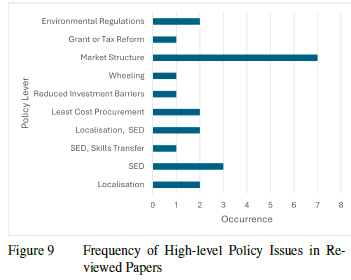
Several policy issues related to renewable energy were discussed by various authors, Figure 9. While not all the reviewed papers specifically address policy matters, those that do discuss a wide range of public policy areas. Specifically, the authors focus on market structures, localisation of renewable energy technologies, and Socio-Economic Development (SED) as the most relevant policy issues [55, 61, 69] These issues are closely linked to financing costs and de-risking of renewable energy projects. The authors argue that these critical policy considerations shape the renewable energy sector, influencing the competitiveness, accessibility, and affordability of sustainable energy solutions.
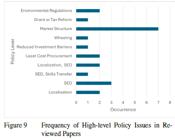
Market structures are emphasised as playing a vital role in the regulatory framework and competition dynamics of the renewable energy market, ultimately influencing market efficiency. Furthermore, the localisation of renewable energy technologies is presented as addressing the need for in-country production and implementation, fostering economic growth and job creation. Simultaneously, socio-economic development policies ensure that the benefits of renewable energy reach diverse communities, contributing to inclusive and sustainable progress on both local and global scales.
The positive and negative effects of each of these policy issues have effects on financial costs, which are related to project risk. For instance, South African projects are noted to face the pressures of meeting local content requirements. Whilst lenders require proven technology as expressed by [70], a shortage of skills can significantly impede project development. Effective policies such as local content initiatives can lead to a reduction in financial costs. However, this can be counterbalanced by the negative aspects of stringent localisation mandates. Such mandates can increase project risks, notably when local expertise is lacking in the local workforce. Furthermore, it precisely dictates the procurement of wind projects due to their disposition towards utility scale. [56] discusses the Social License to Operate (SLO) in the context of financing renewables. The SLO refers to the approval and acceptance of a company's operations by the local community, stakeholders, and society [56]. It has emerged as a critical factor in determining the success of a company's financial and operational performance. Notably, the cost of financing renewables is closely linked to the maintenance of the SLO, where the higher the cost of financing, the more challenging it is for a company to maintain its SLO. However, the impact of the SLO in South Africa varies, where greater emphasis is placed on aligning with local interests matters more than macro (national) interests [56]. This suggests that companies operating in South Africa must prioritise community engagement and investment, which aligns with the Joint Education Trust (JET). JET is a non-profit organization that focuses on education development in South Africa. It seeks to improve the country's education quality by working with various stakeholders, including the government, private sector, and civil society. JET recognizes the importance of community engagement and investment in improving the quality of education, which is critical for the country's development.
The reviewed papers encompass a wide range of financial topics, from least-cost energy procurement at a national level [65] to market structures of energy procurement at a national level to reducing the developmental hurdles for renewable energy projects. [71] compares different renewable energy technologies and the lowering of risk. [72] discusses the impact of RE on mining operations, which we have already seen. Several authors address risks associated with financing re-newables through reducing technology risks, country investment scale risks or some other form of risk adjustment, as seen in Figure 9. One prevalent theme in the financial structure of these papers was the use of standardised hybrid PPPs through PPAs. These agreements were crucial for balancing various stakeholders' interests in renewable energy projects [56, 59, 60, 61, 63, 69]. The role of governments in influencing PPA content, particularly when providing off-take guarantees was also highlighted [56, 59, 60, 61, 63, 69].
A relevant policy requirement noted in the literature was the market structure. For instance, the evolution of the private market for renewables in South Africa, following the Schedule 2 Amendment of the ERA, demonstrates how market structure directly dictates the interest in renewable energy procurement [73]. Other key policy issues include the need to localise portions of the value chain for renewables and wind energy and the need for renewable energy to make a social impact through skills transfer or socio-economic development commitments outside the sector's direct mandate. Upon reviewing these papers, it was possible to gain insights into key policy issues that may impact the wind industry. This has emphasised the importance of financial and regulatory policies in fostering the growth and stability of renewable energy initiatives.
5 Recommendations and Conclusion
Deploying emerging low-carbon technologies, such as wind energy, is essential for advancing the overall electrification of South Africa's energy system. The success of this transition depends on pursuing sustainable and innovative financial strategies to secure the necessary investments that will support the high costs involved. To achieve this, South Africa must create a supportive political, legislative, and financial environment that reflects the socio-economic landscape of the energy sector, making it an attractive destination for funding.
Redirecting financial resources towards initiatives that can expedite the transition, such as improving energy efficiency and restructuring electricity transmission from centralised grids to mini-grids, as well as the costs of building additional infrastructure development. Although the country has made progress in attracting investment for renewable energy projects, relatively high financing costs-largely due to elevated interest rates remain a barrier. Establishing a favourable environment that lowers financing costs and mitigates investment risks is essential for ensuring a successful and sustainable green energy transition. South Africa's transition to green energy is complex and requires substantial financing under the right conditions. The government should create an enabling financial environment that attracts both domestic and foreign investment. This can be achieved by implementing policies to lower the cost of finance, such as reducing country risk and stabilizing interest rates, which are critical for renewable energy investments, particularly in sectors like wind energy that may otherwise struggle to thrive. In addition, financial incentives that shift resources to energy efficiency projects and decentralise energy systems could both reduce operational costs and make renewable energy more attractive to investors. Expanding support for such initiatives will reduce the overall capital expenditure needed for additional infrastructure. Furthermore, aligning stakeholder interest by fostering collaboration across government, private sector, and international investors unlocks additional funding to support and increase the pace of the transition. These efforts will not only benefit the environment and strengthen energy security but also promote economic growth.
References
[1] UN Environment. Green economy, 2021. URL https://www.unep.org/.
[2] IEA. World energy outlook 2021,. URL https://www.iea.org/reports/world-energy-outlook-2021.
[3] IEA. Africa energy outlook 2022,. URL https://www.iea.org/reports/africa-energy-outlook-2022.
[4] J Burton, A Marquard, and B McCall. Socio-economic considerations for a Paris agreement-compatible coal transition in South Africa. Energy Research Centre, University of Cape Town: Cape Town, South Africa, 2019.
2 Literature Review
- [5] B Sweerts, FD Longa, and B van der Zwaan. Financial de-risking to unlock Africa's renewable energy potential. Renewable and Sustainable Energy Reviews, 102:75-82, 2019.
- [6] IRENA. The renewable energy transition in Africa, . URL https://www.irena.org/-/media/Files/IRENA/Agency/Publication/2021/March/Renewable_Energy_Transition_Africa_2021.pdf.
- [7] IRENA. World energy transitions outlook 2022. URL https://www.irena.org/Digital-Report/World-Energy-Transitions-Outlook-2022.
- [8] B Zhang and Y Wang. The effect of green finance on energy sustainable development: a case study in China. Emerging Markets Finance and Trade, 57(12):3435-3454, 2021.
- [11] R Tripathi. Framework of green finance to attain sustainable development goals: an empirical evidence from the TCCM approach. Benchmarking: An International Journal, 31(9):3130-3153, 2024.
- [12] D Zhang, Z Zhang, and S Managi. A bibliometric analysis on green finance: Current status, development, and future directions. Finance Research Letters, 29:425-430, 2019. ISSN 1544-6123. doi: https://doi.org/10.1016/j.frl.2019.02.003.
- [13] IRENA. Renewable power generation costs in 2022, . URL https://www.irena.org/Publications/2023/Aug/Renewable-Power-Generation-Costs-in-2022.
- [14] Presidential Climate Commission et al. A critical appraisal of South Africa's just energy transition investment plan, 2023.
- [15] N Kilinc-Ata and IA Dolmatov. Which factors influence the decisions of renewable energy investors? empirical evidence from OECD and BRICS countries. Environmental Science and Pollution Research, 30(1):1720-1736, 2023.
- [16] DMRE. The South African energy sector report 2021. URL http://www.energy.gov.za/files/media/explained/2021-South-African-Energy-Sector-Report.pdf.
- [17] Department of Minerals and Energy. Integreated resources plan South Africa 2019. URL https://www.energy.gov.za/irp/2019/IRP-2019.pdf.
-
[18] Eskom. Eskom integrated annual report 2021. URL https://www.eskom.co.za/wp-content/uploads/2021/08/2021IntegratedReport.pdfaccessed26/06/22.
» https://doi.org/10.3390/en10040443 - [19] AS Oyewo, A Aghahosseini, M Ram, A Lohrmann, and C Breyer. Pathway towards achieving 100% renewable electricity by 2050 for South Africa. Solar Energy, 191: 549-565, 2019.
- [20] Republic of South Africa. White Paper on the Energy Policy ofthe Republic ofSouth Africa. Department of Minerals and Energy, Pretoria, 1998.
- [21] Republic of South Africa. National Development Plan 2030: Our Future-Make It Work. National Planning Commission, Pretoria, 2012. Accessed: 2024-11-01.
- [22] Republic of South Africa. National climate change adaptation strategy. https://www.dffe.gov.za/sites/default/files/legislations/session2_draftnational_adaptationstrategy.pdf, 2017. Accessed: 2024-11-01.
- [23] Republic of South Africa. Integrated resource plan (irp 2019). Government Gazette, No. 42778, Department of Energy, 2019. Accessed: 2024-11-01.
- [24] A Oqubay, F Tregenna, and I Valodia. The Oxford handbook ofthe South African economy. Oxford University Press, 2021.
- [25] RES4Africa. Accelerating investment in re-newables through energy aggregators. URL https://res4africa.org/wp-content/uploads/2023/07/Accelerating-investment-in-renewables-through-energy-aggregators.pdf.
- [26] World Energy Council. World energy trilemma index. URL https://www.worldenergy.org/assets/downloads/WE_Trilemma_Index_2021.pdf?v=1634811254.
- [27] World Bank. South africa country climate and development report. URL http://hdl.handle.net/10986/38216http://hdl.handle.net/10986/38216.
- [28] J Morisset and M Salto. Reasons why climate skeptics should support South Africa's just energy transition, 2022.
- [29] D Pilling. The cost of getting South Africa to stop using coal. Financial Times, 2022.
- [30] K Lehmann-Grube, I Valodia, J Taylor, and S Pha-latse. What happened to the just energy transition grant funding? URL https://www.wits.ac.za/news/latest-news/research-news/2024/2024-03/what-happened-to-the-just-energy-transition-grant-funding.html.
- [31] Presidential Climate Comission. Early lessons and recommendations from Komati's decommissioning and re-purposing project. URL https://pccommissionflo.imgix.net/uploads/documents/PCC-Komati-Power-Station-Recommendations-Report.pdf.
- [32] IRENA. The cost of financing for renewable power . URL https://mc-cd8320d4-36a1-40ac-83cc-3389-cdn-endpoint.azureedge.net/-/media/Files/IRENA/Agency/Publication/2023/May/IRENA_The_cost_of_financing_renewable_power_2023.pdf?rev=8ba5ec0a558148f085e285b247523fb5.
- [33] S Flowers and P Martin. How higher interest rates could hold up energy transition investment. URL https://www.woodmac.com/news/the-edge/higher-interest-rates-could-hold-up-energy-investment/#:~:text=Higher%20rates%20will%20reduce%20renewables,a%20combined%20cycle%20gas%20plant.
- [34] B Steffen. Estimating the cost of capital for renewable energy projects. Energy Economics, 88:104783, 2020.
- [35] G Montmasson-Clair. Bridging the gap between aspiration and reality: What would it take to localise the renewable energy value chain in South Africa. URL https://tips.org.za/policy-briefs/item/download/2512_1ff1cae2023ff359d7302684aa431f01.
- [36] DMRE and DTIC. South African renewable energy masterplan. URL https://greencape.co.za/assets/SAREM-Draft-March-2022.pdf.
- [37] Solargis. Global solar atlas 2.0. https://globalsolaratlas.info, 2020.
- [38] Technical University of Denmark. Global wind atlas 3.3. https://globalwindatlas.info, 2023.
- [39] NN Davis, J Badger, AN Hahmann, BO Hansen, NG Mortensen, M Kelly, XG Larsén, BT Olsen, R Floors, G Lizcano, et al. The global wind atlas: A high-resolution dataset of climatologies and associated web-based application. Bulletin of the American Meteorological Society, 104(8):E1507-E1525, 2023.
- [40] L Nomjana. REIPPP comes of age. URL https://futuregrowth.co.za/insights/reippp-comes-of-age/.
- [41] J Radmore and U Terblanche. 2023 large-scale renewable energy market intelligence report, . URL https://greencape.co.za/wp-content/uploads/2023/04/RENEWABLE_ENERGY_MIR_2023_DIGITAL_SINGLES.pdf.
- [42] R Marais. South African renewable energy grid survey. URL https://www.eskom.co.za/wp-content/uploads/2023/06/RE_Survey_202304rev0_Pub.pdf.
-
[43] K Umoh and M Lemon. Drivers for and barriers to the take up of floating offshore wind technology: A comparison of Scotland and South Africa. Energies, 13:5618, 10 2020. doi: 10.3390/en13215618.
» https://doi.org/10.3390/en13215618 - [44] S Mercier. Four case studies on just transition: Lessons for Ireland. National Economic and Social Council, 15, 5 2020.
-
[45] C Savage and J Smallwood. The development of wind farms. Proceedings ofInternational Structural Engineering and Construction, 1, 11 2014. doi: 10.14455/ISEC.res.2014.88.
» https://doi.org/10.14455/ISEC.res.2014.88 - [46] A Eberhard and R Naude. The South African renewable energy independent power producer procurement programme: A review and lessons learned. Journal of Energy South. Africa, 27:1-14, 2016. ISSN 0038-092X. doi: http://dx.doi.org/10.17159/2413-3051/2016/v27i4a1483.
- [47] P Adedeji, S Akinlabi, N Madushele, and O Olatunji. Latent dynamics in siting onshore wind energy farms: A case of a wind farm in South Africa. 09 2020. doi: 10.1115/POWER2020-16726.
- [48] DFFE. Media realise geographical areas for the development of renewable energy. URL https://www.dffe.gov.za/geographicalzones_renewableenergy.
- [49] PCC. South Africa's just energy transition investment plan. URL https://pccommissionflow.imgix.net/uploads/images/South-Africas-Just-Energy-Transition-Investment-Plan-JET-IP-2023-2027-FINAL.pdf.
- [50] J Van der Poel and M Kota. New issues with amended schedule 2 of the electricity regulation act for private power generation). URL https://www.webberwentzel.com/News/Pages/new-issues-with-amended-amended-schedule-2-of-the-electricity-regulation-act-for-private-power-generation.aspx.
- [51] World Government Bonds. South Africa credit rating. URL http://www.worldgovernmentbonds.com/credit-rating/south-africa/.
- [52] Trading Economics. South Africa fed funds rate2023 data - 1971-2022 historical - 2024 forecast., . URL https://tradingeconomics.com/south-africa/interest-rate.
- [53] Trading Economics. United States fed funds rate2023 data - 1971-2022 historical - 2024 forecast.,. URL https://tradingeconomics.com/united-states/interest-rate.
- [54] OECD. OECD Guidelines on Corporate Governance of State-Owned Enterprises, 2015 Edition. 2015. doi: https://doi.org/https://doi.org/10.1787/9789264244160-en.
- [57] A Boadzo, SK Kibaara, and S Chowdhury. A study on dairy farm-based hybrid renewable energy systems in South Africa. pages 1-5, 07 2016. doi: 10.1109/PESGM.2016.7741223.
- [58] D Pullinger, A Ali, M Zhang, N Hill, and T Crutch-ley. Improving accuracy of wind resource assessment through feedbackloops ofoperational performance data: A South African case study. Journal ofEnergyin Southern Africa, 30:1-10,09 2019. doi: 10.17159/2413-3051/2019/v30i3a5669.
- [59] M Chauke. Trend analysis and inter-annual variability in wind speed in South Africa. Journal of Energy in Southern Africa, 33:13-21, 03 2023. doi: 10.17159/2413-3051/2022/v33i4a13162.
-
[63] J Moldvay, R Hamann, and J Fay. Assessing opportunities and constraints related to different models for supplying wind turbines to the South African wind energy industry. Development Southern Africa, 30, 09 2013. doi: 10.1080/0376835X.2013.817305.
» https://doi.org/10.1080/0376835X.2013.817305 -
[64] J Leigland and A Eberhard. Localisation barriers to trade: The case of South Africa's renewable energy independent power program. Development Southern Africa, 35(4):569-588, 2018. doi: 10.1080/0376835X.2018.1487829.
» https://doi.org/10.1080/0376835X.2018.1487829 - [67] S Jain and PK Jain. The rise of renewable energy implementation in South Africa. Energy Procedia, 143:721726, 2017. ISSN 1876-6102. doi: https://doi.org/10.1016/j.egypro.2017.12.752. Leveraging Energy Technologies and Policy Options for Low Carbon Cities.
- [68] E Hamatwi, I Davidson, J Agee, and G Venayagamoor-thy. Model of a hybrid distributed generation system for a DC nano-grid. 03 2016. doi: 10.1109/PSC.2016.7462851.
Revised form 28 April 2025
Accepted 13 July 2025