Dynamic Cyclic Bending, Kinetic to Strain Energy Deceleration Systems
Abstract
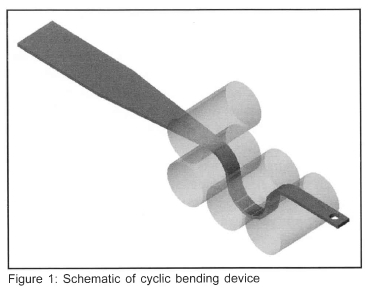
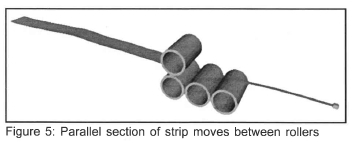
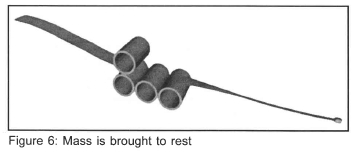
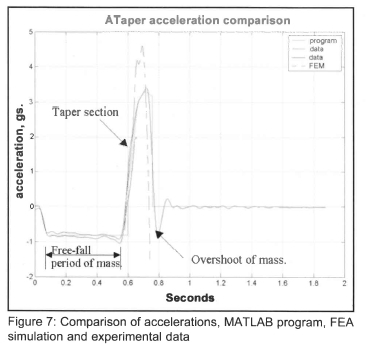
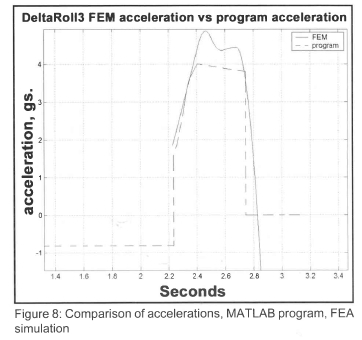
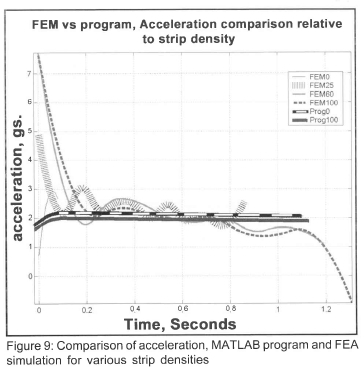
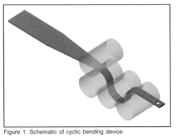
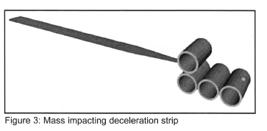
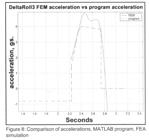
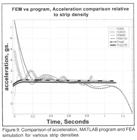
During the period of 2001 to 2003 an investigation has been completed at the University of Pretoria, which explored the application of a cyclic plastic bending deceleration system in a dynamic environment The system consisted of a user-defined number of inline guide rollers, with a metal element threaded in an over and under arrangement. This metal element, when drawn through the rollers, was subjected to bending and reverse bending as the material moved from roller to roller. This action allowed for kinetic energy to be absorbed by means of the kinetic to strain energy transformation mechanism. In the past, this concept and the performance prediction thereof had been proved reliable under quasi-static conditions however, the performance prediction under dynamic conditions remained uncharted. The study performed at the University of Pretoria, produced a dynamic performance prediction model. The various predictions were compared to scale experimental simulations, as well as dynamic finite element analyses. The comparison between the predictions, (mathematical prediction, experimental model results and the finite element analyses) proved to be extremely accurate and consistent. Full-scale evaluation would be the next remaining step to evaluate the system's suitability for future application in industry.
 Thumbnail
 Thumbnail
 Thumbnail
 Thumbnail
 Thumbnail
 Thumbnail
 Thumbnail
 Thumbnail
 Thumbnail