How to build the climate resilience and environmental sustainability of your facility and services
Abstract
African district-level health facilities and services face many interconnected challenges including infectious disease outbreaks, conflict and insecurity, fiscal austerity, population displacement and climate-related hazards such as heat, flooding and drought. Emergency preparedness and disaster risk reduction plans have often not included the challenges from climate hazards. In this article, we outline six practical steps that a facility can take to assess its vulnerabilities, capacities and climate-related risks, and develop a plan to improve climate resilience and environmental sustainability: (1) a desktop review of the facility and services; (2) contextualisation and planning; (3) an audit of the facility; (4) a focus group discussion; (5) integration and analysis; (6) creation of an action plan. Environmental sustainability needs to be considered simultaneously with climate resilience as the key domains are the same (workforce; energy; water, waste and sanitation; infrastructure and equipment). In addition, the article outlines how to perform a carbon footprint and integrate the findings into one action plan for the facility. The article provides a practical roadmap for evaluating and improving the climate resilience and environmental sustainability of primary care or primary hospital facilities, and readers can access the referenced resources if they need additional details and support.
climate resilience; environmental sustainability; primary care; district hospitals; carbon footprint
Introduction
African district-level health facilities and services face many challenges including infectious disease outbreaks, conflict and insecurity, fiscal austerity, population displacement and climate-related hazards such as heat, flooding and drought.12
Climate change is altering the burden and distribution of disease, changing the morbidity patterns seen in clinical practice.3
In their latest framework for health systems from a primary healthcare lens, the World Health Organization (WHO) identify three key components in service delivery.4
Ironically, health systems also contribute to climate change through their own carbon emissions. Globally, the health sector contributes about 5% of emissions.56
As countries work to strengthen the climate resilience of primary care facilities and services, environmental sustainability must be considered alongside resilience, not as an add-on but as a core design principle for future-ready health systems. In this article, we describe an approach to evaluating the climate resilience of our facilities and services with a focus on primary care and primary hospitals. The approach should culminate in an action plan. At the same time, we outline an approach to evaluating the carbon footprint and looking at ways of improving environmental sustainability. Family physicians often play a key role in leadership and need to contribute or even lead such initiatives.
Evaluating climate resilience
Climate resilience has been defined as the ability to prepare for, respond to and recover from climate-related shocks and stressors.788,9
-
A desktop review of the facility and services.
-
Contextualisation and planning.
-
An audit of the facility.
-
A focus group discussion.
-
Integration and analysis of the findings.
-
Creation of an action plan.
This process can be followed for a single facility or several facilities in a subdistrict.
The underlying conceptual framework is shown in Figure 1. The process should identify the likely current and future climate hazards in the local area. The vulnerabilities and capacities of the facility and services to succumb to or withstand these hazards should be considered. Vulnerabilities are the factors that make a facility or service more likely to be harmed by a hazard (such as weak infrastructure, staff shortages or unreliable power or water supply). Capacities are the strengths, resources and systems that enable the facility to anticipate, withstand, respond to and recover from these hazards. The actual risks to the facility and services will depend on the climate hazards, their exposure to these hazards and how the impact of these hazards are modulated by the vulnerabilities and capacities. Once the risks are identified, then potential solutions can be listed to reduce these risks. A final action plan will prioritise the most feasible and effective solutions. You may need a small team to assist you in the process. Such a team should include the relevant managers and leadership.
A desktop review of the facility and services
Before gathering new information, you should consider what you already know. However, information on climate change in your local area may need to be sought from local government, national departments of the environment or even international bodies. This should help to confirm the most likely climate hazards in your area. Consider also the characteristics of the community served, burden of disease in your community and morbidity profile. Think how this may be impacted by the climate hazards. Gather information also on the workforce, workload and infrastructure. This information will help identify the known vulnerabilities and capacities. Summarising the key points in a short document will help consolidate the information and inform the next steps.
Contextualisation and audit of the facility
There are several key areas to consider in the audit (see Table 1 for examples):
-
The workforce.
-
Energy.
-
Water, waste and sanitation.
-
Infrastructure and equipment.
-
Emergency preparedness.
-
Service delivery.
Practical tools are available from the Climate Action Accelerator,87
A scenario-based tabletop focus group discussion
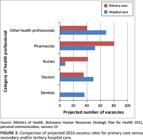
The audit information can be supplemented by discussion and feedback from the staff. Gather a group of 8-10 people from each facility. Ideally this should include clinical staff, support staff, managers and some community-based healthcare workers. One person should facilitate the discussion, while a second person listens and makes notes. You may also want to record the conversation to help with the summary later. The discussion can follow a five-step process as shown in Figure 2. The focus of the discussion is on a previously experienced climate event (e.g. extreme heat, flooding) and an exploration of how the staff experienced it, how they coped and what would help in future events.
The observer should listen for key points in the discussion that signify areas of weakness or vulnerability, areas of strength or capacities and potential adaptations or solutions. After the discussion, the observer should look at their notes, listen to the recording and construct a 2-3-page summary of the key vulnerabilities, capacities, risks and solutions that came up in the discussion.
Integration and analysis of the findings
The results of the audit(s) and the focus group discussion(s) should be combined in an Excel spreadsheet or matrix (Table 2). The first column identifies the key climate hazards. For each hazard, the next columns list the identified vulnerabilities and capacities and resultant risks. Once the risks have been identified, then a final column can insert potential solutions. Solutions may be implied or derived from the audit and discussion but may also be identified from the literature and experts. Solutions may also be critiqued by technical experts if they are available.
Creation of an action plan
The potential solutions can be extracted from the matrix and organised into six domains:
-
Health workforce.
-
Energy.
-
Water, waste and sanitation.
-
Infrastructure and equipment.
-
Service delivery.
-
Governance and financing.
The management and leadership of the facility together with the evaluation team should rank and prioritise the suggested solutions. Key considerations would be cost, feasibility, impact on climate resilience, other environmental benefits, responsibility of other stakeholders and alignment with existing priorities. Criteria can be selected according to the local context, and a simple scoring system for each criterion (e.g. low, moderate, high) can assist with prioritisation. The solutions in each category can be considered in turn. This should lead to a much smaller list of solutions that can be included in an action plan. Some may be immediately implementable in the short term, while others may need additional financing and planning with the department of health or even external funders.
Evaluating the carbon footprint
The WHO consider climate resilience and environmental sustainability as two sides of the same coin as they both relate to the same set of key issues: the workforce; energy; water, waste, sanitation; infrastructure and equipment.710Table 3).
Data need to be collected for each of the key items in Table 4, and more detail is given in the Manual.10
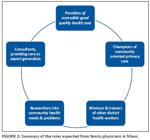
The HCWH Climate Impact Tool uses the data entered to calculate greenhouse gas emissions by applying emissions factors to each activity (such as fuel use, electricity consumption or travel). Where possible, these emissions factors are country-specific, reflecting local energy sources and conditions. If country-specific emissions factors are not available, global averages are used. The final carbon footprint can be presented as a total annual amount of carbon dioxide equivalent (eCO2), an amount of eCO2 per bed or per consultation and the proportions of the footprint allocated to different scopes (Figure 3). The analysis and reporting are automated by the online tool, reducing the technical burden for users. Importantly, the results are not intended to sit on a shelf. Healthcare Without Harm provides guidance and resources to help facilities identify priority areas for action and translate their carbon footprint into practical mitigation measures. These may include 'quick wins' - such as improving energy efficiency, reducing waste or changing procurement practices - as well as longer-term investments, such as transitioning to renewable energy, upgrading infrastructure or redesigning models of care. The footprint from the Cederberg (Figure 3) highlighted the potential for reducing the carbon footprint by changing the prescription of inhalers from metered dose to dry powdered inhalers. In this way, reducing the carbon footprint can directly inform the facility action plan, support environmental sustainability while also strengthening the resilience and efficiency of health services.
Conclusion
Family physicians and facility-level healthcare teams are well placed to lead practical action on climate resilience and environmental sustainability within primary care facilities and primary hospitals. This article describes practical steps to assess climate risks, identify priorities and develop facility-level action plans. At the same time, facilities can strengthen these efforts by considering their carbon footprint and adopting low-carbon development pathways. Taking an integrated approach - one that addresses resilience and sustainability together - can help protect patients, support healthcare workers and build stronger, more resilient and future-ready health services.
Competing interests
The author, Robert J. Mash, is the editor of this journal. Robert J. Mash and Patricia N. Schwerdtle have no other competing interests to declare.
CRediT authorship contribution
Robert J. Mash: Conceptualisation, Writing - original draft. Patricia N. Schwerdtle: Writing - review & editing. All authors reviewed the article, approved the final version for submission and publication and take responsibility for the integrity of its contents.
Funding information
The publication costs were paid by Stellenbosch University, Division of Family Medicine and Primary Care using a TEAM grant (ZA2022TEA526A103) from the Flemish Interuniversity Council (VLIR-UOS).
Data availability
Data sharing is not applicable to this article, as no new data were created or analysed in this study.
Disclaimer
The views and opinions expressed in this article are those of the authors. They do not necessarily reflect the official policy or position of any affiliated institution, funder, agency or that of the publisher. The authors are responsible for this article's content.
Acknowledgements
References
-
1. Intergovernmental panel on climate change. Fact sheet-Africa: Climate change impacts and risk [homepage on the Internet]. 2022 [cited 2022 Jul 10]. Available from: https://www.ipcc.ch/report/ar6/wg2/about/factsheets/
» https://www.ipcc.ch/report/ar6/wg2/about/factsheets/ -
2. Lee H, Romero J. Intergovernmental Panel on Climate Change, ClimateChange 2023: Synthesis report. Contribution of working groups I, II and III to the sixth assessment report of the intergovernmental panel on climate change. Geneva: Switzerland, 2023, pp. 35-115, https://doi.org/10.59327/IPCC/AR6-9789291691647
» https://doi.org/10.59327/IPCC/AR6-9789291691647 - 3. Intergovernmental Panel on Climate Change (IPCC). Climate change 2022: Impacts, adaptation and vulnerability. Contribution of working group II to the sixth assessment report of the intergovernmental panel on climate change. Cambridge: Cambridge University Press; 2022.
-
4. World Health Organisation (WHO). Primary health care measurement framework and indicators: Monitoring health systems through a primary health care lens [homepage on the Internet]. Geneva; 2022 [cited 2022 Mar 13]. Available from: https://www.who.int/publications/i/item/9789240044210
» https://www.who.int/publications/i/item/9789240044210 -
5. Health care's climate footprint: How the health sector contributes to the global climate crisis and opportunities for action. Health Care Without Harm, 2019 [cited 2026 May 01]. Available from: https://global.noharm.org/focus/climate/health-care-climate-footprint-report
» https://global.noharm.org/focus/climate/health-care-climate-footprint-report -
6. Baddley J, Rasheed F. The Aga Khan Development Network's (AKDN) approach to supply chain carbon foot printing for healthcare providers. Clean Logist Supply Chain 2023;7:100109. https://doi.org/10.1016/j.clscn.2023.100109
» https://doi.org/10.1016/j.clscn.2023.100109 - 7. World Health Organisation. WHO guidance for climate-resilient and environmentally sustainable health care facilities. Geneva: World Health Organization; 2020.
-
8. Climate Action Accelerator. Health facility level climate Vulnerability and Capacity Assessment (VCA) [homepage on the Internet]. 2026 [cited 2024 Oct 18]. Available from: https://climateactionaccelerator.org/climate-vca/
» https://climateactionaccelerator.org/climate-vca/ -
9. Mash R, Blows S, Lahri S, et al. Building climate-resilient primary care: A convergent mixed-methods climate vulnerability and capacity assessment in the Cederberg subdistrict, South Africa. Public Health. 2026;252:106106. https://doi.org/10.1016/j.puhe.2025.106106
» https://doi.org/10.1016/j.puhe.2025.106106 -
10. Health Care Without Harm. How to use climate impact checkup [homepage on the Internet]. 2023 [cited 2025 Oct 22]. Available from: https://greenhospitals.org/checkup
» https://greenhospitals.org/checkup -
11. Schwerdtle P, Quitmann C, Herrmann A, et al. Assessing greenhouse gas emissions in a primary care subdistrict in Cederberg, South Africa. BMC Health Serv Res. 2025;25:1389. https://doi.org/10.1186/s12913-025-13489-9
» https://doi.org/10.1186/s12913-025-13489-9

Accepted: 17 Apr. 2026
Published: 25 May 2026