Interventions for reaching men to improve HIV Testing Services in sub-Saharan Africa: A narrative review
Abstract
BACKGROUND: The HIV Testing Services (HTS) are a vital component of human immunodeficiency virus (HIV) prevention initiatives, and the essential first step to healthcare. Men in South Africa have been shown to test for HIV at a lower rate than women, with a resulting higher mortality rate AIM: This narrative review aimed to describe the approaches used to improve the uptake of HTS by men both at the facility and community level in sub-Saharan Africa (SSA METHOD: Online databases were used to search for relevant studies published from 2019 to 2024 in English. A total of 475 records were identified, with 426 being included after duplicates were removed. After reviewing the abstracts, only 13 studies were included in the review RESULTS: This findings revealed three themes and seven sub-themes related to improving HTS uptake: improved access to testing (HIV self-testing, community-based testing and workplace testing), motivation and support (stakeholder involvement and creating a demand for testing) and health facility services (facility-based testing and services provided by male healthcare workers CONCLUSION: The limited number of studies highlights the need for more research into developing and testing interventions to encourage men to utilise HTS. A multipronged approach that includes various role-players can be beneficial. This needs to be supported by continuous demand creation utilising platforms such as social media, radio and local newspapers CONTRIBUTION: The study collates the interventions intended to encourage men to undertake HTS in SSA
intervention; reaching; men; HTS; treatment uptake
Introduction
Acquired immunodeficiency syndrome (AIDS) is a disease of global public health importance, and contributes to high morbidity and premature mortality rates.12334
The HIV Testing Services (HTS) are a vital component of HIV prevention initiatives and the essential first step in getting individuals into treatment, with men in South Africa having been shown to test for HIV at a consistently lower rate than women.5,6,7,811,9
According to the South African National Department of Health (NDoH) (2023), HTS should be made available in all public health facilities, community settings, private healthcare facilities and non-governmental organisations (NGOs) that have been approved to offer HTS, this is sometimes not the case.101111
Poverty can also directly affect willingness to test and engagement in care, as individuals lack the resources required to attend clinics (cost of transport), additional barriers to visiting facilities including confidentiality concerns, long waiting time, loss of wages, inconvenient hours and the perception that clinics are places for women.12,13,1467
This narrative literature review therefore aims to identify key interventions that have been implemented across and beyond healthcare systems to improve HTS uptake among men that may improve their access to HIV prevention services, such as Pre-Exposure Prophylaxis (PrEp), condoms and health promotion. This will be done by identifying those interventions that can be scaled up among men to enhance their HTS uptake, these being essential for improving their health and well-being, enabling them to learn about their HIV status timeously and make informed decisions regarding their health.
Methodology
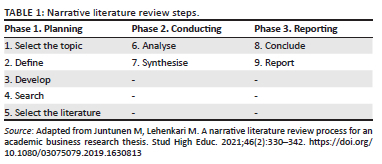
The most influential publications that elucidate and debate the current state of science on a particular subject or theme, from a theoretical and contextual perspective, are regarded as appropriate narrative literature review articles as stated by Juntunen and Lehenkari.1515Table 1.
Phase 1. Planning
This phase covers topic selection, identifying the research objective and question, and setting out the procedure to be followed to search for the literature through the first 5 steps.
Step 1: Select the topic
The topic for this study is interventions for reaching men through HIV testing opportunities to improve access to treatment services.
Step 2: Define the aim and objectives and formulate the research questions
The study's aim is to describe the interventions that will improve the uptake of HTS opportunities for men at both facility and community levels to improve their access to treatment services. The research question to be addressed was, what interventions have been implemented for improving the uptake of HTS which would then facilitate improved access to treatment services for men?
Step 3: Develop and validate a review protocol
This step entailed developing a plan regarding how to undertake the subsequent steps of the research process, being equivalent to research design in empirical research. The first author conceptualised the study, while the protocol was validated by other authors involved in the project. L.G., S.Q. and Z.S. were responsible for the entire study process, through conceptualisation, methodology design, the conduct of the research and project management, data analysis and validation. A.R. was the overall study supervisor and contributed to the article's idea, method design, validation and critical review.
Step 4: Search the literature
Two reviewers searched for studies from three online databases, these being Google Scholar, Science Direct and the World Health Organization (WHO) website. The search terms used to identify relevant articles included intervention, reaching, men, HTS and treatment access. The inclusion criteria were recent studies conducted from 2019 to 2024 that were published in English, with comprehensiveness and relevancy of the literature being prioritised, with those published before 2019 being excluded. Those involving the general population or with a focus on women were excluded, as were newspapers, conference articles and other databases.
Step 5: Select the literature: You need to select the search words before you can search
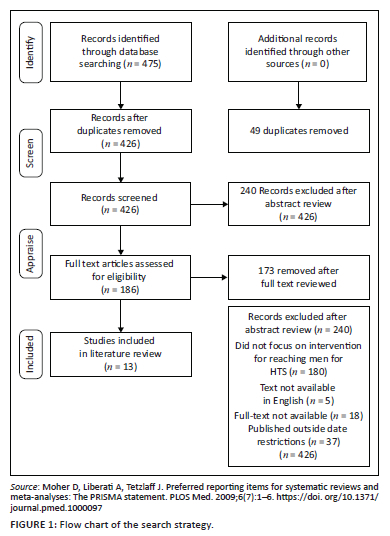
Of the 475 records identified through database searching, 426 articles were included after duplicates were removed, of which 240 were excluded after reviewing the abstracts, and 173 full-text articles were excluded because of other exclusion criteria. This resulted in 13 studies being included in this narrative literature review.
Phase 2. Conducting
This phase covers the analysis of identified records and arranging the gathered data for the narrative review through two steps.
Step 6: Analyse
All authors graded the evidence from each report using the Johns Hopkins Nursing Evidence-Based Practice Research Evidence Appraisal instrument.1515
Step 7: Synthesise
The gathered data were arranged according to a predetermined structure.1515
Phase 3. Reporting
This phase addresses recommendations for future research and consisted of two steps.
Step 8: Conclude
The findings provide opportunities to strengthen existing strategies and offer recommendations for further study to broaden the body of knowledge on the subject relating to improving access to HTS among men in SSA. The authors made recommendations that healthcare providers could implement and acknowledged the study's limitations.
Step 9: Report
This literature review is organised as per Juntunen and Lehenkari's structure: title, abstract, introduction, design and methods, discussion, conclusion and list of references.
Ethical considerations
In this review, no Biomedical Research Ethics permission was required as this was a review of already published studies. The methodology section outlines the contributions made by each author in writing this article, their varying backgrounds enhancing the study's credibility.
Review findings
Figure 1 displays the search strategy used to identify, screen and apprise the literature that was sourced for the study; this process resulting in 13 articles being included.
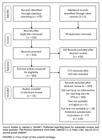
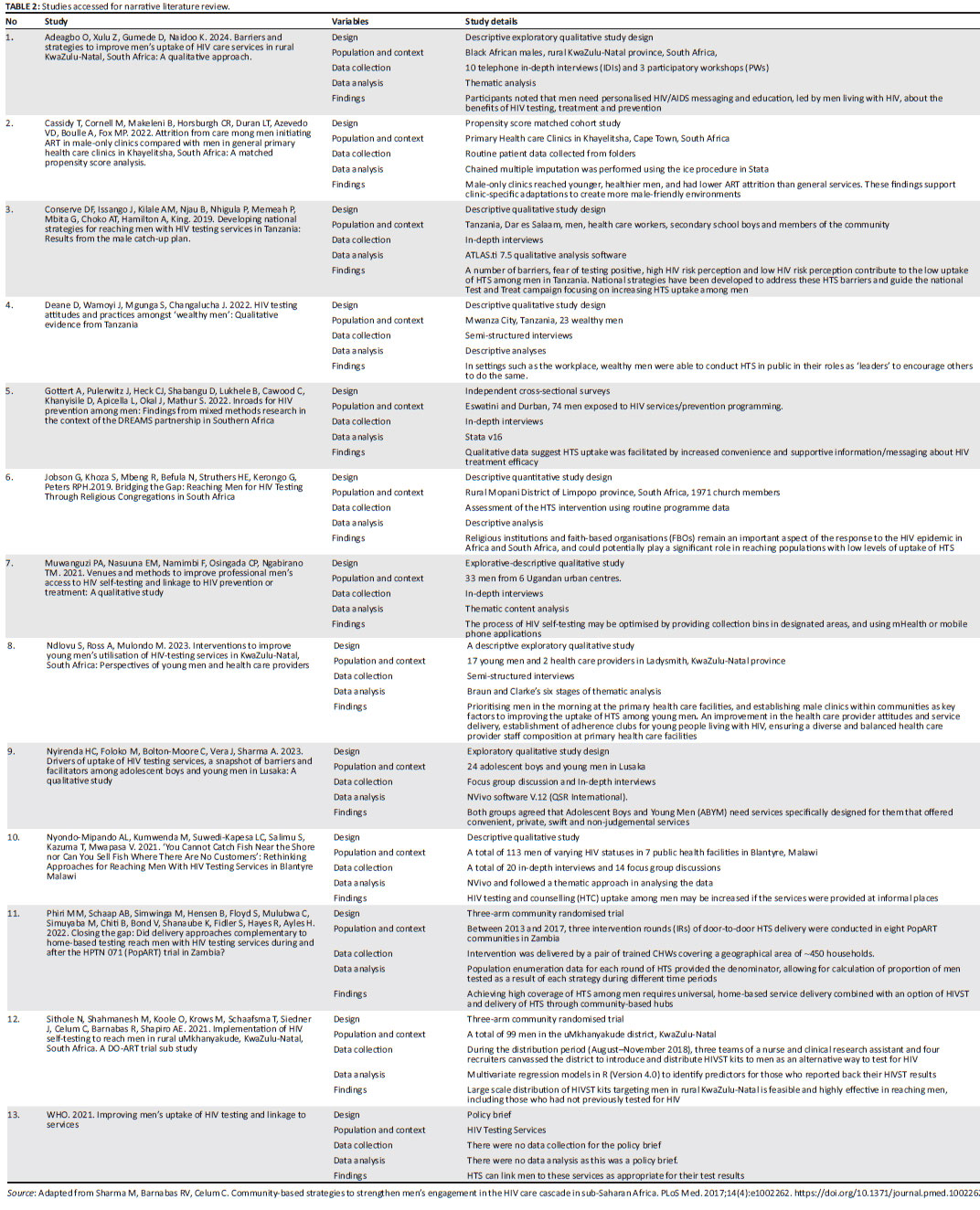
Table 2 shows the included studies, their aim and objective, study design, population and context, data collection and analysis methods, and the main findings. Of the 13 studies included, 7 were qualitative, 5 were quantitative and 1 was policy brief from the WHO. While 2 studies included adolescent boys and young men (ABYM), 10 focused on the general male population, with 9 being conducted in Southern Africa and three in Eastern Africa.
Themes
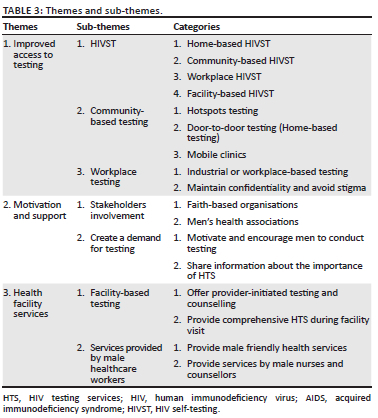
The thematic analysis of the included articles revealed three main themes: (1) Improved access to testing; (2) Motivation and support; and (3) Health facility services. The three main themes, the seven sub-themes and their associated categories are indicated in Table 3.
Theme 1: Improved access to testing
This section consisted of three sub-themes: HIV self-testing, community-based testing and workplace testing. Routine HIV testing should be offered to all clients in all clinical settings to improve uptake, with active linkage to prevention, treatment and care services, in addition to routine facility-based and workplace testing.4
Sub-theme 1: HIV self-testing
Five studies (3,7, 11, 12 and 13, refer to Table 2) referred to HIV self-testing as a key strategy in improving HTS coverage among men, and was found to have been conducted in various places. This being addressed through four categories of home-based, community-based, workplace model and facility-based HIV self-testing (HIVST).
The HIV self-testing entails a person obtaining a test from their local clinic, being shown about how to use it, counselled about the implications of testing positive and informed about the need for regular testing if they are negative.4416
The latest evidence indicates that HIVST increases the rate of HIV testing among men, including those from key populations, such as sex workers and people who inject drugs, and is comparable to facility-based testing regarding reliability.4,171616
Home-based HIV self-testing: A study conducted between 2013 and 2017 in eight HIV Prevention Trials Network (HPTN) 071 (PopART) communities in Zambia found that achieving high testing coverage among men requires access to home-based service delivery through HCWs, combined with the option of HIVST and HTS.171718
This suggests that there is the potential for sexual partners to provide HIVST kits to men, including those who have never been tested, while engaging in conversations about HTS.4,1817
Community-based HIV self-testing: The HIV self-testing delivery models need to be adapted, with the engagement of communities, to reach men in their local context, with community-led models possibly being more acceptable.41918
Workplace HIV self-testing: Distribution of HIVST kits can be useful in high HIV burden settings where most of the employees are men.4194194
Facility-based HIV self-testing: Secondary distribution of HIVST kits should include partners or peers, for example, women attending antenatal care (ANC) and index clients to their partners, and this could be useful for reaching men.4
The HIV self-testing is another strategy that has shown success in reaching high-risk men and first-time testers, hence their intensive distribution in healthcare facilities needing to be prioritised.19
Sub-theme 2: Community-based testing
Four studies (1, 3, 10 and 13, refer to Table 2) from the searched literature referred to community-based testing as a key strategy in improving HTS coverage among men, this being addressed through three categories: hotspot, door-to-door testing and mobile clinics.
Community-based testing, also known as community-based HTS, involves HCWs offering HIV testing outside of traditional health facilities at convenient times and place, such as in community settings, for example, 'moonlight', evening or weekend testing.44,7,18,20
Hotspots testing: Targeted HIV testing by health facilities, NGOs or HCW can be effective in hotspots, these being places where people who may be at increased risk gather for specific activities, such as at bars, brothels, football grounds, video centres and truck stops.18187
Door-to-door testing (Home-based testing): Sustained implementation of home-based testing and support for rapid treatment initiation has been shown to increase testing and treatment coverage among men in high-burden settings or hotspots.444720
Mobile clinics: Confidential community-based HIV testing and treatment services could include mobile clinics at places that were accessible and convenient for the people who wanted to use them.207
Sub-theme 3: Workplace testing
Three studies (4, 10 and 13, refer to Table 2) from the researched literature mentioned workplace testing as a key strategy in improving HTS coverage among men, this being addressed through two categories: industrial or workplace-based testing and maintaining the confidentiality and avoiding stigma.
Industrial or workplace-based testing: Men prefer workplace-based HTS, which may be offered at their onsite clinics, because of its convenience and the absence of stigma associated with testing at a clinic. This option has been shown to be feasible and acceptable among men and assists with reaching those who may be reluctant to go to their local health facility.72174
Maintain confidentiality and avoid stigma: An independent cross-sectional survey in 2016-2017 and 2018 of men and HCWs (20-40 years old) in Eswatini (20-34 years old) and Durban, South Africa, found a need to maintain confidentiality and avoid any form of unintended disclosure, with stigma being an underlying factor that prevented people from attending clinics for testing.2222
Theme 2: Motivation and support
This theme consisted of two sub-themes: stakeholder involvement and creating a demand for testing. Tools and interventions that increase the demand for HTS are needed to reach people who are unaware of their options or unwilling to seek their use. In addition, peer-led interventions and the use of digital platforms and tools, such as social media and video-based messages, are promising and can be considered where feasible.4
Sub-theme 4: Stakeholders involvement
Two studies (5 and 6, refer to Table 2) from the researched literature referred to stakeholder involvement as a key strategy in improving HTS coverage among men, the two categories being faith-based organisations (FBO) and men's health associations.
Faith-based organisations: Collaborating with FBOs to bridge the gap between ideological approaches to HIV and HTS proved successful in reaching men in South Africa, including older men, a hard-to-reach group. This was carried out through campaigns organised by the district health departments in collaboration with church leaders to reach a large proportion of first-time testers and improve access to services.55
Men's health associations: Men's forums and societies, such as the South Africa Men's Forum, where men meet monthly to discuss their issues and the Justice Men's Forum, play an important role in HIV services. Participants described these gatherings as opportunities for them to discuss the challenges they face, learn positive coping strategies and promote HIV risk reduction and linkage to services.22
Sub-theme 5: Create a demand for testing
Three studies (8, 9 and 13, refer Table 2) from the researched literature included creating a demand for testing as a key strategy in improving HTS coverage among men, the two categories that emerged being motivate and encourage men to conduct testing and share information about the importance of HTS.
Motivate and encourage men to conduct testing: To increase testing uptake among young men, providing incentives, such as free earphones, data bundles and USB flash drives, has been shown to help retention in HIV treatment and care. This enables healthcare providers, CHWs and community mobilisers to educate them about HIV/AIDS and HTS.64
Motivating men to seek HIV testing services and to remain on ART through an existing programme in South Africa, such as the Coach Mpilo and MINA health strategy, can assist in improving the 95-95-95 strategies.23,24242324
Share information about the importance of HIV testing services: Targeting outreach, education and community initiatives to raise awareness about HIV/AIDS and the importance of HTS can help to dispel misconceptions about being infected, while encouraging proactive health care-seeking behaviours that can be used to encourage testing.611
Theme 3: Health facility services
This theme consisted of two sub-themes: facility-based testing and services provided by male HCWs. Health facilities continue to be important locations where men access HTS, and to increase testing uptake, it is important to routinely offer HTS to men when they attend health services for any reason, with facility-based HTS needing to be adapted to better reach men.4
Sub-theme 6: Facility-based testing
Four studies (4, 8, 12 and 13, refer Table 2) from the researched literature mentioned facility-based testing as a key strategy to improving HTS coverage among men, the two emerging categories being provider-initiated testing and counselling, and the provision of comprehensive HTS during facility visits.
Offer provider-initiated testing and counselling: Facility-based testing refers to HTS provided in a health facility or laboratory, at stand-alone HTS sites, also known as voluntary counselling and testing (VCT), or offered at every opportunity at clinical sites to all patients who present for any condition, this approach being known as provider-initiated testing and counselling (PITC).42144
Provide comprehensive HIV testing services during facility visit: Health facilities remain essential for men to access HTS, particularly in areas with a high burden of HIV, and should be routinely offered to men when they visit facilities.46416
Sub-theme 7: Services provided by male healthcare workers
Four studies (1, 2, 3 and 8, refer Table 2) from the researched literature referred to the provision of services by male healthcare providers as a key strategy to improving HTS coverage among men, this being addressed by two categories: providing male-friendly health services and providing services by male nurses and counsellors.
Provide male friendly health services: Male-only clinics or services were accessed by younger and healthier men compared to those who traditionally make use of health services, including for HTS.256625
Provide services by male nurses and counsellors: There is a need to re-orient and sensitise clinical management to include more male nurses, clinicians and counsellors in clinical settings to provide services to men.2018
Implications and recommendations
This narrative review aimed to describe the interventions used to reach men through HTS opportunities at both facility and community levels to improve their access to treatment services. A literature review design and relevant methods were applied to identify strategies that can improve HTS uptake among men in both primary health care and community-based settings. This literature review found 13 articles to be relevant, and revealed that improved access to testing, motivation and support, and health facility services are key interventions used to reach men to improve HTS uptake. These findings are similar with the study conducted by Dovel which reported that convenient services, actively engaging men and providing positive experiences with health services, improves health utilisation.26
The findings revealed that HIVST, community-based testing and workplace testing are key interventions for reaching men through HTS, with HIVST being regarded as a safe, accurate and acceptable approach.42727
Men in SSA have also been reached for HIV testing using HIV and AIDS sensitisation campaigns, clinician referrals, home- and community-based HIV testing, incentives for HIV testing, partner (index) testing and traditional HIV testing methods.7276
In an effort to reach more men for testing some interventions studies found that the proportion of individuals at home who were male was low resulting in the limited impact of population level testing to provide services for men.2727272826,27,29
Mobile HTS is a popular community-based strategy that has become well-liked because of its practicality and accessibility in reaching more men for HTS, especially in hard-to-reach areas. In contrast to facility-based HTS, mobile services enable people to be tested at places and times that suit them, and meet their needs for dignity, privacy and shorter waiting times.64
Testing can be conducted in high HIV-burden workplaces where men may be at risk, such as mines, truck stops, farms, industrial sites and taxi ranks.4273012
In order to delimit stigma around HIV, there is a need to provide HCWs sensitisation training and job aids on how to interact with men as clients either at healthcare facilities or during workplace testing. It is well known that misconception and implicit bias arise from lack of understanding, experience and professional skills or tools to engage men.2627
Studies have shown that stakeholder involvement and creating a demand for testing can play an important role in promoting HTS among men, which can be done through regular contact with men who are members of formal societies. The NDoH in, collaboration with NGOs, should involve key stakeholders, such as RL, FBOs and men's associations, to reach men for testing by conducting regular community dialogues and addressing health issues during church services and events. Engaging religious institutions to encourage HIV testing by the men in their congregations and communities is another understudied strategy to increase men's access to HTS.55
Creating a demand for testing is also important and highlights the need for HCWs to motivate and encourage men to conduct testing through information sharing about the importance of HTS, this being significant for improving uptake. Behavioural interventions, such as health promotion activities, are effective in increasing the uptake of HTS among men, including through health education and distributing information, education and communication (IEC) material in places where men can be reached.281222
Measures such as facility-based testing and service provision by male HCWs have been shown to improve HTS uptake among men.4314
Facility-based testing has shown great strides in reaching men who access health services, and although PITC is unlikely to increase men's population levels of HIV testing, the strategy can reach a high proportion of men already seeking services.2732
Improving social support and providing poverty alleviation can change norms around HTS and access to treatment while addressing other factors contributing to low engagement in care among men, for example food insecurity and poverty.1232
The literature review identified male-friendly health services and services provided by male nurses and counsellors, as being important to assist men in accessing HTS. While this intervention may improve HTS uptake among men, special consideration should be given to engaging male HCWs in the delivery of health and social services to ABYM. This may require careful attention regarding how to support ABYM to feel safe, while not upholding rigid gender binaries and harmful masculine norms because of the separation of services.32
No single strategy will probably be adequate to enhance men's engagement in HIV services, indicating a need for more comprehensive thought regarding a set of strategies that are both feasible and sustainable.2727
Evidence that has been compiled arising from this review may motivate and support decision-making by the HTS implementers in countries where men's testing level is low in developing strategies that can be implemented in healthcare facilities to target men for comprehensive service provision.
Limitations
A number of limitations may have affected the study, including the small sample size, with less stringent inclusion criteria possibly enabling more studies to be reviewed. While the study focused on existing approaches that can be implemented to improve testing uptake among men, other key indicators, such as viral load uptake and missed appointments in the HIV programme, were not covered in the study. The review did not include sources such as newspaper articles, theses and books, which might provide useful insight into the topic under investigation. Lastly, the inclusion of studies in languages other than English may have resulted in other approaches being identified.
Recommendations
The literature review indicates the need for more studies into coordinated, multifaceted approaches to promote the uptake of HTS among men. Improving their access to accurate, consistent and easily accessible HTS information as a means to encouraging testing can be performed by utilising local radio stations, community newspapers, billboards and social media platforms. Home-based testing, through HIVST or door-to-door efforts, can reach men who are unable or unwilling to test, and for those who are unable to test and receive their results immediately, the results can be followed up within 72 h by HCWs over the phone. Social Network Testing, which involves testing people who are closely related and belong to the same social group, can improve reaching the hard-to-reach male population. Healthcare services for men need to be available from HCWs they can relate to, specifically men. Strategies that target men, such as Coach Impilo and Mina Health for Men, could be implemented in healthcare facilities with the assistance of civil societies, men's forums and other stakeholders.8,234
Conclusion
Approaches for reaching men for HTS need to include multifaceted strategies that combine facility and community-based testing methods to encourage those who are positive to access treatment at health facilities or registered clinics.4,203425
Competing interests
The authors declare that they have no financial or personal relationships that may have inappropriately influenced them in writing this article.
Authors' contributions
L.G.M. conceptualised the study and conducted the literature search. A.R., S.Q. and Z.S. validated the protocol. All authors analysed the data and contributed to finalising the article.
Funding information
This research received no specific grant from any funding agency in the public, commercial or not-for-profit sectors.
Data availability
Data sharing does not apply to this article because no new data were generated or analysed in this study.
Disclaimer
The views and opinions expressed in this article are those of the author and are the product of professional research. The article does not necessarily reflect the official policy or position of any affiliated institution, funder or agency, or that of the publisher. The authors are responsible for this article's results, findings and content.
Acknowledgements
The authors would like to thank Prof. Andrew Ross, a mentor supervisor, for encouraging to write the article and providing invaluable feedback as part of ensuring the completion of this article. The authors would also like to acknowledge the authors of the sources used in this study. This article is partially based on the author L.G.M.'s thesis titled "Understanding men's experience of HIV testing services, linkage to treatment, adherence, disclosure and retention in HIV care in Lejweleputswa district, Free State Province, South Africa'' towards the degree of Doctor of Philosophy (Public Health) in the Department of Health Sciences, Faculty of Public Health and Family Medicine, University of Kwazulu-Natal, Durban, South Africa on 09 June 2025, with Prof. Andrew Ross. It is available here: https://doi.org/10.4102/phcfm.v17i.4869
References
-
1. Mandawa MB, Mahiti GR. Factors contributing to loss to follow-up from HIV care among men living with HIV/AIDS in Kibaha District, Tanzania. HIV/AIDS Res Palliat Care. 2022;14:503-516. https://doi.org/10.2147/HIV.S381204
» https://doi.org/10.2147/HIV.S381204 -
2. Moraes DCD, De Oliviera RC, Geraldo Costa SF. Adherence of men living with HIV/AIDS to antiretroviral treatment. Esc Anna Nery. 2014;18(4):676-681. https://doi.org/10.5935/1414-8145.20140096
» https://doi.org/10.5935/1414-8145.20140096 -
3. UNAIDS. Country factsheets. 2023 [cited 2024 Aug 10]. Available from: https://www.google.com/url?sa=i&rct=j&q=&esrc=s&source=web&cd=&cad=rja&uact=8&ved=0CDgQw7AJahcKEwjIqPrn_f6AAxUAAAAAHQAAAAAQAw&url=https%3A%2F%2Fwww.unaids.org%2Fen%2Fregionscountries%2Fcountries%2Fsouthafrica&psig=AOvVaw2yCjfNiGRld1uT886KKuDy&ust=16932984367660&opi=89978449
» https://www.google.com/url?sa=i&rct=j&q=&esrc=s&source=web&cd=&cad=rja&uact=8&ved=0CDgQw7AJahcKEwjIqPrn_f6AAxUAAAAAHQAAAAAQAw&url=https%3A%2F%2Fwww.unaids.org%2Fen%2Fregionscountries%2Fcountries%2Fsouthafrica&psig=AOvVaw2yCjfNiGRld1uT886KKuDy&ust=16932984367660&opi=89978449 -
4. World Health Organization (WHO). Improving men's uptake of HIV testing and linkage to services. Policy Brief. 2021 [cited 2024 July 20]. Available from: https://www.who.int/publications/i/item/9789240018938
» https://www.who.int/publications/i/item/9789240018938 -
5. Jobson G, Khoza S, Mbeng R, et al. Bridging the gap: Reaching men for HIV testing through religious congregations in South Africa. J Acquir Immune Defic Syndr. 2019;81(5):e160-e162. https://doi.org/10.1097/QAI.0000000000002078
» https://doi.org/10.1097/QAI.0000000000002078 -
6. Ndlovu S, Ross A, Mulondo M. Interventions to improve young men's utilisation of HIV-Testing services in Kwazulu-Natal, South Africa: Perspectives of young men and health care providers. Afr J AIDS Res. 2023;22(4):3316-3326. https://doi.org/10.2989/16085906.2023.2276897
» https://doi.org/10.2989/16085906.2023.2276897 -
7. Nyondo-Mipando AL, Kumwenda M, Suwedi-Kapesa LC, Salimu S, Kazuma T, Mwapasa V. 'You cannot catch fish near the shore nor can you sell fish where there are no customers': Rethinking approaches for reaching men with HIV testing services in Blantyre Malawi. Am J Men's Health. 2021;10(1177):1-13. https://doi.org/10.1177/15579883211011381
» https://doi.org/10.1177/15579883211011381 -
8. Hlongwa M, Basera W, Hlongwana K, et al. Linkage to HIV care and early retention in HIV care among men in the 'Universal Test-Andtreat' era in a high HIV-burdened district, Kwazulu-Natal, South Africa. BMC Health Serv Res. 2024;24(384):1-9. https://doi.org/10.1186/s12913-024-10736-3
» https://doi.org/10.1186/s12913-024-10736-3 -
9. Kusemererwa S, Akena D, Nakanjako D, et al. Strategies for retention of heterosexual men in HIV care in sub-Saharan Africa: Asystematic review. PLoS One. 2021;16(2):e0246471. https://doi.org/10.1371/journal.pone.0246471
» https://doi.org/10.1371/journal.pone.0246471 -
10. National Department of Health (NDoH). 2023 ART clinical guidelines for the management of HIV in adults, pregnancy and breastfeeding, adolescents, children, infants and neonates. 2023 [cited 2024 Aug 10]. Available from: https://knowledgehub.health.gov.za/elibrary/2023-art-clinical-guidelines-management-hiv-adults-pregnancy-and-breastfeeding-adolescents
» https://knowledgehub.health.gov.za/elibrary/2023-art-clinical-guidelines-management-hiv-adults-pregnancy-and-breastfeeding-adolescents -
11. Nyirenda HC, Foloko M, Bolton-Moore C, Vera J, Sharma A. Drivers of uptake of HIV testing services, a snapshot of barriers and facilitators among adolescent boys and young men in Lusaka: A qualitative study. BMJ Open. 2022;13(10):1-7. https://doi.org/10.1136/bmjopen-2022-062928
» https://doi.org/10.1136/bmjopen-2022-062928 -
12. Sharma M, Barnabas RV, Celum C. Community-based strategies to strengthen men's engagement in the HIV care cascade in sub-Saharan Africa. PLoS Med. 2017;14(4):e1002262. https://doi.org/10.1371/journal.pmed.1002262
» https://doi.org/10.1371/journal.pmed.1002262 -
13. Makumbang FC. Leaving no man behind: How differentiated service delivery models increase men's engagement in HIV care. Int J Health Policy Manag. 2020;10(3):129-140. https://doi.org/10.34172/ijhpm.2020.32
» https://doi.org/10.34172/ijhpm.2020.32 -
14. UNAIDS. Male engagement in Hiv testing, treatment and prevention in Eastern and Southern Africa: A framework for action. 2021 [cited 2024 July 20]. Available from: https://www.google.com/url?sa=i&rct=j&q=&esrc=s&source=web&cd=&cad=rja&uact=8&ved=0CDgQw7AJahcKEwjIn5aIutSAAxUAAAAAHQAAAAAQAw&url=https%3A%2F%2Fwww.unaids.org%2Fen%2Fresources%2Fdocuments%2F2022%2Fmale-engagement-hiv-testing-treatment-prevention-eastern-uthernafrica&psig=AOvVaw2TlTAa5HikshdjvwqIbYv&ust=1691838063240024&opi=89978449
» https://www.google.com/url?sa=i&rct=j&q=&esrc=s&source=web&cd=&cad=rja&uact=8&ved=0CDgQw7AJahcKEwjIn5aIutSAAxUAAAAAHQAAAAAQAw&url=https%3A%2F%2Fwww.unaids.org%2Fen%2Fresources%2Fdocuments%2F2022%2Fmale-engagement-hiv-testing-treatment-prevention-eastern-uthernafrica&psig=AOvVaw2TlTAa5HikshdjvwqIbYv&ust=1691838063240024&opi=89978449 -
15. Juntunen M, Lehenkari M. A narrative literature review process for an academic business research thesis. Stud in High Educ. 2021;46(2):30-342. https://doi.org/10.1080/03075079.2019.1630813
» https://doi.org/10.1080/03075079.2019.1630813 -
16. Sithole N, Shashmanesh M, Koole O, et al. Implementation of HIV self-testing to reach men in rural Umkhanyakude, Kwazulu-Natal, South Africa. A DO-ART trial sub study. Front Public Health. 2021;9:652887. https://doi.org/10.3389/fpubh.2021.652887
» https://doi.org/10.3389/fpubh.2021.652887 -
17. Phiri MM, Schaap AB, Simwinga M, et al. Closing the gap: Did delivery approaches complementary to home-based testing reach men with HIV testing services during and after the HPTN 071 (Popart) trial in Zambia?. J Int AIDS Soc. 2022;25(2):1-10. https://doi.org/10.1002/jia2.25855
» https://doi.org/10.1002/jia2.25855 -
18. Conserve DF, Issango J, Kilale AM, et al. Developing national strategies for reaching men with HIV testing services in Tanzania: Results from the male catch-up plan. BMC Health Serv Res. 2019;19:317. https://doi.org/10.1186/s12913-019-4120-3
» https://doi.org/10.1186/s12913-019-4120-3 -
19. Muwanguzi PA, Nasuuna EM, Namimbi F, Osingada PC, Ngabirano TD. Venues and methods to improve professional men's access to HIV self-testing and linkage to HIV prevention or treatment: A qualitative study. BMC Health Serv Res. 2021;21(1217):1-12. https://doi.org/10.1186/s12913-021-07259-6
» https://doi.org/10.1186/s12913-021-07259-6 -
20. Adeagbo O, Xulu Z, Gumede D, Naidoo K. Barriers and strategies to improve men's uptake of HIV care services in rural Kwazulu-Natal, South Africa: A qualitative approach. J L Soc Dev. 2024;11:14877. https://doi.org/10.25159/2520-9515/14877
» https://doi.org/10.25159/2520-9515/14877 -
21. Deane K, Wamoyi J, Mgunga S, Changalucha J. HIV testing attitudes and practices amongst 'wealthy men': Qualitative evidence from Tanzania. Cult Health Sex. 2022;24(9):1215-1229. https://doi.org/10.1080/13691058.2021.1941261
» https://doi.org/10.1080/13691058.2021.1941261 -
22. Gottert A, Pulerwitz J, Heck GJ, et al. Inroads for HIV prevention among men: Findings from mixed methods research in the context of the DREAMS partnership in Southern Africa. AIDS. 2022;36(1):S85-S97. https://doi.org/10.1097/QAD.0000000000003225
» https://doi.org/10.1097/QAD.0000000000003225 -
23. HIV Learning Network. icap Global Health: 2023 [cited 2024 Aug 10]. Available from: https://www.coachmpilo.co.za/videos.
» https://www.coachmpilo.co.za/videos -
24. Hansen N. Peer power: The coach Mpilo model in South Africa. [cited 2024 Nov 15]. Available from: https://www.coachmpilo.co.za/
» https://www.coachmpilo.co.za/ -
25. Cassidy T, Cornell M, Makeleni B, et al. Attrition from care among men initiating art in male-only clinics compared with men in general primary healthcare clinics in Khayelitsha, South Africa: A matched propensity score analysis. AIDS Behav. 2023;27(1):358-369. https://doi.org/10.1007/s10461-022-03772-9
» https://doi.org/10.1007/s10461-022-03772-9 -
26. Dovel K, Hubbard J, Zembe L, et al. Interventions to improve men's engagement in HIV and other key Services in sub-Saharan Africa: A scoping review. med Rxiv. 2023;8:1-35. https://doi.org/10.1101/2023.10.25.23297534
» https://doi.org/10.1101/2023.10.25.23297534 -
27. Hensen B, Taoka S, Lewis JJ, Weiss HA, Hargreaves J. Systematic review of strategies to increase men's HIV-Testing in sub-Saharan Africa. AIDS. 28(14):2123-2145. https://doi.org/10.1097/QAD.0000000000000395
» https://doi.org/10.1097/QAD.0000000000000395 -
28. Sulat JS, Hapsari ED, Santoso B. The impacts of community-based HIV testing and counselling on testing uptake: A systematic review. J Health Res. 2017;32(2):152-163. https://doi.org/10.1108/JHR-01-2018-015
» https://doi.org/10.1108/JHR-01-2018-015 -
29. Sharma M, Barnabas RV, Celum C. Community-based strategies to strengthen men's engagement in the HIV care cascade in sub-Saharan Africa. PLoS Med. 2017;14(4):e1002262. https://doi.org/10.1371/journal.pmed.1002262
» https://doi.org/10.1371/journal.pmed.1002262 -
30. Mbokazi N, Madzima R, Leon N, et al. Health worker experiences of and perspectives on engaging men in HIV care: A qualitative study in Cape Town, South Africa. J Int Assoc Provid AIDS Care. 2020;19:1-9. https://doi.org/10.1177/2325958220935691
» https://doi.org/10.1177/2325958220935691 -
31. Moher D, Liberati A, Tetzlaff J. Preferred reporting items for systematic reviews and meta-analyses: The PRISMA statement. 2009; PLOS Med; 6(7):1-6. https://doi.org/10.1371/journal.pmed.1000097
» https://doi.org/10.1371/journal.pmed.1000097 -
32. Makusha T, Gittings L. The path towards an HIV-free generation: Engaging adolescent boys and young men (ABYM) in sub-Saharan Africa from lessons learned and future directions. AIDS Care. 2024;36(1):58-88. https://doi.org/10.1080/09540121.2024.2307391
» https://doi.org/10.1080/09540121.2024.2307391

Accepted: 29 Apr. 2025
Published: 25 June 2025