Evaluation of factors associated with medical male circumcision in South Africa: A case-control study
Abstract
BACKGROUND: The World Health Organization recommends medical male circumcision (MMC) to prevent human immunodeficiency virus (HIV). More research is needed in South Africa on factors influencing the uptake of MMC. AIM: To evaluate factors associated with uptake of MMC.. SETTING: Diepsloot, Johannesburg, South Africa. METHODS: An observational case-control study. Cases (men attending a private general practice (GP) offering free MMC) were compared to controls (uncircumcised men attending a local shopping mall) for a variety of demographic, sociocultural and financial factors. Factors were analysed using bivariate and multiple-variable binary forward logistic regression with the Statistical Package for Social Sciences RESULTS: There were 350 cases and 350 controls. Four factors were associated with the uptake of MMC: being a student (adjusted odds ratio [AOR]: 6.29, 95% confidence interval [CI]: 2.29-17.26), attending a mainline Christian denomination (AOR 2.85, 95% CI: 1.39-5.78), speaking an African language other than Zulu (range of AORs: 2.5-6.8, p < 0.05) and being South African (AOR: 2.50, 95% CI: 1.58-3.96). MMC was associated with feeling susceptible to HIV, seeing it as a serious health problem and being encouraged by partners. Men who were sterilised, not sexually active and without symptoms of a sexually transmitted infection felt less susceptible. Other barriers included the pain of the procedure, indirect costs, anticipated impact on sexual activity, lack of information, cultural beliefs, embarrassment and access to health services. CONCLUSION: Disease prevention initiatives should take note of the factors associated with MMC in this community. Further qualitative studies should explore issues behind the factors identified and provide further insights CONTRIBUTION: This study helps to identify factors that health services should address when implementing medical male circumcision.
disease prevention; HIV; male medical circumcision; primary health care; primary care; health promotion
Introduction
Human immunodeficiency virus (HIV) is one of the major health problems in low- and middle-income countries, with over 38 million people infected worldwide.1233
Studies conducted in the United States of America and Israel, where circumcision rates are high and HIV burden is relatively low, show an inverse association between circumcision and HIV acquisition.455655
The majority of HIV infections (at least 70%) in sub-Saharan Africa are thought to be a result of penetrative sexual intercourse.77,8
The introduction and expansion of highly active antiretroviral therapy (HAART) was associated with a sustained and profound population-level decrease in morbidity and mortality from HIV, as well as reduced transmission.999
The United Nations report that 37% of men are circumcised globally.101112131314
To date, little research has been conducted to identify the demographic, sociocultural and financial factors that may contribute to an individual's decision to have MMC.1315162,15
Methods
Study design
This was an analytical observational case-control study that compared cases (men with MMC) and controls (men without MMC) and identified the factors associated with a decision to have MMC.
Setting
This study was conducted in Diepsloot, a densely populated and impoverished township in the north of Johannesburg, South Africa. The population of the township was 138 329 as per 2011 census with the following population groups: black people (98%), mixed race people (0.2%), Asian people (0.1%), white people (0.2%) and other (1.5%).171
The local clinics manage acute and chronic medical conditions. Emergency services are provided by the nearby public hospital. There is also provision for antenatal care and immunisation programmes. The private sector also manages acute and chronic cases, although chronic cases are less common as patients receive free services in the public sector. The private doctors refer cash patients to the nearby government hospitals and insured patients to the private hospitals.
Medical male circumcision is included in the service in both the public and private sectors. It is free in the government clinics, but it incurs a fee for service in the private sector. However, one private practice offered free MMC to the community as part of the government initiative.
Study population
This study was conducted with men between the ages of 18 and 55 years living in Diepsloot, as this was the target group for MMC. Men who did not live in Diepsloot or had a traditional circumcision were excluded from the study.
Sample size
Sample size for an unmatched case-control study was calculated using Epi Info. The following assumptions were made:
•95% confidence intervals
•80% power
•ratio of cases : controls 1:1
•expected odds ratio 1.7 with 31% of controls and 43% of cases exposed (based on those passing matriculation as a key educational factor1
Using the Kelsey method, this gave a sample size of 243 in each group or 486 in total. It was assumed that five variables would be compared for their association with outcomes in the final multivariable analysis, and therefore an additional 10% was needed for each variable. This gave a final sample size of 364 cases and 364 controls, totalling 728 cases.15
Sampling strategy
Cases were recruited from a local private practice, run by a local general practitioner, who offered free MMC to the community as part of the government initiative. This practice circumcised 50 people per day in the winter and 20 per day in the summer. People were recruited on a consecutive basis until the sample size was obtained, and only 11 men refused to consent.
Controls were recruited from the local shopping mall, which was used by all community members. Three research assistants were invited to help recruit controls, and the mall also provided a private more secluded space to obtain consent and complete the questionnaire. People meeting the inclusion and exclusion criteria were recruited on a random systematic basis as they entered the mall, whereby every third person was invited to participate until the sample size was obtained. All men who consented were then asked about their circumcision status, and those who were not circumcised were allocated to the controls. The exact ratio (i.e. every nth person) was determined by the time taken to consent and complete the questionnaire in privacy and the need to obtain the sample size. If someone refused to participate (23 people), then the next person was selected according to the systematic process. The reasons for refusal were not recorded.
Data collection
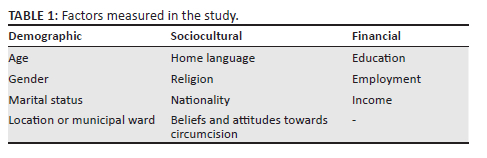
The research focused on demographic, sociocultural and financial factors (Table 1). Demographic factors were defined as the characteristics of human populations, such as age and gender. Sociocultural factors were seen as the beliefs, customs and practices of community members that affected their behaviour. Financial factors were defined by employment, education and income.
A questionnaire was developed to measure these factors. Demographic and financial questions were derived from established questionnaires used in South Africa,1819
The questionnaire was translated by the Language Centre of Stellenbosch University and piloted with community members to ensure that it was easily understood in the local community. The languages were IsiZulu, IsiXhosa, Setswana and Tsonga.
Data were collected in 2021. The respondents completed the questionnaire in a private area of the general practice (GP). The research assistant took consent and was available to assist with the questionnaire if necessary. The questionnaire was completed by the respondents before having the circumcision, as the pain experienced after circumcision made it difficult to complete the questionnaire. In the mall, the research assistants took potential participants to a private and secluded area where they completed the questionnaire in a similar process. The researcher was assisted by three trained male research assistants. One assistant was a clinical associate from the researcher's practice, and the other two assistants were contracted. They were all trained and held at least a basic degree and were proficient in the local languages.
Data analysis
Data were captured in an Excel spreadsheet and checked for errors or omissions. The data were then analysed using Statistical Package for Social Sciences version 25. The supervisor, with support from the statistician at Stellenbosch University, assisted the researcher to perform the analysis.
Data were analysed by descriptive statistics with means and standard deviations (numerical data) or frequencies and percentages (categorical data). If not normally distributed, numerical data were described using medians and interquartile ranges (IQR).
Each independent variable was then tested for an association with cases or controls in a bivariate binary logistic regression. Associations with p < 0.2 were then included in a multivariable binary forward logistic regression. The results were presented as unadjusted and adjusted odds ratios with 95% confidence intervals.
Ethical considerations
Ethical approval to conduct the study was obtained from the Health Research Ethics Committee of Stellenbosch University (ref. no. HREC2-2020-11877). Permission to conduct the research was obtained from the private GP and shopping mall (ref. no. S19/10/276).
Results
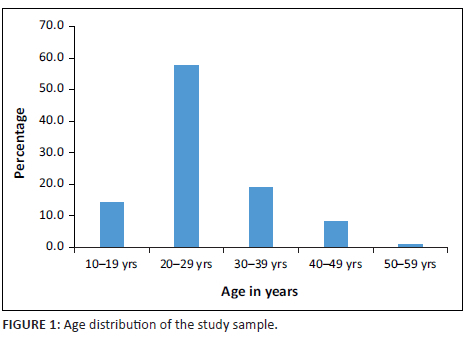
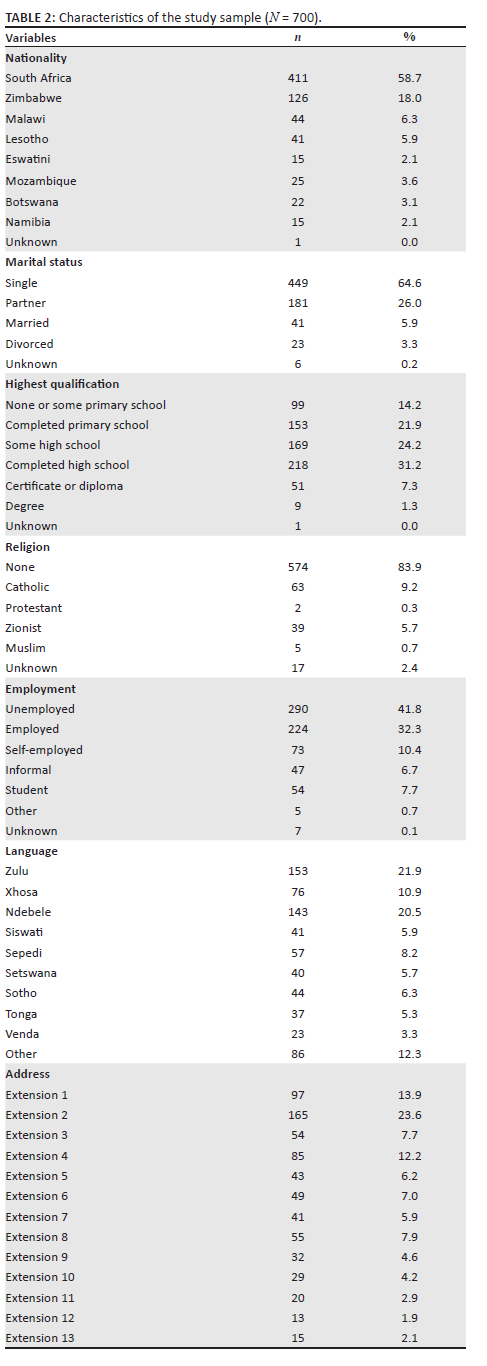
Table 2 describes key characteristics of the study sample as a whole. The 700 participants were mostly single, had education up to high school and were unemployed, of no particular religion and South African. There were a substantial number of immigrants as well, particularly from Zimbabwe. The predominant languages were Zulu and Ndebele. Very few people were married (5.9%), although 26% lived with a long-term partner. The median age was 25 years (IQR 25-27) for the cases and 26 years (IQR 26-27) for the controls. The age distribution is shown in Figure 1.
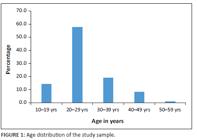
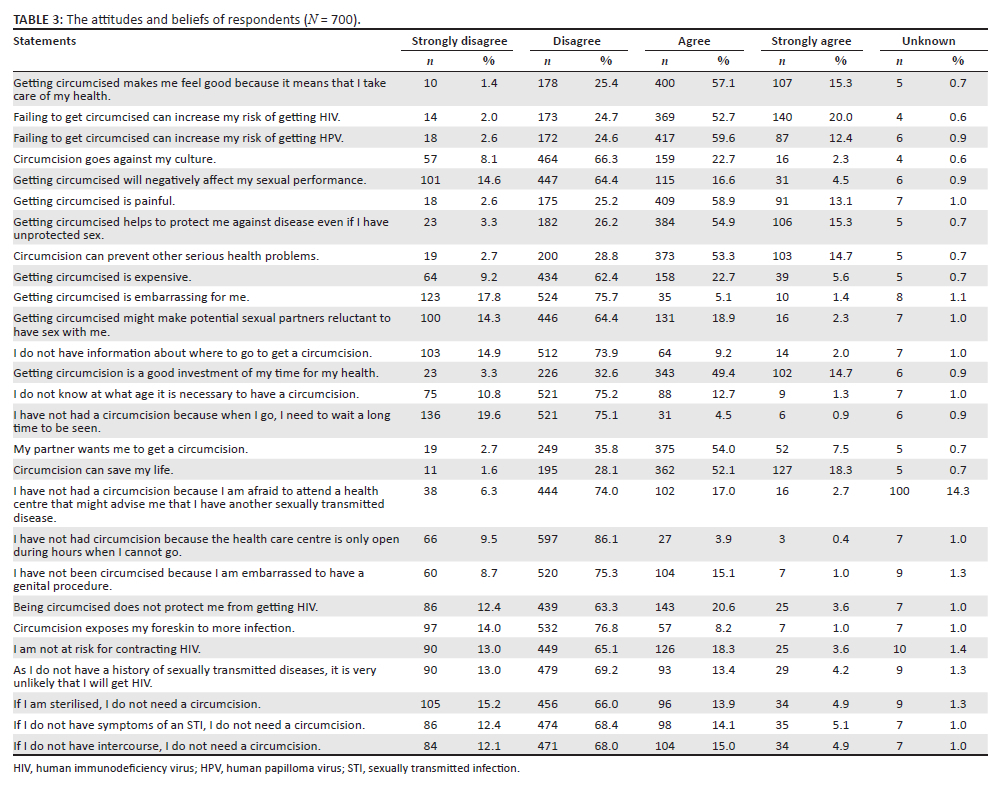
Table 3 presents the views of participants on various beliefs and attitudes related to MMC. The majority saw MMC as having health benefits, especially in terms of protecting them from HIV and HPV. The one worrying response was that the majority (70.2%) of respondents believed that MMC would still protect them from infection even when they did not use protection. The majority of respondents did not see MMC as against their culture and thought that their partner wanted them to have it. They did not anticipate any negative effects on sexual performance or sexual relationships. The majority of respondents had information about MMC and did not anticipate it being too expensive, painful or embarrassing. They were happy with the waiting times and opening hours of the clinic where they could get the MMC and saw it as a good investment of their time.
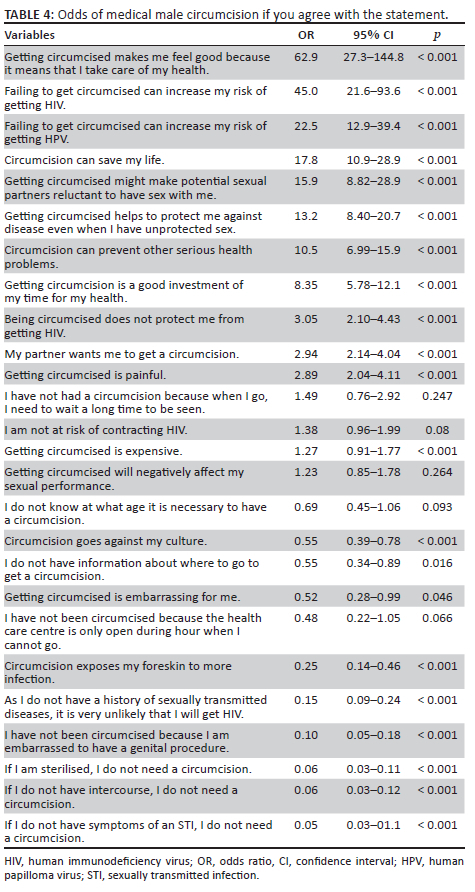
Table 4 shows the association between different beliefs or attitudes and obtaining an MMC. People who had an MMC were more likely to believe in the positive health benefits and protection from HIV and HPV. They felt less at risk of contracting HIV, but they also believed that they were still protected during unprotected sex. People who had an MMC were more likely to believe partners might be reluctant to have sex with them. While seeing it as a good investment of their time, they were more likely to see it as costly, painful and time-consuming.
People who had not had MMC were less informed and were more likely to see it as against their culture. They felt less at risk from Sexually transmitted infections (STIs) and thought that if they had no symptoms of STIs they did not need an MMC. They also felt less risk if they were sexually inactive and believed that if they were sterilised they did not need MMC. They were more likely to see it as embarrassing and to put them at risk of complications, such as infection of their foreskin.
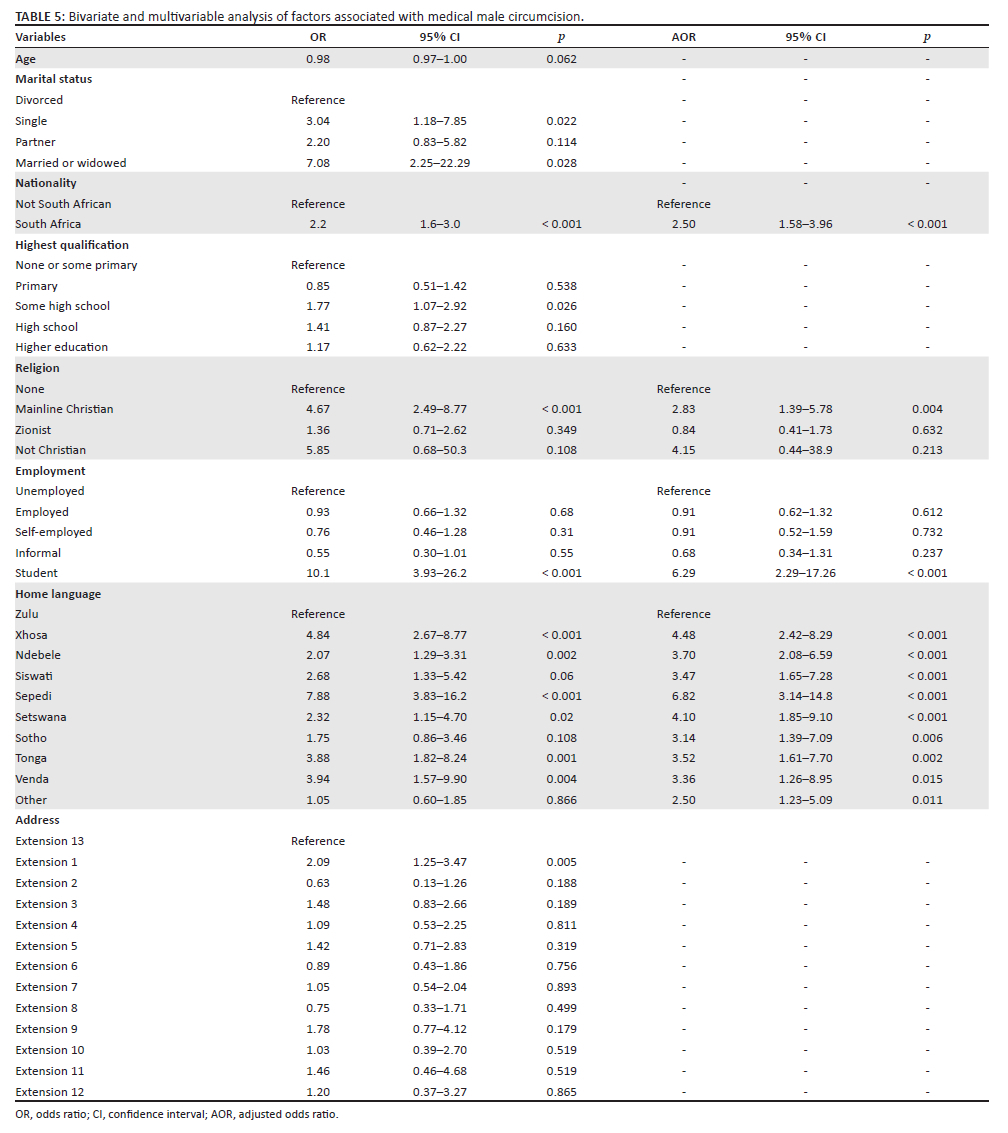
Table 5 shows the results of the bivariate and multiple variable analyses for sociodemographic factors associated with MMC. In the bivariate analysis, all the variables were significantly associated with MMC, but in the multiple variable analysis only four factors remained. The analysis showed that being a student, attending a mainline Christian denomination, speaking an African language other than Zulu and being South African were associated with obtaining an MMC. Adjusted odds ratios are only presented for those variables that remained in the model.
Discussion
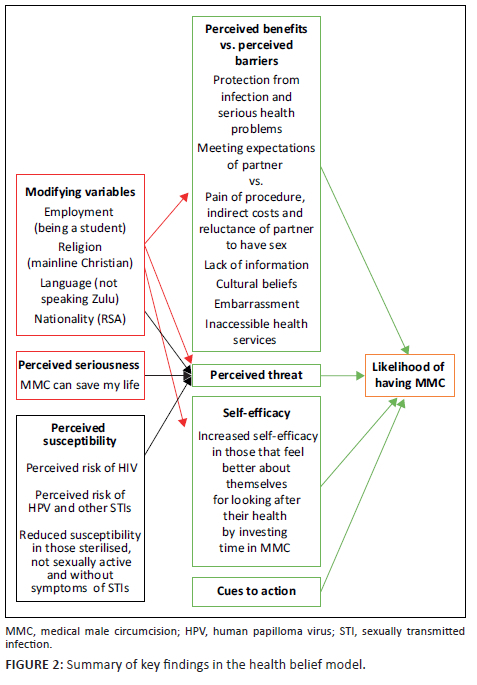
The findings of the study are summarised using the health belief model in Figure 2. This model attempts to predict whether a person's beliefs will translate into health-related behaviour or action. Motivation to undertake a health behaviour is seen as a balance between the perceived benefits, barriers and threats along with self-efficacy and cues to action.20
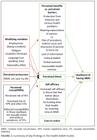
One key modifying factor was language, which is closely linked to culture. A survey, conducted in South Africa in 2008, also found that Zulus were the least likely to be circumcised.212221
In this study, 41% of the men enrolled were foreign nationals, which illustrates the importance of this group in HIV prevention. The decreased chance of foreign nationals being circumcised may also be because of cultural issues. The largest group was from Zimbabwe, where it seems that attitudes are also against circumcision. A study from Mashonaland reported that circumcised men were perceived as 'half a man' and saw themselves as emasculated by the loss of their foreskins.2221
Other studies have also shown that members of mainline churches are more in support of circumcision (53%) than African traditional religions (27%) or Islam (0%).23232323
Previous studies from KwaZulu-Natal reported that men presenting for MMC were young, living in urban townships, single, employed, more educated and sexually active.24,252426
In a study from 2012, in four of nine provinces (Eastern Cape, Gauteng, KwaZulu-Natal and Mpumalanga) in South Africa, a high number of the participants (96%) had knowledge regarding MMC and found it acceptable (84%).27272829
In our study, those who had MMC also held strong beliefs about the health benefits and prevention of infectious diseases such as HIV. On the other hand, those who had MMC were also more likely to believe that they were safe during unprotected sex. While MMC reduces transmission, it does not fully protect from HIV, HPV and other infections, and barrier methods such as condoms are still needed. This false sense of security among those with MMC also needs to be addressed in health education.
As this was a case-control study, factors are associated with the outcome, but a cause and effect relationship cannot be proven. Nevertheless, the relationship between factors can be logically attributed, even though not proven; for example, in those with MMC it is likely that the belief in the protective effect of MMC was instrumental in the decision to have the procedure.
The control group was selected from the shopping mall, and during the coronavirus disease 2019 (COVID-19) pandemic and lockdown, it is likely that unemployment led many people to shop locally and not travel to the mall. Two other malls were also available in the area. This could have introduced a selection bias, although employment versus unemployment was not found to be a significant factor. The case group was selected from a private practice offering free MMC sponsored by the government. Nevertheless, it is possible that those choosing to have the MMC at the private practice were different from those choosing to have it done at a public sector facility.
A few of the statements that participants responded to were worded in a way that implied which group the person should belong to. It would have been better to phrase all the statements more neutrally for both groups. For example, the statement 'I have not been circumcised because I am embarrassed to have a genital procedure' speaks more directly about the control group.
Diepsloot is a metropolitan township in Johannesburg, with a mix of different people typical of Gauteng. The mix of cultures, languages and population groups would however be very different from other provinces such as the Western Cape or KwaZulu-Natal. Likewise, the urban setting cannot be generalised to more rural areas. Hence, the results may not be generalised to other districts in South Africa, although it is likely that many of these factors would also be identified elsewhere.
The health belief model helps to focus attention on key issues that health promotion should focus on in this community. The perceived susceptibility to and seriousness of HIV infection should be addressed and, in particular, misinformation regarding the protection offered by sterilisation as well as the absence of risk if there are no symptoms of an STI. The value of MMC to reduce future risk, even if one is not currently sexually active, should also be addressed.
Culture and traditions can act as barriers to the acceptability of MMC.2828
Further attention should be given to understanding the perceptions of Zulu-speaking community members and what issues need to be addressed to overcome resistance to MMC. Attention may also need to be given to migrants in the community and barriers to MMC, such as the cost of the procedure and making health services more migrant-friendly.
Health promotion messages should be tailored to reach groups less likely to accept MMC, such as those attending Zionist and other Christian denominations. Engaging religious and faith-based leaders and understanding the theological issues involved may assist with this.2930
Therefore, qualitative studies could explore issues behind some of the factors identified and provide insights useful to health promotion. Factors such as being a student, attending a mainline Christian denomination, speaking Zulu and being a foreigner could be further explored.
Conclusions
People who had MMC were more likely to believe in the positive health benefits and protection from HIV and HPV. Culture and traditions were the factors against MMC. Being a student, attending a mainline Christian domination, speaking an African language other than Zulu and being a South African were associated with obtaining MMC.
The health belief model helps to focus attention on the key issues that health promotion and disease prevention should address in this community. The perceived susceptibility to and seriousness of HIV infection should be addressed and, in particular, misinformation regarding the protection offered by sterilisation as well as the absence of risk if there are no symptoms of an STI. Men with MMC believed that they were fully protected during unprotected sex, and this also needs to be addressed.
Competing interests
The authors have declared that no competing interests exist.
Authors' contributions
S.O.O. completed this research for a MPhil degree in Family Medicine and was responsible for all aspects of the work from conceptualisation, data collection, analysis to final manuscript writing. R.J.M. supervised S.O. and contributed towards conceptualisation, methods, data analysis and editing of the final manuscript.
Funding information
This research received no specific grant from any funding agency in the public, commercial or not-for-profit sectors.
Data availability
Data may be available upon reasonable request to the authors.
Disclaimer
The views and opinions expressed in this article are those of the authors and do not necessarily reflect the official policy or position of any affiliated agency of the authors.
Acknowledgements
The authors acknowledge the contribution of the three research assistants towards data collection.
References
-
1.Phan V, Thai S, Choun K, Lynen, Griensven JV. Incidence of treatment-limiting toxicity with stavudine-based antiretroviral therapy in Cambodia: A retrospective cohort study. PLoS One. 2012;7(1):1-6. https://doi.org/10.1371/journal.pone.0030647
» https://doi.org/10.1371/journal.pone.0030647 -
2.Adler D, Wallace M, Bennie T, Abar B, Sedaghi R. High risk human papilloma virus persistence among HIV-infected young women in South Africa. Int J Infect Dis. 2015;33:219-221. https://doi.org/10.1016/j.ijid.2015.02.009
» https://doi.org/10.1016/j.ijid.2015.02.009 -
3.Senkomago V, Duran D, Loharikar A, Hyde TB. CDC activities for improving implementation of human papillomavirus vaccination, cervical cancer screening, and surveillance worldwide. Emerg Infect Dis. 2017;23(13):S101-S107. https://doi.org/10.3201/eid2313.170603
» https://doi.org/10.3201/eid2313.170603 -
4.Friedman B, Khoury J, Petersiel N, Yahalomi T, Paul M, Neuberger A. Pros and cons of circumcision: An evidence- based overview. Clin Microbiol Infect. 2016;22(9):768-774. https://doi.org/10.1016/j.cmi.2016.07.030
» https://doi.org/10.1016/j.cmi.2016.07.030 -
5.Montaner JSG, Lima VD, Harrigan R, et al. Expansion of HAART coverage is associated with sustained decreases in HIV/AIDS morbidity, mortality and HIV transmission: The HIV treatment as prevention experience in a Canadian setting. PLoS One. 2014;9(2):e87872. https://doi.org/10.1371/journal.pone.0087872
» https://doi.org/10.1371/journal.pone.0087872 -
6.Morris BJ. Why circumcision is a biomedical imperative for the 21st century. Bioessay. 2007;29(11):1147-1158. https://doi.org/10.1002/bies.20654
» https://doi.org/10.1002/bies.20654 -
7.Peters F. Circumcision weeks: Making circumcision part of routine training and service delivery at district level hospitals in South Africa. S Afr Fam Pract 2011;53(3):262-266. https://doi.org/10.1080/20786204.2011.10874096
» https://doi.org/10.1080/20786204.2011.10874096 -
8.Wawer MJ, Tobian AA, Kigozi G, Kong X. Male circumcision reduces human papillomavirus transmission to HIV-negative female partners: A randomized trial in Rakai, Uganda. Lancet. 2011;377(9761):209-218. https://doi.org/10.1016/S0140-6736(10)61967-8
» https://doi.org/10.1016/S0140-6736(10)61967-8 -
9.Global information and education on HIV and AIDS [homepage on the Internet]. No date [cited 2019 Sep 26]. Available from: http://www.avert.org
» http://www.avert.org -
10.Morris BJ, Wamai RG, Henebeng EB, Tobian AAR, Klaubner JD. Estimation of country-specific and global prevalence of male circumcision. Population Health Metrics. 2016;14:4. https://doi.org/10.1186/s12963-016-0073-5
» https://doi.org/10.1186/s12963-016-0073-5 -
11.Banwari, M, Dangerous to mix: Culture and politics in a traditional circumcision in South Africa. Afr Health Sci. 2015;15(1):283-287. https://doi.org/10.4314/ahs.v15i1.38
» https://doi.org/10.4314/ahs.v15i1.38 -
12.Kripke K, Njeuhoneli E, Samuelson J, Schnure M. Assessing progress, impact, and next steps in rolling out voluntary medical male circumcision for HIV prevention in 14 priority countries in eastern and southern Africa through 2014. PLoS One. 2016;11(7):1-17. https://doi.org/10.1371/journal.pone.0158767
» https://doi.org/10.1371/journal.pone.0158767 -
13.Godlonton S, Munthali A, Thornton R. Responding to risk: Circumcision, information, and HIV prevention. Rev Econ Stat. 2016;98(2):333-349. https://doi.org/10.1162/REST_a_00516
» https://doi.org/10.1162/REST_a_00516 -
14.Sample size calculation [homepage on the Internet]. No date [cited 2019 Apr 14]. Available from: http://www.openepi.com/samplesize/SSCC
» http://www.openepi.com/samplesize/SSCC -
15.Kibira SP, David M, Atuyambe LM, Makumbi FE, Sandoy IF. Exploring drivers for safe male circumcision: Experiences with health education and understanding of partial HIV protection among newly circumcised men in Wakiso, Uganda. PLoS One. 2017;12(3):e0175228. https://doi.org/10.1371/journal.pone.0175228
» https://doi.org/10.1371/journal.pone.0175228 -
16.Tchuenche M, Hate V, Mcpherson D, Palmar E, Thambinayagam A. Estimating client out-of-pocket costs for accessing voluntary medical male circumcision in South Africa. PLos One. 2016;11(10):e0164147. https://doi.org/10.1371/journal.pone.0164147
» https://doi.org/10.1371/journal.pone.0164147 -
17.Statistics South Africa (STATS SA). Diepsloot [homepage on the Internet]. No date [cited 2019 May 15]. Available from: http://www.statssa.gov.za
» http://www.statssa.gov.za -
18.Statistics South Africa (STATS SA). South Africa Demographic and health survey 2016 [homepage on the Internet]. No date [cited 2019 Sep 25]. Available from: http://www.statssa.gov.za/?page_id=6634
» http://www.statssa.gov.za/?page_id=6634 -
19.Ganczak M, Korzen M, Olszewski M. Attitudes, beliefs and predictors of male circumcision promotion among medical university students in a traditionally non-circumcising region. Int J Environ Res Publ Health. 2017;14(10):1097. https://doi.org/10.3390/ijerph14101097
» https://doi.org/10.3390/ijerph14101097 - 20.Champion VL, Sugg Skinner C. In: Glanz K, Rimer BK, Viswanath K, editors. Health behavior and health education: Theory, research, and practice. The health belief model. 4th ed. San Francisco, CA: Jossey-Bass, 2008; p. 45-65.
-
21.Peltzer K, Onoya D, Makonko E, Simbayi L. Prevalence and acceptability of male circumcision in South Africa. Afr J Traditional Complement Alternate Med. 2014;11(4):126-130. https://doi.org/10.4314/ajtcam.v11i4.19
» https://doi.org/10.4314/ajtcam.v11i4.19 -
22.Khumalo-Sakutukwa G, Lane T, Van-Rooyen H, Chingono A. Understanding and addressing socio-cultural barriers to medical male circumcision in traditionally non-circumcising rural communities in sub-Saharan Africa. Cult Health Sex. 2013;15(9):1085-1100. https://doi.org/10.1080/13691058.2013.807519
» https://doi.org/10.1080/13691058.2013.807519 -
23.Mark D, MIddeloop K, Black S, Roux S. Low acceptability of medical male circumcision as an HIV/AIDs prevention intervention within a South African community that practices traditional circumcision. S Afr Med J. 2012;102(6):571-573. https://doi.org/10.7196/SAMJ.5477
» https://doi.org/10.7196/SAMJ.5477 -
24.Faleye A. Knowledge of HIV and benefits of male medical circumcision amongst clients in an urban area. Afr J Prm Health Care Fam Med. 2014;6(1):2071-2936. https://doi.org/10.4102/phcfm.v6i1.722
» https://doi.org/10.4102/phcfm.v6i1.722 -
25.Trm KH, Bertrand JT. Correlates of male circumcision in Eastern and Southern African countries: Establishing a baseline prior to VMMC scale-up. PLos One. 2014;9(6):1-10. https://doi.org/10.1371/journal.pone.0100775
» https://doi.org/10.1371/journal.pone.0100775 -
26.Peltzer K, Mlambo M. Prevalence and acceptability of male circumcision among young men in South Africa. Ethno Med. 2012;6(3):179-186. https://doi.org/10.1080/09735070.2012.11886437
» https://doi.org/10.1080/09735070.2012.11886437 -
27.Nxumalo CT, Mchunu GG. Healthcare providers' perceptions and understanding of voluntary medical male circumcision in KwaZulu-Natal, South Africa: A qualitative study. S Afr Fam Pract. 2021;63(1):a5318. https://doi.org/10.4102/safp.v63i1.5318
» https://doi.org/10.4102/safp.v63i1.5318 -
28.Skolnik L, Tsui S, Ashengo TA, Kikaya V, Lukobo-Durrell M. A cross-sectional study describing motivations and barriers to voluntary medical male circumcision in Lesotho. BMC Public Health. 2014;14(1119):1-10. https://doi.org/10.1186/1471-2458-14-1119
» https://doi.org/10.1186/1471-2458-14-1119 -
29.Mash R. Faith-based organisations and HIV prevention in Africa: A review. Afr J Prm Health Care Fam Med. 2013;5(1):1-6. https://doi.org/10.1186/1471-2458-14-1119
» https://doi.org/10.1186/1471-2458-14-1119 -
30.Schouw D, Mash R, Kolbe-Alexander T. Changes in risk factors for non-communicable diseases associated with the 'Healthy choices at work' programme, South Africa. Global Health Action. 2020;13(1):1827363. https://doi.org/10.1080/16549716.2020.1827363
» https://doi.org/10.1080/16549716.2020.1827363

Accepted: 21 July 2022
Published: 31 Oct. 2022