The hearing screening experiences and practices of primary health care nurses: Indications for referral based on high-risk factors and community views about hearing loss
Abstract
BACKGROUND: In South Africa, primary health care is the first point of contact with the health system for at least 85% of the population, yet early hearing detection and intervention continues to be elusive in these settings. Nurses at community level may, therefore, be missing an opportunity to identify prelingual infants with hearing losses and alter their developmental trajectory. AIM: To determine primary health care nurses' experiences, practices and beliefs regarding hearing loss in infants. SETTING: The study was conducted in the eThekwini District of KwaZulu-Natal, South Africa. METHODS: A descriptive survey was used with quantitative methods of analysis. Fourteen primary health care clinics from the eThekwini district were selected, from which 75 nurses participated by completing a self-administered questionnaire. RESULTS: At least one-third of primary health care nurses had never screened a child for hearing loss, and most clinics did not have access to basic hearing screening equipment or materials. Only 49% of nurses had access to an otoscope, while 31% used the Road to Health Development screener to check for hearing loss. None of the clinics had access to an otoacoustic emission screener nor the Swart questionnaire. Although nurses reported that they would refer to audiology services for some of the risk factors, as indicated on the Joint Committee on Infant Hearing (JCIH) 2007 list, they were less likely to refer if the child was in a neonatal intensive care unit (ICU) longer than five days, had neurodegenerative disorders, meningitis, hyperbilirubinaemia requiring blood transfusion or were undergoing chemotherapy. Less than a third of nurses always referred if the child displayed additional non-JCIH risk factors or those pertinent to the South African context. Approximately 38% reported that communities believed that hearing loss could be because of some form of spiritual or supernatural causes. CONCLUSION: This study demonstrates that hearing screening and referral practices at primary health care clinics need to be strengthened. Nurses need to be capacitated to conduct basic screening, make necessary referrals, provide information to caregivers and understand community beliefs about hearing loss in order to counsel caregivers appropriately and facilitate the process of early hearing detection and intervention.
Introduction
Hearing loss is a commonly occurring birth defect in developing countries.12,344565,7
In South Africa (SA), primary health care (PHC), which is mainly nurse-driven, is the first point of contact with the health system for at least 85% of the South African population.1899
There are too few audiologists available in SA to provide an accessible and equitable service at community level. A total of 1800 speech and hearing therapists, audiologists and/or speech therapists, mainly urban-based within the private sector, service a population of over 53 million people in the country, making access to services difficult for most, particularly in rural areas.5,10,11551213
There is limited knowledge about the extent to which the assessment of developmental milestones is part of the medical protocol in developing countries.1414151617181920
A study conducted in the United States of America showed that nurses trained in ear care can substantially reduce treatment costs, antibiotic usage and referrals to ENT specialists and general practitioners.2122232224
Despite the shortage of nurses in the health system and their extensive workloads,25262618,27
Parent and caregiver education is essential in a multicultural setting such as SA, because of the cultural and social stigmatisation that a disability carries.25282629
Another area that has been included in the scope of practice for nurses is promoting health and counselling with individuals and groups of people.29422
In a study conducted by Thandrayen and Saloojee3031
The HPCSA position statement recommends that each district health system in SA use an integrated information system to manage data.53233,34
There is a paucity of literature in SA related to how PHC nurses identify and engage with children with hearing loss who attend clinics. Their referrals, based on high-risk factors, as well as information and education provided to caregivers, given the beliefs about the causes of the condition at community level, need clarification. Information obtained will also guide appropriate education, awareness and training programmes for nurses and develop appropriate guidelines for detecting hearing loss in prelingual infants at PHC clinics.
The aim of this study was firstly to determine hearing screening experiences, methods and approaches used by PHC nurses to screen for hearing loss in prelingual infants and secondly to determine their referral practices based on high-risk factors and their views on community beliefs about the causes of hearing loss. The findings will have implications for managing prelingual infants with hearing loss at community level.
Research method and design
A descriptive survey design was used with quantitative methods of analysis to enable the researchers to make inferences and learn about a large population by surveying a smaller sample.35
Study population
The study participants were PHC nurses working within the eThekwini district in KwaZulu-Natal province, which has a total of 112 PHC provincial and municipal clinics located within it. In SA, the provincial government is responsible for the provision of health care services; however, in some large municipalities, there are municipal clinics that also provide PHC services. This is made possible through a bilateral agreement between the provincial department and the municipality,36
Sampling method
A multistage (two-stage) sampling strategy was used, firstly to select the clinics and secondly the participants. Based on the estimated numbers of nurses in the facilities, 12 provincial and 18 municipal clinics were selected through simple random sampling. The second stage involved randomly recruiting a minimum of four nurses per clinic to achieve the proposed sample size of 120 from 30 clinics. Nurses of all races, ages (above 18 years), genders and levels of qualification were included, while student nurses were excluded because of their limited work experience.
Sample size
Of the 30 clinics identified, only 14 agreed to participate in the descriptive survey, including the one pilot site. Of the 74 questionnaires that were completed, nine were discarded because of incomplete responses. Another 10 from the pilot were added to the main study, as there were no changes to the questionnaire. The total number of questionnaires accepted for analysis was 75 of the anticipated 120 PHC nurses. These came from eight provincial clinics with 51 nurses, and six municipal clinics with 24 nurses. Some of the reasons cited for non-participation of clinics included staff shortages, that they did not see children with hearing loss, that they declined to participate, and two clinics lost the forms.
Description of the sample
The majority of participants were female 85% (n = 64), with 48% (n = 36) being between 36 and 50 years and 28% being over 50 years of age. A diploma in general nursing level 6 was held by almost half the nurses (43%, n = 28), with most (77%, n = 58) respondents being professional nurses, having received their education at various nursing colleges within the province. Approximately 50% (n = 38) of the nurses had less than 10 years of experience working in PHC, with 36% (n = 27) having over 15 years' experience.
Data collection instrument
The data collection instrument was developed by the researcher based on the literature and was adapted from the studies by Moodley and Storbeck26325237,38141839,40
Procedure
All ethical considerations relevant to the study were adhered to, including signed informed consent, voluntary participation and anonymity. Participants were given two weeks to complete the questionnaires and an additional week in order to improve the response rate. A pilot study was conducted with 10 nurses from one clinic in the eThekwini district to ensure reliability and validity. Cronbach's alpha was used to determine the internal consistency and reliability of the items contained in the survey questionnaire. A score of 0.887 (n = 56 items) was obtained, indicating good internal consistency. The data was processed and analysed using SPSS version 23, while NVivo 11 was used for the open-ended question about nurses' views of community beliefs regarding the causes of hearing loss, allowing for qualitative analysis.
Results
The results are presented with respect to the two study objectives of, firstly, hearing screening experiences, methods and approaches used by PHC nurses and, secondly, PHC nurses' reported referral practices based on high-risk factors for hearing loss and views of the community pertaining to hearing loss.
Hearing screening experiences, methods and approaches used by primary health care nurses
Hearing screening experience
Of the 75 participants, 33% (n = 25) had never screened a child nor identified a hearing loss. Of the 67% who had screened children, only 28% (n = 21) had screened over 20 children with a possible hearing loss, while the remainder had screened less than 20 in their years of working in a PHC setting. The chi-squared test showed a significant association (p < 0.001) between the years of experience as a PHC nurse and the number of children screened. Recently qualified nurses with fewer than 10 years of work experience tended to screen more children for hearing loss. Half the participants (55%, n = 41) felt that the best time to screen was every time a child attends the clinic, followed by when they come in for their immunisation checks (23%, n = 17). No significant association (p = 0.38) was noted between those who had or those who had never screened, and the best time to screen. Most nurses (84%, n = 63) used the RtHC to record patient information, while the others used the general patient files. In general, when a hearing loss or speech and/or language problem was suspected, referrals were made to various health professionals, including audiologists, ENT specialists, the General Practitioner at the district hospital or clinic and paediatricians.
Health information and education provided to mothers and/or caregivers
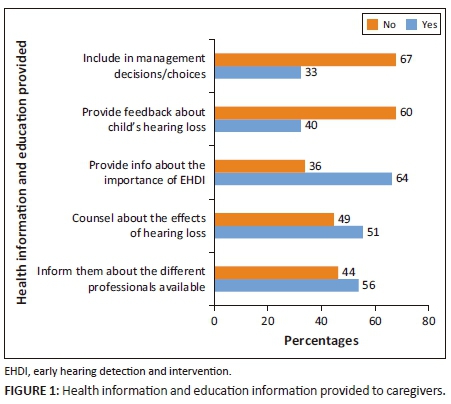
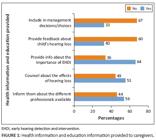
Most nurses 64% (n = 48) indicated that they provide information about the importance of EHDI to parents or caregivers, while 51% provided information about other professionals and counselling on the effects of hearing loss (Figure 1). Forty per cent (n = 30) of the nurses provided feedback to the caregivers about the child's hearing loss and a third included them in making decisions about their management options.
Screening equipment and strategies
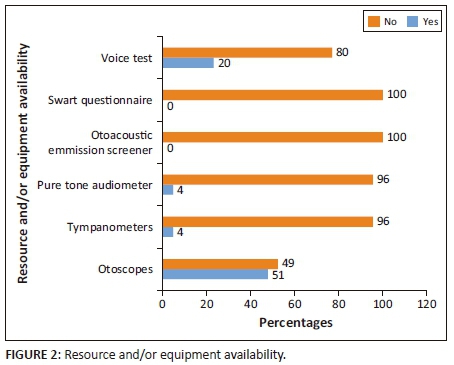
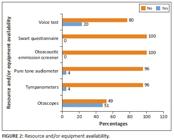
Regarding the availability of screening equipment, only 49% (n = 37) indicated that otoscopes were available in 14 clinics, with two to three being available in each clinic, one clinic reporting only having one otoscope and two clinics having none. Three participants had tympanometers and pure tone audiometers, and 20% (n = 15) had the voice test available, with none having the Swart questionnaire (Figure 2).
Regarding their use of any developmental screening charts to assess for hearing, of the 63 who answered this question, 63% (n = 47) indicated that they did use them, while only 25 participants indicated exactly what they used to screen: 92% (n = 23) used the RtHC that has a developmental screener, one participant spoke to the child and one used a general screener.
Primary health care nurses self-reported referral practices based on high-risk factors for hearing loss and views of the community pertaining to the causes of hearing loss
Self-reported referral practices based on high-risk factors for hearing loss
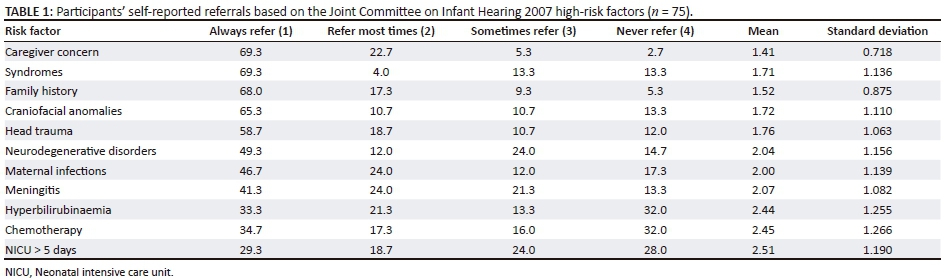
Risk factors were categorised into four groups: (1) those using the JCIH (2007)5224Tables 1 and 2 using percentages, means and standard deviations. Participants were given a four-point rating scale to respond to: (1) always refer, (2) refer most times, (3) sometimes refer and (4) never refer. The mean rating and standard deviation for each of the responses for each risk factor was calculated.
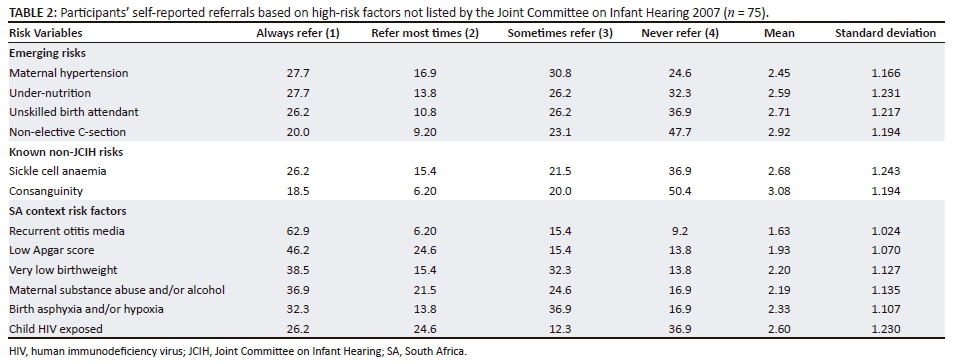
Over half of the nurses reported that they would always refer when they encountered at least five of the JCIH 2007 list of high-risk factors for hearing loss (Table 1). These included caregiver concern about speech and language development, family history of hearing loss, syndromes associated with hearing loss, craniofacial anomalies and head trauma.
There were fewer referrals made for neonatal ICU admission of more than five days, hyperbilirubinaemia requiring blood transfusion, neurodegenerative disorders, meningitis and chemotherapy. Less than a third of nurses always referred if the child displayed risk factors relevant to developing countries or known non-JCIH risk factors (Table 2). Most nurses would always refer if otitis media was evident with fever, making fewer referrals for a low Apgar score, low birthweight, birth asphyxia, maternal substance abuse and child exposed to HIV and/or AIDS (Table 2).
Views of the community pertaining to the causes of hearing loss
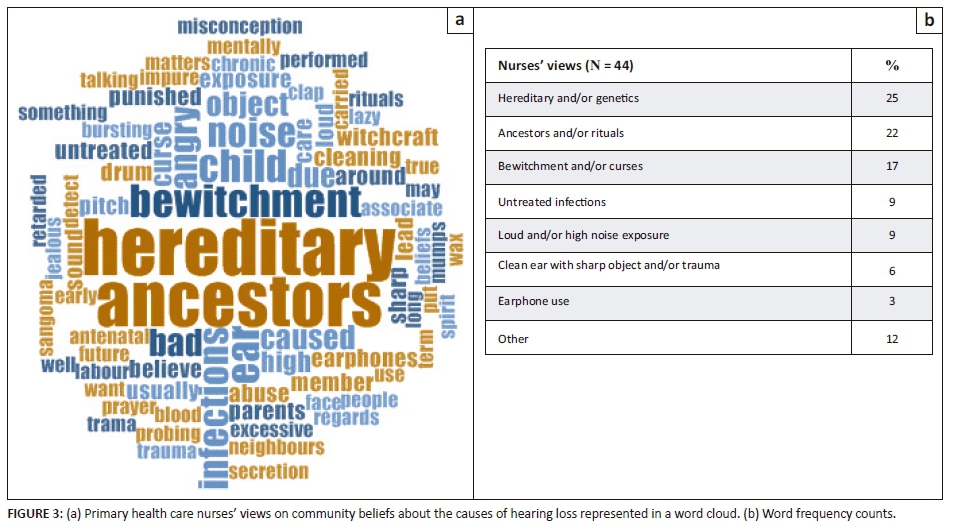
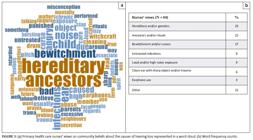
Nurses were given an open-ended question to obtain their views about the beliefs of the community pertaining to the causes of hearing loss. Of the 75 nurses, 44 answered this question, with the results being thematically analysed and depicted as a word cloud, with word frequencies (Figure 3) showing some emerging themes. The nurses felt that the communities' beliefs regarding the causes of hearing loss included genetics or hereditary (25%) (n = 11); loud noise or high noise exposure or high-pitched noise (9%) (n = 4), untreated infections (9%) (n = 4), trauma or parents hitting child on the ear or cleaning one's ear with sharp objects and/or eardrum bursting (6%) (n = 3), earphone use (3%) (n = 1 and other causes including mumps, excessive wax, mental retardation and poor antenatal care during pregnancy. Additionally, 39% (n = 17) reported some form of spiritual or supernatural causes of hearing loss, which included rituals not being followed, ancestral spirits, angry ancestors, prayers not performed, parents or family members being punished by ancestors, family did not do well with regard to ancestor matters, beliefs that ancestors want something a child may have (stated by one participant without elaboration), ancestral spirit wants the child to be a sangoma in the future, curse by ancestors and punishment by ancestors because of rituals not being carried out. They also mentioned bewitchment, curses, witchcraft, jealous neighbours, the child being bewitched and blood being impure (17%, n = 7).
Discussion
The PHC nurses had very few encounters with children with hearing loss, and the methods used to screen hearing for the condition at community level were inadequate. Similarly, in a study conducted in Nigeria,41n = 30) of nurses based at immunisation clinics reported that no formal hearing screening was conducted and that the HPCSA screening guidelines were not followed at the PHC level.1313
Over half (54%) of the nurses noted that the best time to screen or identify a possible hearing loss was every time a child attends the clinic or presents for immunisation (22%). However, this is seldom done in practice. Research shows that there are very few opportunities for infant screening in PHC clinics in SA,4240
Another South African-based study found that children who had been screened and referred did not always attend the follow-up appointments.382640
However, the authors do acknowledge that other factors also play a role, such as accessibility and affordability of services, parental cultural beliefs towards childhood deafness and other priorities that mothers and/or caregivers have to deal with. SA is characterised as a multicultural, multilingual country, making it important for professionals to provide services that are culturally and linguistically appropriate.282618262643
Based on the non-availability of equipment, it is clear that none of the clinics provided any formal screening. Similar findings were reported by Petrocchi-Bartal and Khoza-Shangase133122,31 The Swart questionnaire242244
The lack of EHDI services has been reported by many researchers, and it is often regarded as a low priority and of little importance.34262626
Every nurse is in a position to make appropriate referrals when hearing problems are detected, as well as to ensure proper record-keeping practices, and should keep a record of the management decisions and referrals made.22142231242432
The lack of importance given to early screening and identification of disability in Africa may suggest that training and experience in the area of hearing loss is limited.2664,5,45
Nurses and audiologists, as well as families and community workers, are part of the collaborative interdisciplinary team required to service the population with hearing loss and those at risk to ensure that affected children receive an appropriate quality of service.5,26 Many health care professionals are unaware of the significance of appropriate interdisciplinary referrals.424646223122
Nurses must be aware of the risk factors for hearing loss in order to facilitate EHDI at community level. The HPCSA (2007) states that even if a child passes the screening, if they exhibit risk factors for a progressive, late-onset hearing loss or other auditory pathologies that can lead to a speech and language delay, the child should be monitored, and the parents informed of the risks and provided with information on the developmental milestones. In this current study, nurses indicated that they were less likely to refer if a child was in neonatal ICU for more than 5 days and had low birthweight that was usually related to prematurity or neonatal jaundice. However, a retrospective record review of paediatric cochlea implant recipients conducted by Le Roux et al.4747
Swanepoel, Johl and Pienaar48482
Emerging risk factors from developing countries, such as Nigeria, include maternal hypertensive disorders in pregnancy, non-elective caesarean delivery, unskilled attendant at delivery and under-nutrition.24950
In developed countries, however, certain risks have been minimised or eliminated because of improved health services but are still very relevant in developing contexts, such as those related to low birthweight and birth asphyxia, making it essential for early identification procedures to be coordinated for efficient outcomes.2617
Furthermore, it is reported that 50% of children with a hearing loss have identified risk factors that present at birth or within the early years of life.5551525353,54 Nurses do receive training in the structure of the ear, otitis media, hearing problems and the effects of hearing losses on speech and language development, although its extent is unclear.46,55 However, in a study conducted in SA, nurses expressed an interest in learning more about managing hearing loss at PHC level.55
Differences in health beliefs, perceptions of illness and healing methods between the patient and the provider can be a barrier to accepting services.563957
As 8 out of 10 Black South Africans, seek services from traditional healers,5740571839183858
Implications and limitations
Research evidence supports that as the UNHS is unlikely to be attained in the near future in the SA context, other feasible options need to be developed, revisited or even redesigned to ensure that early identification happens at the PHC level. The study limitations included the small sample size, which may affect the generalisability of the findings. In addition, the beliefs of nurses regarding the causes of hearing loss may not be the same as the communities they serve, which may have introduced information bias in the study. The responses were based on nurses' self-reports of their practices and not their observed practices.
Conclusion
This study demonstrates that hearing screening and referral practices at primary health care clinics need to be strengthened. Despite the challenges relating to screening for hearing loss, PHC nurses should conduct some form of early hearing detection at community level, given that this is most accessible to most people and where mothers and/or caregivers take their infants for health care. Child health in SA is one of the key imperatives of the PHC package, and while preventative care is currently limited to immunisation against diseases and conducting growth monitoring, it should include developmental screening. In this PHC context, nurses can be given basic skills during their training by members of the multidisciplinary team to manage hearing loss at community level and thereby reduce the frequency and chronicity of ear disease and disabling deafness.
Competing interests
The authors declare that they have no financial or personal relationships that may have inappropriately influenced them in writing this article.
Authors contributions
All authors contributed equally to the write-up, editing and finalisation of the article.
Acknowledgements
The authors would like to acknowledge the participants of the study for their contributions.
References
- 1. Swanepoel DW, Hugo R, Louw B. Disabling infant hearing loss in a developing South African community: The risks. J Disabil Int Dev. 2005;2:75-82.
-
2. Olusanya BO. Marking targeted screening for infant hearing loss an effective option in less developed countries. Int J Otorhinolaryngol. 2011;75:316-321. https://doi.org/10.1016/j.ijporl.2010.12.002
» https://doi.org/10.1016/j.ijporl.2010.12.002 - 3. Hall JW, Mueller HG. Audiologists' desk reference. Vol 1, Diagnostic audiology principles, procedures and practices, New York: Delmar Cengage Learning; 1997.
- 4. Health Professions Council of South Africa. Early hearing detection and intervention programmes in South Africa. Position Statement. Pretoria, South Africa: Health Professions Council of South Africa; 2007.
-
5. Joint Committee on Infant Hearing (JCIH). Year position statement: Principles and guidelines for early hearing detection and intervention programme [homepage on the Internet]. 2007 [cited 2018 Aug 17]. Available from: http://www.ncbi.nlm.nih.gov/pubmed/17908777
» http://www.ncbi.nlm.nih.gov/pubmed/17908777 - 6. Kanji A, Opperman J. Audiological practices and findings post HPCSA position statement: Assessment of children aged 0-35 months. SAJCD. 2015;9(2).
-
7. Hopkins S, Morris P. Rapid evidence summary - Does ear health screening improve outcomes in young children? [homepage on the Internet]. Australian Indigenous HealthInfoNet; 2009. [cited 2018 Aug 17]. Available from: http://www.healthinfonet.ecu.edu.au/ear_summary
» http://www.healthinfonet.ecu.edu.au/ear_summary -
8. World Health Organization. 1998. Report on the international workshop on primary ear and hearing care, 12-14 March 1998 [homepage on the Internet]. Cape Town, South Africa. Co-sponsored by the WHO regional office for Africa based in Harare, Zimbabwe; Prevention of Blindness and Deafness, WHO, Geneva, Switzerland and The University of Cape Town. 2007. [cited 2018 Aug 17]. Available from: www.WHO.PBD/100.10
» www.WHO.PBD/100.10 - 9. Samelli AS, Rabelo CM, Vespasiano APC. Development and analysis of a low-cost screening tool to identify and classify hearing loss in children: A proposal for developing countries. Clinics. 2011;66(11):1943-1948.
-
10. Health Professions Council of South Africa (HPCSA). Statistics [homepage on the Internet]. 2012. Number of registered healthcare practitioners 31 March 2012. [cited 2013 May 02]. Available from: http://www.hpcsa.co.za/statistics.php
» http://www.hpcsa.co.za/statistics.php -
11. Statistics South Africa. 2011. Census [homepage on the Internet]. [cited 2018 Aug 17]. Available from: http://www.statssa.gov.za/census01/
» http://www.statssa.gov.za/census01/ -
12. Bridges DR, Davidson RA, Odegard PS, Maki IV, Tomkowiak J. Interprofessional collaboration: Three best practice models of interprofessional education. Med Educ Online. 2011;16:6035. https://doi.org/10.3402/meo.v160.6035
» https://doi.org/10.3402/meo.v160.6035 -
13. Petrocchi-Bartal L, Khoza-Shangase K. Infant hearing screening at primary healthcare immunisation clinics in South Africa: The current status. S Afr J Comm Disord. 2016;10(2):139-143. https://doi.org/10.7196/SAJCD.2016v10i2.1114
» https://doi.org/10.7196/SAJCD.2016v10i2.1114 -
14. Scherzer AL. Experience in Cambodia with the use of a culturally relevant developmental milestone chart for children in low and middle-income countries. J Pol Pract Intellect Disabil. 2009;6(4):287-292. https://doi.org/10.1111/j.1741-1130.2009.00234.x
» https://doi.org/10.1111/j.1741-1130.2009.00234.x -
15. Scherzer AL, Chhagan M, Kauchali S, Susser E. Global perspective on early diagnosis and intervention for children with developmental delays and disabilities. Dev Med Child Neurol. 2012;54(12):1-12. https://doi.org/10.1111/j.1469-8749.2012.04348.x
» https://doi.org/10.1111/j.1469-8749.2012.04348.x -
16. Barbosa CP, Griz SMS. Health education regarding newborn screening: An integrative review. Rev. CEFAC. 2014;16(2):643-650. https://doi.org/10.1590/1982-0216201413012
» https://doi.org/10.1590/1982-0216201413012 - 17. Aires J, Barbosa C, Farias I, Griz S, Linhares F. Newborn and infant hearing health education for nursing professionals. Braz J Otorhinolaryngol. 2013;79: 226-232.
-
18. Olusanya BO. Priorities for early detection and intervention in sub-Saharan Africa. Int J Pediatr Otorhinolaryngol. 2008;47(1):S3-SI3. https://doi.org/10.1080/14992020802287143
» https://doi.org/10.1080/14992020802287143 -
19. Orzan E, Bolzonello P, Marchi R, Ceschin F, Ciciriello E. 2016. Childhood hearing surveillance activity in Italy: Preliminary recommendations. Acta Otorhinolaryngol Ital. 2016;36:15-20. https://doi.org/10.14639/0392-100x-1073
» https://doi.org/10.14639/0392-100x-1073 -
20. Fonn S, Sartorius B, Levin J, Likibi ML. Immunisation coverage estimates by cluster sampling survey of children (aged 12-23 months) in Gauteng Province 2003. S Afr J Epidemiol Infect. 2006;21(4):164-169. https://doi.org/10.1080/10158782.2006.11441271
» https://doi.org/10.1080/10158782.2006.11441271 - 21. Fall M, Walters S, Read S, et al. An evaluation of a nurse-led ear care services in primary care: Benefits and costs. Br J Gen Pract. 1997;47:699-703.
- 22. Department of Health. The Primary Health Care Package for South Africa - A set of norms and standards. Pretoria: Department of Health; 2002.
-
23. Copley GJ, Friderichs NB. An approach to hearing loss in children. SA Fam Prac. 2010;52(1):34-39. https://doi.org/10.1080/20786204.2010.10873928
» https://doi.org/10.1080/20786204.2010.10873928 -
24. Swart JG. Hearing assessment in general practice - Cradle to grave [serial online]. Cont Med Educ J. (1996);14(5):649-665. [cited 2014 Feb 16]. Available from: http://www.ais.up.ac.za/health/blocks/block12/hearing.pdf
» http://www.ais.up.ac.za/health/blocks/block12/hearing.pdf -
25. Igumbor J, Davids A, Nieuwoudt C, Lee J, Roomaney R. Assessment of activities performed by clinical nurse practitioners and implications for staffing and patient care at primary health care level in South Africa. Curationis. 2016;39(1). https://doi.org/10.4102/curationis.v39i1.1479
» https://doi.org/10.4102/curationis.v39i1.1479 - 26. Moodley S, Storbeck C. The role of the neonatal nurse in early hearing detection and intervention in South Africa. Prof Nurs Today. 2012;16(4):26-31.
-
27. Chukuezi C, Chukuezi A. Myths and beliefs in aetiology and treatment of the ear, nose and throat diseases amongst the Igbo of Nigeria [serial online]. Int J Otorhinolaryngol. 2009 [cited 2013 Nov 17];11(2):1-6. Available from: http://ispub.com/IJORL
» http://ispub.com/IJORL - 28. Louw B, Avenant C. Culture as context for intervention: Developing a culturally congruent early intervention program. Int Pediatr. 2002;17(3):145-150.
-
29. South African Nursing Council. Scope of practice [homepage on the Internet]. 1978 [cited 2018 Aug 17]. Available from: http://www.sanc.co.za/regulat/Reg-scp.htm
» http://www.sanc.co.za/regulat/Reg-scp.htm - 30. Thandrayen K, Saloojee H. Quality of care offered to children attending primary health care clinics in Johannesburg. S Afr J Child Health. 2010;4(3):73-77.
-
31. Petrocchi-Bartal L, Khoza-Shangase K. Hearing screening procedures and protocols in use at immunisation clinics in South Africa [serial online]. S Afr J Comm Disord. 2014 [cited 2018 Aug 17];61(1). Available from: http://www.sajcd.org.za
» http://www.sajcd.org.za -
32. Joubert K, Casoojee A. Hearing-screening record-keeping practices at primary healthcare clinic in Gauteng. S Afr J Comm Disord. 2013;60(1):27-30. https://doi.org/10.4102/sajcd.v60i1.7
» https://doi.org/10.4102/sajcd.v60i1.7 -
33. Olusanya BO. Hearing impairment prevention in developing countries: Making things happen. Int J Pediatr Otorhinolaryngol. 2000;55:167-171. https://doi.org/10.1016/s0165-58760000392-x
» https://doi.org/10.1016/s0165-58760000392-x -
34. Olusanya BO. Can the world's infants with hearing loss wait? Int J Pediatr Otorhinolaryngol. 2005;69:735-738. https://doi.org/10.1016/j-ijporl.2005.03.024
» https://doi.org/10.1016/j-ijporl.2005.03.024 - 35. Leedy PD, Ormrod HE. Practical research. Planning and design. 9th ed. NJ: Pearson Education, Colorado, 2010.
-
36. National Health Act, 61, 2003, South African Government [homepage on the Internet]. [cited 2018 Aug 17]. Available from: www.doh.gov.za
» www.doh.gov.za -
37. Olusanya BO. Follow-up default in a hospital-based universal newborn hearing screening programme in a low-income country. Child Care Health Dev. 2009;35(2):190-198. https://doi.org/10.1111/j.1365-2214.2008.00923.x
» https://doi.org/10.1111/j.1365-2214.2008.00923.x -
38. Swanepoel D, Almec N. Maternal views on infant hearing loss and early intervention in a South African community. Int J Audiol. 2008;47(Suppl. 1):S44-S48. https://doi.org/10.1080/14992020802252279
» https://doi.org/10.1080/14992020802252279 -
39. Olusanya BO, Akinyemi OO. Community-based infant hearing screening in a developing country: Parental uptake of follow-up services. BMC Pub Health. 2009;9(66).:1-10 https://doi.org/10.1186/1471-2458-9-66
» https://doi.org/10.1186/1471-2458-9-66 -
40. Olusanya BO, Eletu BO, Odusote B, Somefun AO, Olude O. Early detection of infant hearing loss: Current experiences of health professionals in a developing country. Acta Paediatr. 2008;95:1300-1302. https://doi.org/10.1080/08035250600603016
» https://doi.org/10.1080/08035250600603016 - 41. Meyer ME, Swanepoel DW. New-born hearing screening in the private health sector - A national survey. SAMJ. 2011;101(9):665-667.
- 42. Swanepoel DW, Delport S, Swart JG. Universal new-born screening in South Africa: A first world dream? S Afr Med J. 2007;94(8):634-635.
-
43. Arnold CL, Davis TC, Humiston SG, et al. Infant hearing screening: Stakeholder recommendations for parent-centered communication. Pediatrics. 2006;117(3):S341-S354. https://doi.org/10.1542/peds.2005-2633N
» https://doi.org/10.1542/peds.2005-2633N -
44. Thandrayen K. The quality of child health services offered at primary health care clinics in Johannesburg. Unpublished research report. University of the Witwatersrand; 2008 [cited 2008 Jul 09]. Available from: http://hdl.handle.net/10539/5010
» http://hdl.handle.net/10539/5010 -
45. Danhauer J, Johnson CE. A case study of an emerging community based early hearing detection and intervention program: Part 1. Parents' compliance. Am J Audiol. 2006;15:25-32. https://doi.org/10.1044/1059-0889(2006/004)
» https://doi.org/10.1044/1059-0889(2006/004) - 46. Casoojee A. Neonatal hearing screening services at primary health care clinics in Gauteng. Master's thesis. Johannesburg, South Africa: University of Witwatersrand; 2012.
-
47. Le Roux T, de Wet Swanepoel, Louw A, Tshifularo M. Profound childhood hearing loss in a South Africa cohort: Risk profile, diagnosis and age of identification. Int J Pediatr Otorhinolaryngol. 2015;79:8-14. https://doi.org/10.1044/1059-0889(2006/004)
» https://doi.org/10.1044/1059-0889(2006/004) -
48. Swanepoel DW, Johl L, Pienaar D. Childhood hearing loss and risk profile in a South African population Int J Pediatr Otorhinolaryngol. 2013;77(3):394-398. https://doi.org/10.1016/j.ijporl.2012.11.034
» https://doi.org/10.1016/j.ijporl.2012.11.034 -
49. Bruder MB, Dunst CJ. Personnel preparation in recommended early intervention practices: Degree of emphasis across disciplines. Top Early Child Spec Educ. 2005;25(1):25-33. https://doi.org/10.1177/02711214050250010301
» https://doi.org/10.1177/02711214050250010301 - 50. Spiegel HML, Bonwit AM. HIV infection in children. In Batshaw ML, editor. Children with disabilities. 5th ed. Baltimore, MD: Paul H. Brookes Publishing; 2002, p. 123-139.
- 51. Finlayson M, Sheridan N, Cumming J. Nursing developments in Primary Health Care 2001-2007. Health Services Research Centre. Victoria: University of Wellington; 2009.
-
52. Tiedt NJ, Butler IRT, Hallbauer UM, et al. Paediatric chronic suppurative otitis media in the Free State Province: Clinical and audiological features. S Afr Med J. 2013;103. https://doi.org/10.7196/SAMJ.6636
» https://doi.org/10.7196/SAMJ.6636 -
53. Biagio L, Swanepoel DW, Laurent C, Lundberg T. Paediatric otitis media at a primary healthcare clinic in South Africa. S Afr Med J. 2014;104:7534. https://doi.org/10.7196/SAMJ.7534
» https://doi.org/10.7196/SAMJ.7534 -
54. Olusanya BO, Newton VE. 2007. Global burden of childhood hearing impairment and disease control priorities for developing countries. Lancet. 2007;369(9569):1314-1317. https://doi.org/10.1016/S0140-6736(07)60602-3
» https://doi.org/10.1016/S0140-6736(07)60602-3 -
55. Van der Linde J, Kritzinger A. 2013. Perceptions of rural primary health care personnel about expansion of early communication intervention. Afr J Prim Health Care Fam Med. 2013;5(1):553-564. https://doi.org/10.4102/phcfm.v5i1
» https://doi.org/10.4102/phcfm.v5i1 -
56. Scheppers E, van Dongen E, Dekker J, Geertzen J, Dekker, J. Potential barriers to the use of health services among ethnic minorities: A review. Fam Pract. 2006;23:325-348. https://doi.org/10.1093/fampra/cmi113
» https://doi.org/10.1093/fampra/cmi113 -
57. De Andrade V, Ross E. 2005. Beliefs and practices of Black South African traditional healers regarding hearing impairment. Int J Audiol. 2005;44:489-449. https://doi.org/10.1080/14992020500188999
» https://doi.org/10.1080/14992020500188999 -
58. Olusanya BO, Luxon LM, Wirz SL. 2005. Ethical issues in screening for hearing impairment in new-borns in developing countries. J Med Ethics. 2005;32:588-591. https://doi.org/10.1136/jme.2005.014720
» https://doi.org/10.1136/jme.2005.014720

Accepted: 07 Aug. 2018
Published: 10 Oct. 2018