Chronic substance use and self-harm in a primary health care setting
Abstract
BACKGROUND: Chronic substance use (CSU) is associated with health problems, including self-harm, placing a significant burden on health care resources and emergency departments (EDs). This is problematic in low- and middle-income countries like South Africa (SA), where primary care facilitates and emergency departments (EDs) are often poorly resourced AIM: To investigate the epidemiology of CSU and self-harm and to consider the implications for primary health care service delivery and suicide prevention in SA METHODS: Data were collected from 238 consecutive self-harm patients treated at the emergency department (ED) of an urban hospital in SA. The data were analysed using bivariate and multivariate analyses RESULTS: Approximately 37% of self-harm patients reported CSU. The patients in the CSU subgroup, compared to other self-harm patients, were more likely to be men (odds ratio [OR] = 8.33, 95% confidence interval [CI] = 3.19-20.9, p < 0.001), to have self-harmed by inflicting damage to their body tissue OR = 4.45, 95% CI = 1.77-11.2, p < 0.01) and to have a history of self-harm (OR = 3.71, 95% CI = 1.44-9.54, p = 0.007). A significantly smaller proportion of CSU patients, compared to other self-harm patients, were referred for psychiatric assessment (OR = 8.05, 95% CI = 4.16-15.7, p < 0.001 CONCLUSION: The findings of this study confirm that CSU is associated with greater service utilisation and repetition of self-harm among patients in primary health care settings. Treating self-harm as the presenting problem within primary care settings does not necessarily ensure that patients receive the care that they need. It might be helpful to include psychiatric assessments and screening for CSU as an integral component of care for self-harm patients who present in primary health care settings
Introduction
Chronic substance use (CSU) is understood as the recurrent and harmful use of substances over an extended period of time; this includes both substance use disorders and recurring patterns of hazardous substance use.1,2,3,4 CSU is associated with adverse health outcomes among people who visit primary health care settings.5,6 For example, CSU is associated with serious medical health issues (e.g. cardiac problems) and mental health issues (e.g. mood disturbances) that complicate treatment of acute health problems.789,10,11 CSU, especially when co-occurring with other medical or mental health issues, increases the use of high-cost health services.121314,15 No studies have explored the epidemiology of CSU and self-harm, or the implications for primary health care in SA. Knowledge of the epidemiology of CSU and self-harm in primary health care settings and emergency departments (EDs) has the potential to contribute to improved service delivery and suicide prevention in primary health care settings. It is within this context that we set out to explore the epidemiology of CSU and self-harm among patients presenting to an ED at an urban hospital in SA.
The term self-harm was defined as an intentional non-fatal self-injury or self-poisoning regardless of the level of intent to die.16,17 The term includes deliberate self-harm and suicide attempts but does not include other forms of self-injurious behaviours that are habitual (i.e. non-suicidal self-injury). The reason for using this broad definition of self-harm is that expert consensus suggests that suicide prevention should focus on the full range of self-injurious behaviours irrespective of the level of intent to die.1816,17,19
CSU has been consistently associated with self-harm, although prevalence rates seem to vary by geographic region and gender. A study 3 567 084 suicide attempt-related visits to an ED in the United States showed that 12.1% of self-harm patients met diagnostic criteria for substance-related disorders.920212223p < 0.001).24
Research in high-income countries has consistently demonstrated that CSU is a risk factor for repetition of self-harm,25N = 16 966) reported that 6 % of adolescents and 8 % of young adults engaged in repetition of self-harm within 7 days of an index incident of self-harm and that substance use disorders were significantly associated with risk of repetition (OR = 1.76, 95% CI = 1.46-2.13, p < 0.01).2626N = 81 675) showed that in addition to alcohol dependence, other factors such as symptoms of depression, lower socio-economic status (SES) and younger age predicted repetition of self-harm.25
Self-harm patients account for a significant proportion of those who present for treatment in the ED. In England, there are an estimated 200 000 admissions to EDs per year for self-harm.2728
In high-income countries, self-poisoning is consistently the most common method of self-harm among patients treated in EDs, although damage to body tissue (e.g. cutting of the body tissue or hanging) is also common.29,30 Similarly, self-poisoning (e.g. pesticide poisoning) is the leading method of self-harm in LMICs.10,31 Research has consistently shown associations between substance intoxication and method of self-harm,2
For some patients, a visit to the ED presents an opportunity not only to receive treatment or referral for the presenting problem (i.e. self-harm) but also to gain access to knowledge and resources to address the underlying predisposing and precipitating factors contributing to the presenting problem (e.g. CSU).102232333435,36
Though substance use is a growing public health problem in LMICs,37
Methods
Study design, setting and sampling
Data were collected for this cohort study from 270 consecutive self-harm patients presenting to the ED of a hospital in SA between 16 June 2014 and 29 March 2015. The hospital is a large public hospital in an urban city with a catchment area of 1.5 million people.38
Though data were collected for 270 patients, we included 238 patients in the final statistical analysis. Patients were excluded if their files were missing or if there was not sufficient information available in the patient file (17 patients), if the patient had already been included in the sample on a prior presentation to the hospital during the period of data collection (9 patients), if the patient left the hospital before their information was captured (1 patient), or where patients died as a result of their injuries (5 patients).
Measures
Data were collected from patient records that contained information recorded by doctors in the ED. The recording of these data is part of the routine clerking of all self-harm patients treated in the ED. These data were extracted from patient records with the help of an experienced psychiatric nurse. Quality checks for possible errors and missing data were performed throughout data collection. The following data were collected:
Demographic information
Patients' gender, age, race, relationship status, whether or not they had dependents, completed level of education and employment status were recorded. Socio-economic status was also recorded as low to moderate SES (0 ZAR to 76 800 ZAR) and high SES (76 801 ZAR to 2 547 601 ZAR) based on annual family income. At the time of this study, 15.72 ZAR = 1 US dollar.
Time and day of presentation at the emergency department
Time and day of admission was recorded as part of routine clerking of all patients treated in the ED.
Chronic substance use
Self-reports of a history of substance use disorder, and recurrent or habitual harmful use of alcohol or illicit drugs were recorded.1,2,3,4 There is evidence, internationally and in the South African context, to show that self-report measures of substance use are valid and reliable. Self-report of alcohol, cannabis and methamphetamine use are consistent with measures of substance use biomarkers.39,40
Clinical features of self-harm
Method(s) of self-harm, whether or not the incident was impulsive and whether or not the patient was referred for a psychiatric assessment. The level of admission was recorded as: (1) treated in ED and discharged or, (2) transferred to secondary or tertiary level care (intensive care unit [ICU], high care, medical or surgical ward, or emergency psychiatric unit).
Level of suicidal intent
The 12-item Pierce Suicidal Intent Scale (PSIS) was used to measure suicidal intent among patients.41
History of self-harm
Patients' self-report of the number of previous episodes of self-harm was recorded.
Data analysis
Data were captured, cleaned and analysed with Statistical Package for the Social Sciences' (SPSS v.19) (SPSS Inc., Chicago, IL, USA). Three quality control checks were completed before the data were analysed. Descriptive statistics were calculated to provide an overview of the data. The association between CSU and self-harm was calculated using chi-square statistics or Fisher's exact test for categorical variables. Odds ratios and 95% confidence intervals were calculated where appropriate. Between-group analysis of the continuous variables age and length of stay in the hospital were calculated using the Mann-Whitney test for non-normal distributions. Logistic regression analysis was used to determine the relationship between CSU and gender, age, SES, having dependents or not, history of self-harm, impulsive self-harm, method of self-harm, level of suicidal intent, psychiatric referral, and referral for secondary or tertiary care. Statistical significance was considered at p < 0.05.
Ethical considerations
Ethical approval to conduct the study was granted by the Health Sciences Research Ethics committee of Stellenbosch University (reference number N13/05/074) and the University of Cape Town (reference number 645/2013). We obtained institutional permission from the hospital before patient records were accessed. The information collected from each patient record was assigned a unique number and stored on a password protected computer to protect patient confidentiality.
Results
Demographic characteristics of sample
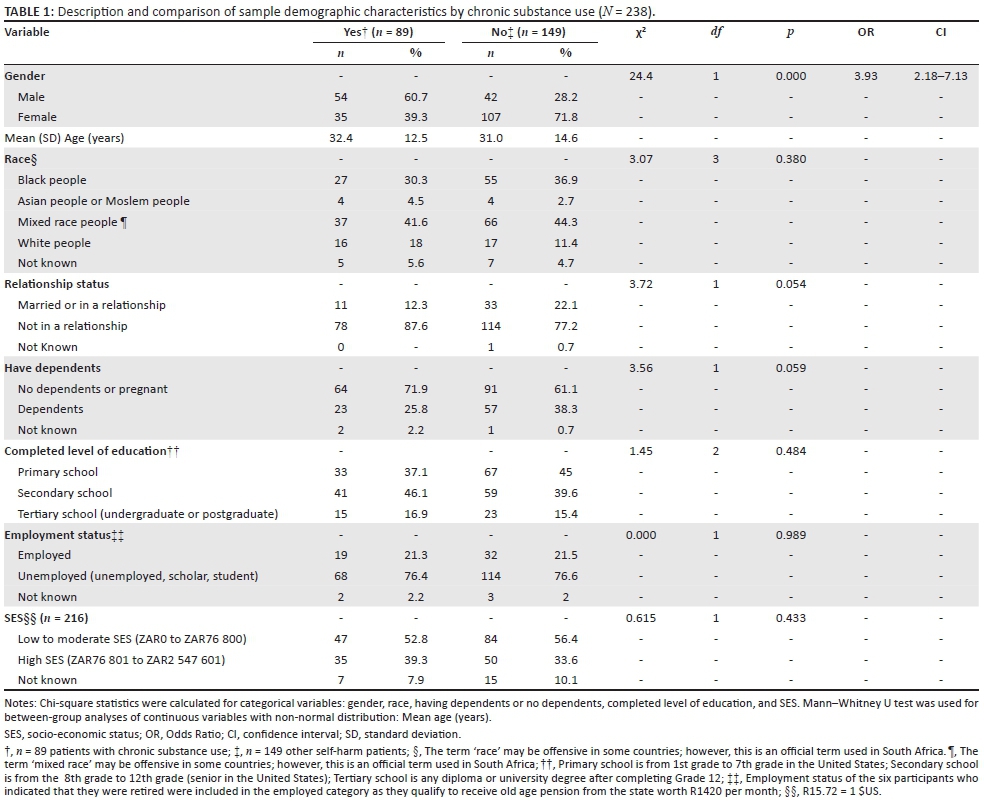
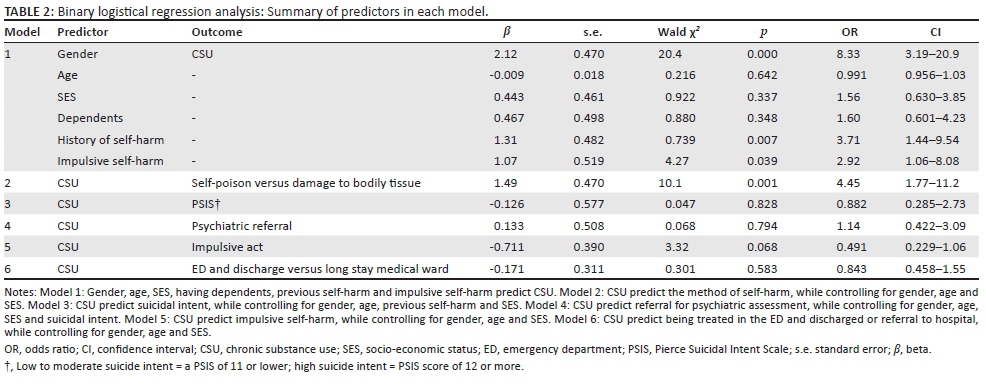
A total of 238 patients were included in this study of which 37% reported a history of CSU. Table 1 presents the sample characteristics of the CSU patients and other self-harm patients. The mean age for the subgroup of CSU patients was 32.4 (12.5 SD) years, and the age range was 13-82 years. Most of the patients in the subgroup of CSU patients were mixed race1 (41.6%), not in a relationship (87.6%), unemployed (76.4%), from a low to moderate SES (52.8%), had completed a Grade 12 school level of education (46.1%) and did not have dependents (71.9%). The subgroup of CSU patients were more likely to be men when compared to the other self-harm patients (χ2df = 1, p < 0.001, OR = 3.93, 95% CI = 2.18-7.13). In the logistic regression, men were approximately eight times more likely to report CSU when controlling for demographic variables, and impulsive self-harm or a history of self-harm (OR = 8. 8.33, 95% CI = 3.19 - 20.9, p < 0.001) (see Table 2).
Methods of self-harm
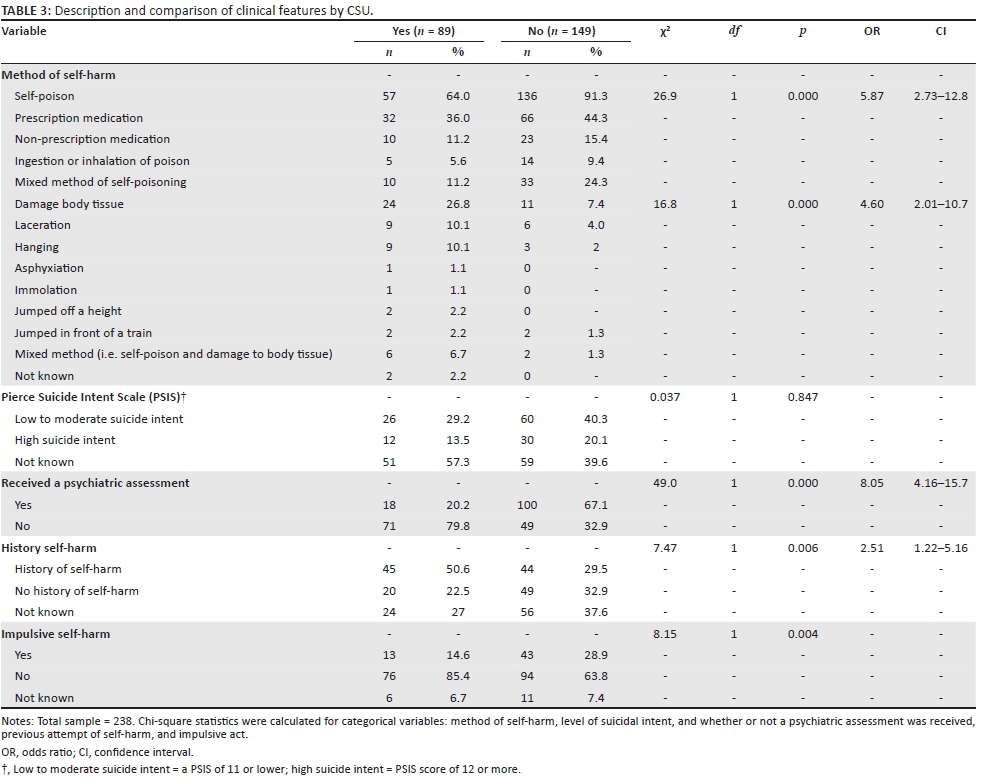
The prevalence of different methods for self-harm and the comparison between the subgroup of CSU patients and other self-harm patients is presented in Table 3. Most of the subgroup of CSU patients used self-poisoning (64%) as the method of self-harm. Among the patients who utilised self-poisoning, abuse of prescription medication (36%) was the most common method of self-harm. A significantly greater proportion of the subgroup of CSU patients, compared to other self-harm patients (26.8% vs. 7.4%, p < 0.001), utilised damage to body tissue as their method of self-harm (χ2df = 1, p < 0.001, OR = 4.60, 95% CI = 2.01-10.7). In the logistic regression analysis, the CSU self-harm patients, compared to other self-harm patients, were five times more likely to use damage to body tissue as the method of self-harm (OR = 4.45, 95% CI = 1.77-11.2, p < 0.001) (see Table 2).
Level of suicidal intent
A slightly smaller proportion of CSU patients, when compared to other self-harm patients, reported low to moderate suicidal intent (29.2% vs. 40.3%, n = 26 vs. 60, p = 0.847). Likewise, only 13.5% of CSU patients reported high suicidal intent, whereas 20.1% of other self-harm patients reported high suicidal intent (Table 3). More than half (57.3%) of the CSU patients did not receive a suicidal intent assessment, even though this is part of the routine care of self-harm patients in this setting. In the chi-square analysis, there was no significant difference in the level of suicidal intent between the subgroup of CSU patients and other self-harm patients. Likewise, in the logistic regression analysis, CSU did not predict suicidal intent (see Table 2).
Referral for psychiatric assessment
Only 20.2% of CSU self-harm patients were referred for a psychiatric assessment (see Table 3), compared to 67.1% of other self-harm patients. In the chi-square analysis, the subgroup of CSU patients were eight times less likely to receive a psychiatric assessment compared to other self-harm patients (χ2df = 1, p < 0.001, OR = 8.05, 95% CI = 4.16-15.7). In the logistic regression analysis, this association did not remain significant, when controlling for gender, age, SES and suicidal intent (see Table 2).
History of self-harm
Half (50.6%) of the CSU self-harm patients reported a history of self-harm (Table 3), compared to 29.5% of other self-harm patients (50.6% vs. 29.5%, p = 0.006). In the chi-square analysis, CSU was significantly associated with a history of self-harm (χ2df = 1, p = 0.006). Results from the logistic regression showed that patients who had a history of self-harm were approximately 4 times more likely to be in the CSU subgroup, when controlling for gender, age, SES, having dependents and impulsive self-harm (OR = 3.71, 95% CI = 1.44-9.54, p = 0.007) (see Table 2).
Impulsive self-harm
A significantly smaller proportion of CSU patients, when compared to other self-harm patients, reported that their self-harm was impulsive (14.6% vs. 28.9%, p = 0.004) (Table 3). Results from the chi-square analysis showed that an impulsive act of self-harm was significantly associated with CSU (χ2df = 2, p = 0.004). In the logistic regression analysis, this association did not remain significant when controlling for gender, age and SES (see Table 2).
Time and day of presentation to the emergency department
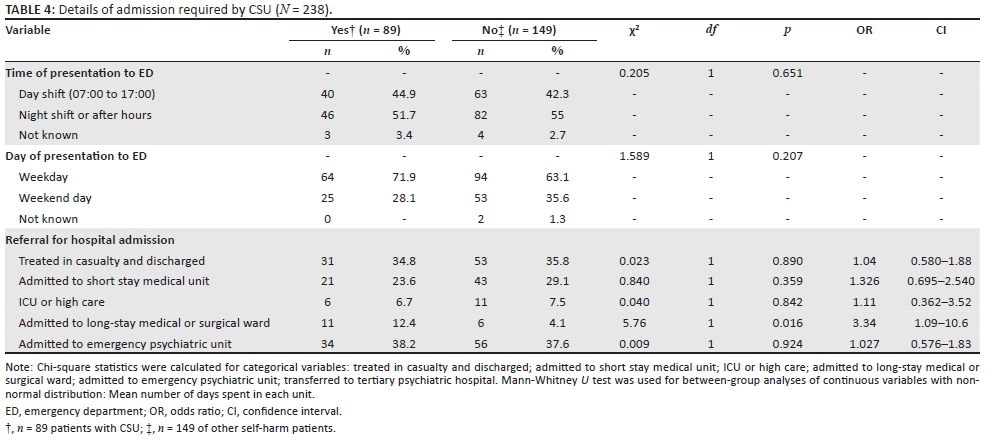
A slightly larger proportion of CSU patients, when compared to other self-harm patients, presented to the ED between 07:00 and 17:00 during the day (44.9% vs. 42.3%, p = 0.651) (Table 4). For both CSU patients and other self-harm patients, the largest proportion of patients presented to the ED after hours or during the night shift (i.e. between 17:00 and 07:00) (51.7% vs. 55%, p = 0.651). There were no significant differences between the CSU patients and other self-harm patients with regard to time of presentation to the ED.
For both the CSU patients and other self-harm patients, the greatest proportion of patients presented to the ED on a weekday (71.9% vs. 63.1%, p = 0.207). A smaller proportion of CSU patients, when compared to other self-harm patients, presented to the ED on a Saturday or Sunday (28.1% vs. 35.6%, p = 0.207).
Referral for hospital admission
Details about the number of self-harm patients referred for inpatient treatment are presented in Table 2. A slightly smaller proportion of CSU self-harm patients, compared to other self-harm patients, were treated in the ED and discharged (34.8% vs. 35.8%, p = 0.890), referred to a short-stay medical unit (23.6% vs. 29.1%, p = 0.359) and referred to Intensive Care Unit (ICU) or high care (6.7% vs. 7.5%, p = 0.842). CSU was significantly associated with a referral to a long-stay medical or surgical ward (χ2df = 1, p = 0.016, OR = 3.34 95% CI = 1.09-10.6). This finding did not remain significant in the logistic regression analysis, when controlling for gender, age, SES and suicidal intent (see Table 2).
Discussion
More than a third of the self-harm patients presenting at the ED of an urban hospital in SA reported CSU. This finding is similar to results reported in studies from high-income countries204243224412
Our findings are congruent with other studies that report self-poisoning as a leading method of self-harm.29,30,31 Despite high rates of self-poisoning as the method of self-harm among both groups, a statistically significant greater proportion of the subgroup of CSU patients used damage to body tissue as their method of self-harm. This is a noteworthy finding given that damage to body tissue (e.g. hanging or cutting of body tissue) is typically more lethal,3245
Patients with a history of self-harm were approximately four times more likely to be in the subgroup of CSU patients, when compared to other self-harm patients. There is an abundance of literature showing strong associations between CSU and repetition of self-harm.25,46,47 Furthermore, our results showed that the association between CSU and self-harm was not influenced by gender, age, SES, having dependents or not, and impulsive self-harm. However, the available literature suggests that other factors such as impulse-control disorders, personality disorders and symptoms of depression contribute to the increased risk for repetition of self-harm among people with CSU.25,26 A psychiatric assessment among CSU self-harm patients treated in primary health care settings is one potentially useful way of identifying other factors such as comorbid psychopathology that increase the risk for repetition of self-harm.
The finding that not all patients who present to the ED following self-harm receive a psychiatric assessment or referral is consistent with international practices.3031,48
Psychiatric assessment or screening to detect CSU among self-harm patients within primary health care will need to be planned carefully in SA to ensure that patients receive the care that they need without further exacerbating the burden on the already strained health care system.3449
In LMICs, people with mental health problems do not typically have access to specialised health care services and therefore frequently seek help in primary health care settings, such as EDs.50511212
Limitations
Data were collected in one ED in an urban city of SA, making it difficult to generalise the findings. Furthermore, data collection relied on self-report measures of CSU. Future studies will be strengthened by including a range of other primary health care settings and including more objective measures of substance use.
Conclusion
The findings from this study demonstrate that more than a third of the self-harm patients visiting this primary health care setting had a history of CSU. Our study also showed that a smaller proportion of CSU patients received a psychiatric assessment, despite the finding that half of the CSU patients (50.6%) reported a history of self-harm. These findings are particularly concerning in LMICs, like SA, where primary health care facilities are often poorly resourced, understaffed, overcrowded and open for limited hours.14,15 A visit to primary health care services that includes a psychiatric assessment could ensure that self-harm patients receive the care that they need, as it provides an opportunity to reinforce health behaviour patterns, to make appropriate referrals and to prevent repetition of self-harm.22,32 Despite the benefit of a psychiatric assessment in reducing self-harm, such assessments are not routinely performed before discharge from the ED.3334
Competing interests
The authors declare that they have no competing interest and that they alone are responsible for the content and writing of the article.
Authors' contributions
E.B. participated in the study design, data collection, data analysis and data interpretation, wrote the first draft of the manuscript, and critically revised subsequent drafts. J.B. participated in the conception of the study, data interpretation and critical revision of the manuscript and provided funding for the study. I.A. assisted in the interpretation of the data and critically revised the manuscript and/or tables. All authors read and approved the final manuscript.
Acknowledgements
The financial assistance from the National Research Foundation (NRF) (reference number TTK13070620647), South African Medical Research Council (SAMRC) (Career Development Grant awarded to Dr Jason Bantjes) and the NRF Innovation Doctoral Scholarship (reference number 102311) is hereby acknowledged. Opinions expressed or conclusions arrived at in this work are those of the author and should not necessarily be regarded as those of the NRF or SAMRC.
References
-
1. Bechtolds J, Simpson T, White HR, Pardini D. Chronic adolescent marijuana use as a risk factor for physical and mental health problems in young adult men. Psychol Addict Behav. 2015;29(3):552-563. https://doi.org/10.1037/adb0000103
» https://doi.org/10.1037/adb0000103 -
2. Conner KR, Bagge CL, Goldston DB, Ilgen MA. Alcohol and suicidal behavior: What is known and what can be done. Am J Prev Med. 2014;47(3):S204-S208. https://doi.org/10.1016/j.amepre.2014.06.007
» https://doi.org/10.1016/j.amepre.2014.06.007 -
3. Norström T, Rossow I. Alcohol consumption as a risk factor for suicidal behavior: A systematic review of associations at the individual and at the population level. Arch Suicide Res. 2016;20(4):489-506. https://doi.org/10.1080/13811118.2016.1158678
» https://doi.org/10.1080/13811118.2016.1158678 -
4. Papini S, Ruglass LM, Lopez-Castro T, Powers MB, Smits JA, Hien DA. Chronic cannabis use is associated with impaired fear extinction in humans. J Abnorm Psychol. 2017;126(1):117-124. https://doi.org/10.1037/abn0000224
» https://doi.org/10.1037/abn0000224 -
5. Field CA, Klimas J, Barry J, et al. Problem alcohol use among problem drug users in primary care: A qualitative study of what patients think about screening and treatment. BMC Fam Pract. 2013;14:98-108. https://doi.org/10.1186/1471-2296-14-98
» https://doi.org/10.1186/1471-2296-14-98 -
6. Mertens JR, Flisher AJ, Ward CL, et al. Medical conditions of hazardous drinkers and drug users in primary care clinics in Cape Town, South Africa. J Drug Issues. 2009;39(4):1-26. https://doi.org/10.1177/002204260903900411
» https://doi.org/10.1177/002204260903900411 -
7. Mertens JR, Weisner C, Ray GT, Fireman B, Walsh K. Hazardous drinkers and drug users in HMO primary care: Prevalence, medical conditions and costs. Alcohol Clin Exp Res. 2005;29(6):989-998. https://doi.org/10.1097/01.ALC.0000167958.68586.3D
» https://doi.org/10.1097/01.ALC.0000167958.68586.3D -
8. Ngobale KNW, Ogunbanjo GA, Omole OB. Interpersonal violence amongst primary health care patients in Lesotho: A qualitative study of the reasons for assault: Original research. Afr J Prim Health Care Fam Med. 2013;5(1):1-8. https://doi.org/10.4102/phcfm.v5i1.473
» https://doi.org/10.4102/phcfm.v5i1.473 -
9. Canner JK, Giuliano K, Selvarajah S, Hammond ER, Schneider EB. Emergency department visits for attempted suicide and self-harm in the USA: 2006-2013. Epidemiol Psychiatr Sci. 2016;25(2):94-102. https://doi.org/10.1017/s2045796016000871
» https://doi.org/10.1017/s2045796016000871 -
10. Grover S, Sarkar S, Bhalla A, Chakrabarti S, Avasthi A. Demographic, clinical and psychological characteristics of patients with self-harm behaviours attending an emergency department of a tertiary care hospital. Asian J Psychiatr. 2016;20:3-10. https://doi.org/10.1016/j.ajp.2016.01.006
» https://doi.org/10.1016/j.ajp.2016.01.006 -
11. Juhás M, Agyapong VIO. Patients assessed by the liaison psychiatric team in the emergency department of a regional hospital in Canada - General characteristics and gender differences. Int J Psychiatry Clin Pract. 2016;20(3):179-186. https://doi.org/10.3109/13651501.2016.1174275
» https://doi.org/10.3109/13651501.2016.1174275 -
12. Vythilingum B, Chiliza B. Consultation liaison psychiatry in Africa - Essential service or unaffordable luxury?: Guest editorial. Afr J Psychiatry. 2011;14(4):257. https://doi.org/10.4314/ajpsy.v14i4.1
» https://doi.org/10.4314/ajpsy.v14i4.1 - 13. Authors. Substance use and suicidal behaviour in low-income and middle-income countries: A systematic review. BMC Public Health (Currently under review). 2017.
-
14. Adeniji AA, Mash B. Patients' perceptions of the triage system in a primary healthcare facility, Cape Town, South Africa. Afr J Prim Health Care Fam Med. 2016;8(1):1-9. https://doi.org/10.4102/phcfm.v8i1.1148
» https://doi.org/10.4102/phcfm.v8i1.1148 -
15. Van Wyk P, Jenkins L. The after-hours case mix of patients attending the George Provincial Hospital Emergency Centre. S Afr Fam Pract. 2014;56(4):1-6. https://doi.org/10.1080/20786190.2014.953889
» https://doi.org/10.1080/20786190.2014.953889 -
16. Hawton K, Witt KG, Salisbury TLT. Psychosocial interventions following self-harm in adults: A systematic review and meta-analysis. Lancet Psychiatry. 2016;3(8):740-750. https://doi.org/10.1016/s2215-0366(16)30070-0
» https://doi.org/10.1016/s2215-0366(16)30070-0 -
17. WHO. Preventing suicide: A global imperative [homepage on the Internet]. Geneva: World Health Organization; 2014b. [cited 2016 May 10]. Available from: http://www.who.int/mental_health/suicide-prevention/world_report_2014/en/
» http://www.who.int/mental_health/suicide-prevention/world_report_2014/en/ - 18. O'Connor RC, Platt S, Gordon J. International handbook of suicide prevention. Research, Policy and Practice. Oxford: John Wiley & Sons; 2011; p. 2-3.
-
19. Hawton K, Hall S, Simkin S, et al. Deliberate self-harm in adolescents: A study of characteristics and trends in Oxford, 1990-2000. J Child Psychol Psychiatry. 2003;44(8):1191-1198. https://doi.org/10.1111/1469-7610.00200
» https://doi.org/10.1111/1469-7610.00200 -
20. Ness J, Hawton K, Bergen H, et al. Alcohol use and misuse, self-harm and subsequent mortality: An epidemiological and longitudinal study from the multicentre study of self-harm in England. Emerg Med J. 2015;32(10):793-799. https://doi.org/10.1136/emermed-2013-202753
» https://doi.org/10.1136/emermed-2013-202753 -
21. Gradus JL, Leatherman S, Curreri A, et al. Gender differences in substance abuse, PTSD and intentional self-harm among veterans health administration patients. Drug Alcohol Depend. 2017;171:66-69. https://doi.org/10.1016/j.drugalcdep.2016.11.012
» https://doi.org/10.1016/j.drugalcdep.2016.11.012 -
22. Bergen H, Hawton K, Waters K, Cooper J, Kapur N. Psychosocial assessment and repetition of self-harm: The significance of single and multiple repeat episode analyses. J Affect Disord. 2010;127(1-3):257-265. https://doi.org/10.1016/j.jad.2010.05.001
» https://doi.org/10.1016/j.jad.2010.05.001 -
23. Shakeri J, Farnia V, Abdoli N, Akrami MR, Arman F, Shakeri H. The risk of repetition of attempted suicide among Iranian women with psychiatric disorders as quantified by the Suicide Behaviors Questionnaire. Oman Med J. 2015;30(3):173-180. https://doi.org/10.5001/omj.2015.38
» https://doi.org/10.5001/omj.2015.38 -
24. Peltzer K, Louw J. Prevalence of suicidal behaviour and associated factors among tuberculosis patients in public primary care in South Africa. Indian J Med Res. 2013;138(2):194-200. https://doi.org/10.4314/ahs.v14i1.24
» https://doi.org/10.4314/ahs.v14i1.24 -
25. Finkelstein Y, Macdonald EM, Hollands S, et al. Canadian Drug Safety and Effectiveness Research Network (CDSERN). Repetition of intentional drug overdose: A population-based study. Clin Toxicol. 2016;54(7):585-589. https://doi.org/10.1080/15563650.2016.1177187
» https://doi.org/10.1080/15563650.2016.1177187 -
26. Hu N, Glauert RA, Li J, Taylor CL. Risk factors for repetition of a deliberate self-harm episode within seven days in adolescents and young adults: A population-level record linkage study in Western Australia. Aust N Z J Psychiatry. 2016;50(2):154-166. https://doi.org/10.1177/0004867415621391
» https://doi.org/10.1177/0004867415621391 -
27. Hawton K, Bergen H, Casey D, et al. Self-harm in England: A tale of three cities. Multicentre study of self-harm. Soc Psychiatry Psychiatr Epidemiol. 2007;42:513-521. https://doi.org/10.1007/s00127-007-0199-7
» https://doi.org/10.1007/s00127-007-0199-7 -
28. Bertolote JM, Fleischmann A, De Leo D, et al. Suicide attempts, plans, and ideation in culturally diverse sites: The WHO SUPRE-MISS community survey. Psychol Med. 2005;35(10):1457-1465. https://doi.org/10.1016/s0084-3970(08)70433-x
» https://doi.org/10.1016/s0084-3970(08)70433-x - 29. Babakhanian M, Sadeghi M, Mohamadpur E, Rezazadeh H. Deliberate self-harm among patients referring to the emergency room in Damghan, Iran. Iran J Psychiatry Behav Sci. 2014;8(4):46-51.
-
30. Grimholt TK, Bjornaas MA, Jacobsen D, Dieserud G, Ekeberg O. Treatment received, satisfaction with health care services, and psychiatric symptoms 3 months after hospitalization for self-poisoning. Ann Gen Psychiatry. 2012;11:10. https://doi.org/10.1186/1744-859X-11-10
» https://doi.org/10.1186/1744-859X-11-10 -
31. Jegaraj MKA, Mitra S, Kumar S, et al. Profile of deliberate self-harm patients presenting to Emergency Department: A retrospective study. J Fam Med Prim Care. 2016:5(1):73-76. https://doi.org/10.4103/2249-4863.184627
» https://doi.org/10.4103/2249-4863.184627 -
32. Pompili M, Serafini G, Innamorati M, et al. Suicidal behavior and alcohol abuse. Int J Environ Res Public Health. 2010;7(4):1392-1431. https://doi.org/10.3390/ijerph7041392
» https://doi.org/10.3390/ijerph7041392 -
33. Cooper J, Steeg S, Bennewith O, et al. Are hospital services for self-harm getting better? An observational study examining management, service provision and temporal trends in England. BMJ Open. 2013;3(11):e003444. https://doi.org/10.1136/bmjopen-2013-003444
» https://doi.org/10.1136/bmjopen-2013-003444 -
34. Coovadia H, Jewkes R, Barron P, Sanders D, McIntyre D. The health and health system of South Africa: Historical roots of current public health challenges. Lancet. 2009;374(9692):817-834. https://doi.org/10.1016/S0140-6736(09)60951-X
» https://doi.org/10.1016/S0140-6736(09)60951-X -
35. Bantjes J, Nel A, Louw KA, Frenkel L, Benjamin E, Lewis I. 'This place is making me more depressed': The organisation of care for suicide attempters in a South African hospital. J Health Psychol. 2016;22(11):1434-1446. https://doi.org/10.1177/1359105316628744
» https://doi.org/10.1177/1359105316628744 -
36. Petersen I. Comprehensive integrated primary mental health care: Pipedream or possibility? Soc Sci Med. 2000;51:321-334. https://doi.org/10.1016/s0277-9536(99)00456-6
» https://doi.org/10.1016/s0277-9536(99)00456-6 -
37. Baingana F, al'Absi M, Becker AE, Pringle B. Global research challenges and opportunities for mental health and substance-use disorders. Nature. 2015;527(7578):S172-S177. https://doi.org/10.1038/nature16032
» https://doi.org/10.1038/nature16032 -
38. Myer L, Smith E, Mayosi BM. Medical inpatient mortality at Groote Schuur Hospital, Cape Town, South Africa, 2002-2009. SAMJ. 2012;103(1):28-31. https://doi.org/10.7196/samj.6285
» https://doi.org/10.7196/samj.6285 -
39. Kader R, Seedat S, Koch JR, Parry CD. A preliminary investigation of the AUDIT and DUDIT in comparison to biomarkers for alcohol and drug use among HIV-infected clinic attendees in Cape Town, South Africa. Afr J Psychiatry. 2012;15(5):346-351. https://doi.org/10.4314/ajpsy.v15i5.43
» https://doi.org/10.4314/ajpsy.v15i5.43 -
40. Arfer KB, Tomlinson M, Mayekiso A, Bantjes J, van Heerden A, Rotheram-Borus MJ. Criterion validity of self-reports of alcohol, cannabis, and methamphetamine use among young men in Cape Town, South Africa. Int J Ment Health Addict. 2017;16(1):45-52. https://doi.org/10.1007/s11469-017-9769-4
» https://doi.org/10.1007/s11469-017-9769-4 -
41. Pierce DW. Suicidal intent in self-injury. Br J Psychiatry. 1977;130(4):377-385. https://doi.org/10.1192/bjp.130.4.377
» https://doi.org/10.1192/bjp.130.4.377 -
42. Osman T, Victor C, Abdulmoneim A, et al. Epidemiology of substance use among university students in Sudan. J Addict. 2016;2016:1-8. https://doi.org/10.1155/2016/2476164
» https://doi.org/10.1155/2016/2476164 -
43. Gureje O, Degenhardt L, Olley B, et al. A descriptive epidemiology of substance use and substance use disorders in Nigeria during the early 21st century. Drug Alcohol Depend. 2007;91(1):1-9. https://doi.org/10.1016/j.drugalcdep.2007.04.010
» https://doi.org/10.1016/j.drugalcdep.2007.04.010 -
44. Bilén K, Ottosson C, Castrén M, et al. Deliberate self-harm patients in the emergency department: Factors associated with repeated self-harm among 1524 patients. Emerg Med J. 2011;28(12):1019-1025. https://doi.org/10.1136/emj.2010.102616
» https://doi.org/10.1136/emj.2010.102616 -
45. Lilley R, Owens D, Horrocks J, et al. Hospital care and repetition following self-harm: Multicentre comparison of self-poisoning and self-injury. Br J Psychiatry. 2008;192(6):440-445. https://doi.org/10.1192/bjp.bp.107.043380
» https://doi.org/10.1192/bjp.bp.107.043380 -
46. Haw C, Houston K, Townsend E, Hawton K. Deliberate self-harm patients with alcohol disorders: Characteristics, treatment, and outcome. Crisis. 2001;22(3):93-101. https://doi.org/10.1027//0227-5910.22.3.93
» https://doi.org/10.1027//0227-5910.22.3.93 -
47. Townsend E, Ness J, Waters K, et al. Self-harm and life problems: Findings from the Multicentre Study of Self-harm in England. Soc Psychiatry Psychiatr Epidemiol. 2016;51(2):183-192. https://doi.org/10.1007/s00127-015-1136-9
» https://doi.org/10.1007/s00127-015-1136-9 -
48. Schlebusch L. Suicide prevention: A proposed national strategy for South Africa. Afr J Psychiatry. 2012;15(6):436-440. https://doi.org/10.4314/ajpsy.v15i6.56.
» https://doi.org/10.4314/ajpsy.v15i6.56 -
49. Hallgren KA, Ries RK, Atkins DC, Bumgardner K, Roy-Byrne P. Prediction of suicide ideation and attempt among substance-using patients in primary care. J Am Board Fam Med. 2017;30(2):150-160. https://doi.org/10.3122/jabfm.2017.02.160264
» https://doi.org/10.3122/jabfm.2017.02.160264 -
50. Nadkarni A, Hanlon C, Bhatia U, et al. The management of adult psychiatric emergencies in low-income and middle-income countries: A systematic review. Lancet Psychiatry. 2015;2(6):540-547. https://doi.org/10.1016/s2215-0366(15)00094-2
» https://doi.org/10.1016/s2215-0366(15)00094-2 -
51. Larkin GL, Beautrais AL. Emergency departments are underutilized sites for suicide prevention. Crisis. 2010;31(1):1-6. https://doi.org/10.1027/0227-5910/a000001
» https://doi.org/10.1027/0227-5910/a000001

Accepted: 13 Mar. 2018
Published: 19 June 2018