Scoping review of risk factors of and interventions for adolescent repeat pregnancies: A public health perspective
Abstract
BACKGROUND: Adolescent repeat pregnancy is of importance in public health because the birth of a second child to an adolescent mother compounds the adverse medical, educational, socio-economic and parenting outcomes. Repeat pregnancy in adolescence is not only an international phenomenon but also a local concern as it also occurs in South Africa. The prevalence of adolescent repeat pregnancy in Durban, KwaZulu-Natal, was reported as 17.6% in 2013 AIM: This review aimed to gather relevant information from national and international sources to inform practice and to provide an understanding of what is known about the risk factors of and the interventions for adolescent repeat pregnancy METHODS: A scoping review was undertaken using the Arksey and O'Malley framework. An electronic search was conducted using PubMed, Medline, Science Direct, Ebscohost, Sage and Wiley Online and Google Scholar RESULTS: The search identified 3032 citations. After a review of the full text articles, 26 articles met the inclusion criteria. Risk factors pertaining to adolescent repeat pregnancy are categorised according to individual factors, partner relationship factors, family factors, peer factors, and social and community factors. Interventions to reduce adolescent repeat pregnancy have been largely influenced by the ecological framework. Across studies, adolescent mothers who received medical, psychosocial, educational, and family planning support experienced lower rates of repeat pregnancy CONCLUSION: A single 'one-size-fits-all' intervention for adolescent repeat pregnancy prevention is unlikely as different strategies were employed by the intervention programmes in this scoping review
Introduction
Adolescent childbearing and repeat pregnancy are both public health and social problems.122345,6 In the United Kingdom, one-fifth of births to adolescents under 18 years of age are repeat pregnancies.78
Adolescent repeat pregnancy is of particular importance in public health because the birth of a second child to an adolescent mother compounds the adverse medical, educational, socio-economic and parenting outcomes.9,10 In addition, girls who have repeat adolescent pregnancies generally experience suicidal ideation, depression and anxiety.11124,10,13 In the USA, taxpayers contribute almost $7 billion towards the burden of adolescent childbearing which includes health care, criminal justice, foster care, and public social and economic assistance.13
Researchers have often referred to the topic of adolescent childbearing and rapid repeat pregnancy as a phenomenon or an enigma.7,12,14 A range of opinions have been forwarded amongst public health professionals, clinicians, social scientists, advocacy groups and the media regarding the issue of adolescent pregnancy. The current debate centres on the conceptualisation of adolescent pregnancy as a public health problem versus adolescent pregnancy as a reproductive choice and process. Adolescent pregnancy is culturally accepted in different parts of the world despite being labelled a public health problem. Some adolescent health experts have refuted the claim that adolescent pregnancy results in catastrophe for the mother and her infant.15,16 Macleod15
A study by Smith and Pell171818191920
On the basis of these arguments, the literature review was essential in facilitating a better understanding of the public health approach towards adolescent repeat pregnancy. Understanding the risk factors of and the interventions for adolescent repeat pregnancy can provide guidance to health practitioners and decision makers. This scoping review was designed with the purpose of gathering relevant information from national and international sources to inform practice and to provide an understanding of what is known about the risk factors of and the interventions for adolescent repeat pregnancy.
Defining repeat adolescent pregnancy
The literature distinguishes between adolescent repeat pregnancy and rapid adolescent repeat pregnancy. Adolescent repeat pregnancy is defined as a second pregnancy or additional pregnancies to a woman younger than 20 years of age.621,22,23,24,25,26 Rapid adolescent repeat pregnancy is defined as a second birth or pregnancy that occurs within 2 years of the previous pregnancy.24
Methods
This literature review employed a scoping review methodology based on the framework by Arksey and O'Malley27282927
The research question
The research question was generated by our public health concerns about adolescent repeat pregnancy. The scoping review was guided by the research question: 'what are the risk factors of, and the interventions for adolescent repeat pregnancy?' A key aspect of a scoping review is a broad and comprehensive research question to provide breadth of the literature.
The data sources and search strategy
The databases used to conduct the literature search were selected on the basis that the topic of adolescent repeat pregnancy encompasses social science research and public health research. The databases included PubMed, Medline, Science Direct, Ebscohost and Wiley Online. Search engines included Google and Google Scholar. The search terms included 'adolescent pregnancy' and/or 'adolescent repeat pregnancy' and/or 'adolescent parenting' and/or 'adolescent repeat pregnancy risk factors' and/or 'consequences of adolescent pregnancy' and/or 'secondary pregnancy prevention'. The snowballing technique was applied by identifying references in the scrutinised review articles to obtain detailed and relevant information. Searching involved published literature from 1990 to 2016.
Study selection
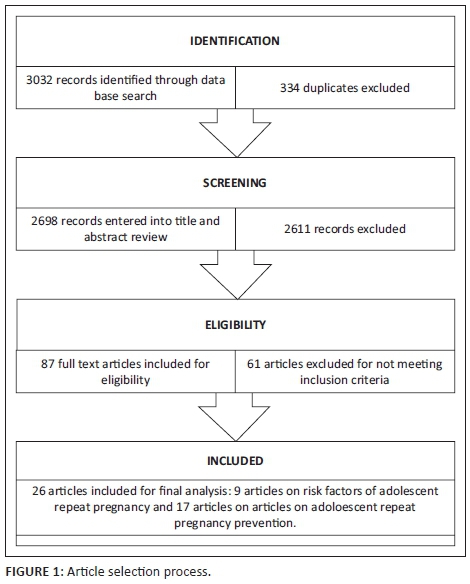
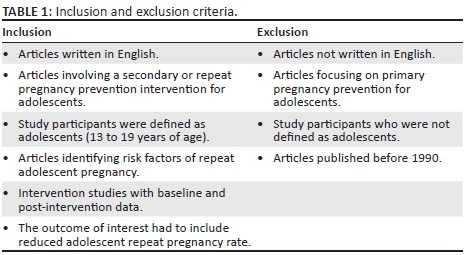
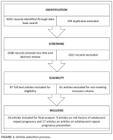
When the relevant literature was identified, the inclusion and exclusion criteria were established (Table 1). The papers that were included for this scoping study comprised published peer review studies, review articles and opinion articles. Figure 1; depicts the scoping process which includes the number of publications retrieved and selected from the database search.
Charting the data
An electronic data spreadsheet was developed. Data were extracted according to the following details: author information, title, journal, year of publication, identified risk factors, study design, study setting, participants, intervention and the related health outcome.
Ethical Considerations
This literature review was part of a larger doctoral study that had been approved by the University of KwaZulu-Natal Bioethics Research Committee (ref no: BFC553/16) and the KwaZulu-Natal Department of Health (ref no. KZ_2016RP26_545).
Results
Description of studies
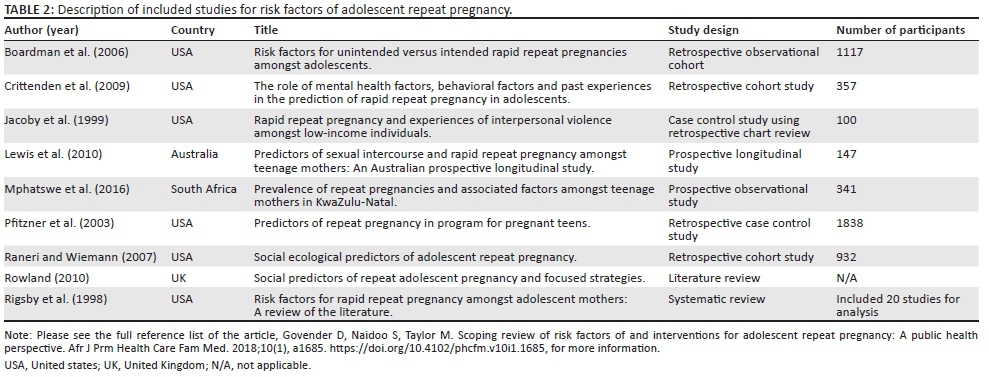
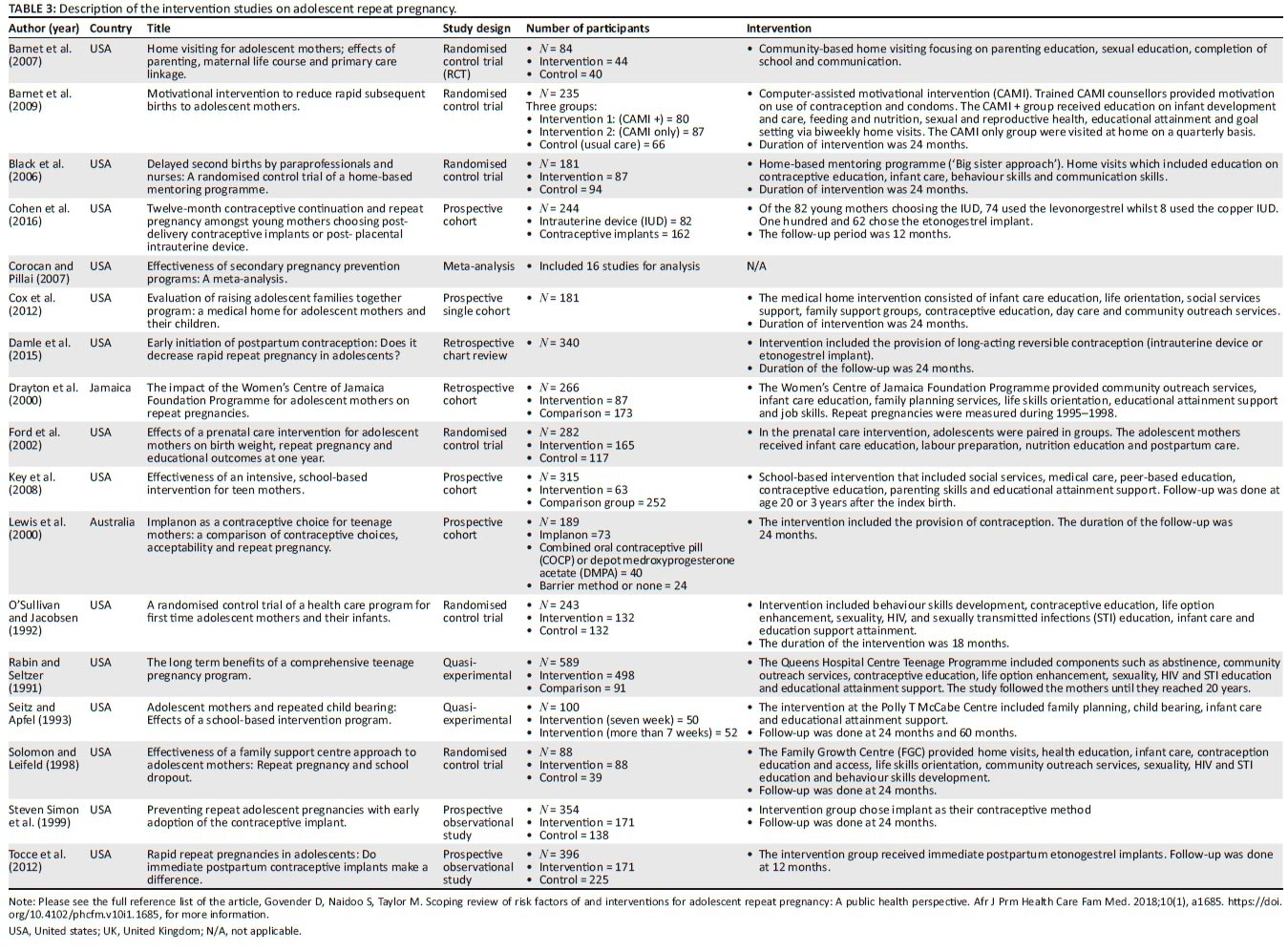
The online searches yielded 3032 relevant citations of which 2698 were eligible for title and abstract review. Of these, a total of 87 articles were retrieved for full text screening. After review of the full text articles, 26 articles met the inclusion criteria (illustrated in Figure 1). The articles were summarised into themes of risk factors and of interventions for adolescent repeat pregnancy. Nine of the 26 articles addressed the risk factors of adolescent repeat pregnancy. The majority of the studies (67%) addressing the risk factors of adolescent repeat pregnancy were from the USA. The description of included studies for the risk factors of adolescent repeat pregnancy is presented in Table 2. Seventeen articles in this scoping review addressed interventions on adolescent repeat pregnancy. Details of these 17 articles included for the analysis and discussion of the interventions on adolescent repeat pregnancy are presented in Table 3.
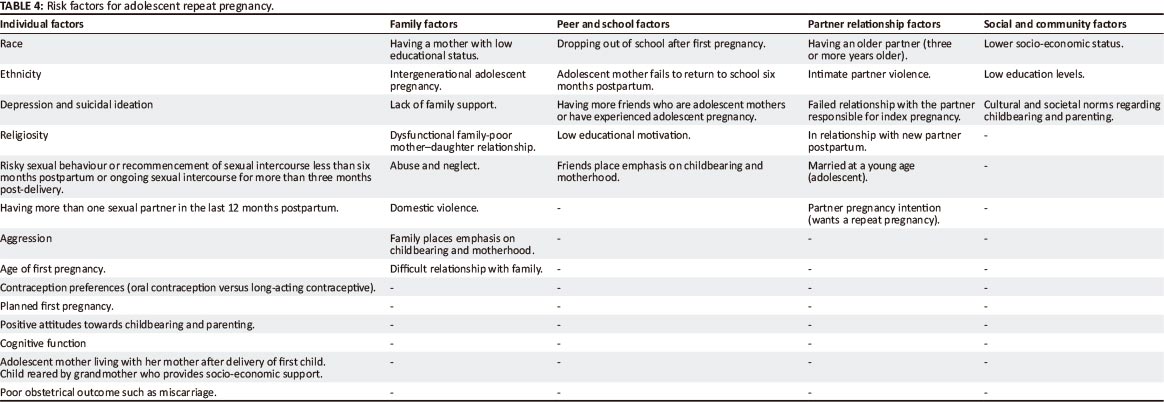
The individual factors relating to adolescent repeat pregnancy include race, ethnicity, age of first pregnancy, int. ended first pregnancy and attitudes towards early childbearing10,30,31 In addition, cognitive functioning and a history of depression have been linked to adolescent repeat pregnancies.142230,31 Family factors that are related to subsequent adolescent repeat pregnancies include dysfunctional mother-daughter relationships, having mothers with low educational levels, intergenerational adolescent pregnancy, and lack of family support.30,31
Equally important, an adolescent mother who lives with her mother after the birth of her first child and relies on her mother for financial and social support is more likely to experience a repeat adolescent pregnancy.30,31 Peer factors in particular, such as association with friends who are adolescent parents, postpartum school enrolment and low educational ambition, have been linked with adolescent repeat pregnancy.30,32 The social and community factors associated with adolescent repeat pregnancy include low socio-economic status, low educational status, and society norms that accept adolescent childbearing.30,31,32
These ecological factors have been tested in studies conducted by Lewis et al.,22232423p < 0.00001; odds ratio 22.6). Similarly, Raneri and Wiemann2422p < 0.001), (2) recommencement of sexual intercourse before 6 weeks postpartum (p < 0.005), (3) oral contraceptive use (p < 0.005) and (4) ongoing sexual intercourse > 3 months (p < 0.005).
Raneri and Wiemann et al.24
In the South African context, Mphatswe et al.8
According to Raneri and Wiemann2426p < 0.0001) than for other adolescent mothers using alternative methods of contraception (46%). Lewis et al.22
Interventions to prevent adolescent repeat pregnancy
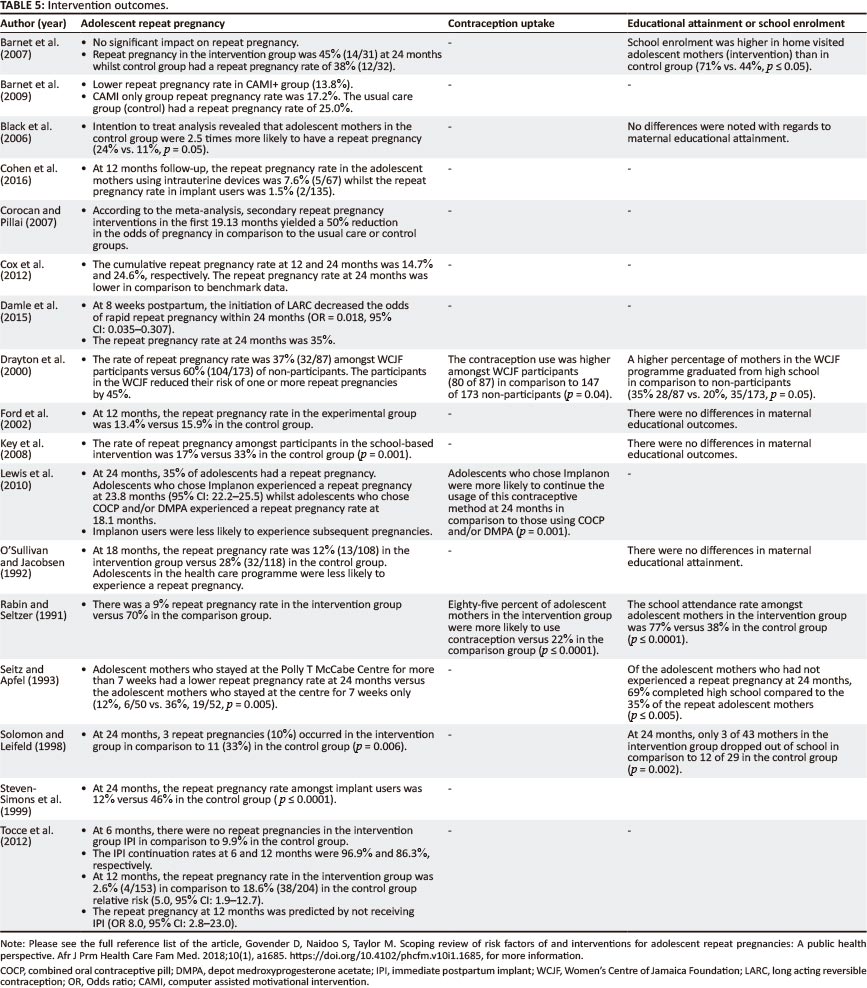
Interventions to reduce adolescent repeat pregnancy have been largely influenced by the ecological framework of individual, partner, familial, peer, and community factors (Table 5). First time adolescent mothers who attended the Queens Hospital community-based programme in the USA, which provided medical, psychosocial, educational and family planning support through a multidisciplinary team (i.e. a team including a gynaecologist, paediatrician, social worker and health educator), had a lower repeat pregnancy rate (9%) than the control group (70%).33
Similarly, O'Sullivan and Jacobsen34
A study carried out by Cox et al.21219
Numerous studies have focused on specific community-based health care centres for adolescent mothers with emphasis on secondary pregnancy prevention. For example, Solomon and Liefeld2535
By employing the ecological framework and social cognitive theory (SCT), Ford et al.36
Some authors argue that school-based programmes for adolescent mothers are also effective in reducing repeat pregnancies.37,38 For example, in a South Carolina high school, a school-based programme that provided comprehensive care found that the repeat pregnancy rate was 17% in the treatment group in comparison to 29% in the control group at 3 years after the previous birth.37p = 0.005).3839
Apart from community and school-based interventions, home nurse visiting and motivational interviewing (MI) have also proven to be effective in delaying and reducing repeat pregnancies amongst adolescent mothers.37,40,41 The effects of a home-based mentoring programme on repeat pregnancy prevention for first time adolescent mothers was evaluated by Black et al.41
According to Lewis et al.,224,22,26,43,44 Some of the findings that were most compelling arose from a study by Tocce et al.,3n = 4/153; relative risk = 5.5; 95%; CI: 1.9 - 12.7) with immediate postpartum etonogestrel implant insertion experienced a repeat pregnancy at 12 months versus 18.6% (38/204) of the control participants. A retrospective study in the USA in the Medstar Washington Hospital by Damle et al.4344
Discussion
Adolescent repeat pregnancy has been studied extensively in other countries but in the African continent, studies on this phenomenon are scarce. With regard to the risk factors for adolescent repeat pregnancy, the ecological framework best explains this phenomenon. The results obtained by Mphatswe et al.8
The vast majority of interventions in this scoping review recruited participants from clinics, hospitals and community centres. In this regard, adolescent mothers not seeking health care would have been excluded. The findings of this scoping review illustrate the need for adolescent repeat pregnancy interventions to shift from individuals to the wider social and community context that influences adolescent sexual and reproductive health.
The FGC intervention by Solomon and Leifeld2524
Interventions by Tocce et al.,4222645,46 This implies that, though most married adolescents do not want a pregnancy, their contraceptive use is lower than that of sexually active unmarried adolescents.45
In a nutshell, there is an unmet need for contraception amongst adolescents in general. For example, a study in Nigeria by Ahanonu474648
A 'single one-size-fits-all' intervention for adolescent repeat pregnancy prevention is unlikely as different strategies were employed by the intervention programmes in this scoping review. In short, health care services need to be tailored to the needs of pregnant and parenting adolescents. Interventions can be implemented at various sites, including clinics, schools and community centres.
Study limitations
For practical reasons, only articles written in English were considered for this scoping review. The authors acknowledge that important published research may have been omitted using the method outlined in the search methodology. Rather, the review was designed to further illuminate the phenomenon of adolescent repeat pregnancy and to provide an understanding of what is known about the risk factors of and the interventions for adolescent repeat pregnancy.
Conclusion and recommendations
Health services, health care workers and health information are essential building blocks of the public health system. According to the World Health Organization (WHO),49
To address the shortage of literature on adolescent repeat pregnancy in South Africa, future research needs to focus on this phenomenon and the strengthening of comprehensive health care services for adolescent mothers. Recommended for inclusion in future interventions, the Pinzon and Jones505146
The research reported in this publication was supported by the Fogarty International Center (FIC), NIH Common Fund, Office of Strategic Coordination, Office of the Director (OD/OSC/CF/NIH), Office of AIDS Research, Office of the Director (OAR/NIH), National Institute of Mental Health (NIMH/NIH) of the National Institutes of Health under Award Number D43TW010131. The content is solely the responsibility of the authors and does not necessarily represent the official views of the National Institutes of Health.
Competing interest
The authors declare that they have no financial or personal relationships that may have inappropriately influenced them in writing this article.
Authors' contributions
D.G. searched the databases, reviewed the literature and wrote the article. S.N. and M.T. assisted in the design of the article and also reviewed and edited the article.
Acknowledgements
We would like to express our gratitude to Prof. Verusia Chetty and Dr Saul Cobbing for their comments that greatly improved the manuscript.
References
-
1. Cook MCS, Cameron ST. Social issues of teenage pregnancy. Obstet Gynaecol Reprod Med. 2015;25(9):243-248. https://doi.org/10.1016/j.ogrm.2015.06.001
» https://doi.org/10.1016/j.ogrm.2015.06.001 - 2. Darroch J, Woog V, Bankole A, Ashford LS. Adding it up: Costs and benefits of meeting the contraceptive needs of adolescents. New York: Guttmacher Institute, WHO; 2016.
- 3. World Health Organization. Global health estimates 2015: Deaths by cause, age, sex, by country and by region, 2000-2015. Geneva: WHO; 2016
-
4. Tocce KM, Sheeder JL, Teal SB. Rapid repeat pregnancy in adolescents: Do immediate postpartum contraceptive implants make a difference? Am J Obstet Gynaecol. 2012;206(481):e1-e7. https://doi.org/10.1016/j.ajog.2012.04.015
» https://doi.org/10.1016/j.ajog.2012.04.015 -
5. Maravilla JC, Betts KS, Abajobir AA, Cruz CC, Alati R. The role of community health workers in preventing adolescent repeat pregnancies. J Adolesc Health. 2016;59(4):378-390. https://doi.org/10.1016/j.jadohealth.2016.05.011
» https://doi.org/10.1016/j.jadohealth.2016.05.011 - 6. Best Start Resource Centre. Subsequent teen pregnancies: Exploring the issues, impact and effectiveness of prevention strategies. [homepage on the Internet]. 2009 [cited 2016 Nov 22]. Available from: http://www.beststart.org/resources/…/subsequent_teen_pregnancies
-
7. Whitaker R, Hendry M, Booth A, et al. Intervention Now To Eliminate Repeat Unintended Pregnancy in Teenagers (INTERUPT): A systematic review of intervention effectiveness and cost-effectiveness qualitative and realist synthesis of implementation factors and user engagement. Br Med J Open. 2014;4(4):e004733. https://doi.org/10.1136/bmjopen-2013-004733
» https://doi.org/10.1136/bmjopen-2013-004733 -
8. Mphatswe W, Maise H, Sebitloane M. Prevalence of repeat pregnancies and associated factors among teenage mothers in KwaZulu Natal. Int J Gynecol Obstet. 2016;133:152-155. https://doi.org/10.1016/j.ijgo.2015.09.028
» https://doi.org/10.1016/j.ijgo.2015.09.028 -
9. Barnet B, Liu J, DeVoe M, Alperovitz-Bichell K, Duggan AK. Home visiting for adolescent mothers: Effects on parenting, maternal life course, and primary care linkage. Ann Fam Med. 2007;5(3):224-232. https://doi.org/10.1370/afm.629
» https://doi.org/10.1370/afm.629 - 10. Boardman L, Allsworth J, Phipps M, Lapane K. Risk factors for unintended versus intended rapid repeat pregnancies among adolescents. J Adolesc Health. 2006;36:597e1-8.
- 11. Dillon ME. Adolescent pregnancy in mental health. In: Dillon ME, Cherry AL, editors. International handbook of adolescent pregnancy: Medical, psychosocial and public health responses. New York: Springer, 2014; p. 79-102.
-
12. Conroy KN, Engelhart MHS, Martins Y, et al. The enigma of rapid repeat pregnancy: A qualitative study of teen mothers. J Pediatr Adolesc Gynecol. 2016:312-317. https://doi.org/10.1016/j.jpag.2015.12.003
» https://doi.org/10.1016/j.jpag.2015.12.003 -
13. The Schuyler Centre for Analysis and Advocacy. Teenage births: Outcomes for young parents and their children. [homepage on the Internet]. 2008 [cited 2016 Dec 15]. Available from: http://www.scanny.org/…/teen_pregnancy
» http://www.scanny.org//teen_pregnancy -
14. Pfitzner MA, Hoff C, McElligott K. Predictors of Repeat pregnancy in a program for pregnant teens. J Pediatr Adolesc Gynecol. 2003;16:77-81. https://doi.org/10.1016/S1083-3188(03)00011-1
» https://doi.org/10.1016/S1083-3188(03)00011-1 - 15. Macleod C. 'Adolescence', pregnancy and abortion: Constructing a threat of degeneration. London: Routledge, 2011; xi-168 p.
- 16. Seamark CJ, Lings P. Positive experiences of teenage motherhood: A qualitative study. Br J Gen Pract. 2004;54(508):813-818.
-
17. Smith GCS, Pell JP. Teenage pregnancy and risk of adverse perinatal outcomes associated with first and second births: Population-based cohort study. Br Med J. 2001;323:1-5. https://doi.org/10.1136/bmj.323.7311.476
» https://doi.org/10.1136/bmj.323.7311.476 -
18. Lawlor DA, M S. Too much too young? Teenage pregnancy is not a public health problem. Int J Epidemiol. 2002;31(3):552-553. https://doi.org/10.1093/ije/31.3.552
» https://doi.org/10.1093/ije/31.3.552 -
19. Scally G. Too much too young? Teenage pregnancy is a public health, not a clinical problem. Int J Epidemiol. 2002;31(3):554-555. https://doi.org/10.1093/ije/31.3.554
» https://doi.org/10.1093/ije/31.3.554 -
20. Rich-Edwards J. Teenage pregnancy is not a public health crisis in the United States. It is time we made it one. Int J Epidemiol. 2002;31(3):555-556. https://doi.org/10.1093/ije/31.3.555
» https://doi.org/10.1093/ije/31.3.555 -
21. Cox JE, Burman MP, Woods ER, Famakinwa O, Harris SK. Evaluation of raising adolescent families' together program: A medical home for adolescent mothers and their children. Am J Pub Health. 2012;102(10):1879-1885. https://doi.org/10.2105/AJPH.2012.300766
» https://doi.org/10.2105/AJPH.2012.300766 - 22. Lewis LN, Doherty DA, Hickey M, Skinner SR. Predictors of sexual intercourse and rapid repeat pregnancy among teenage mothers: An Australian prospective longitudinal study. Med J Aust. 2010;193(6):338-342.
-
23. Jacoby M, Gorenflo D, Black E, Wunderlich C, Eyler E. Rapid repeat pregnancy and experiences of interpersonal violence among low income individuals. Am J Prev Med. 1999;16(4):318-321. https://doi.org/10.1016/S0749-3797(99)00029-X
» https://doi.org/10.1016/S0749-3797(99)00029-X -
24. Raneri LG, Wiemann M. Social ecological predictors of repeat adolescent pregnancy. Perspect Sex Reprod Health. 2007;39(1):39-47. https://doi.org/10.1363/3903907
» https://doi.org/10.1363/3903907 -
25. Solomon R, Leifeld CP. Effectiveness of a family support centre approach to adolescent mothers: Repeat pregnancy and school dropout. Fam Relat. 1998;47(2):139-144. https://doi.org/10.2307/585617
» https://doi.org/10.2307/585617 -
26. Steven-Simons C, Kelly S, Singer D. Preventing repeat adolescent pregnancies with early adoption of the contraceptive implant. Fam Plann Perspect. 1999;31(2):88-93. https://doi.org/10.2307/2991646
» https://doi.org/10.2307/2991646 -
27. Arksey H, O'Malley. Scoping studies: Towards a methodological framework. Int J Soc Res Methodol. 2005;8(1):19-32. https://doi.org/10.1080/1364557032000119616
» https://doi.org/10.1080/1364557032000119616 -
28. Levac D, Colquhoun H, O'Brien KK. Scoping studies: Advancing the methodology. Implement Sci. 2010;5:69. https://doi.org/10.1186/1748-5908-5-69
» https://doi.org/10.1186/1748-5908-5-69 -
29. Davis K, Drey N, Gould D. A review of nursing literature. Int J Nurs Stud. 2009;46(10):1386-1400. https://doi.org/10.1016/j.ijnurstu.2009.02.010
» https://doi.org/10.1016/j.ijnurstu.2009.02.010 -
30. Rowland S. Social predictors of repeat adolescent pregnancy and focused strategies. Best Pract Res Clin Obstet Gynecol. 2010;24(5):605-616. https://doi.org/10.1016/j.bpobgyn.2010.02.016
» https://doi.org/10.1016/j.bpobgyn.2010.02.016 -
31. Rigsby DC, Macones GA, Driscoll DA. Risk factors for rapid repeat pregnancy among adolescent Mothers: A review of the literature. J Pediatr Adolesc Gynecol. 1998;11:115-126. https://doi.org/10.1016/S1083-3188(98)70130-5
» https://doi.org/10.1016/S1083-3188(98)70130-5 -
32. Rosenguard C. Confronting the intendedness of adolescent rapid repeat pregnancy. J Adolesc Health. 2009;44:5-6. https://doi.org/10.1016/j.jadohealth.2008.10.132
» https://doi.org/10.1016/j.jadohealth.2008.10.132 - 33. Rabin JM, Seltzer V, Ventura S. A randomised trial of a health care program for first time adolescent mothers and their infants. Clin Paediatr. 1991:301-305.
- 34. O'Sullivan AL, Jacobsen BS. A randomised trial of a health care program for first time adolescent mothers. Nurs Res. 1992;41(4):210-215.
- 35. Drayton VL, Montgomery SB, Modeste NN, Frye-Anderson BA, McNeil P. The impact of the Women's Centre of Jamaica Foundation Programme for adolescent mothers on repeat pregnancies. West Indian Med J. 2000;49(4):316-326.
-
36. Ford K, Weglicki L, Kershaw T, Schram C, Hoyer PJ, Jacobson Ml. Effects of a prenatal care intervention on adolescent mothers on birth weight, repeat pregnancy, and educational outcomes at one year postpartum. J Perinat Educ. 2002;11(1):35-38. https://doi.org/10.1624/105812402X88588
» https://doi.org/10.1624/105812402X88588 -
37. Seitz V, Apfel NH. Adolescent mothers and repeated childbearing: Effects of a school-based intervention program. Am J Orthopyschiatry. 1993;63(4):572-581. https://doi.org/10.1037/h0079483
» https://doi.org/10.1037/h0079483 -
38. Key JD, Gebregziabher MG, Marsh LD, O'Rourke KM. Effectiveness of an intensive, school-based intervention for teen mothers. J Adolesc Health. 2008;42:394-400. https://doi.org/10.1016/j.jadohealth.2007.09.027
» https://doi.org/10.1016/j.jadohealth.2007.09.027 -
39. Corocan J, Pillai VK. Effectiveness of secondary prevention programs: A metanalysis. Res Soc Work Pract. 2007;17(5):5-17. https://doi.org/10.1177/1049731506291583
» https://doi.org/10.1177/1049731506291583 - 40. Olds DL, Robinson JA, O'Brien R, et al. Home visiting by paraprofessionals and by nurses: A randomised control trial. Am Acad Paediatr. 2002;110(3):486-496.
-
41. Black MM, Bentley ME, Papas MA, et al. Delayed second births among adolescent t mothers: A randomised, controlled trial of a home-based mentoring programme. Paediatrics. 2006;118:1087-1099. https://doi.org/10.1542/peds.2005-2318
» https://doi.org/10.1542/peds.2005-2318 -
42. Barnet B, Luiu J, DeVoe M, Duggan AK, Gold MA, Pecukonis E. Motivational intervention to reduce rapid subsequent births to adolescent mothers: A community based randomised trial. Ann Fam Med. 2009;7(5):436-445. https://doi.org/10.1370/afm.1014
» https://doi.org/10.1370/afm.1014 -
43. Damle LF, Gohari AC, McEvoy AK, Desale SY, Gomez-Lobo V. Early initiation of postpartum contraception: Does it decrease rapid repeat pregnancy in adolescents? J Pediatr Adolesc Gynecol. 2015;28:57-62. https://doi.org/10.1016/j.jpag.2014.04.005
» https://doi.org/10.1016/j.jpag.2014.04.005 -
44. Cohen R, Sheeder J, Arango N, Teal SB, Tocce K. Twelve-month contraceptive continuation and repeat pregnancy among young mothers choosing post-delivery contraceptive implants or postplacental intrauterine devices. Contraception. 2015;93:178-183. https://doi.org/10.1016/j.contraception.2015.10.001
» https://doi.org/10.1016/j.contraception.2015.10.001 -
45. Rivera R. Contraception in adolescence [homepage on the Internet]. Geneva: World Health Organization; 2004 [cited 2016 Nov 22]. Available from: http://www.who.int/iris/handle/10665/42901
» http://www.who.int/iris/handle/10665/42901 -
46. Morris JL, Rushwan H. Adolescent sexual and reproductive health: Global challenges. Int J Gynecol Obstetr. 2015;131(1):S40-S42. https://doi.org/10.1016/j.ijgo.2015.02.006
» https://doi.org/10.1016/j.ijgo.2015.02.006 - 47. Ahanonu EL. Attitudes of healthcare providers towards providing contraceptives for unmarried adolescents in Ibadan, Nigeria. J Fam Reprod Health. 2013;8(1):33-40.
-
48. Ehlers VJ. Adolescent mothers' utilisation of contraceptive services in South Africa. Int Nurs Rev. 2003;50:229-241. https://doi.org/10.1046/j.1466-7657.2003.00187.x
» https://doi.org/10.1046/j.1466-7657.2003.00187.x -
49. World Health Organization. Strengthening health systems to improve health outcomes [homepage on the Internet]. Geneva: Switzerland; 2007 [cited 2016 Dec 15]. Available from: www.who.int/healthsystems/…/index5.ht
» www.who.int/healthsystems//index5.ht -
50. Pinzon JL, Jones VF. Care of adolescent parents and their children. Pediatrics. 2012;130(6):1743-1756. https://doi.org/10.1542/peds.2012-2879
» https://doi.org/10.1542/peds.2012-2879 -
51. Porter LS, Holness NA. Breaking the repeat pregnancy cycle. Nurs Women Health. 2011;15(5):368-381. https://doi.org/10.1111/j.1751-486X.2011.01661.x
» https://doi.org/10.1111/j.1751-486X.2011.01661.x

Accepted: 19 May 2018
Published: 19 June 2018