The execution rate of procedures to diagnose extrapulmonary tuberculosis in Botswana
Abstract
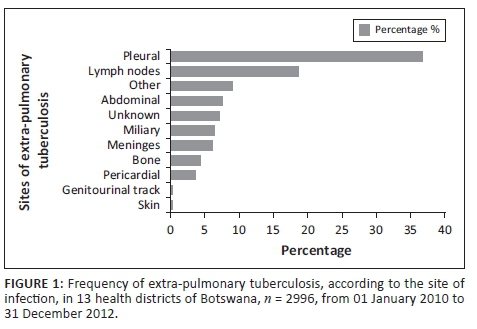
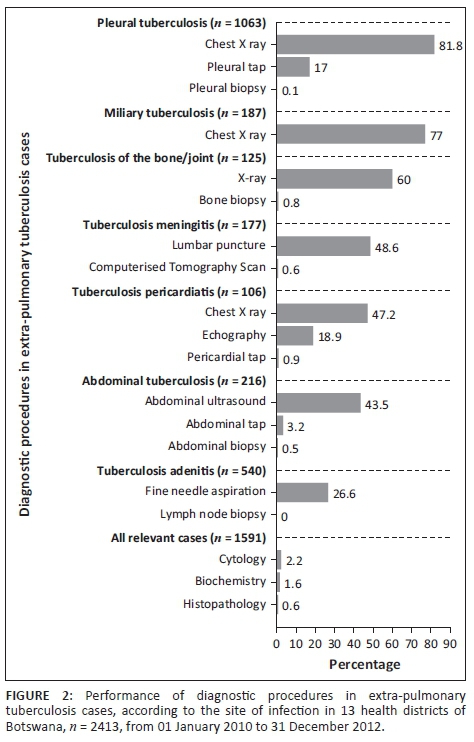
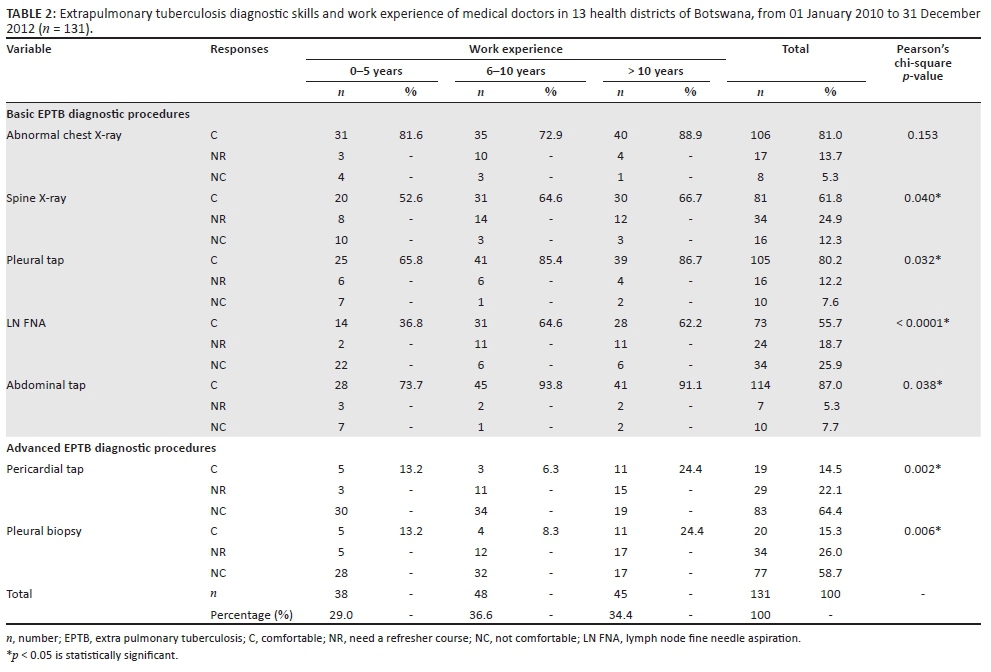
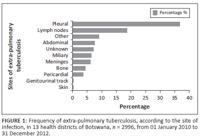
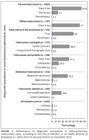
BACKGROUND: Extra-pulmonary tuberculosis (EPTB) accounts for about 20% of TB cases worldwide. Its diagnosis is challenging. AIM: This study meant to assess the prevalence of EPTB types, procedures to diagnose EPTB and medical officers' (MOs) views on procedures performed in the diagnosis of EPTB over a 2-year period in Botswana SETTING: The study was conducted in 13 urban and rural facilities of 29 health districts in Botswana. METHODS: This was a cross-sectional study that reviewed patients' TB data and administered a questionnaire to MOs. RESULTS: About 2 in 10 TB (n = 2996, 22.7%) cases were classified as EPTB. The most common site of EPTB was pleural (n = 1066, 36.7%) followed by lymph node (LN) (n = 546, 18.8%). A pleural tap was performed in 182 (17.0%) cases of pleural TB and a fine needle aspiration (FNA) in one-third (n = 160, 29.6%) of LN TB cases. There were statistical differences in work experience amongst MOs' responses regarding their self-reported confidence to undertake basic procedures to diagnose EPTB such as pleural tap (p = 0.032) or FNA (p < 0.0001. CONCLUSION: This study reviewed and evaluated the proportion of EPTB and inquired about MO's experience in managing EPTB. Despite MOs' attendance at Botswana National Tuberculosis Programme (BNTP) TB case management (TBCM) training, the emphasis by the BNTP guidelines and availability of logistics, the execution rate of procedures to diagnose EPTB was still low in Botswana.
extrapulmonary tuberculosis; execution rate of procedures; medical officers; Botswana
 Thumbnail
 Thumbnail