Perceptions of Family Medicine among first-year medical students at Aga Khan University, Nairobi, Kenya
Abstract
BACKGROUND: Family Medicine (FM) is vital in delivering comprehensive and continuous care essential for robust primary healthcare systems. However, it remains underappreciated in many settings, particularly in sub-Saharan Africa. AIM: This study aimed to assess the perceptions of FM among first-year medical students at Aga Khan University (AKU), Kenya. SETTING: A cross-sectional survey was conducted between August 2024 and September 2024 among the first-year medical students at AKU. All were invited to participate via email. METHODS: An 18-item questionnaire focused on three areas: perception and choice of medicine as a career, perception of FM and choice of FM as a career. Descriptive statistics were used to analyse the data collected. RESULTS: Of the 59 first-year medical students, 49 participated (83% response rate). While 88% acknowledged FM's importance, only 35% understood a family physician's role. Only one participant indicated that they would choose FM as a career, while 61% were uncertain. Reasons for not considering FM included a lack of interest, limited knowledge and negative experiences with FM physicians. Only 16% reported that interactions with FM physicians and the first-year curriculum significantly improved their understanding of FM; many respondents disagreed that the first-year curriculum content advanced their understanding of FM. CONCLUSION: Integration of FM into undergraduate curricula could promote students' interest. Additional research is needed to explore perceptions among medical students at different levels of their training and across different medical schools in our region CONTRIBUTION: This study establishes baseline perceptions of family medicine among first-year Kenyan medical students, identifying how knowledge gaps and limited curricular exposure undermine interest in the specialty.
Family Medicine; medical education; medical students; medicine as a career; family physician
Introduction
According to the World Organization of National Colleges, Academies and Academic Associations of General Practitioners and Family Physicians (WONCA), Family Medicine (FM) physicians, also called family physicians, are expert doctors who are trained to provide comprehensive and ongoing primary healthcare to patients within the broader contexts of family, community and culture irrespective of age, gender or health condition.1234,567,88,9,10
However, several challenges hinder the progress of FM as a specialty in Kenya. Among these is that FM remains ill-defined and poorly understood in the community and among other medical specialists and health policymakers.7,87,8,1173,12,139,117,11
Some African countries, including South Africa14,15,161711
In 2023, the Aga Khan University (AKU) in Nairobi, Kenya, launched an innovative 6-year, trimester model, Bachelor of Medicine and Bachelor of Surgery (MBChB) curriculum to train undergraduate students. This is structured into two phases, a 3-year preclinical phase followed by a 3-year clinical phase. Here, FM is not taught as a stand-alone course but is integrated in the curriculum through courses facilitated by FM physicians who serve as key educators across the programme. They teach consultation skills and emergency medicine in the early years of training and instruct on leadership, clinical governance and entrepreneurship during the clinical phase. This is done in tutoring small groups, leading interdisciplinary course modules and through mentorship. Medical students therefore receive early, albeit indirect, exposure to key FM concepts such as person-centred care, continuity of care and interprofessional teamwork.
There is a need to evaluate the effect of early exposure to FM among the undergraduate students, and the findings used to inform medical school curricula development and ultimately shape the landscape of PHC in Kenya. This study, therefore, set out to understand the perceptions among first-year medical students at AKU towards FM and assess the influence of the first-year curriculum on the choice of FM as a future career.
Research methods and design
Study design, setting and participants
A baseline mixed-methods survey to gain insight into the perception of FM among first-year Bachelor of Medicine and Bachelor of Surgery (MBChB) students at the Aga Khan University, Kenya, was conducted between August 2024 and September 2024. A total of 59 students had been enrolled into the programme. As this was a newly established programme at the time of the study, the first-year students were the only cohort included. The survey was conducted while the participants were in their final trimester of their first year, and all students were invited to participate via email.
Survey development
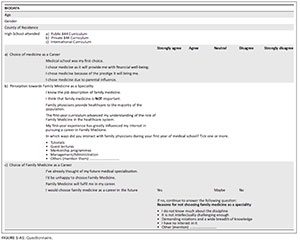
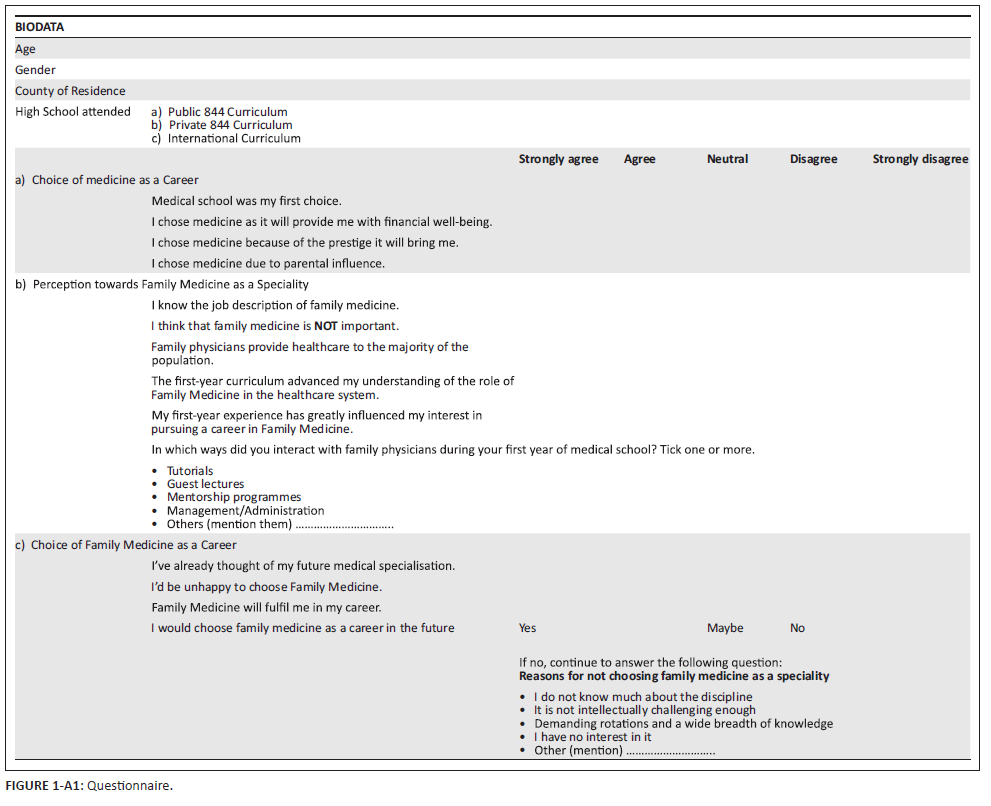
The survey comprised 18 items adopted from a similar previously validated tool.12Box 1. Closed-ended questions were used to capture participants' data, and semi-structured questions were used to capture avenues of interaction with FM physicians and reasons for not choosing FM as a speciality. The questionnaire was created on Microsoft® Forms.

Survey distribution and data collection
The survey tool (Figure 1-A1) was self-administered. An introductory email providing information about the study's significance and inviting participants was sent to all first-year MBChB students through their shared first-year group email address. A Microsoft® link to the survey questionnaire was shared through the same email address. Weekly email reminders were also sent during the 4-week data collection period.
Data analysis
The data collected were automatically captured on Microsoft® ExcelTM. It was cleaned, analysed and visualised using Microsoft® Excel™ and STATA® version 15 (StataCorp LLC®, United States). Frequencies and percentages for categorical variables and continuous variables were calculated and summarised as mean ± standard deviation (s.d.). Because of this survey's pre-determined small sample size, the study was not powered to conduct a conclusive bivariate analysis of the collected data.
Ethical considerations
Ethical approval was sought and obtained from the AKU Institutional Scientific and Ethics Committee (ISERC No. 2024/ISERC-87 [v3]), and a research permit was obtained from the National Commission for Science, Technology and Innovation (NACOSTI), Kenya. Informed consent was sought from all first-year students prior to their participation through an informed consent form shared electronically with all invited participants. To ensure confidentiality, no participant's names or other identifying information were collected, and a unique code was automatically assigned once a survey response was submitted.
Results
Participants' characteristics
Of the 59 first-year MBChB students at AKU, Kenya, 49 participated in the study, yielding an 83% response rate. The mean age of the participants was 19.4 years (s.d. 1.04), with the male-to-female ratio nearly equal (49% and 51%, respectively). Most respondents (82%) went through the 8-4-4 high school curriculum in public or private high schools prior to joining the MBChB programme. This is a Kenyan education curriculum where students went through 8 years and 4 years of primary and secondary school, respectively, prior to joining university. The other respondents (18%) progressed through international education curricula offered in Kenya.
Perception towards Family Medicine as a speciality
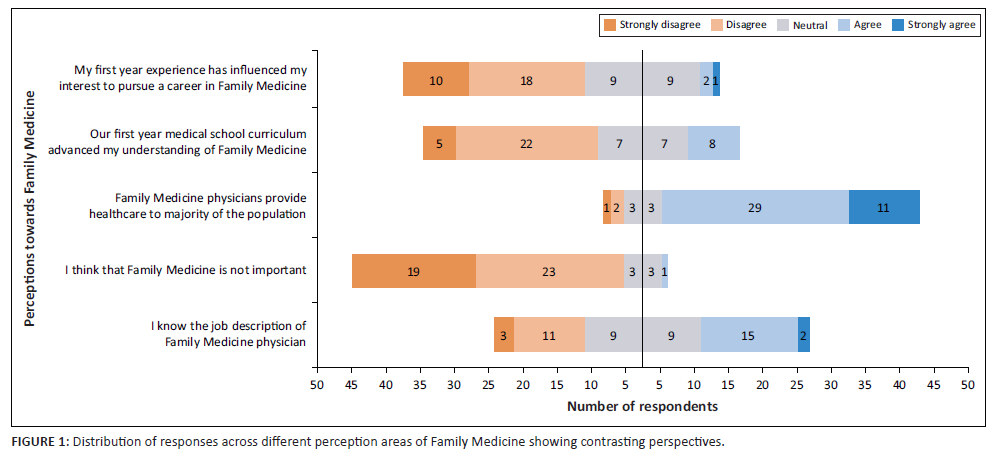
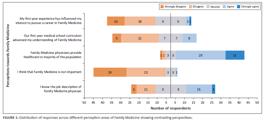
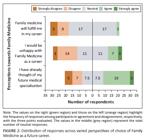
When asked about their future career choice, only one participant indicated that they would choose FM. Eighteen (approximately 37%) of respondents indicated they would not choose FM, while 30 (approximately 61%) were uncertain. Five key points assessed the perception of FM as a speciality among the participants. These included knowledge of FM physician job description, the importance of FM practice and the influence of the first-year curriculum in understanding FM. Figure 1 shows the distribution of responses across different perception areas and indicates the contrasting perspectives. The values on the right (blue region) and those on the left (orange region) represent the frequency of those who responded in agreement or disagreement, respectively, with the five points as evaluated. The values in the middle (grey region) indicate the total number of neutral responses.
The survey's findings also showed that during their first year, students engaged with FM physicians through channels that included tutorials (30 responses), guest lectures (20 responses), mentorship programmes (10 responses) and through other administrative roles held by FM physicians (32 responses). Other interaction channels with FM physicians cited included a simulation conference or as a patient at the Aga Khan University Hospital, Nairobi.
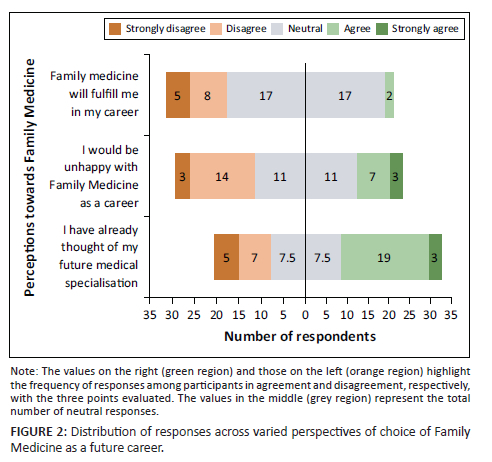
Perceived fulfilment in FM as a future career was assessed using three points. Figure 2 shows the distribution of the participants' responses, indicating contrasting perspectives. The values on the right (green region) and those on the left (orange region) highlight the frequency of responses of participants in agreement or disagreement, respectively, of the three points evaluated. The values in the middle (grey region) represent the total number of neutral responses.
The respondents who indicated that they would not choose FM as a future career cited various reasons for this, including having no interest in FM (14 responses) and not knowing much about the discipline (5 responses). Respondents indicated four other reasons for their unwillingness to choose FM: (1) Previous negative interaction with FM physicians; (2) low financial incentives; (3) limited advanced training opportunities; and (4) poor systems to support FM practice.
Some of the responses are quoted as follows:
'I have no interest, low financial incentive, underappreciated, overworked. In terms of fellowships, not as many, and the opportunities are greater for Internal medicine [cardiology, neurology, nephrology, amongst many others] and surgery [many options].' (Respondent #07)
'I have had very negative experiences with family medicine specialists, as they seem inauthentic.' (Respondent #15)
Other medical students viewed FM with mixed feelings of positivity and indecision:
'The course is very key in serving the roles of a doctor in the familial context. However, most family medicine specialists interact very negatively with many of the patients and in the medical training … this makes some residents acrimonious, and most think of them as inauthentic people. I hate apathy; I want to work with people I can converse with. All in all, family medicine is a good field.' (Respondent #11)
'I want to go into something surgical, but my thoughts on surgery may change as the years progress. However, for now, there is no speciality I dislike, and family medicine seems like a decent choice should I deviate from surgery in the future. In Kenya, a family medicine physician and a General Physician [M.O.] are more or less the same. As a country, we don't have the systems or the cultures to support family medicine.' (Respondent #29)
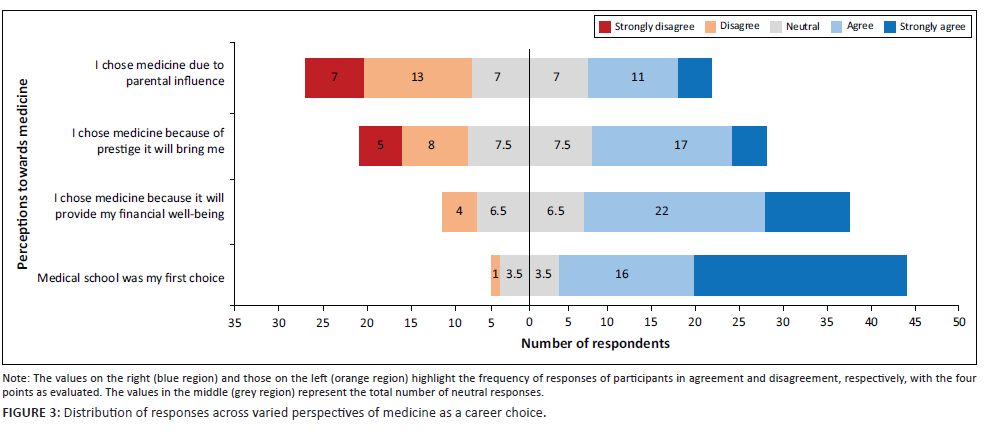
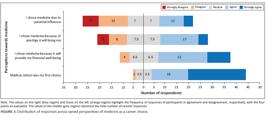
In addition, 41 (84%) respondents indicated that medicine was their first choice for study, only one respondent indicated that it was not, while seven (14%) had a neutral response. On examining factors that influenced their choice of studying medicine, 32 (65%) strongly agreed or agreed that the prospect of financial well-being influences them, while 21 (approximately 43%) and 15 (approximately 31%) strongly agreed or agreed that prestige and parental influence, respectively, were their main drivers (Figure 3).
Discussion
Despite many of the first-year students surveyed recognising the importance of FM, most did not fully understand its scope or the specific duties of the family physician. This echoes an observation from a previous study in Kenya, which showed a significant lack of clarity on how FM should be implemented in practice, despite FM having been defined by the Kenyan Ministry of Health.81814,15161217
Compared to these findings, our study focused uniquely on first-year students - a group for whom early perceptions may be more malleable. However, data on first-year medical students' attitudes towards FM in Africa remains scarce. Most existing studies, as observed, focus on final-year cohorts, whose views are likely influenced by cumulative clinical experiences and prevailing institutional cultures. This gap underscores the value of our study in capturing baseline perceptions at the beginning of medical training.
Interaction with practising FM physicians is one potential avenue to augment the understanding of FM as a speciality. Here, we showed that the first-year students had multiple interactions with family physicians through lectures, tutorials and mentorship programmes. However, there was still a general lack of understanding of what FM entails. This could in part explain why very few students are interested in pursuing a career in this speciality. It has previously been shown that informal one-on-one career guidance, such as with personal tutors or seniors during placements, is more effective than formal career advice.19
This survey showed some negative sentiments from participants towards the FM physicians they had previously interacted with; at least two participants mentioned that family physicians seemed "inauthentic". Career decisions are often honed over multiple experiences and potentially numerous years; one negative experience can lead to ruling out a career path.191919,20,21
Given that FM is a relatively new speciality in Kenya, there is a paucity of robust support systems for its training and practice despite some indicated growth.9,1021
Interestingly, 69% of our cohort were unsure whether a career in FM would offer fulfilment. Although limited research exists on what brings fulfilment in a FM career, studies in broader healthcare contexts have identified factors such as independence,22232422,25,26,27,28
Arguably, career preferences may not remain stable throughout one's medical school training.29,30
Limitations
Firstly, our study was performed at a single medical training institution; as such, the results may not be representative of all first-year medical students in the country. Inclusion of all higher education institutions approved to offer undergraduate medical education in future studies would allow generalisability of findings. Secondly, while the study explored reasons for disinterest in pursuing FM as a future career, it did not probe into the specific motivations behind interest or the uncertainty expressed by some participants. This information would be useful to identify additional factors, which influence students' attitudes towards FM. Finally, in general, first-year medical students are not adequately exposed to all possible areas of specialisation in medical practice, including exposure to FM, as evidenced by the many neutral responses. There is therefore a need for a longitudinal assessment of evolving perceptions among medical students as they advance through their training.
Conclusion and recommendations
A minority of first-year medical students surveyed were interested in pursuing FM as a career, with many respondents disagreeing that the curriculum advanced their understanding of the speciality. We recommend that medical schools better integrate FM training into their undergraduate medical curricula, as well as offer longitudinal exposure to FM, therefore foster understanding and a sense of authenticity among students. Furthermore, the inclusion of medical educators' perspectives would provide insight into any curriculum gaps and offer opportunities to strengthen FM student exposure and practice. In a wider context, advocacy to increase awareness and scope of FM will be beneficial in attracting the necessary support for its training and practice in our region.
Competing interests
The authors declare that they have no financial or personal relationships that may have inappropriately influenced them in writing this article.
CRediT authorship contribution
Catherine Gathu: Conceptualisation, Methodology, Formal analysis, Investigation, Writing - original draft, Visualisation, Project administration, Software, Data curation, Resources, Writing - review & editing, Supervision, Funding acquisition. Lucy Mwangi: Conceptualisation, Methodology, Formal analysis, Investigation, Writing - original draft, Visualisation, Project administration, Software, Data curation, Resources, Writing - review & editing, Supervision. Peter Kioko: Formal analysis, Writing - original draft, Visualisation, Data Curation, Writing - review & editing. Tatiana Elwes: Formal analysis, Writing - original draft, Visualisation, Data curation, Writing - review & editing. All authors reviewed the article, contributed to the discussion of results, approved the final version for submission and publication and take responsibility for the integrity of its findings.
Funding information
This research received no specific grant from any funding agency in the public, commercial or not-for-profit sectors.
Data availability
The data supporting the findings of this study are not publicly available because of ethical restrictions. Access to the data may be granted upon reasonable request to the corresponding author, Catherine Gathu, subject to approval by the relevant institutional review board and in compliance with applicable data protection regulations.
Disclaimer
The views and opinions expressed in this article are those of the authors and are the product of professional research. It does not necessarily reflect the official policy or position of any affiliated institution, funder, agency or that of the publisher. The authors are responsible for this article's results, findings and content.
Acknowledgements
The authors would like to acknowledge Augustine Gitonga for his valuable contribution in providing the final edits to the article.
References
-
1.World Organization of National Colleges, Academies and Academic Associations of General Practitioners/Family Physicians (WONCA). The European definition of general practice/Family medicine [homepage on the Internet]. 2023 [cited 2024 Jun 16]. Available from: https://www.woncaeurope.org/page/definition-of-general-practice-family-medicine
» https://www.woncaeurope.org/page/definition-of-general-practice-family-medicine - 2.World Health Organization. Declaration of Alma-Ata. Geneva: World Health Organization, Regional Office for Europe; 1978.
-
3.Haq C, Ventres W, Hunt V, et al. Where there is no family doctor: The development of family practice worldwide. Acad Med. 1995;70(5):370-380. https://doi.org/10.1097/00001888-199505000-00012
» https://doi.org/10.1097/00001888-199505000-00012 -
4.Montegut AJ. To achieve 'health for all', we must shift the world's paradigm to 'primary care access for all'. J Am Board Fam Med. 2007;20(6):514-517. https://doi.org/10.3122/jabfm.2007.06.070128
» https://doi.org/10.3122/jabfm.2007.06.070128 - 5.Kidd M. The contribution of Family Medicine to improving health systems: A guidebook from the World Organisation of Family Doctors. London: CRC Press, Taylor & Francis Group; 2013.
-
6.Starfield B, Shi L. Policy relevant determinants of health: An international perspective. Health Policy. 2002;60(3):201-218. https://doi.org/10.1016/S0168-8510(01)00208-1
» https://doi.org/10.1016/S0168-8510(01)00208-1 -
7.Van der Voort CT, Van Kasteren G, Chege P, Dinant GJ. What challenges hamper Kenyan family physicians in pursuing their Family Medicine mandate? A qualitative study among family physicians and their colleagues. BMC Fam Pract. 2012;13:32. https://doi.org/10.1186/1471-2296-13-32
» https://doi.org/10.1186/1471-2296-13-32 -
8.Momanyi K, Dinant G-J, Bouwmans M, Jaarsma S, Chege P. Current status of Family Medicine in Kenya; family physicians' perception of their role. Afr J Prm Healthcare Fam Med. 2020;12(1):a2404. https://doi.org/10.4102/phcfm.v12i1.2404
» https://doi.org/10.4102/phcfm.v12i1.2404 -
9.Chege P, Penner J, Godoy-Ruiz P, Kapoor V, Rodas J, Rouleau K. Evolution of Family Medicine in Kenya (1990s to date): A case study. S Afr Fam Pract. 2016;59(1):1-8. https://doi.org/10.1080/20786190.2016.1248142
» https://doi.org/10.1080/20786190.2016.1248142 -
10.Arya N, Gibson C, Ponka D, et al. Family Medicine around the world: overview by region: The Besrour Papers: A series on the state of Family Medicine in the world. Can Fam Physician [serial online]. 2017 [cited 2024 Jun 17];63(6):436-441. Available from: https://www.ncbi.nlm.nih.gov/pmc/articles/PMC5471080/
» https://www.ncbi.nlm.nih.gov/pmc/articles/PMC5471080/ -
11.Mash R, Besigye I, Galle A. Undergraduate teaching in Family Medicine within the PRIMAFAMED network. Afr J Prim Healthcare Fam Med. 2024;16(1): 4376. https://doi.org/10.4102/phcfm.v16i1.4376
» https://doi.org/10.4102/phcfm.v16i1.4376 - 12.Essuman A, Anthony-Krueger C, Ndanu T. Perceptions of medical students about Family Medicine in Ghana. Ghana Med J. 2013;47(4):178.
-
13.Kenya Medical Practitioners and Dentist Council. Licensed local practitioners' register [homepage on the Internet]. 2024 [cited 2024 Jun 19]. Available from: https://kmpdc.go.ke/Registers/practitioners.php
» https://kmpdc.go.ke/Registers/practitioners.php -
14.Hagemeister D, Naidoo A, Kristen U, Mokgosana N, Joubert G. Undergraduate medical students' interest in specialising in Family Medicine at the University of the Free State, 2014. S Afr Fam Pract. 2017;59(5):166-171. https://doi.org/10.4102/safp.v59i5.4768
» https://doi.org/10.4102/safp.v59i5.4768 -
15.De Vries E, James I, Ian C, Saul K. Career plans of final-year medical students in South Africa. S Afr Med J. 2010;100(4):227-228. https://doi.org/10.7196/SAMJ.3856
» https://doi.org/10.7196/SAMJ.3856 -
16.Omed Ali R, Nkabinde TC, Ross AJ. Knowledge of final-year medical students at the University of KwaZulu-Natal about Family Medicine, and long-term career choices. S Afr Fam Pract. 2019;61(1):5-10. https://doi.org/10.1080/20786190.2018.1504865
» https://doi.org/10.1080/20786190.2018.1504865 -
17.Fasola OE, Alao AO, Ibisola BA, Obimakinde AM, Odekunle IC. Knowledge and perception of Family Medicine among medical students at University of Ibadan, Nigeria. S Afr Fam Pract. 2019;61(5):197-202. https://doi.org/10.1080/20786190.2019.1648110
» https://doi.org/10.1080/20786190.2019.1648110 -
18.Burch V, McKinley D, Van Wyk J, et al. Career intentions of medical students trained in six sub-Saharan African countries. Educ Health. 2011;24(3):614. https://doi.org/10.4103/1357-6283.101416
» https://doi.org/10.4103/1357-6283.101416 -
19.Thomas A, Kinston R, Yardley S, McKinley RK, Lefroy J. How do medical schools influence their students' career choices? A realist evaluation. Med Educ Online. 2024;29(1):2320459. https://doi.org/10.1080/10872981.2024.2320459
» https://doi.org/10.1080/10872981.2024.2320459 -
20.Mwachaka P, Mbugua E. Speciality preferences among medical students a Kenyan University. PanAfr Med J [serial online]. 2010 [cited 2024 Jun 16];5:18. Available from: https://pubmed.ncbi.nlm.nih.gov/21293745/
» https://pubmed.ncbi.nlm.nih.gov/21293745/ -
21.Scott I, Wright B, Brenneis F, Brett-Maclean P, McCaffrey L. Why would I choose a career in Family Medicine?: Reflections of medical students at 3 universities. Can Fam Physician [serial online]. 2007 [cited 2024 Sep 30];53(11):1956-1957. Available from: https://www.ncbi.nlm.nih.gov/pmc/articles/PMC2231492/
» https://www.ncbi.nlm.nih.gov/pmc/articles/PMC2231492/ -
22.Gannotti ME, Blanchard Y, Blumberg L, LaRocco D. Shared meanings of success, happiness, and health among adults with cerebral palsy and physiotherapists: Implications for practice and research. Disabil Rehabil. 2018;41(11):1321-1330. https://doi.org/10.1080/09638288.2018.1425488
» https://doi.org/10.1080/09638288.2018.1425488 -
23.Buaklee P, Fongkaew W, Sue T, Akkadechanunt T, Sansiriphun N. Unveiling the experiences of happiness at work through narrative inquiry: Advanced practice nurses' perspectives. Pac Rim Int J Nurs Res [serial online]. 2017 [cited 2024 Sep 30];21(3):206. Available from: https://openurl.ebsco.com/EPDB%3Agcd%3A1%3A16439857/detailv2?sid=ebsco%3Aplink %3Ascholar&id=ebsco%3Agcd%3A123962768&crl=c
» https://openurl.ebsco.com/EPDB%3Agcd%3A1%3A16439857/detailv2?sid=ebsco%3Aplink %3Ascholar& id=ebsco%3Agcd%3A123962768& crl=c - 24.Clark AG, Layard R, Senik C. The causes of happiness and misery. New York: The Earth Institute at Columbia University City; 2012.
-
25.Khosrojerdi Z, Tagharrobi Z, Sooki Z, Sharifi K. Predictors of happiness among Iranian nurses. Int J Nurs Sci. 2018;5(3):281-286. https://doi.org/10.1016/j.ijnss.2018.06.008
» https://doi.org/10.1016/j.ijnss.2018.06.008 -
26.Petriş A, Tatu-Chiţoiu G, Călin P. Highlights on Romanian cardiologists' happiness: Results of fellow cardiologists' self-rating. Rom J Cardiol [serial online]. 2013 [cited 2024 Sep 30];23(1):3. Available from: https://openurl.ebsco.com/EPDB%3Agcd%3A12%3A19285916/detailv2?sid=ebsco% 3Aplink%3Ascholar&id=ebsco%3Agcd%3A86653998&crl=c
» https://openurl.ebsco.com/EPDB%3Agcd%3A12%3A19285916/detailv2?sid=ebsco% 3Aplink%3Ascholar&id=ebsco%3Agcd%3A86653998&crl=c -
27.Machado L, Tavares H, Petribú K, Pinto T, Cantilino A. Happiness and defense styles in psychiatrists. J Nerv Ment Dis. 2016;204(3):181-187. https://doi.org/10.1097/NMD.0000000000000450
» https://doi.org/10.1097/NMD.0000000000000450 -
28.Baggett S, Martin K. Medscape physician lifestyle & happiness report 2022. Medscape Fam Med [serial online]. 2022 [cited 2024 Sep 30]. Available from: https://www.medscape.com/slideshow/2022-lifestyle-happiness-6014665?reg=1&icd=login_success_email_match_norm#1
» https://www.medscape.com/slideshow/2022-lifestyle-happiness-6014665?reg=1& icd=login_success_email_match_norm#1 -
29.Compton MT, Frank E, Elon L, Carrera J. Changes in U.S. medical students' speciality interests over the course of medical school. J Gen Intern Med. 2008;23(7):1095-1100. https://doi.org/10.1007/s11606-008-0579-z
» https://doi.org/10.1007/s11606-008-0579-z -
30.Kaur B, Carberry A, Hogan N, Roberton D, Beilby J. The medical schools outcomes database project: Australian medical student characteristics. BMC Med Educ. 2014;14(1):180. https://doi.org/10.1186/1472-6920-14-180
» https://doi.org/10.1186/1472-6920-14-180
Accepted: 06 Dec. 2025
Published: 17 Feb. 2026