Systematic review of factors influencing oral health-related quality of life in children in Africa
Abstract
BACKGROUND: Oral health-related quality of life (OHRQoL) is influenced by cultural and societal context. Existing OHRQoL children measurement tools have been conceptualised in high-income countries. Probing whether the factors influencing OHRQoL are context-reliant in the African setting is necessary and is the purpose of the current review AIM: To investigate if the factors influencing OHRQoL are context-reliant METHODS: Seven databases were searched using search terms ('oral health'; and 'quality of life', 'health-related quality of life', 'patient-reported outcomes', 'well-being'; and 'child*', 'adolescents', 'teen*', 'youth'; and 'determinants', 'factors', 'predictors'; and 'oral health quality of life tools/instruments/scales'; and 'Africa*'). Abstracts identified were exported to a reference software manager. Three of the authors used specific selection criteria to review, firstly, 307 abstracts and, secondly, 30 full papers. Data were extracted from these papers using a pre-designed data extraction form, after which quantitative synthesis of data was performed RESULTS: Key factors influencing OHRQoL followed an existing conceptual framework where environmental and individual factors in the form of socio-economic status (SES), area of residence and children psyche status, and the presence of any oral condition other than dental caries were reported among child populations in Africa CONCLUSION: There is preliminary evidence to suggest an association between individual factors such as children's psyche and oral problems, excluding dental caries, and environmental determinants such as area of residence and SES in children's OHRQoL in African children. The finding that dental caries was not a key factor in child-oral health is unexpected. There seemed to be a contextual viewpoint underpinning the current OHRQoL frameworks and OHRQoL was context-reliant
oral health; oral health-related quality of life; factors; children; Africa
Introduction
The FDI World Dental Federation vision 2020 defines oral health as:
multi-faceted and includes the ability to speak, smile, smell, taste, touch, chew, swallow and convey a range of emotions through facial expressions with confidence and without pain, discomfort and disease of the craniofacial complex.1
The definition connects with Locker and Allen's concept of oral health-related quality of life (OHRQoL), which is explained simply and loosely as 'impact of oral conditions on daily functioning and well-being'.2345,6,7,8 Herdman et al. purport that OHRQoL measurement domains important to one culture may not be equally relevant in all cultures.9
Recently, research on children's oral conditions and OHRQoL globally has described the factors influencing OHRQoL.10,11,12,13 Oral health-related quality of life research in children is fairly recent in Africa.14,15,16,17 Existing children tools that measure OHRQoL have been developed in a non-African setting; however, some have been adapted and tested in the African setting. According to Traebert et al., different existing tools showed discrepancies when applied to different cultural backgrounds when probing the concept of ethnicity and socialisation despite translation.18
Consideration of sociocultural contexts and factors affecting children's OHRQoL is important as OHRQoL is a social construct. The majority of health-related quality of life (HRQoL) models are based on the biomedical and psychological dimensions of health such as those in the International Classification of Impairments, Disabilities and Handicaps model by the World Health Organization (ICIDH, 1980). The Locker model is a type of such HRQoL model that is based on the WHO-ICIDH.1919
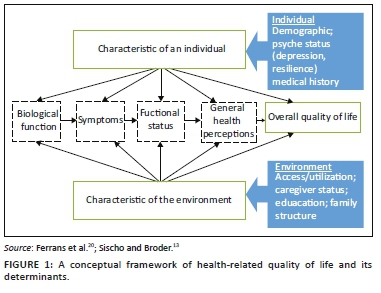
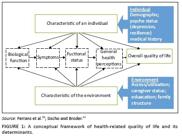
In 2005, Ferrans et al. developed an OHRQoL conceptual framework which posits that the biological-symptom-functional status complex is directly influenced by both individual and environmental characteristics and together they influence the general perceptions of health and overall OHRQoL (Figure 1).2013,20 On the contrary, a newer model, such as the International Classification of Functioning, Disability and Health (ICF), has an elaborate classification which includes holistic non-sick-based dimensions such as functioning and health. These models and theories provide a guiding point of view when interrogating the factors that may influence OHRQoL among African children.
Oral health-related quality of life in children is particularly important as childhood development involves phases that are dominated by life changes notwithstanding the added burden of living with oral diseases.4,21,22 Wallander et al. noted that HRQoL has a dual subjective-objective elements underlined by a time in one's life.423
This review will be the first to our knowledge that seeks to explore and integrate available literature on the factors influencing OHRQoL in children in the African setting. The review will provide more insight into understanding the phenomenon and to add a voice to the integrated management of children's oral conditions and the related impact on HRQoL.
Methods
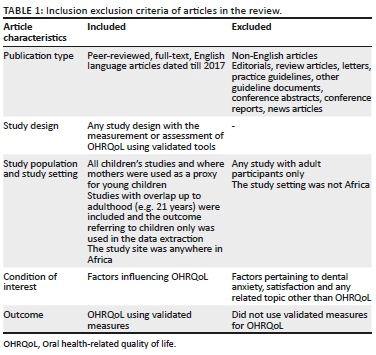
This review addresses the following question: What are the determinant factors that influence OHRQoL among children in Africa? It seeks to establish, through the available literature, factors influencing OHRQoL in children in Africa. The objective is to integrate and summarise the factors influencing OHRQoL in children diagnosed with oral conditions or problems throughout Africa. The systematic review was registered with PROSPERO number: CRD42017056759. The inclusion requirements, as shown in Table 1, were followed. No publication date limit was set as this type of review has not been done before.
A systematic literature search of multiple databases with published English language articles in PubMed, CINAHL, EMBASE (Excerpta Medical Database), MEDLINE, EBSCOhost, OVID and PsychINFO was performed with key words: #1 'oral health'; and #2 'quality of life', 'health-related quality of life', 'patient-reported outcomes', 'well-being'; and #3 'child*', 'adolescents', 'teen*', 'youth'; and 4# 'determinants', 'factors', 'predictors'; and #5 'oral health quality of life tools/instruments/scales'; and #6 'Africa*'.
Data synthesis
A multi-level search process was used starting with the screening which included an independent review of titles by three of the authors of this article (Y.M.-K., C.B.N., T.R.D.R.). This was followed by a review of abstracts and full articles selected after the abstract review. Thereafter a reference list of selected full articles was reviewed to retrieve more articles. Identified studies that met the publication criteria were grouped into one of the following categories: experimental studies, cohort studies, case control studies and cross-sectional observational studies. These studies were then assessed independently for methodological validity by three reviewers, prior to inclusion in the review, using the corresponding checklist developed by the Joanna Briggs Institute tool for cross-sectional, random controlled trials and cohort studies. Each of the tools has the components related to selection criteria, validity and reliability of exposure and outcome variables, confounders, objective measurement of outcome and appropriate statistical tests used. Any disagreements that arose between the reviewers were resolved through discussion among the three reviewers. Where required, a consensus of two out of three was the deciding factor. Following assessment of methodological quality, the papers were grouped according to whether they are quantitative, qualitative designs or opinion-based. A data extraction tool was developed specifically for quantitative research data. None of papers retrieved used qualitative study designs. Three reviewers independently performed data extraction.
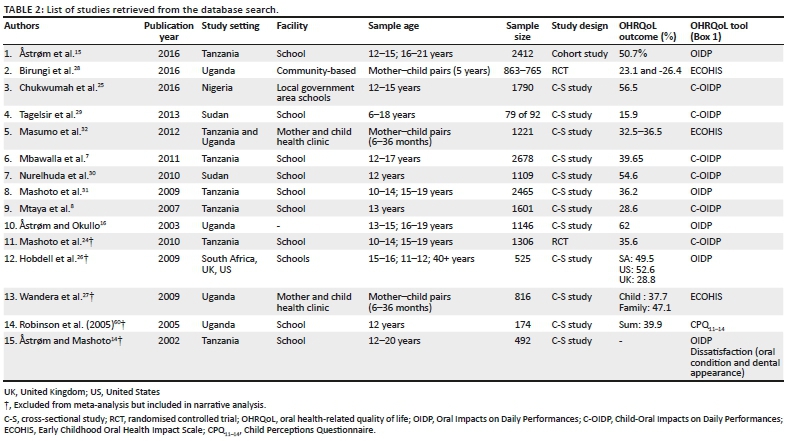
Quantitative studies were classified using a table noting publication year, study setting, participants' age, sample size, study design, OHRQoL outcome and the underpinning predictors or factors or determinants, odds ratio (OR) and corresponding confidence intervals (CIs) (Table 2). If more than one study reported the same factors influencing OHRQoL, the results were pooled into a statistical meta-analysis. Where statistical pooling was not possible, the findings were presented in the form of a narrative analysis. The initial step of meta-analysis was to assess the heterogeneity of the studies to be pooled. When studies were heterogeneous, a random effect model was assumed to account for unequal weighting of the studies. Heterogeneity was quantified using I2
Ethical considerations
Ethical approval was obtained from the Human Research Ethics Committee of the University of the Witwatersrand (Clearance certificate no. M141150).
Results
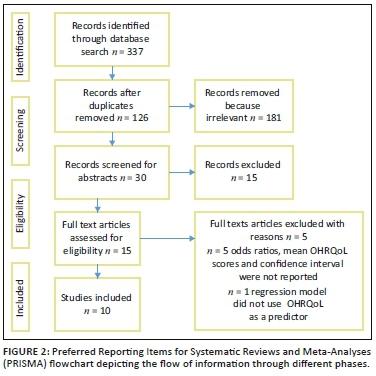
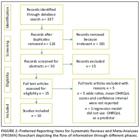
A total of 337 articles were retrieved from all databases. Following identification and screening, only 15 articles were assessed for eligibility (Figure 2). Of the 15 eligible articles, four were excluded from the narrative or meta-analysis despite using validated OHRQoL tools because they did not perform regression analysis to report on the factors influencing OHRQoL.24,25,26,27 The regression analysis was crucial to ascertain the likelihood of independent variables influencing OHRQoL. One article was also excluded because it reported ORs, but the OHRQoL was not the dependant variable in the regression model but the presence or absence of dental fluorosis.1414
Characteristics of the studies finally included in the review
The main characteristics of the studies in the review are shown in Table 2. All of the 10 studies used validated tools to measure OHRQoL outcomes (Box 1). All studies were quantitative in design; nine were conducted in the East African region (Tanzania, Uganda and Sudan); they were also similar in sharing the same authors or co-authors.7,8,15,16,25,28,29,30,31 Only one study was conducted in West Africa (Nigeria).25

Factors influencing oral health-related quality of life where studies were fitted into forest plots for meta-analysis
Dental caries
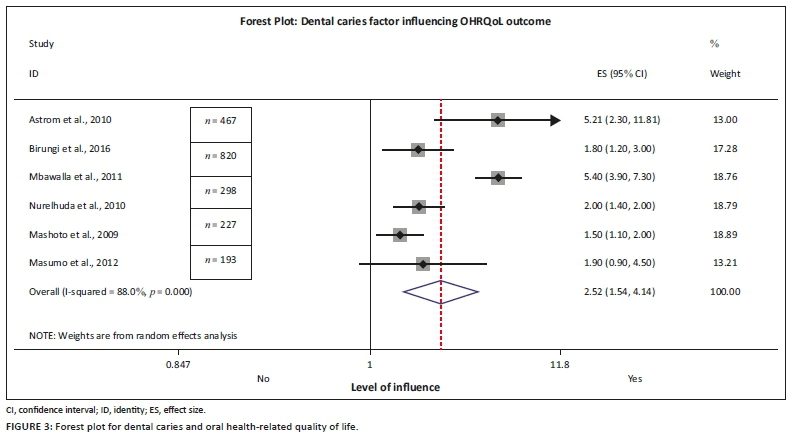
Six studies in this review reported the presence of dental caries as a factor influencing OHRQoL.7,15,25,30,31,32 Four of the studies were performed in Tanzania with a total of 7617 children and they reported the variable dental caries experience measured by DMFT/dmft (Decayed Missing Filled Teeth/decayed missing filled teeth) index. In both primary and secondary dentition, the caries index ranged from being 1.5 times more likely to up to 5.2 times more likely to lead to a poorer OHRQoL among children. Studies based in the Sudan and Uganda reported mid-range ORs of 2.0 (95% CI: 1.4-2.6) and 1.8 (95% CI: 1.2-3.0), respectively (n combined = 1874) (Figure 3).
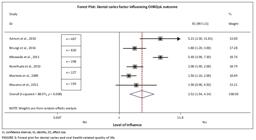
Dental caries, when fitted for meta-analysis, showed an overall high level of influence with regard to OHRQoL in total combined studies of 9491 child participants. However, the results of the I2p = 0.000) (Figure 2). This implies that the studies cannot be pooled because of high heterogeneity. Even though studies all used validated OHRQoL (Table 2), responses are still subjective heterogeneity and the overall conclusion from meta-analysis is explained later in the discussion.
Oral conditions other than dental caries
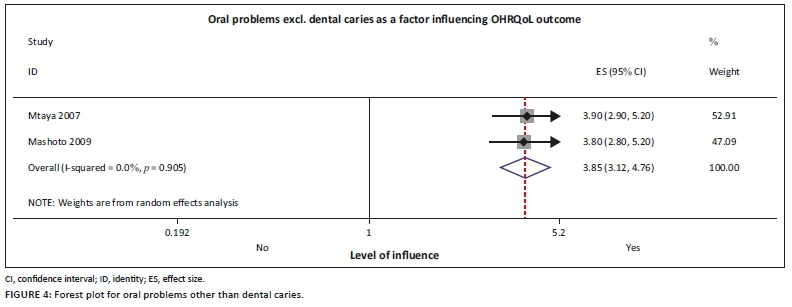
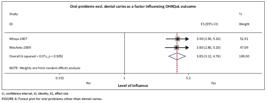
Mashoto et al. in their Tanzanian study reported, with a total of 1745 children with a mean age of 13.8 years (s.d. 1.67), that having any oral condition other than dental caries increased the odds of a poorer OHRQoL (OR: 3.8, 95% CI: 2.8-5.2).31n = 387) (OR: 3.9, 95% CI: 2.9-5.2).8Table 2), suggested that the oral problems were stronger influencers than other dimensions in the OHRQoL tool used, such as emotional and social well-being.8,31 When these studies were included in the meta-analysis, having oral problems (excluding dental caries) was still a factor likely to influence OHRQoL among children (Figure 3). Both the I2p = 0.9) (Figure 4).
Socio-economic status
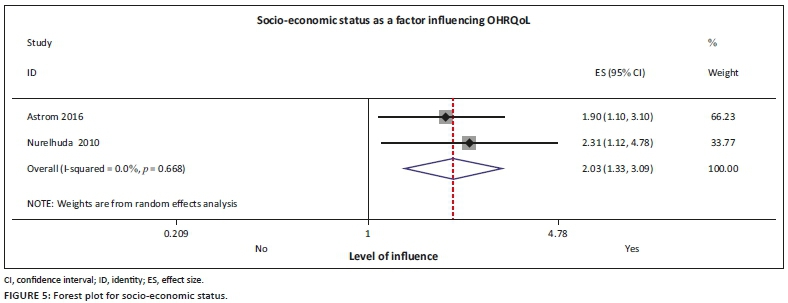
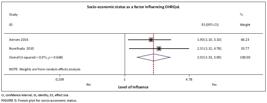
From the only longitudinal study in the review, with a sample of 2412 children in Tanzania, the authors concluded that an SES was 2.3 times more likely (95% CI: 1.12-4.78) to result in poorer OHRQoL (Figure 4), both used C-OIDP and OIDP tools (Table 2)15n = 1109) found that SES, albeit in a cross-sectional study, was 1.9 times more likely (95% CI: 1.1-1.3) to influence OHRQoL.15,30 Meta-analysis of the two studies was displayed in the forest plot and supported the fact that a higher SES is 2.03 times more likely to influence OHRQoL outcomes (Figure 5).
Area of residence
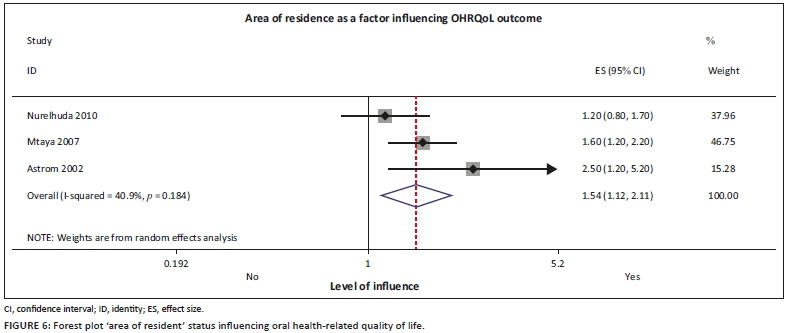
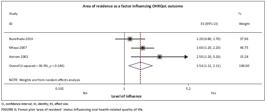
The Tanzanian and Ugandan studies found the area of residence (district, rural and urban) to influence children's oral HRQoL.8,16 Nurelhuda et al. reached a similar conclusion in the Sudanese study.30Figure 6).
Satisfaction with oral health
In the Sudanese and Tanzanian studies those children who were satisfied with their oral health status were less likely to report lower OHRQoL using the Child-OIDP tool (OR: 0.4, 95% CI: 0.3-0.6).8,30 However, the studies demonstrated moderate heterogeneity and the meta-analysis yielded contrasting findings. The overall effect was not significant with OR = 0.87 (95% CI: 0.19-4.00) with equal weighting of the studies (Figures 7-9).
Dental attendance and gingival infection
Both dental attendance and gingival infection were identified by Mtaya et al., Mashoto et al. and Nurelhuda et al. as factors influencing OHRQoL in their Tanzanian and Sudanese samples, respectively.8,30,31 The meta-analysis and pooling of results did not support their argument. Dental attendance had an overall effect of 1.30 (0.48-3.50), while gingival infection had an overall effect of 1.40 (0.88-2.24) (Figures 7-9).
Seven more reported factors influencing oral health-related quality of life
Four studies, in addition to reporting factors similar to each other, also reported individual factors that were not cited by any other authors in this review. In the Sudan, among the visually challenged school attendants, it was found that visual impairment (n = 79, OR: 6.3, 95% CI: 1.7-22.7 [Results are significant]) significantly influenced OHRQoL.29Low self-efficacy (n = 610, OR: 0.41, 95% CI: 0.19-0.89 [Results are significant; paper was included in meta-analyses]) and depressed mental status n = 428. OR: 3.23 (95% CI: 1.37-7.63 [Results are significant]) (paper was included in meta-analyses) were reported to be significant predictors of OHRQoL in the secondary schools learners in Tanzania.15religious affiliation (n = 256, OR: 0.5, 95% CI: 0.3-0.9 [Results are significant; paper was included in meta-analyses]) and missing teeth (n =372, OR: 1.8, 95% CI: 1.0-3.2 [Results are significant; paper was included in meta-analyses]) significantly influenced the OHRQoL of adolescents using the OIDP tool, and were significantly influenced by OHRQoL instead.15,16,30
Of interest is that a study conducted among the Sudanese sample of 12-year-old school attendees showed a significant association between OHRQoL and behavioural factors, such as irregular tooth brushing and eating sugar sweetened snacks. [16,30] The findings included tooth brushing frequency (irregular) (OR: 1.0, 95% CI: 0.6-1.7), plaque index (n = 1045, OR: 1.3, 95% CI: 0.9-1.8) and sugar sweetened snack intake (n = 1045, OR: 1.4, 95% CI: 0.9-1.8), respectively.
Discussion
This systematic review is the first aimed to critically analyse the factors influencing OHRQoL in African child populations. Oral health-related quality of life outcomes are usually assessed by measurement tools based on a conceptual framework which postulates that individual factors (demographic, personal biological and psychological status) and environmental factors (SES, dental access, caregivers status, education, type of residence and utilisation, and more) influence general health perceptions and the overall OHRQoL as postulated by Ferrens et al.20
All 10 articles included studies that used validated tools to measure OHRQoL in children (Table 2). The studies used good methods with regard to selection criteria of participants, validity and reliability of exposure and outcome variables as objectively assessed by the review involved (Y.M.-K., C.B.N., and T.R.D.R.). There was also a predisposition towards cross-sectional study designs in the studies selected. Cross-sectional studies cannot determine causality but only associations. However, these associations were rigorously determined especially when studies adjusted for confounders using regression analysis. Longitudinal studies including randomised controlled trials are obviously preferred as these designs have the potential to follow up on the exposure variable and can be used to determine causality.
The bias of studies towards East Africa could be attributed to one key author who contributed to eight of the 10 articles. The reason could be that the field on OHRQoL in dentistry is still at its development stage in Africa and the author is an expert author in the field.
Dental caries, the most common dental condition that affects 60% - 90% of school-aged children, in children more often results in pain and functional limitation.313334I2I2357,15,25,30,31,32 were used where dental caries was reported to be a factor. Secondly, the heterogeneity could be attributed to the subjective nature of the design of OHRQoL tools that may be affected by cultural variation and differences in these East African countries. Thirdly, reporting of caries experience through DMFT/dmft without severity does not factor the element of pain. Indices such as Pulpal involvement, Ulcerations, Fistula and Abscess (PUFA) index do factor in the pain element, and thus may be useful in OHRQoL measurements.3637
Dental caries was reported as a predictor of pain only if the prevalence and severity is high which tends to be common in the poorer communities who consume more refined carbohydrates diet as is common in South Africa.2338
Oral conditions other than dental caries were a significant determinant of OHRQoL in this systematic review. These oral conditions maybe gingival or mucosal conditions, related to aesthetics or dental treatments. This is plausible as OHRQoL dimensions include pain, functional, psychological or emotional factors as well the social impacts. Malocclusion, which is an oral problem where there is misalignment or an incorrect relationship between the two dental arches, may result in aesthetic and functional problems. This is more likely to lead to a self-perceived treatment need which is common in malocclusion cases. It heightens the way the children perceive their own oral health. The children tend to have a worsened OHRQoL when they perceive that they ought to receive treatment, a perception that is shaped by the societal expectations. Appearance, which is affected in malocclusion cases, is very important in children's lives particularly as they approach puberty. The notion is supported by Koposova et al.'s study in Europe among 12-year-olds where it was concluded that dental aesthetics was found to influence their OHRQoL.38
Socio-economic status measured by attending private versus public school was found to play an important role in influencing OHRQoL in the review. A higher SES may result in preventive visits and better access to dental health services and, thus, is likely to result in improved dental health, no pain, no early extraction and resulting malocclusion and a better OHRQoL. Thus, a better SES increases access to aesthetic services and may possibly influence the non-clinical dimensions (behavioural and social) of OHRQoL. Issues such as missing teeth, early extraction and later malocclusion are averted early, and thus improve oral health perceptions of adolescents. This finding in this review is congruent with literature where parents' low-income is closely related to the availability of resources and children from low-income families are likely to have a lower OHRQoL.39,40 In addition, the study among 12-year-olds in Norway and Russia reported a poorer OHRQoL for the less privileged Russian children than their Norwegian counterparts.38414243
There was evidence linking area of residence with negative outcomes on OHRQoL in African child populations from this review. Mtaya et al. and Åstrøm and Okullo,8,16 in their Tanzanian and Ugandan studies, found the area of residence (rural vs. urban) to influence children's OHRQoL.6,16 Nurelhuda et al. reached a similar conclusion in their Sudanese study.30844
Satisfaction with oral health is likely to result in a good self-rating on oral health and it is influenced by attitudes towards oral health. The result from this review showed moderate heterogeneity, and meta-analysis showed that this factor did not influence OHRQoL from the only two studies in the review. Satisfaction with oral health usually results from the individual's attitudes; these attitudes are shaped by socialisation and context. In contrast, studies conducted outside Africa from literature have shown that oral health perceptions and attitudes of the caregiver or parents and of children themselves can influence the OHRQoL in children.33,45 Shaghaghian et al. reported that parental attitude to children's oral hygiene habits influences children's oral health status and their OHRQoL.453346,47,48,49 The difference can be explained by embedded cultural influences. It is for this reason that the development of a conceptual equivalence of OHRQoL measurement tools is recommended before it can be used in settings different from those in which it originated.9
More factors influencing oral health-related quality of life
Physical handicap such as visual impairment will impart an element of physical limitation, thus it may result in restrictive action and lack of visual-manual coordination. Despite the low sample in the reviewed study, of note among these visually impaired school attendees, those who were boarders had a poorer oral hygiene compared with non-boarders. Therefore, lack of assistance and supervision by caregivers may have mediated the resulting poorer oral hygiene. Less or no assistance with oral hygiene practices (e.g. toothbrushing and use of mouth guards) may thus lead to poor oral health states such as poor oral hygiene and traumatic dental injuries. A poor oral health status and the associated oral conditions may cause a negative reporting on OHRQoL.2930
Mental status is closely related to perception of self; if individuals have less confidence and suffer from depression then their attitudes are generally negative.501551
Behavioural factors such as poor dietary habits and irregular brushing on their own failed to make an impact on these African child populations; however, they may be mediated by the level of adolescents' self-efficacy1529
Religion such as reporting being Muslim was an important factor in the Ugandan adolescent sample as they were less likely to report oral impacts.1652
The issue of a child's age as a determinant factor did not come up in the African studies in this systematic review, although Barbosa and Gaviao argue that the child's age, development and gender influence and affect their well-being.53Table 2). Genderson et al. argues that the issue of self-concept is age-dependent and is heightened and important during adolescence because oral health is 'strongly age-dependent',5455
Dental utilisation and access did not influence OHRQoL in this review when results were pooled; this is in contrast to the Indian study by Kumar et al. which found that OHRQoL was better for participants who had been to the dentist within the past 12 months.56561657
A key finding in the articles reviewed was that factors influencing OHRQoL in children were environmental in nature (family SES and area of residence), but depended on the individual biological status and symptoms from oral problems. These oral problems, however, did not include dental caries, the most common oral condition. When assessing the findings against the Ferrans et al.2013Figure 1).13,20 There seems to be congruence with the Sischo and Broder explanation of the framework in this African setting where oral medical condition, psyche status (low self-efficacy and depressive states) and physical disability of the children were the significant individual factors to influence. However, the environmental issues arising from the review were the area of residence and SES only. The parent or caregiver status was implied by the family's SES status.
The factors in the review were balanced between the environmental and individuals' oral problems, but the pathway did not necessarily fit the models (Figure 1). Overall perceptions with oral health were not evident. Other factors such as oral health behaviour, perception or satisfaction with oral health and dental access were significant in other settings in high-income countries but not evident in the African setting. This may be related to contextual importance of factors or perhaps these factors were reported by few studies.5859
Moreover, these systematic review findings are in contrast with the Locker model of OHRQoL, which suggests that mainly physical symptoms and functional limitation dimensions will carry weight rather than environmental dimensions in influencing OHRQoL.1919
Oral health-related quality of life does not exist in a vacuum, but is influenced by interplay of socio-economical, biological and personal psychosocial factors. Herdman et al. argue convincingly that cross-cultural adaptation is warranted as it guards against automatic assumptions that OHRQoL domains important to one culture will be equally relevant in all cultures.9
Limitations
Mostly cross-sectional studies were retrieved from this review given that research into OHRQoL is fairly recent in Africa. However, data analysis included accounting for possible confounders when looking for associated factors related to OHRQoL in children. The reporting of ORs implied that authors dichotomised the OHRQoL outcome describing the absence or presence of a negative impact. Reporting the presence of OHRQoL impacts in binary form makes it impossible to see the intensity of the OHRQoL impacts.
Conclusion
There is preliminary evidence to suggest that in Africa there is an association between individual factors such as children's psyche and oral problems, excluding dental caries, and contextual social determinants such as area of residence and SES and children's OHRQoL in African contexts. Thus, in this African setting context the contributing factors spanned the socio-environmental context in nature and biomedical dimensions. There seemed to be a contextual viewpoint underpinning the current OHRQoL frameworks and OHRQoL was context-reliant.
There is evidence of rigorous work in the field of OHRQoL in Africa. However, most literature is dominated by quantitative prevalence studies. More work in qualitative and longitudinal studies can assess causality in this field in the setting to see if factors related to OHRQoL are context-reliant.
Competing interests
The authors declare that they have no financial or personal relationships that may have inappropriately influenced them in writing this article.
Authors' contributions
Y.M.-K., the project leader, conceptualised the article; searched databases, undertook the critical appraisal and data synthesis of papers included in the review data collection, analysis and discussion synthesis of the review. V.Y. supported the data analysis and synthesis with discussion. J.I. supported conceptualisation, analysis and synthesis with discussion. C.B.N. and T.R.D.R. were responsible for database search, critical appraisal and data synthesis of papers included in the review. All authors read and approved the final manuscript.
Funding information
This study was funded by the Wellcome Trust (UK) (Grant no.: 087547/Z/08/Z), the Carnegie Corporation of New York (Grant no.: B 8606.R02) and Sida (Grant no.: 54100029).
Data availability statement
Data sharing is not applicable to this article as no new data were created or analysed in this study.
Disclaimer
The views and opinions expressed in this article are those of the authors and do not necessarily reflect the official policy or position of any affiliated agency of the authors.
Acknowledgements
The authors would like to acknowledge all the support from the Faculty of Health Science and the School of Oral Health Sciences at Wits University. In addition, the first author Y.M.-K. is a PhD candidate and a Consortium for Advanced Research Training in Africa (CARTA) fellowship recipient. This systematic review was supported by the CARTA, which is jointly led by the African Population and Health Research Center and the University of the Witwatersrand.
References
-
1. Glick M, Williams DM, Kleinman DV, Vujicic M, Watt RG, Weyant RJ. A new definition for oral health developed by the FDI World Dental Federation opens the door to a universal definition of oral health. Br Dent J. 2016;221:792-793. https://doi.org/10.1038/sj.bdj.2016.953
» https://doi.org/10.1038/sj.bdj.2016.953 -
2. Locker D, Allen F. What do measures of 'oral health-related quality of life' measure? Community Dent Oral Epidemiol. 2007;35:401-411. https://doi.org/10.1111/j.1600-0528.2007.00418.x
» https://doi.org/10.1111/j.1600-0528.2007.00418.x -
3. De la Fuente HJ, Díaz FDCA, Vilchis MDCV. Oral health related quality of life [homepage on the Internet]. [cited 2017 Sep 09]. Available from: https://doi.org/10.5772/59262
» https://doi.org/10.5772/59262 -
4. Wallander JL, Schmitt M, Koot HM. Quality of life measurement in children and adolescents: Issues, instruments, and applications. J Clin Psychol. 2001;57:571-585. https://doi.org/10.1002/jclp.1029
» https://doi.org/10.1002/jclp.1029 - 5. Buczynski AK, Castro GF, Leao AT, Souza IP. Impact of oral health on the quality of life of 3-6-years old HIV-infected children. Quality of life in HIV+ children. Eur J Paediatr Dent. 2011;12:81-86.
-
6. Massarente DB, Domaneschi C, Marques HH, Andrade SB, Goursand D, Antunes JL. Oral health-related quality of life of paediatric patients with AIDS. BMC Oral Health. 2011;11:2. https://doi.org/10.1186/1472-6831-11-2
» https://doi.org/10.1186/1472-6831-11-2 -
7. Mbawalla HS, Mtaya M, Masalu JR, Brudvik P, Astrom AN. Discriminative ability of the generic and condition-specific Child-Oral Impacts on Daily Performances (Child-OIDP) by the Limpopo-Arusha School Health (LASH) Project: A cross-sectional study. BMC Pediatr. 2011;11:45. https://doi.org/10.1186/1471-2431-11-45
» https://doi.org/10.1186/1471-2431-11-45 -
8. Mtaya M, Astrom AN, Tsakos G. Applicability of an abbreviated version of the Child-OIDP inventory among primary schoolchildren in Tanzania. Health Qual Life Outcomes. 2007;5:40. https://doi.org/10.1186/1477-7525-5-40
» https://doi.org/10.1186/1477-7525-5-40 -
9. Herdman M, Fox-Rushby J, Badia X. A model of equivalence in the cultural adaptation of hrqol instruments: The universalist approach. Qual Life Res. 1998;7:323-335. https://doi.org/10.1023/A:1008846618880
» https://doi.org/10.1023/A:1008846618880 -
10. Broder HL, Wilson-Genderson M. Reliability and convergent and discriminant validity of the Child Oral Health Impact Profile (COHIP Child's version). Community Dent Oral Epidemiol. 2007;35(Suppl 1):20-31. https://doi.org/10.1111/j.1600-0528.2007.0002.x
» https://doi.org/10.1111/j.1600-0528.2007.0002.x -
11. Broder HL, Wilson-Genderson M, Sischo L, Norman RG. Examining factors associated with oral health-related quality of life for youth with cleft. Plast Reconstr Surg. 2014;133:828e-834e. https://doi.org/10.1097/PRS.0000000000000221
» https://doi.org/10.1097/PRS.0000000000000221 -
12. Mcgrath C, Broder H, Wilson-Genderson M. Assessing the impact of oral health on the life quality of children: Implications for research and practice. Community Dent Oral Epidemiol. 2004;32:81-85. https://doi.org/10.1111/j.1600-0528.2004.00149.x
» https://doi.org/10.1111/j.1600-0528.2004.00149.x -
13. Sischo L, Broder H. Oral health-related quality of life what, why, how, and future implications. J Dent Res. 2011;90:1264-1270. https://doi.org/10.1177/0022034511399918
» https://doi.org/10.1177/0022034511399918 -
14. Åstrøm A, Mashoto K. Determinants of self-rated oral health status among school children in northern Tanzania. Int J Paediatr Dent. 2002;12:90-100. https://doi.org/10.1046/j.1365-263X.2002.00341.x
» https://doi.org/10.1046/j.1365-263X.2002.00341.x -
15. Åstrøm AN, Lie SA, Mbawalla H. Do self-efficacy and depression predict oral impacts on daily performances across time? A 2-yr follow-up of students in Tanzania. Eur J Oral Sci. 2016;124:358-367. https://doi.org/10.1111/eos.12274
» https://doi.org/10.1111/eos.12274 -
16. Åstrøm AN, Okullo I. Validity and reliability of the Oral Impacts on Daily Performance (OIDP) frequency scale: A cross-sectional study of adolescents in Uganda. BMC Oral Health. 2003;3:5. https://doi.org/10.1186/1472-6831-3-5
» https://doi.org/10.1186/1472-6831-3-5 -
17. Masiga M, M'imunya J. Prevalence of dental caries and its impact on Quality of Life (QOL) among HIV-infected children in Kenya. J Clin Pediatr Dent. 2013;38:83-87. https://doi.org/10.17796/jcpd.38.1.62l1q94650j5l815
» https://doi.org/10.17796/jcpd.38.1.62l1q94650j5l815 -
18. Traebert J, Foster Page LA, Thomson WM, Locker D. Differential item functioning related to ethnicity in an oral health-related quality of life measure. Int J Paediatr Dent. 2010;20:435-41. https://doi.org/10.1111/j.1365-263X.2010.01066.x
» https://doi.org/10.1111/j.1365-263X.2010.01066.x -
19. Locker D. Measuring oral health: A conceptual framework. Community Dent Health [serial online]. 1988;5:3-18. [cited 2018 Mar 15] Available from: https://www.ncbi.nlm.nih.gov/pubmed/3285972
» https://www.ncbi.nlm.nih.gov/pubmed/3285972 -
20. Ferrans CE, Zerwic JJ, Wilbur JE, Larson JL. Conceptual model of health-related quality of life. J Nurs Scholarship. 2005;37:336-342. https://doi.org/10.1111/j.1547-5069.2005.00058.x
» https://doi.org/10.1111/j.1547-5069.2005.00058.x -
21. Krisdapong S, Prasertsom P, Rattanarangsima K, Adulyanon S, Sheiham A. Using associations between oral diseases and oral health-related quality of life in a nationally representative sample to propose oral health goals for 12-year-old children in Thailand. Int Dent J. 2012;62:320-330. https://doi.org/10.1111/j.1875-595x.2012.00130.x
» https://doi.org/10.1111/j.1875-595x.2012.00130.x -
22. Broder HL, Mcgrath C, Cisneros GJ. Questionnaire development: Face validity and item impact testing of the child oral health impact profile. Community Dent Oral Epidemiol. 2007;35(Suppl 1):8-19. https://doi.org/10.1111/j.1600-0528.2007.00401.x
» https://doi.org/10.1111/j.1600-0528.2007.00401.x - 23. Van Wyk PJ, Louw AJ, Du Plessis JB. Caries status and treatment needs in South Africa: Report of the 1999-2002 National Children's Oral Health Survey. SADJ. 2004;59:240-242.
-
24. Mashoto KO, Astrom AN, Skeie MS, Masalu JR. Changes in the quality of life of Tanzanian school children after treatment interventions using the Child-OIDP. Eur J Oral Sci. 2010;118:626-634. https://doi.org/10.1111/j.1600-0722.2010.00776.x
» https://doi.org/10.1111/j.1600-0722.2010.00776.x -
25. Chukwumah NM, Folayan MO, Oziegbe EO, Umweni AA. Impact of dental caries and its treatment on the quality of life of 12-to 15-year-old adolescents in Benin, Nigeria. Int J Paediatr Dent. 2016;26:66-76. https://doi.org/10.1111/ipd.12162
» https://doi.org/10.1111/ipd.12162 -
26. Hobdell M, Tsakos G, Sprod A, et al. Using an oral health-related quality of life measure in three cultural settings. Int Dent J. 2009;59:381-388. https://doi.org/10.1922/IDJ_2328Hobdell08
» https://doi.org/10.1922/IDJ_2328Hobdell08 -
27. Wandera M, Kayondo J, Engebretsen IM, Okullo I, Astrom AN. Factors associated with caregivers' perception of children's health and oral health status: A study of 6- to 36-month-olds in Uganda. Int J Paediatr Dent. 2009;19:251-262. https://doi.org/10.1111/j.1365-263X.2009.00969.x
» https://doi.org/10.1111/j.1365-263X.2009.00969.x -
28. Birungi N, Fadnes LT, Nankabirwa V, Tumwine JK, Åstrøm AN, Group P-ES. Caretaker's caries experience and its association with early childhood caries and children's oral health-related quality of life: A prospective two-generation study. Acta Odontol Scand. 2016;74:605-612. https://doi.org/10.1080/00016357.2016.1225981
» https://doi.org/10.1080/00016357.2016.1225981 -
29. Tagelsir A, Khogli AE, Nurelhuda NM. Oral health of visually impaired schoolchildren in Khartoum State, Sudan. BMC Oral Health. 2013;13:33. https://doi.org/10.1186/1472-6831-13-33
» https://doi.org/10.1186/1472-6831-13-33 -
30. Nurelhuda NM, Ahmed MF, Trovik TA, Astrom AN. Evaluation of oral health-related quality of life among Sudanese schoolchildren using Child-OIDP inventory. Health Qual Life Outcomes. 2010;8:152. https://doi.org/10.1186/1477-7525-8-152
» https://doi.org/10.1186/1477-7525-8-152 -
31. Mashoto KO, Astrom AN, David J, Masalu JR. Dental pain, oral impacts and perceived need for dental treatment in Tanzanian school students: A cross-sectional study. Health Qual Life Outcomes. 2009;7:73. https://doi.org/10.1186/1477-7525-7-73
» https://doi.org/10.1186/1477-7525-7-73 -
32. Masumo R, Bardsen A, Mashoto K, Astrom AN. Prevalence and socio-behavioral influence of early childhood caries, ECC, and feeding habits among 6-36 months old children in Uganda and Tanzania. BMC Oral Health. 2012;12:24. https://doi.org/10.1186/1472-6831-12-24
» https://doi.org/10.1186/1472-6831-12-24 - 33. Petersen PE, Bourgeois D, Ogawa H, Estupinan-Day S, Ndiaye C. The global burden of oral diseases and risks to oral health. Bull World Health Organ. 2005;83:661-669.
-
34. Gomes MC, Pinto-Sarmento TC, Costa EM, Martins CC, Granville-Garcia AF, Paiva SM. Impact of oral health conditions on the quality of life of preschool children and their families: A cross-sectional study. Health Qual Life Outcomes. 2014;12:55. https://doi.org/10.1186/1477-7525-12-55
» https://doi.org/10.1186/1477-7525-12-55 -
35. Higgins JP, Thompson SG, Deeks JJ, Altman DG. Measuring inconsistency in meta-analyses. BMJ. 2003;327:557. https://doi.org/10.1136/bmj.327.7414.557
» https://doi.org/10.1136/bmj.327.7414.557 -
36. Monse B, Heinrich-Weltzien R, Benzian H, Holmgren C, Van Palenstein Helderman W. PUFA-An index of clinical consequences of untreated dental caries. Community Dent Oral Epidemiol. 2010;38:77-82. https://doi.org/10.1111/j.1600-0528.2009.00514.x
» https://doi.org/10.1111/j.1600-0528.2009.00514.x -
37. Frencken J, Truin GJ, Hof M, et al. Prevalence of dental caries in 7-13-yr-old children in Morogoro District, Tanzania, in 1984, 1986, and 1988. Community Dent Oral Epidemiol. 1990;18:2-8. https://doi.org/10.1111/j.1600-0528.1990.tb00652.x
» https://doi.org/10.1111/j.1600-0528.1990.tb00652.x - 38. Koposova N, Eriksen HM, Widstrãm E, Eisemann M, Opravin A, Koposov R. Oral health-related quality of life among 12-year-olds in Northern Norway and North-West Russia. Oral Health Dent Manag. 2012;11(4):206-214.
-
39. Torres MM, Fernanda S, Pimenta VM, Martins PS, Almeida PI. Dental caries and social factors: Impact on quality of life in Brazilian children. Braz Oral Res. 2015;29(1):1-7. https://doi.org/10.1590/1807-3107BOR-2015.vol29.0133
» https://doi.org/10.1590/1807-3107BOR-2015.vol29.0133 -
40. Paula JS, Leite IC, Almeida AB, Ambrosano GM, Pereira AC, Mialhe FL. The influence of oral health conditions, socioeconomic status and home environment factors on schoolchildren's self-perception of quality of life. Health Qual Life Outcomes. 2012;10:6. https://doi.org/10.1186/1477-7525-10-6
» https://doi.org/10.1186/1477-7525-10-6 -
41. Krisdapong S, Sheiham A. Which aspects of an oral health-related quality of life measure are mainly associated with global ratings of oral health in children? Community Dent Oral Epidemiol. 2014;42:129-138. https://doi.org/10.1111/cdoe.12061
» https://doi.org/10.1111/cdoe.12061 -
42. Guedes RS, Piovesan C, Antunes JL, Mendes FM, Ardenghi TM. Assessing individual and neighborhood social factors in child oral health-related quality of life: A multilevel analysis. Qual Life Res. 2014;23:2521-2530. https://doi.org/10.1007/s11136-014-0690-z
» https://doi.org/10.1007/s11136-014-0690-z -
43. Locker D. Disparities in oral health-related quality of life in a population of Canadian children. Community Dent Oral Epidemiol. 2007;35:348-356. https://doi.org/10.1111/j.1600-0528.2006.00323.x
» https://doi.org/10.1111/j.1600-0528.2006.00323.x -
44. Chmura Kraemer H, Kiernan M, Essex M, Kupfer DJ. How and why criteria defining moderators and mediators differ between the Baron & Kenny and Macarthur approaches. Health Psychol. 2008;27:S101. https://doi.org/10.1037/0278-6133.27.2(Suppl.).S101
» https://doi.org/10.1037/0278-6133.27.2(Suppl.).S101 -
45. Shaghaghian S, Bahmani M, Amin M. Impact of oral hygiene on oral health-related quality of life of preschool children. Int J Dent Hyg. 2015;13:192-198. https://doi.org/10.1111/idh.12129
» https://doi.org/10.1111/idh.12129 -
46. Jokovic A, Locker D, Guyatt G. How well do parents know their children? Implications for proxy reporting of child health-related quality of life. Qual Life Res. 2004;13:1297-1307. https://doi.org/10.1023/B:QURE.0000037480.65972.eb
» https://doi.org/10.1023/B:QURE.0000037480.65972.eb -
47. Brown A, Al-Khayal Z. Validity and reliability of the Arabic translation of the child oral-health-related quality of life questionnaire (CPQ11-14) in Saudi Arabia. Int J Paediatr Dent. 2006;16:405-411. https://doi.org/10.1111/j.1365-263X.2006.00775.x
» https://doi.org/10.1111/j.1365-263X.2006.00775.x -
48. Goursand D, Paiva SM, Zarzar PM, et al. Cross-cultural adaptation of the Child Perceptions Questionnaire 11-14 (CPQ11-14) for the Brazilian Portuguese language. Health Qual Life Outcomes. 2008;6:2. https://doi.org/10.1186/1477-7525-6-2
» https://doi.org/10.1186/1477-7525-6-2 -
49. Yusuf H, Gherunpong S, Sheiham A, Tsakos G. Validation of an English version of the Child-OIDP index, an oral health-related quality of life measure for children. Health Qual Life Outcomes. 2006;4:38. https://doi.org/10.1186/1477-7525-4-38
» https://doi.org/10.1186/1477-7525-4-38 -
50. Cheng H, Furnham A. Personality, self-esteem, and demographic predictions of happiness and depression. Pers Individ Dif. 2003;34:921-942. https://doi.org/10.1016/S0191-8869(02)00078-8
» https://doi.org/10.1016/S0191-8869(02)00078-8 -
51. Ajzen I. Perceived behavioral control, self-efficacy, locus of control, and the theory of planned behavior. J Appl Soc Psychol. 2002;32:665-683. https://doi.org/10.1111/j.1559-1816.2002.tb00236.x
» https://doi.org/10.1111/j.1559-1816.2002.tb00236.x -
52. O'Connell KA, Skevington SM. To measure or not to measure? Reviewing the assessment of spirituality and religion in health-related quality of life. Chronic Illn. 2007;3:77-87. https://doi.org/10.1177/1742395307079195
» https://doi.org/10.1177/1742395307079195 -
53. Barbosa TS, Gaviao MB. Oral health-related quality of life in children: Part I. How well do children know themselves? A systematic review. Int J Dent Hyg. 2008;6:93-99. https://doi.org/10.1111/j.1601-5037.2007.00276.x
» https://doi.org/10.1111/j.1601-5037.2007.00276.x -
54. Genderson MW, Sischo L, Markowitz K, Fine D, Broder HL. An overview of children's oral health-related quality of life assessment: From scale development to measuring outcomes. Caries Res. 2013;47(Suppl 1):13-21. https://doi.org/10.1159/000351693
» https://doi.org/10.1159/000351693 -
55. Baker SR, Mat A, Robinson PG. What psychosocial factors influence adolescents' oral health? J Dent Res. 2010;89(11):1230-1235. https://doi.org/10.1177/0022034510376650
» https://doi.org/10.1177/0022034510376650 -
56. Kumar S, Bhargav P, Patel A, et al. Does dental anxiety influence oral health-related quality of life? Observations from a cross-sectional study among adults in Udaipur district, India. J Oral Sci. 2009;51:245-254. https://doi.org/10.2334/josnusd.51.245
» https://doi.org/10.2334/josnusd.51.245 -
57. Bhayat A, Cleaton-Jones P. Dental clinic attendance in Soweto, South Africa, before and after the introduction of free primary dental health services. Community Dent Oral Epidemiol. 2003;31:105-110. https://doi.org/10.1034/j.1600-0528.2003.00006.x
» https://doi.org/10.1034/j.1600-0528.2003.00006.x -
58. Slade GD. Oral health-related quality of life is important for patients, but what about populations? Community Dent Oral Epidemiol. 2012;40:39-43. https://doi.org/10.1111/j.1600-0528.2012.00718.x
» https://doi.org/10.1111/j.1600-0528.2012.00718.x -
59. Allison P, Locker D, Jokovic A, Slade G. A cross-cultural study of oral health values. J Dent Res. 1999;78:643-649. https://doi.org/10.1177/00220345990780020301
» https://doi.org/10.1177/00220345990780020301 - 60. Robinson PG, Nalweyiso N, Busingye J, Whitworth J. Subjective impacts of dental caries and fluorosis in rural Ugandan children. Community Dent Health. 2005;22(4):231-236.
-
61. Locker D, Jokovic A, Stephens M, Kenny D, Tompson B, Guyatt G. Family impact of child oral and oro-facial conditions. Community Dent Oral Epidemiol. 2002;30(6):438-448. https://doi.org/10.1034/j.1600-0528.2002.00015.x
» https://doi.org/10.1034/j.1600-0528.2002.00015.x -
62. Jokovic A, Locker D, Guyatt G. How well do parents know their children? Implications for proxy reporting of child health-related quality of life. Qual Life Res. 2004a;13(7):1297-1307. https://doi.org/10.1023/B:QURE.0000037480.65972.eb
» https://doi.org/10.1023/B:QURE.0000037480.65972.eb - 63. Jokovic A, Locker D, Tompson B, Guyatt G. Questionnaire for measuring oral health-related quality of life in eight- to ten-year-old children. Pediatr Dent. 2004b;26(6):512-518.
-
64. Jokovic A, Locker D, Stephens M, Kenny D, Tompson B, Guyatt G. Validity and reliability of a questionnaire for measuring child oral-health-related quality of life. J Dent Res. 2002;81(7):459-463. https://doi.org/10.1177/154405910208100705
» https://doi.org/10.1177/154405910208100705 -
65. Gherunpong S, Tsakos G, Sheiham A. Developing and evaluating an oral health-related quality of life index for children; the CHILD-OIDP. Community Dental Health. 2004;21(2):161-169. https://doi.org/10.1186/1477-7525-2-57
» https://doi.org/10.1186/1477-7525-2-57 -
66. Pahel BT, Rozier RG, Slade GD. Parental perceptions of children's oral health: The Early Childhood Oral Health Impact Scale (ECOHIS). Health Qual Life Outcomes. 2007;5:6. https://doi.org/10.1186/1477-7525-5-6
» https://doi.org/10.1186/1477-7525-5-6
Accepted: 01 Mar. 2019
Published: 24 July 2019