Development of a Zimbabwean child growth curve and its comparison with the World Health Organization child growth standards
Abstract
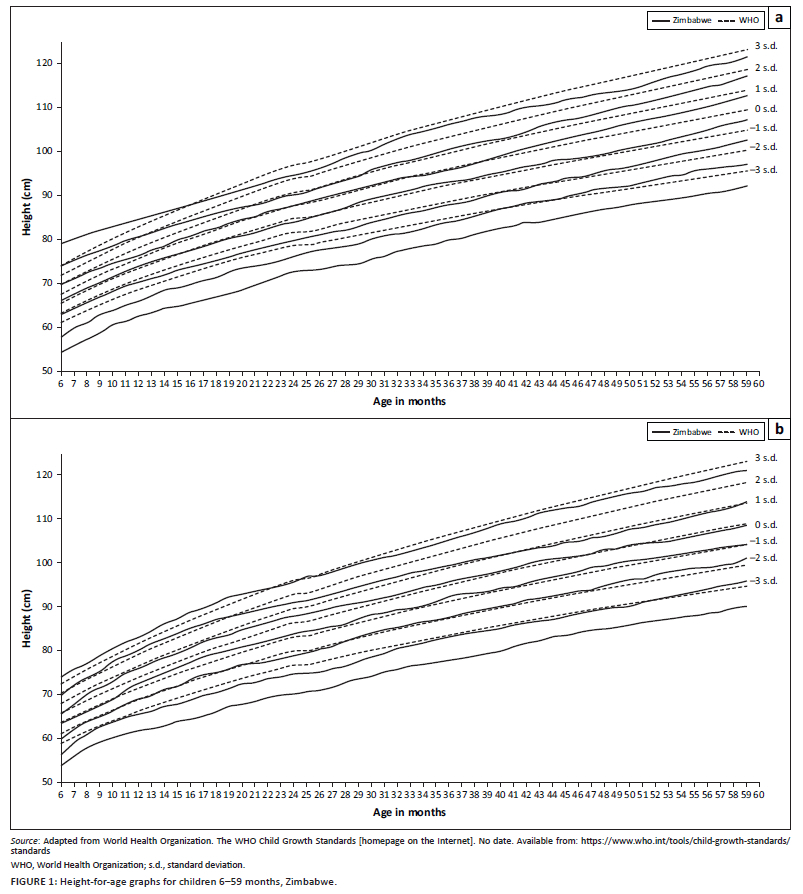
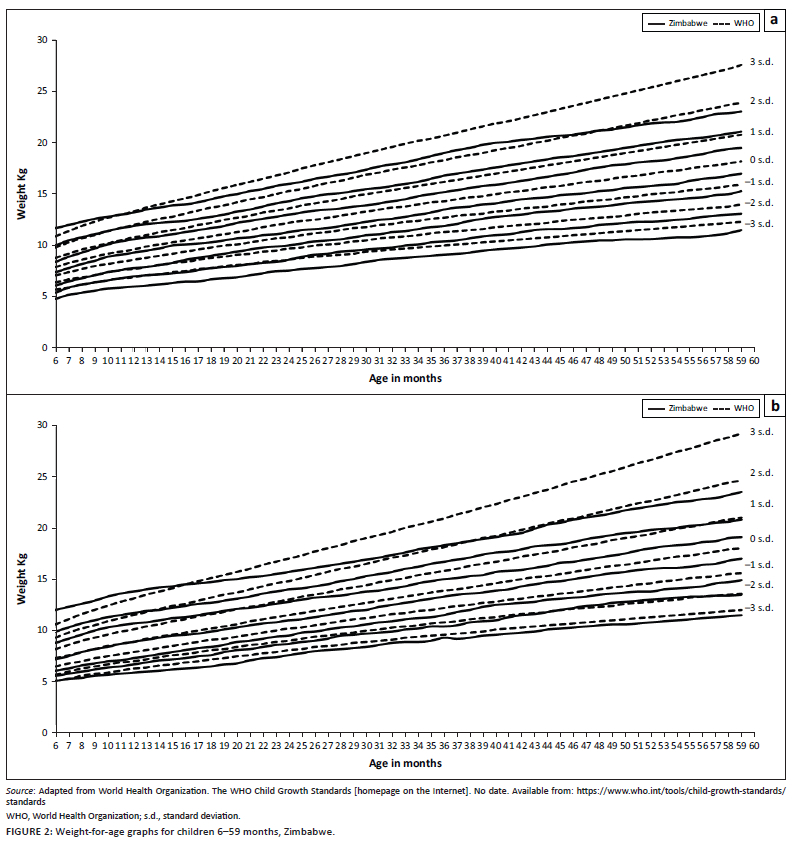
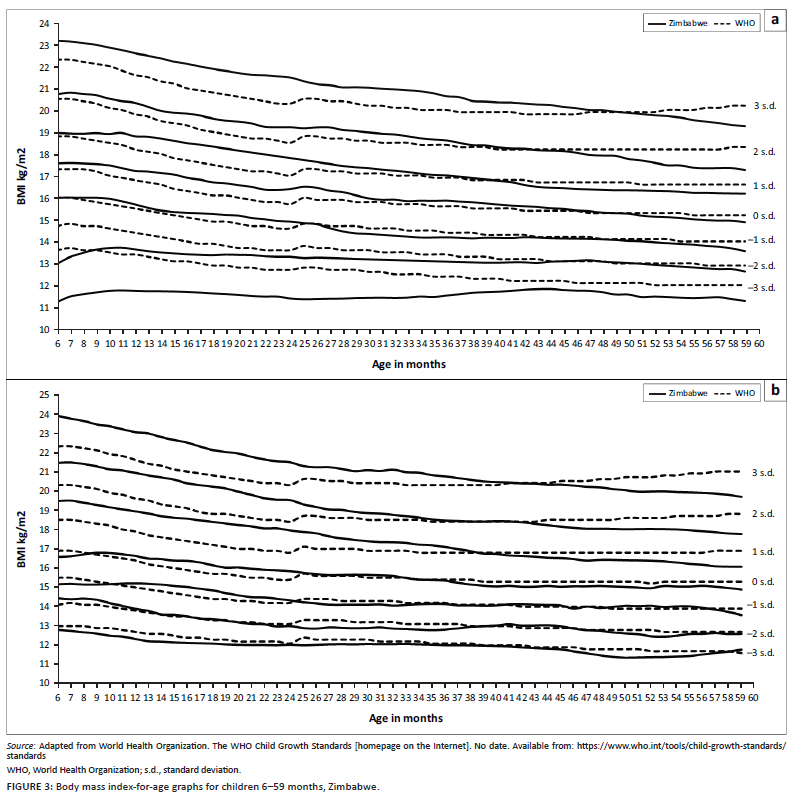
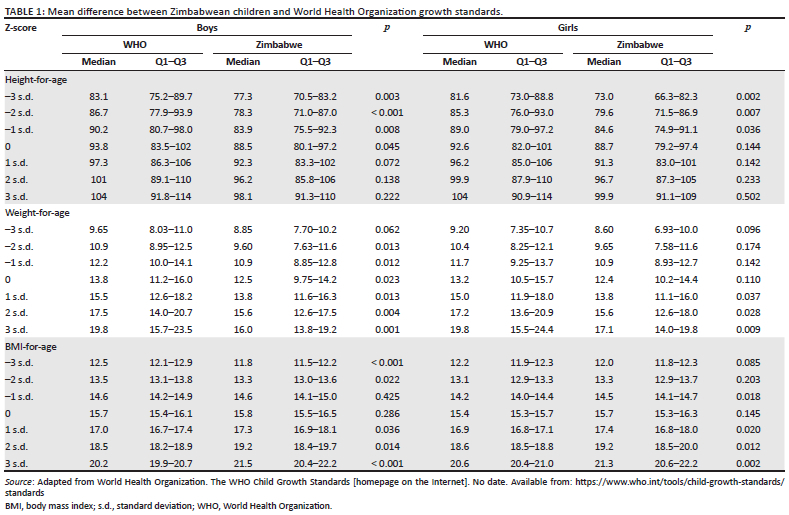
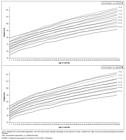
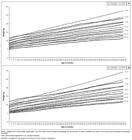
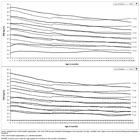
BACKGROUND: There is limited research that describes the growth trajectories of African children. The development of World Health Organization (WHO) growth standards considered a sample of children who lived in environments optimum for human growth AIM: This study aimed to develop weight-for-age and height-for-age growth curves from the Zimbabwean 2018 National Nutrition Survey and compare them with the WHO growth standards SETTING: Study participants were recruited from all districts in Zimbabwe METHODS: Height-for-age and weight-for-age data collected from 32 248 children were used to develop the Zimbabwean references. Smooth growth curves (height, weight and body mass index [BMI]-for-age) were estimated with the Lambda Mu Sigma (LMS) method and compared with the WHO growth standards RESULTS: Zimbabwean children were shorter and weighed less in comparison with the WHO growth standards. The -2 standard deviation (s.d.) Z-score curves (height-for-age) for Zimbabwean children (boys and girls) were below the -1 s.d. Z-score curves of the WHO growth standards. The Zimbabwean Z-scores (BMI-for-age) values above -1 s.d. were significantly higher in comparison with the corresponding WHO growth standards CONCLUSION: Utilising the WHO growth standards would diagnose a higher proportion of Zimbabwean children as stunted whilst underestimating the proportion at risk of obesity. The WHO growth standards lack a consideration of the geographical, economic, political and environmental constraints existing between countries
children; LMS method; growth curve; obesity; smooth growth curves; stunting; WHO growth standards; Zimbabwe
 Thumbnail
 Thumbnail
 Thumbnail