Predictors of post-partum family planning uptake in Webuye Hospital, western Kenya
Abstract
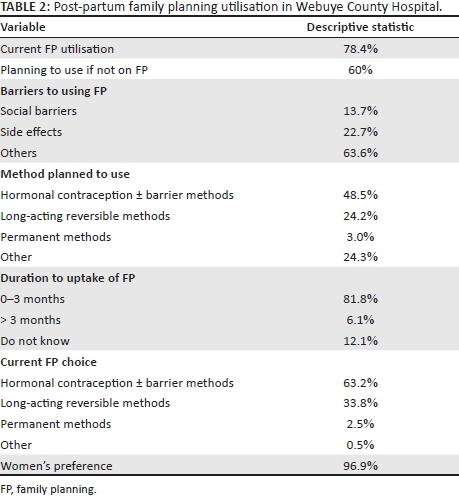
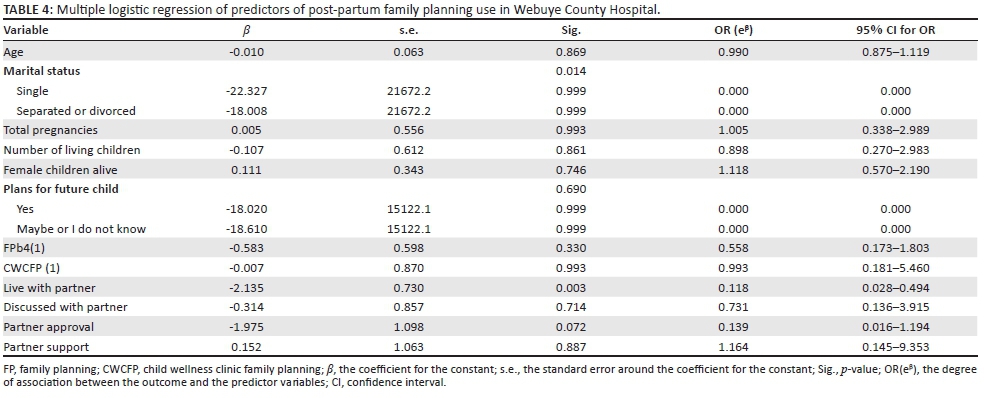
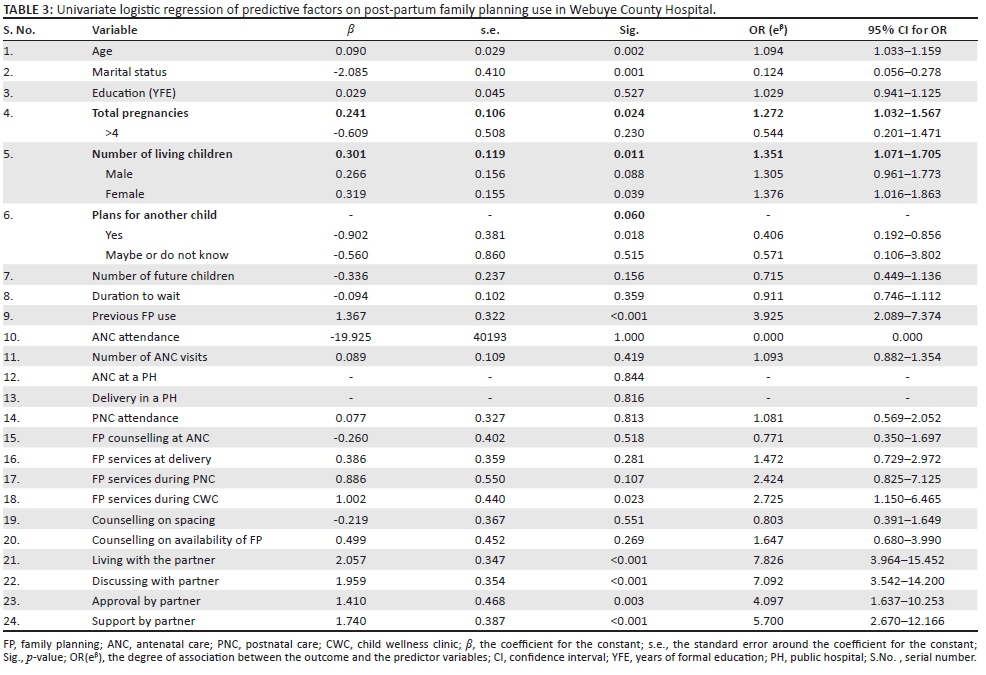
BACKGROUND: A short inter-pregnancy interval increases the risk for maternal and neonatal deaths in addition to other pregnancy complications including: preterm delivery, low birth weight, anaemia and premature rupture of membranes. However, only one half of Kenyan women, who have no desire to conceive immediately after birth, are using contraception one year after delivery AIM: The aim of this study was to determine the predictors of uptake of post-partum family planning (PPFP SETTING: The study was conducted among post-partum women accompanying their children for their first measles vaccination at Webuye County Hospital (WCH), in western Kenya METHODS: This was a cross-sectional study involving 259 randomly sampled post-partum women, accompanying their children for their first measles vaccination. A structured, interviewer-administered questionnaire was used to collect data. Logistic regression was used to identify correlates of PPFP uptake RESULTS: The uptake of PPFP among women at 9 months post-partum at WCH was found to be 78.4% ± 5.0%. The odds of PPFP uptake among women living with their sexual partners was 88.2% less than among those not living with their partners with the true population effect between 97% and 51% (OR = 0.118; 95% CI: 0.028-0.494; p = 0.003 CONCLUSIONS: Not living with her sexual partner in the same house is the key predictor of a woman's PPFP uptake in WCH. This study recommends that any programme aimed at improving post-partum contraceptive use in WCH should target women who live with their partners in the same house