Knowledge, attitudes and practices regarding HIV/AIDS among senior high school students in Sekondi-Takoradi metropolis, Ghana
Abstract
BACKGROUND: In Ghana, youths aged 15-24 years constitute the group most vulnerable to HIV infection. Inadequate knowledge, negative attitudes and risky practices are major hindrances to preventing the spread of HIV. AIM: This study sought to investigate the knowledge, attitudes and practices regarding HIV/AIDS among senior high school (SHS) students SETTING: Sekondi-Takoradi metropolis, Ghana. METHODS: A descriptive, cross-sectional design was adopted, using a validated self-administered questionnaire, to collect data from a stratified sample of 294 senior students selected from three participating high schools in August 2017. The data collected were analysed using Stata version 12. Descriptive and inferential statistics were at a significance level of 0.05. RESULTS: Among the participants, 61.6% had good knowledge about HIV/AIDS, 172 (58.5%) showed positive attitudes towards people living with HIV (PLHIV) and 79.1% reported HIV-related risky practices. We found a significant association between age and attitudes (p < 0.05). Poor knowledge was associated with being Muslim (aOR = 1.51 and 1.93; CI 1.19-1.91; p = 0.00) and being a student from school 'F' senior high school (F SHS) (aOR = 1.93; CI 1.71-2.18; p = 0.00). Bad attitude towards PLHIV and HIV was associated with ages 15-19 years (aOR = 3.20[2.58-3.96]; p = 0.03) p confirmed; and single marital status (aOR = 1.79[1.44-2.23]; p = 0.00). Bad practices were associated with ages 15-19 years (aOR = 1.72[1.41-2.11]; p = 0.08), belonging to the Akans ethnic group (aOR = 1.57[1.26-1.97]; p = 0.00) or being single (aOR = 1.79[1.44-2.23]; p = 0.00). Associations between misconceptions and HIV transmission were found: HIV can be transmitted by a handshake (aOR = 3.45[2.34-5.68]; p = 0.000), HIV can be cured (aOR = 2.01[2.12-5.04]; p = 0.004) and HIV/AIDS can be transmitted by witchcraft (aOR = 3.12[3.21-7.26]; p = 0.001. CONCLUSION: Participants generally had inadequate knowledge regarding HIV/AIDS, manifested negative attitudes towards PLHIV and also engaged in risky practices that might predispose them to HIV transmission. Our findings underscore the need for culturally adapted and age-oriented basic HIV information for youths in the metropolis on misconceptions about HIV transmission, negative attitudes of students towards PLHIV as well as the risky practices of students regarding HIV.
knowledge; attitudes and practice; HIV/AIDS; senior high school students; Sekondi-Takoradi; Ghana
Introduction
Human immunodeficiency virus/acquired immunodeficiency syndrome (HIV/AIDS) has rapidly spread to many countries over the years since 1981 and is becoming a global health challenge.1
Sub-Saharan Africa (SSA) is the worst affected region in the world, with about two-thirds of the afflicted people worldwide living here.22,345
Ghana registered 250 232 cases of PLHIV between 2006 and 2014.67889
Young adults, particularly those aged 15-24 years, are the group most vulnerable to HIV infection.10,11121131415
Knowledge, attitudes and practices (KAPs) regarding HIV/AIDS serve as the cornerstones in the fight against HIV. Adequate knowledge regarding HIV/AIDS is a powerful way of promoting positive attitudes as well as engaging in safe practices.161616
Several studies have been conducted in Africa and beyond to investigate KAP levels among students. These studies found that the knowledge of students regarding HIV was either average or poor, with misconceptions on high-risk practices among participants and a negative attitude towards PLHIV. Misconceptions were equally found in most KAP studies conducted among youths in different parts of Africa (Nigeria, Botswana, Gabon and other African countries) and beyond.1,17
A study conducted in Nigeria to identify knowledge of HIV infection among secondary school students in Port Harcourt found that only 7.1% of participants listed the four modes of transmission, namely sexual intercourse, blood transfusion, mother to child (vertical) transmission and intravenous drug use. The above four modes of transmission were identified by only 31%, 14.4%, 9.1% and 8%, respectively. Only 0.7% identified all the preventive measures.18519
Misconceptions were also found in studies conducted in India20212120,2120
Good knowledge of HIV does not always translate into good behaviour and/or safe practices. In Botswana, for example, a study conducted previously showed that half of the students could be perceived to be at risk of HIV, while the same participants thought that each sexually active student should be aware of his HIV status through regular testing.22
Youths need information to make responsible choices concerning their sexual behaviour. However, there is scarcity of studies addressing KAPs in HIV/AIDS among high school students in Ghana.
Although HIV/AIDS-related KAPs have been reported in studies from other countries and towns in Ghana, to our knowledge, there was no such information for students in Sekondi-Takoradi metropolis, Ghana.
The current study was therefore conducted to find out the KAPs regarding HIV/AIDS among senior high school (SHS) students in the Sekondi-Takoradi metropolis. This could serve as a guide to providing relevant information to health policymakers and other stakeholders in developing strategies related to supporting adolescents in improving their knowledge, attitudes, practices, values and skills needed to achieve the requisite behavioural changes to protect them from HIV infection in the Secondi-Takoradi metropolis of Ghana.
Methods
Study design
A cross-sectional, descriptive study design was adopted with quantitative data collection methods. The choice of this study design was to obtain information which is a snapshot of a population at a certain time, allowing conclusions about phenomena to be drawn across a wide population.19
Study site description
Sekondi-Takoradi metropolis is located in the south-eastern part of the western region of Ghana. The metropolis is bordered to the west by Ahanta West District and to the east by Shama District. To the south of the metropolis is the Atlantic Ocean and to the north is the Wassa East District. It covers a land size of 191.7 km223
Study population and sampling strategy
The study population included students (both males and females) from three selected SHSs in the Sekondi-Takoradi metropolis - all boarding schools. This population was used because most of the participants (students) were aged between 15 and 24 years, which coincide with the age group most vulnerable to HIV/AIDS infection.1224

where,
n = sample size,
Z = Zscore,
p = estimated proportion of an attribute that is present in the population,
q = 1-p,
d = margin of error.
It was based on the assumption of a margin of error of 0.03, 95% confidence level and an estimated proportion of HIV knowledge of Ghanaian youth (15-24 years) as 75.4% 25

Adding a non-response rate of 3%, n = (285*0.03) + 285 = 294. Therefore, a total of 294 students who met the study inclusion criteria were recruited to this study.
A stratified sampling technique was employed in the study, where a proportional number of the students were drawn from each form (one and two) level. Calculation of the number of respondents in each grade level was based on the proportion of the population in the school register (sampling frame). That is, the study sample size divided by the total number in the school multiplied by the total number of students in each grade level. Then, using the sample size determined for each form, the number of respondents per form (grade level) was selected using simple random sampling. This was then computed to achieve the total sample size of 294.
Data collection procedure
A standard set of questionnaires was distributed among the students. Before administering the questionnaire, the nature of the study was explained to the students. They were assured of anonymity and confidentiality of their responses. The face and content validities of the instrument were ensured by comparing items with previous similar studies and by matching them with the stated objectives. In addition, a copy of the prepared questionnaire was made available to the project supervisor for vetting, review and careful scrutiny for the necessary amendments and corrections. Also, a pretest was carried out among 20 students in two schools that were not part of the study to ensure the reliability of the instrument. The principal investigator trained three data collectors about informed consent and the different sections of the questionnaires. The questionnaires were administered by the principal investigator and the three trained data collectors to all qualified students in the study. The questionnaires were administered during regular school hours. Students who volunteered to participate were made to sit apart and asked not to communicate with each other during the administration of the questionnaires so as to encourage honest responses, while the teacher was outside the classroom. After collecting the completed questionnaires, students were thanked for their participation in the study.
Data analysis
The data collected were entered into Epi Data Entry version 3.1 and exported to Stata version 12.0 for cleaning and analyses. Descriptive statistics such as frequencies, percentages, tables and charts were used to present the data. Logistic regression was also used to test associations between socio-demographic variables and KAPs of respondents regarding HIV/AIDS at the significance level of 0.05.
Ethical considerations
Ethical approval for the study was sought from the Ghana Health Service Ethics Review Committee (GHS-ERC: 86/05/2017) with the help of the School of Public Health, University of Health and Allied Sciences, Ho, Ghana. Moreover, local permission and approval for the study was obtained from the headmasters of the various schools where the study was conducted.
Results
Socio-demographic characteristics of the respondents
The study comprised students aged 15-20 years. It was conducted in three schools in the Sekondi-Takoradi metropolis. (The letters S, F and T were used as pseudonyms for the schools to ensure anonymity.)
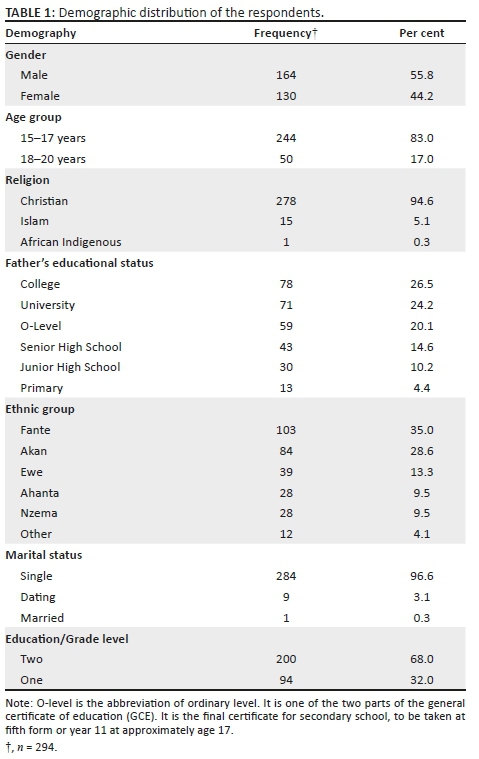
Table 1 shows that the majority of the respondents were females (164; 55.8%) and aged between 15 and 17 years (244; 83.0%). The mean age of the respondents was approximately 17.0 with a standard deviation of ±0.981. Respondents were distributed almost equally across three different schools. Participants were mostly Christians (278; 94.6%), and from the Fante ethnic group (103; 35.0%). A vast majority of the respondents was single at the time of the study (284; 96.6%), had fathers who went to college (71; 24.2%), and had an education level of 2 years (200; 68%).
Knowledge of respondents regarding HIV/AIDS
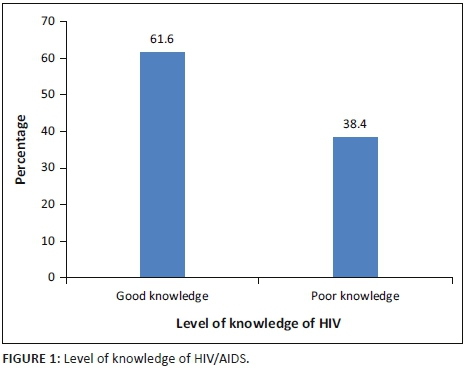
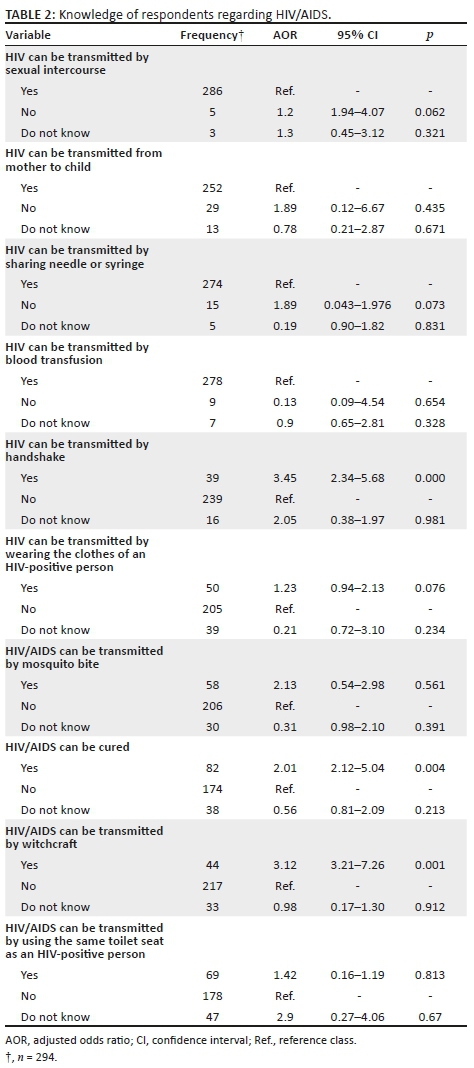
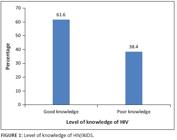
From Table 2, it can be seen that the majority of the respondents (286; 97.3%) knew that HIV/AIDS can be transmitted via sexual intercourse, from mother to child (252; 85.7%), through sharing needles or syringes (274; 93.2%) and through blood transfusion (278; 94.6%). Most respondents knew that HIV/AIDS cannot be transmitted through handshake (239; 81.3%), by sharing clothes with an HIV-infected person (205; 69.7%) and by mosquito bite (206; 70.1%). The majority of the respondents (217; 73.8%) knew HIV/AIDS cannot be transmitted by witchcraft, while a slight majority (178; 60.5%) knew it cannot be transmitted by using the same toilet seat as an HIV-positive patient. Notably, only a slight majority (174; 59.2%) knew HIV/AIDS is not curable. The human immunodeficiency virus transmission is associated with the following misconceptions: HIV can be transmitted by handshake (OR = 3.45; 95% CI 2.34-5.68; p = 0.000) and by witchcraft (OR = 3.12; 95% CI 3.21-7.26; p = 0.001). However, from Figure 1, it is clear that only a slight majority of the respondents had good knowledge regarding HIV/AIDS (61.6%).
Attitudes of respondents regarding HIV/AIDS
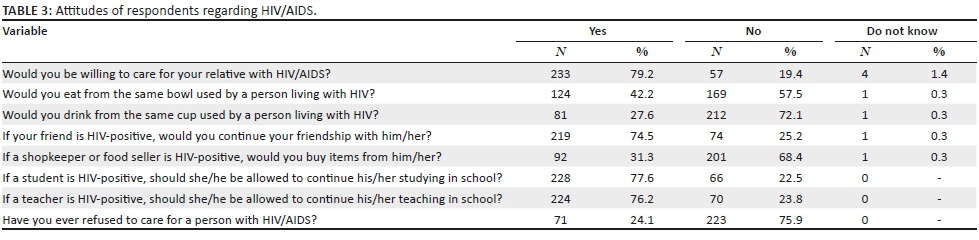
It could be noted from Table 3 that the majority of the respondents (233; 79.2%) were willing to care for their HIV-positive relatives. However, 169 (57.5%) said they would not eat from the same bowl used by the PLHIV. However, the majority of the respondents (219; 74.5%) were willing to continue their friendship with their HIV-positive friends. On the contrary, most of them, (201; 68.4%) said they would not buy items from shopkeepers with HIV/AIDS. Most of the respondents said that students (228; 77.6%) and teachers (224; 76.2%) who are HIV positive should be allowed to continue their studies and teaching, respectively. The majority (223; 75.9%) said they had never refused to take care of HIV/AIDS patients.
Excluded in the analysis
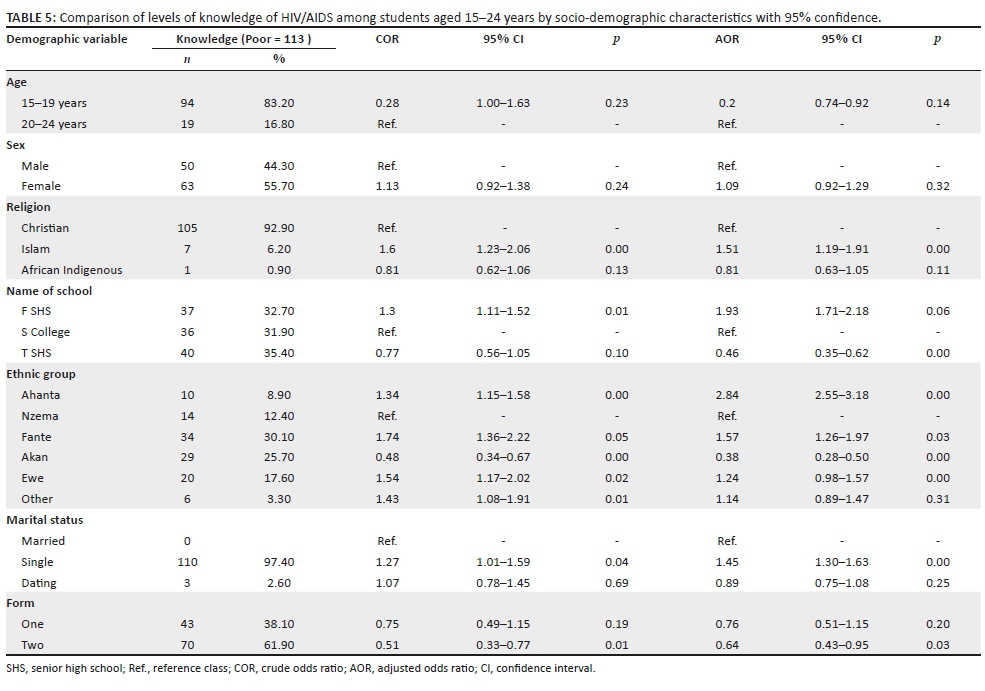
From Table 5, it is clear that Muslims (OR = 1.6; CI 1.23-2.06; p = 0.00) on one side, and Fante (OR = 1.74; CI 1.36-2.22; p = 0.05) and Ewe (OR = 1.54; CI 1.17-2.02; p = 0.02) ethnic groups on the other side, were almost two times more likely to have poor HIV/AIDS knowledge than Christians and others ethnic groups.
On multivariate analysis (Table 5), the Muslims and students from F SHS were almost two (aOR = 1.51 and 1.93; CI 1.19-1.91 and 1.71-2.18; p = 0.00 each) times more likely to have poor knowledge, while the Ahantas were three times more likely to have poor knowledge compared to the Nzemas. All these associations were statistically significant after adjusting for covariants.
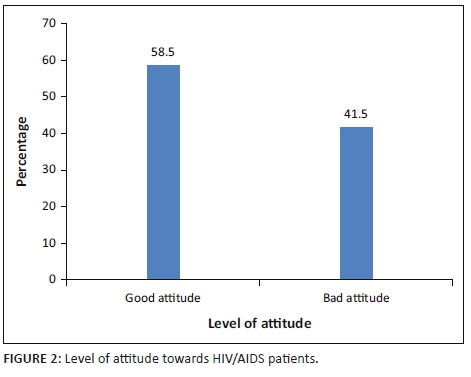
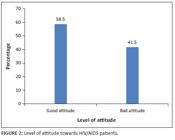
Generally, a slight majority of the respondents (58.5%) had positive attitudes towards PLHIV (see Figure 2).
Practices of respondents regarding HIV/AIDS
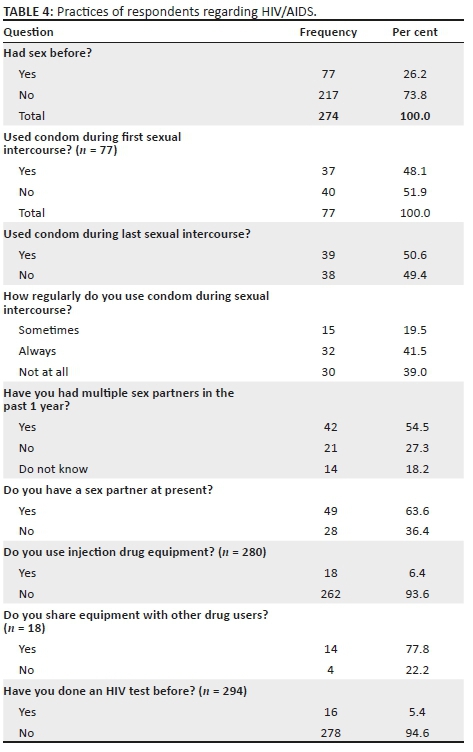
Table 4 presents the results of the practices of respondents regarding HIV/AIDS. Most of the respondents (217; 73.8%) said they had never had sex before. The majority (41; 51.9%) of those who had experienced sex before did not use a condom during their first sexual encounter. However, the majority (39; 50.6%) used a condom during their last sexual encounter. Only 32 (41.5%) of the sexually active respondents always used a condom during sexual encounters. The findings also showed that more than half (42; 54.5%) of the sexually active respondents had multiple sex partners in the year before this study. During the current study, the majority of the sexually active respondents (49; 63.6%) had a sex partner. The study findings indicated that the majority of the respondents (262; 3.6%) was not using injection drugs. The majority (14; 77.8%) of those who used injection drug equipment said they shared with other users. The majority of the respondents (278; 94.6%) said they had never had an HIV test before.
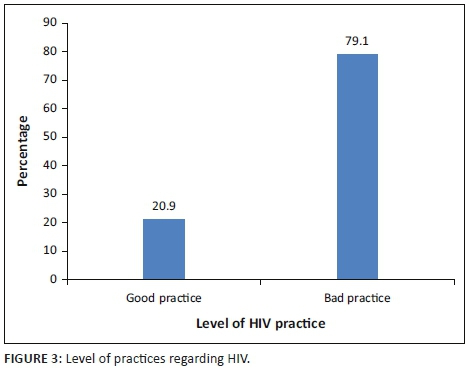
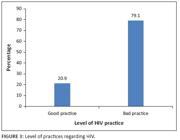
The results revealed that the majority of the respondents (79.1%) was engaging in bad practices regarding HIV (see Figure 3).
Factors associated with knowledge, attitudes and practices regarding HIV/AIDS
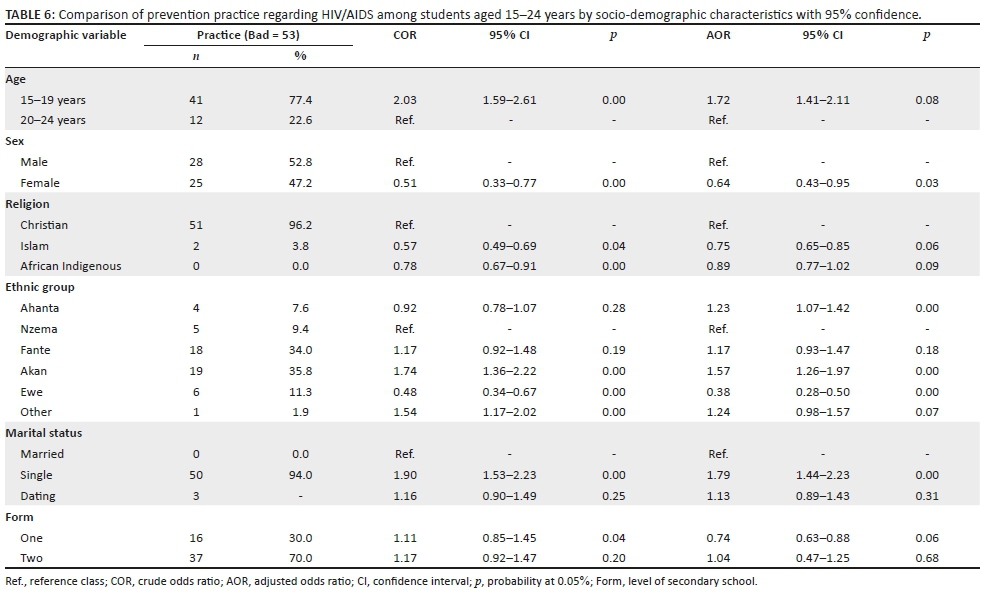
From Table 6, it is clear that students who were aged 15-19 years were almost two times (aOR = 1.72 [1.41-2.11]; p = 0.00) more likely to have bad practice towards HIV/AIDS than those who were aged 20-24 years, while the Akans and those who belong to other ethnic groups and those who were not married were all almost two times more likely to have bad practices regarding HIV/AIDS. On multivariate analysis, those students aged 15-19 years, Akans and singles were almost two times more likely to have bad practice.
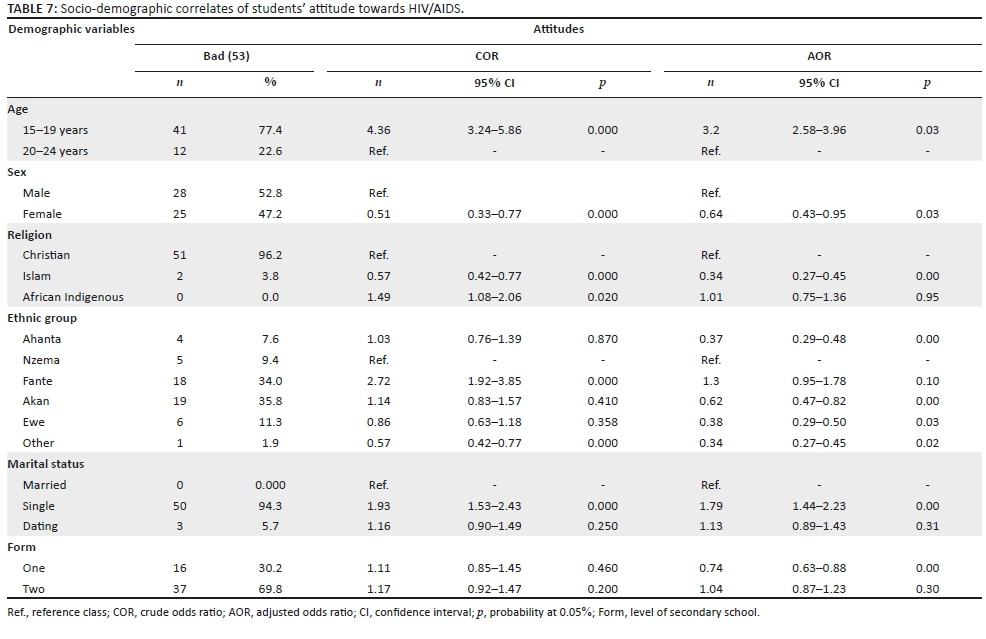
Table 7 shows that students aged 15-19 years were four times (OR = 4.36; CI 3.24-5.86; p = 0.00) more likely to have a bad attitude towards HIV/AIDS than those who were aged 20-24 years, while the Fantes were almost three times more likely to have a bad attitude towards PLHIV than the Nzemas. On multivariate analysis, those students who were aged 15-19 years were three times more likely to have a bad attitude towards PLHIV than those aged 20-24 years (aOR = 3.20; CI 2.58-3.96; p = 0.03).
Discussion
This study aimed at investigating KAPs regarding HIV/AIDS among SHS students in Ghana. In our KAP study, we found students were more knowledgeable about modes of transmission in general. The attitudes of participants towards HIV and AIDS patients were mixed. More than three-quarters of participants were engaged in bad risk practices. However, few misconceptions were found among participants: 69.7% knew that HIV cannot be transmitted by sharing clothes with an HIV-infected person, and 60.5% knew that HIV cannot be transmitted by using the same toilet seat as an HIV-positive person. Notably, only 174 (59.2%) knew that HIV/AIDS is not curable. Factors associated with poor knowledge of HIV/AIDS (Muslim religion, attending F and T SHSs (F and T senior high schools), belonging to the Ahanta ethnic group and being single), bad attitude towards HIV/AIDS (being aged between 15 and 19 years, being single and belonging to the Fante ethnic group) and bad practices (age between 15 and 19 years, belonging to the Akan ethnic group and being single) were also determined.
The current results indicated that the majority of the respondents knew that HIV could be transmitted by sexual intercourse, from mother to child, by sharing contaminated needles or syringes and through blood transfusion. These findings are in agreement with two Ghanaian studies.10,261010262619
Single marital status is associated with the odds of little knowledge and odds of getting infected, as demonstrated by Carlos in Congo, where being single, divorced or widowed increases the likelihood of getting infected almost ten times.2727
There is a direct relation between sexual behaviour and misconceptions in HIV knowledge.28191929272727
Overall, the knowledge level of respondents of HIV/AIDS was found to be encouraging as the majority (61.6%) had good knowledge regarding HIV/AIDS. This finding contradicts that of Agyemang et al.,101212
Attitudes of respondents towards PLHIV showed that the majority (79.3%) of them was willing to care for their relatives with HIV/AIDS. However, 57.5% of them said they would not eat from the same bowl used by a PLHIV. A number of participants believed that they cannot share a cup with a PLHIV or buy from an HIV-positive shopkeeper, while more than three-quarters saw no harm in allowing teachers and students to continue with their jobs or studies while living with HIV.
These attitudes, despite being ambiguous on some points, are similar to the findings of Nubed and Akoachere,1
Their cross-sectional study in Fako Division, Cameroon, revealed that 52.6% of respondents indicated their willingness to take care of a sick HIV-positive relative or continue friendship with an HIV-positive friend, while 56.9% could buy food and other goods from an HIV-positive person. Their study further revealed that the majority of the participants accepted that an HIV-positive student should be allowed to continue her/his studies (71.6%) and that an HIV-positive teacher should be allowed to continue her/his teaching profession (75.0%).119
However, the positive attitude among 58.5% of participants towards PLHIV reported in the current study falls short of the zero-discrimination against PLHIV as prescribed by UNAIDS.30
It was found in the current study that 26.2% of the respondents had a history of sexual intercourse, with 51.9% using a condom during the first sexual intercourse and 41.5% regularly using it. More than half (56.1%) of the sexually active respondents had multiple sex partners in the previous year. Some of the respondents (6.4%) were found to have used or were using injection drug equipment. These results differ from those of a cross-sectional study by Christane et al.19195
On the other hand, a cross-sectional survey conducted among male high school students in Lao People's Democratic Republic reported a higher figure of 31.3% of students having a history of sexual intercourse, and 70.2% of these had used a condom, compared to the current result of 20.8% and 47.4%, respectively.3132
There was association of KAPs with some socio-demographic characteristics, unlike in a study conducted in the Ejura-Sekyedumase district of Ghana, in which no association was found between the demographic characteristics and knowledge of HIV/AIDS.1033
Limitations
This study was restricted to only three schools in the western region of Ghana and all the participating institutions were boarding schools excluding form (grade level) three. This limits the generalisability of the current findings to other regions and today's SHSs. The study only concentrated on knowledge as the primary factor in explaining HIV transmission among young people, which may not be so. The study failed to explore relevant points related to sexual behaviour in youths, such as some attitudes surrounding condom use, the age of sexual debut and high personal HIV risk perception. Lack of such information may impede the design of a culturally tailored message to this group able to reverse their possible bad risk behaviour. Finally, because the questionnaire was self-administered, social desirability bias may have occurred. However, the anonymity of the respondents hopefully encouraged students to be honest in their responses. Despite all of these limitations, the researchers believe that this study might be a reasonable source of information for other researchers and policymakers.
Recommendations
Based on the findings of this study, the following suggestions can be formulated:
•Human immunodeficiency virus/acquired immunodeficiency syndrome awareness campaigns among SHS students in the metropolis should generally pay much attention to specific issues, especially regarding the transmission and management of HIV/AIDS.
•Sexuality education in schools should be reinforced to correct the misconceptions observed in the current study and encourage safe practices and positive attitudes towards PLHIV.
•Furthermore, HIV/AIDS prevention programmes must move beyond education into encouraging and enhancing voluntary counselling and testing services among students.
•Human immunodeficiency virus/acquired immunodeficiency syndrome awareness and prevention campaigns must also be targeted at young people, especially those below 20 years of age, to help improve their attitudes towards PLHIV.
Future research involving regional and national representative samples of school-attending and out-of-school adolescents could contribute substantially to HIV/AIDS prevention.
Conclusion
The study revealed that SHS students in the three schools in which the study was conducted generally had some knowledge of the basics of HIV/AIDS, though it can be considered inadequate. However, there are still some gaps regarding the modes of transmission, such as transmission of HIV through handshake, sharing of clothes with an HIV-positive person, mosquito bite, witchcraft, etc., which need further attention. Furthermore, the knowledge and awareness on HIV/AIDS-related information did not translate to students' decision to undergo voluntary testing, with more than four-fifths of the students not knowing their HIV status. The attitudes of respondents towards PLHIV were found to be encouraging as a slight majority had a good attitude. The majority of the respondents engaged in risky practices regarding HIV. There was no significant association between KAPs regarding HIV/AIDS and socio-demographic variables except between age and attitudes.
Competing interests
The authors declare that they have no financial or personal relationships that may have inappropriately influenced them in writing this article.
Authors' contributions
S.M.D. and E.E.T. conceived and designed the study, and analysed the data; E.E.T. led the writing of the manuscript; and P.M.L. critically reviewed the manuscript. All authors read and approved the final manuscript.
Acknowledgements
References
-
1.Nubed CK, Akoachere J-FTK. Knowledge, attitudes and practices regarding HIV/AIDS among senior secondary school students in Fako Division, South West Region, Cameroon. BMC Public Health. 2016;16(1):847. https://doi.org/10.1186/s12889-016-3516-9
» https://doi.org/10.1186/s12889-016-3516-9 -
2.World Health Organization. HIV/AIDS fact sheet [homepage on the Internet]. c2017 [cited 2018 Oct 2018]. Available from: http://www.unaids.org/sites/default/files/media_asset/UNAIDS_FactSheet_en.pdf
» http://www.unaids.org/sites/default/files/media_asset/UNAIDS_FactSheet_en.pdf -
3.UNAIDS. UNAIDS data [homepage on the Internet]. c2018 [cited 2018 Oct 13]. Available from: http://www.unaids.org/sites/default/files/media_asset/unaids-data-2018_en.pdf
» http://www.unaids.org/sites/default/files/media_asset/unaids-data-2018_en.pdf -
4.Kharsany ABM, Karim QA. HIV infection and AIDS in sub-Saharan Africa: Current status, challenges and opportunities. Open AIDS J. 2016;10(1):34-48. https://doi.org/10.2174/1874613601610010034
» https://doi.org/10.2174/1874613601610010034 -
5.Adeleke IT, Azeez BA, Aliyu D, Ogundiran LM, Salami A, Adeoye WA. HIV/AIDS awareness among secondary schools' adolescents in south-western Nigeria : A correlate to strengthen advocacy and strategic sexuality education programs. AJHR. 2015;3(1-1):61-67. https://doi.org/10.11648/j.ajhr.s.2015030101.19
» https://doi.org/10.11648/j.ajhr.s.2015030101.19 - 6.Ghana AIDS Commission. 2014 Status report. Accra: Ghana AIDS Commission; 2014.
-
7.Ghana Statistical Service. Ghana: Demographic and health survey 2014 [homepage on the Internet]. Rockville, MD ICF International; 2015 [cited 2018 Oct 13]. Available from: https://dhsprogram.com/pubs/pdf/fr307/fr307.pdf
» https://dhsprogram.com/pubs/pdf/fr307/fr307.pdf - 8.Ghana AIDS Commission. Ghana country AIDS progress report (January 2010-December 2011). Accra: Ghana AIDS Commission; 2012.
-
9.Ghana AIDS Commission. Summary of the 2016 HIV sentinel survey report [homepage on the Internet]. c2016 [cited 2017 Nov 10]. Available from: http://www.ghanaids.gov.gh/gac1/aids_info.php
» http://www.ghanaids.gov.gh/gac1/aids_info.php -
10.Agyemang S, Buor D, Tagoe-Darko E. The extent of knowledge about HIV/AIDS among young people in the Ejura-Sekyedumase district of Ghana. J AIDS HIV Res. 2012;4(11):241-247. https://doi.org/10.5897/JAHR12.023
» https://doi.org/10.5897/JAHR12.023 -
11.Masoda M, Govender I. Knowledge and attitudes about and practices of condom use for reducing HIV infection among Goma University students in the Democratic Republic of Congo. S Afr J Epidemiol Infect. 2013;28(1):61-68. https://doi.org/10.1080/10158782.2013.11441521
» https://doi.org/10.1080/10158782.2013.11441521 -
12.Huda MN, Amanullah DA. HIV/AIDS-related knowledge among secondary school students in Bangladesh: A cross-sectional study. Adv Infect Dis [serial online]. 2013 [cited 2018 Oct 2018];3:274-280. Available from: https://doi.org/10.4236/aid.2013.34042
» https://doi.org/10.4236/aid.2013.34042 -
13.Doku D. Substance use and risky sexual behaviours among sexually experienced Ghanaian youth. BMC Public Health. 2012 Jul 29;12(1):571. https://doi.org/10.1186/1471-2458-12-571
» https://doi.org/10.1186/1471-2458-12-571 -
14.Masood MSA, Alsonini NAA. Knowledge and attitude about reproductive health and family planning among young adults in Yemen. Int J Popul Res [serial online]. 2017 [cited 2018 Jul 04]. Available from: https://www.hindawi.com/journals/ijpr/2017/1895472/
» https://www.hindawi.com/journals/ijpr/2017/1895472/ - 15.Chen PF. HIV/AIDS prevention among young people in East and South-East Asia in the context of reproductive and sexual health. Asia Paci Popul. 2008;23(1):7.
- 16.CDC - Division of HIV/AIDS Prevention. HIV among women. Atlanta, GA: Centers for Disease Control and Prevention (CDC); 2013.
-
17.Gudi SK. Assessment of knowledge, attitude and perceptions of HIV/AIDS among secondary school students in Guntur district of south India: A cross-sectional survey. Int J Sci Rep. 2018;4(4):87-92. https://doi.org/10.18203/issn.2454-2156.IntJSciRep20181392
» https://doi.org/10.18203/issn.2454-2156.IntJSciRep20181392 - 18.Aomreore AA, Alikor EA, Nkanginieme KE. Survey of knowledge of HIV infection among senior secondary school 3 (SSS3) students in Port Harcourt. Niger J Med. 2004;13(4):398-404.
-
19.Christane NA, Zamba MR, Masika J, Zhang Y, Zhang L. HIV/AIDS prevalence, knowledge, attitudes and related behaviors among young people in Libreville, Gabon. IOSR J Humanit Soc Sci. 2014;19(1):59-65. https://doi.org/10.9790/0837-19125965
» https://doi.org/10.9790/0837-19125965 - 20.Kumar P, Pore P, Patil U. HIV/AIDS-related KAP among high-school students of municipal corporation school in Pune. An interventional study. Natl J Community Med. 2012;3(1):74-79.
- 21.Mansoor AB, Fungladda W, Kaewkungwal J, Wongwit W. Gender differences in KAP related to HIV/AIDS among freshmen in Afghan universities. Southeast Asian J Trop Med Public Health. 2008;39(3):404-418.
- 22.Stephens LL, Bachhuber MA, Seloilwe E, Gungqisa N. HIV-related knowledge, attitudes, and practice among educated young adults in Botswana. J AIDS HIV Res. 2012;4(6):159-164.
-
23.Shuttleworth M. Cross sectional study - A snapshot of a population [homepage on the Internet]. 2010 [cited 2017 Nov 08]. Available from: https://explorable.com/cross-sectional-study
» https://explorable.com/cross-sectional-study - 24.Cochran WG. Sampling techniques. 3rd ed. New York: John Wiley; 1977; pp. 10-20.
-
25.UNICEF. Statistics at a glance: Ghana [homepage on the Internet]. 2013 [cited 2017 Feb 27]. Available from: https://www.unicef.org/infobycountry/ghana_statistics.html
» https://www.unicef.org/infobycountry/ghana_statistics.html -
26.Appiah-Agyekum NN, Suapim RH. Knowledge and awareness of HIV/AIDS among high school girls in Ghana. HIV AIDS (Auckl). 2013;5:137-144. https://doi.org/10.2147/HIV.S44735
» https://doi.org/10.2147/HIV.S44735 -
27.Carlos S, Martínez-González MA, Burgueño E, et al. Misconceptions about HIV infection in Kinshasa (Democratic Republic of Congo): A case-control study on knowledge, attitudes and practices. Sex Transm Infect. 2014;0:1-4. https://doi.org/10.1136/sextrans-2014-051734
» https://doi.org/10.1136/sextrans-2014-051734 -
28.Tenkorang EY. Myths and misconceptions about HIV transmission in Ghana: What are the drivers? Cult Health Sex. 2013;15:296-310. https://doi.org/10.1080/13691058.2012.752107
» https://doi.org/10.1080/13691058.2012.752107 - 29.Tarkang EE. Knowledge, attitudes and perceptions regarding HIV/AIDS and sexual behaviours among senior secondary school learners in Kumba, Cameroon [unpublished PhD thesis]. Pretoria: University of South Africa; 2009.
-
30.UNAIDS. Zero Discrimination Day to be celebrated around the world [homepage on the Internet]. c2015 [cited 2018 Oct 13]. Available from: http://www.unaids.org/sites/default/files/20150226_PR_Zero_Discrimination_Day_en.pdf
» http://www.unaids.org/sites/default/files/20150226_PR_Zero_Discrimination_Day_en.pdf -
31.Thanavanh B, Harun-Or-Rashid M, Kasuya H, Sakamoto J. Knowledge, attitudes and practices regarding HIV/AIDS among male high school students in Lao People's Democratic Republic. J Int AIDS Soc. 2013;16:17387. https://doi.org/10.7448/IAS.16.1.17387
» https://doi.org/10.7448/IAS.16.1.17387 -
32.UNAIDS. Report on the Global AIDS epidemic [homepage on the Internet]. c2013 [cited 2018 Oct 13]. Available from: http://files.unaids.org/en/media/unaids/contentassets/documents/ epidemiology/2013/gr2013/UNAIDS_Global_Report_2013_en.pdf
» http://files.unaids.org/en/media/unaids/contentassets/documents/ epidemiology/2013/gr2013/UNAIDS_Global_Report_2013_en.pdf - 33.Ministère du Plan et Suivi de la Mise en œuvre de la Révolution de la Modernité (MPSMRM), Ministère de la Santé Publique (MSP), ICF International. [Demographic and health survey in Democratic Republic of the Congo 2013-2014]. Rockville, MD: MPSMRM, MSP, ICF International, 2014; French.
Accepted: 13 Nov. 2018
Published: 09 May 2019