Facilitators and barriers to effective primary health care in Zimbabwe
Overview of country and burden of disease
Following impressive health gains in the first decade following independence in 1980, the health sector in Zimbabwe has been severely undermined by the human immunodeficiency virus (HIV) epidemic and economic crises, which worsened from the mid-1990s. Two years after the Alma Ata Declaration in 1978, the government adopted the Primary Health Care (PHC) approach, directing resources towards disadvantaged areas and active participation of communities in transforming their health.12234435
Current Primary Health Care system
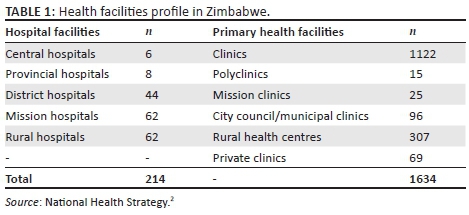
The population of Zimbabwe is 16 million (67% rural and 33% urban).3Table 1 shows the number of hospitals and PHC facilities that serve this population. The public PHC workforce is largely nurse-led, with PHC nurses in rural clinics and nurses, midwives and clinical officers in urban municipality clinics, hospital outpatients and inpatients. Nurse-anaesthetists provide the majority of anaesthesia in urban and rural hospitals, where caesarean sections are the main surgical procedure. Doctors in public PHC provide supervision and teaching, develop guidelines and consult on referred cases. Nearly every district (±250 000 population) has at least two medical officers; every PHC centre has at least two qualified nurses; 59% of administrative wards have an environmental health technician and 60% of villages have access to a village health worker.2
Weaknesses
Financial barriers and user fees are major barriers to care, with 7.6% of households incurring catastrophic health expenditure in 2015, 13% in the poorest and 3% in the richest households.66
Strengths
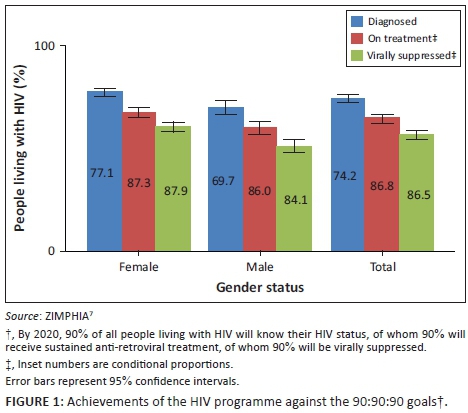
Funding from donors increased from $167 million in 2009 to $361 million in 2015.2,4Figure 1) and prevention of mother-to-child transmission7
Current place of family medicine in the health system
Postgraduate specialist training (Master's in Medicine, MMed) in family medicine is going through approval for the University of Zimbabwe, Harare, and National University of Science and Technology, Bulawayo. First intakes for training are anticipated at both universities for 2018. The four-year programme will be based at district and provincial hospitals, close to populations of greatest need. The programme's success relies on having provincial hospital specialists in obstetrics, anaesthetics, paediatrics, general surgery and internal medicine. The new medical school at Midlands State University has attracted young specialists to Gweru Provincial Hospital. The Medical and Dental Practitioners Council has opened a Specialist Family Practitioner Register with four members, private practitioners who specialised under the Stellenbosch University's MMed programme. Family practitioners, on completing their MMed, will work as senior clinicians in district, mission and provincial hospitals, in City Health facilities and as supervisors of the PHC teams working in rural and urban clinics. Community-based medical education has existed in the undergraduate programme since 19878
Competing interests
The authors declare that they have no financial or personal relationships that may have inappropriately influenced them in writing this article.
Authors' contributions
S.C.R. and N.M. developed and wrote this article jointly.
Acknowledgements
The authors thank Professor F.D. Madzimbamuto for his insights in developing this profile.
References
- 1. Loewenson R, Sanders D. The political economy of health and nutrition. In: Stoneman C, editor. Zimbabwe's prospects. 133-152. London: Macmillan; 1988.
- 2. Ministry of Health and Child Care. The National Health Strategy for Zimbabwe 2016-2020. Equity and quality in health: Leaving no one behind. Harare.
- 3. World Bank. Zimbabwe country profile [homepage on the Internet]. 2016 [cited 2017 Sept 24].
- Available from: http://databank.worldbank.org/data/Views/Reports/ReportWidgetCustom.aspx?Report_Name=CountryProfile&Id=b450fd57&tbar=y&dd=y&inf=n&zm=n&country=ZWE
- 4. Zimbabwe National Statistics Agency and ICF International. Zimbabwe demographic and health survey 2015: Final report. Rockville, MD: Zimbabwe National Statistics Agency (ZIMSTAT) and ICF International; 2016.
- 5. World Health Organization. Non-communicable diseases (NCDs) country profiles, 2014. Zimbabwe.
- 7. Ministry of Health and Child Care, Centre for Disease Control. The Zimbabwe population-based HIV impact assessment (ZIMPHIA). Harare: Ministry of Health and Child Welfare; 2016.
- 8. Todd CH, Tsikirayi CMR. Community-based medical education and curriculum change: The field attachment programme of the School of Medicine of the University of Zimbabwe. Ann Commun Orient Educ. 1993;6:43-52.